What Are The Different Uses Of Plants In Our Daily Life For Class 2
We can see lots of plants around us. They are of different colours, shapes, and sizes. They also show a wide diversity among them. Some plants grow in cold regions and some grow in hot regions. Certain plants grow in tropical regions.
Plants belong to the kingdom Plantae. There are various types of plants. These include trees, shrubs, herbs, medicinal plants, creepers, etc. Plants require an optimum amount of water, air and nutrients. They get these from nature itself.
Trees are big and strong. They have trunks, branches and leaves. Some trees may bear fruits, for example, the mango tree, apple tree and jackfruit tree while the banyan tree is known for its gigantic appearance. Shrubs are small woody plants which are smaller than trees. Rose plants, tulsi plants, and hibiscus plants are some examples.
Herbs such as basil, mint, and coriander are used for flavouring food. Medicinal plants such as tulsi are very useful medicines. Climbers and creepers such as melons and pea plants have weak stems and need support to grow.

Tropical Rainforest
Plants – How Do They Help Us?
Human beings and other animals largely depend upon plants for their survival. Plants play an important role in our existence. There are various uses of plants. Here we are mainly discussing the uses of plants for Class 2.
One of the important things those plants provide us is that they provide clean air for our breathing. The environment consists of carbon dioxide and oxygen. The plants take up carbon dioxide and give out oxygen which we respire. In this way, they also help us out in regulating air pollution. By growing more and more trees we can reduce air pollution.
Another important use of plants is that they provide us with food. Plants bear fruits like mango, grapes, apples, oranges etc and we can consume those fruits. Even leaves like spinach and lettuce are also consumable. From the roots, we can get potatoes, radishes, and tapioca. From seeds, we can consume almonds, wheat, and cashew nuts.
Plants shelter us. The branches of big trees can serve as shelter for many birds and small animals. They give us shade from the scorching sun during hot summers. They also provide wood for constructing houses. They provide wood for making tables, chairs and other materials. During olden times people used to take a rest under the big banyan trees.
We need clothing and we use cotton for making different types of clothing. From where do we get this cotton? Have you wondered about that? Yes, it is obtained from cotton plants. The obtained cotton can be used to make different types of clothes for us.
Also, plants provide us with perfumes, rubber, latex etc. Beautiful flowers like jasmine and rose are used for preparing perfumes. Rubber plants provide us with rubber and we use them to make erasers, tyres etc. Some seeds are oily and they provide us with oils such as sunflower oil, coconut oil, etc.
We all love to write and draw. We need paper for that purpose. Papers are manufactured by using wood pulp. So plants also provide us with paper which is one of the stationeries we use in our day-to-day life. These are some of the various uses of plants.
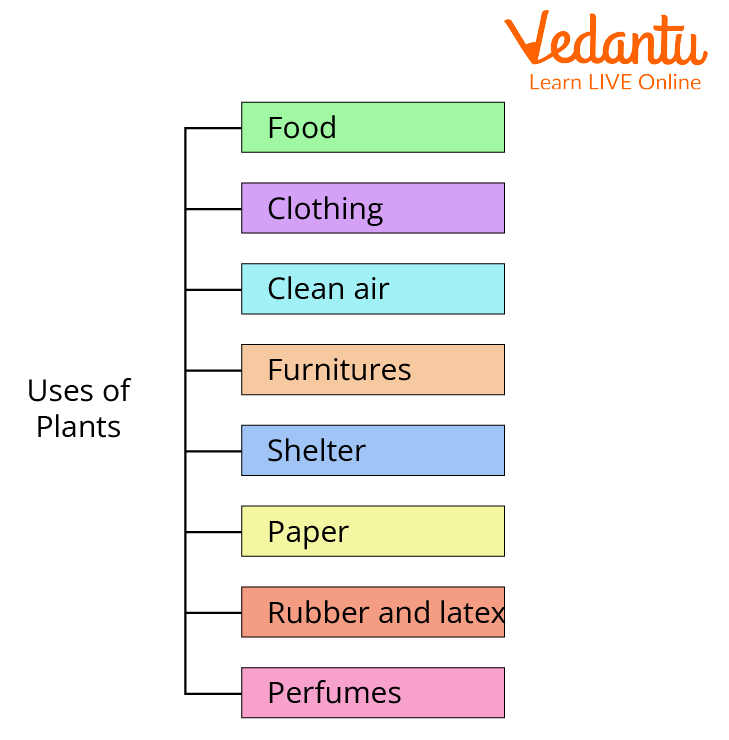
Uses of Plants Chart
Medicinal Plants
Some plants can cure our diseases. Such plants are called medicinal plants. For example, in our households, we may see that our mother or grandmother will give us tulsi leaves to cure a cold and cough. Tulsi is one of the medicinal plants and it has the benefits of curing a cold, cough and fever. Tulsi is also known as the queen of medicinal plants.
Neem is another medicinal plant which can cure many diseases such as bacterial infections, aches and chicken pox. Aloe vera is known as the king of medicinal plants. It can cure poor body immunity and acne. Ginger is a perfect solution for digestion problems. Fenugreek leaves also help in controlling cholesterol and diabetes. The following image shows some of the popular medicine plant names.
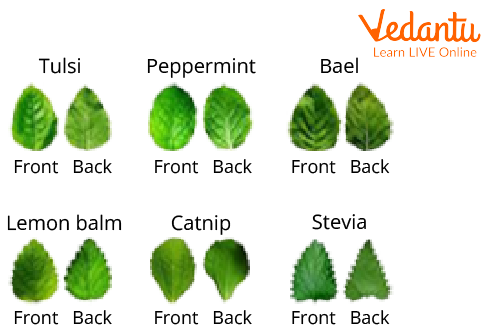
Medicinal Plants Chart
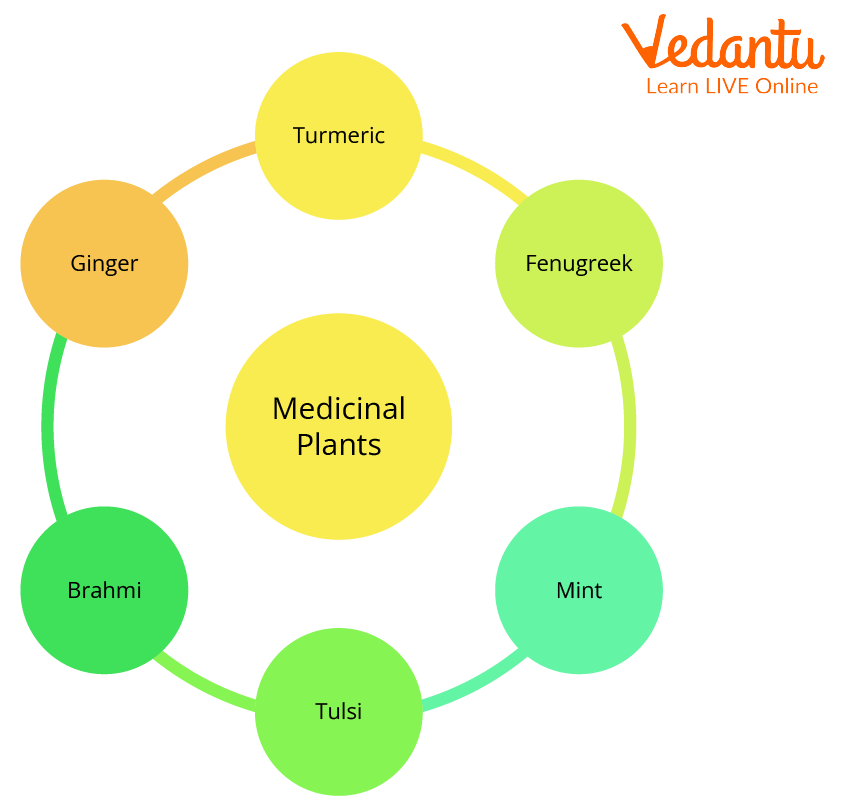
Medicinal Plants
Interesting Facts about Brahmi Plants
Ayurveda is a famous medical practice followed in our country. Brahmi is a medicinal plant used in Ayurveda medicines.
Brahmi plants have a soft stem with white flowers and mostly they are found in damp and marshy areas. By observing these features, we know how to identify Brahmi plants.
This small plant is a hub of various medicinal values. Here are some interesting facts about this plant.
It acts as a powerful antioxidant. It can reduce anxiety and stress. By taking Brahmi, kids can boost their memory power. This will help their brain to develop. So Brahmi is vital for small children for their brain development and memory.
Also, this plant can reduce blood pressure and aches. Brahmi is also helpful for wound healing and reducing diabetes and it is good for hair growth.
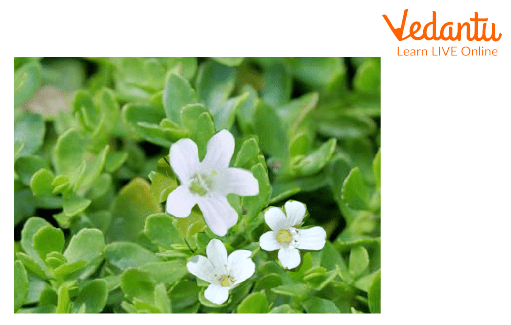
Brahmi Plant
How to Draw a Plant?
Drawing is always fun, right? Plant drawings for kids can be one of the easiest art to start with. Let us now see how to draw a plant easily from these steps.
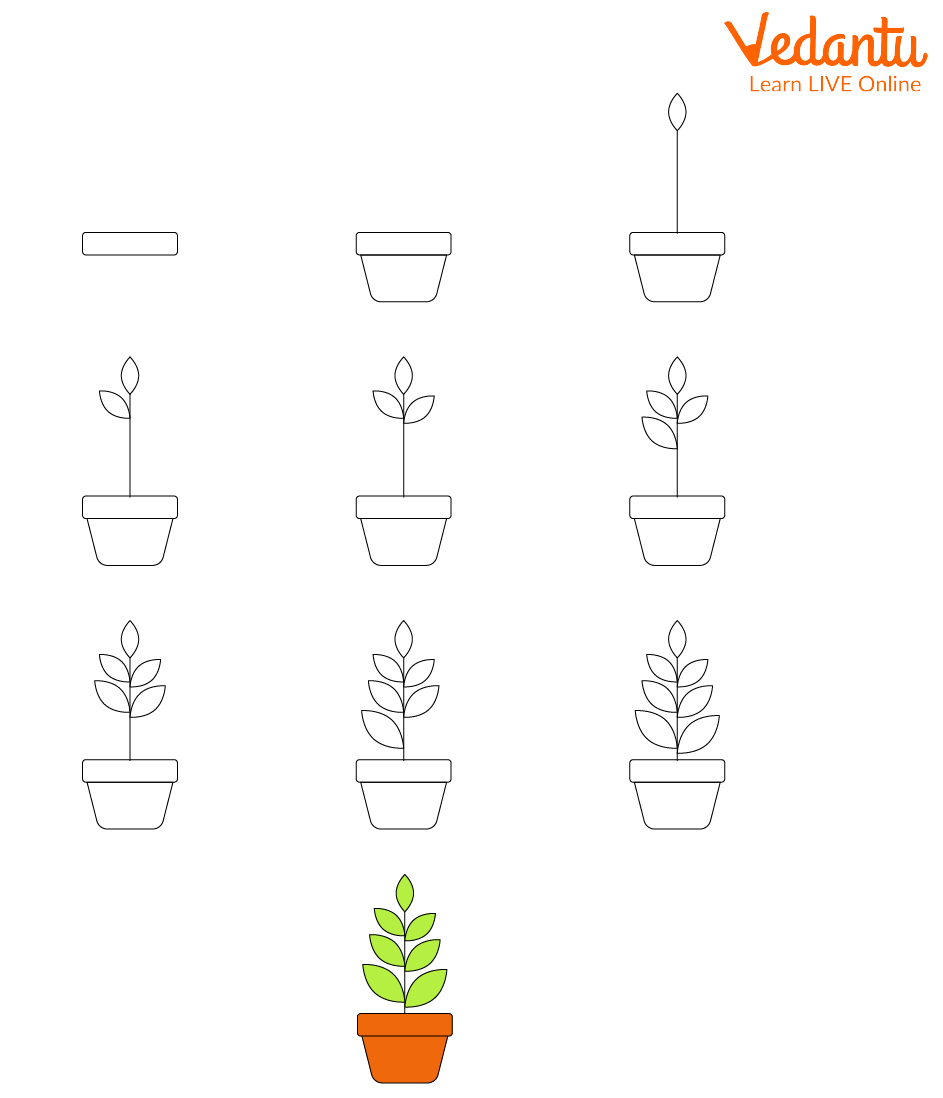
Steps of Drawing a Plant
This is how we can easily draw a plant.
Important Questions
1. What is coconut oil used for?
Ans: Coconut oil is mainly used for cooking purposes. The coconut oil is extracted from the coconut tree. The oil has many health benefits and intake of it is very useful.
2. Which part of the plant is used for making perfumes?
Ans: We use perfumes in our daily life. The flowers of different plants are used for making perfumes. Roses and Jasmines are some of the examples of flowers used for making perfumes.
Practise Questions
1. Plants take up ______ and give out ___________.
Ans: Carbon dioxide, Oxygen
2. Give an example of food from the root of the plant.
Almonds
Potato
Mango
Grapes
Ans: Potato
Key Features
Plants are living beings which prepare food by using sunlight. They grow in soil.
They act as helping hands for the survival of living beings in mother nature.
They have various uses such as they provide shelter, food, clothing, perfumes, clean air and paper.
Medicinal plants are those having medicinal value. They have many medicinal qualities and can be used to cure many diseases.


FAQs on Uses Of Plants For Class 2 Explained In Simple Words
1. What are the uses of plants for Class 2?
Plants are useful to us because they give us food, oxygen, wood, medicine, and many other important things. Plants help humans and animals in daily life in the following ways:
- They provide fruits, vegetables, and grains as food.
- They release oxygen during photosynthesis.
- They give wood for making furniture and houses.
- They provide medicines from different plant parts.
- They make our environment green and clean.
2. How do plants give us food?
Plants give us food by producing edible parts such as fruits, vegetables, seeds, and grains. Different parts of plants that we eat include:
- Fruits – apple, mango, banana
- Roots – carrot, radish
- Leaves – spinach, cabbage
- Seeds – rice, wheat, pulses
3. Why are plants important for oxygen?
Plants are important because they release oxygen into the air during photosynthesis. In this process:
- Plants take in carbon dioxide from the air.
- They use sunlight and water to make food.
- They release oxygen as a by-product.
4. What are the uses of plants in our daily life?
Plants are used in daily life for food, shelter, clothing, and medicine. Common uses of plants include:
- Wood from trees for furniture and houses.
- Cotton plants for making clothes.
- Paper made from tree pulp.
- Herbal medicines from plant leaves and roots.
5. How do plants help animals?
Plants help animals by providing food, oxygen, and shelter. They support animals in these ways:
- Grass and leaves are eaten by herbivores like cows and deer.
- Trees provide shelter and nesting places for birds.
- Plants maintain balance in the ecosystem.
6. What medicines do we get from plants?
Many medicines are obtained from different parts of medicinal plants. Examples include:
- Neem leaves used for skin problems.
- Tulsi used to treat cough and cold.
- Aloe vera used for burns and skin care.
7. What are some examples of plants that give us wood?
Trees like teak, sal, and pine give us wood. Wood from these trees is used for:
- Making furniture such as tables and chairs.
- Building houses and doors.
- Making paper and tools.
8. How do plants help in keeping the environment clean?
Plants help keep the environment clean by absorbing carbon dioxide and releasing oxygen. They also:
- Reduce air pollution by trapping dust.
- Prevent soil erosion with their roots.
- Keep the surroundings cool and green.
9. What do we get from cotton plants?
We get cotton fiber from cotton plants, which is used to make clothes. The cotton fibers are:
- Collected from the cotton bolls.
- Spun into thread.
- Woven into fabric.
10. Why are plants important for humans?
Plants are important for humans because they provide basic needs like food, oxygen, shelter, and medicine. They also:
- Support life through photosynthesis.
- Help maintain ecological balance.
- Provide raw materials for many industries.