




What Is Seed Dormancy Types Causes and Mechanism
Seed dormancy is a condition in which viable seeds do not germinate even when the environment seems favourable (adequate moisture, temperature, and oxygen). It ensures that seeds wait for the right moment to begin growing into new plants, helping them survive in changing or harsh conditions. In this article, we will discuss what is seed dormancy, the types of seed dormancy with examples, the causes of seed dormancy, and various ways of breaking seed dormancy. We will also explore the importance of sustaining plant populations.
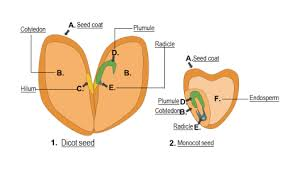
What is Seed Dormancy?
Seed dormancy refers to the state in which a seed is unable to germinate under ideal conditions. This mechanism prevents seeds from sprouting at inappropriate times, increasing their chance of survival. Dormancy can last from a few days to several years, depending on the plant species and environmental factors.
Also Read: Monocots and Dicots
Causes of Seed Dormancy
A seed may remain dormant due to a variety of reasons, which include:
Light Requirement: Some seeds need exposure to light or darkness before they can germinate.
Temperature: Extremely low or high temperatures can halt seed germination.
Hard Seed Coat: A thick, rigid seed coat can stop water or gases from entering the seed.
After-ripening Period: Some seeds are shed before their embryos are fully mature and need more time to complete internal development.
Germination Inhibitors: Certain chemicals within the seed (or its coat) can prevent germination until they are leached out or neutralised.
Immature Embryo: If the embryo has not fully developed, the seed remains dormant.
Impermeability to Water: Some coats do not allow water to enter.
Impermeability to Oxygen: The seed may fail to get sufficient oxygen for respiration.
Mechanically Resistant Seed Coat: Tough coats may restrict embryo expansion.
Presence of Concentrated Solutes: High solute levels within the seed can cause dormancy until they are diluted.
Types of Seed Dormancy with Examples
Seed dormancy can be broadly classified into three major types:
Innate Dormancy
Seeds are incapable of germination even if all ideal conditions are provided.
Example: Many Orchid seeds are released with immature embryos, requiring more time or specific fungal associations before they can germinate.
Enforced Dormancy
Seeds cannot germinate because of unfavourable external conditions such as limited moisture, incorrect temperature, or lack of oxygen.
Example: Seeds of certain desert plants that await rainfall for adequate moisture.
Induced Dormancy
Occurs when seeds have absorbed water but are then subjected to conditions highly unsuitable for germination, causing them to revert to a dormant state.
Example: Some cereal seeds can enter induced dormancy if they experience prolonged cold and damp conditions after partial imbibition.
Breaking Seed Dormancy
Breaking seed dormancy is essential for seed germination and plant propagation. It can be done through natural or artificial methods:
Natural Methods
Favourable environmental conditions: Adequate moisture and temperature can naturally break dormancy.
Weathering of seed coats: In nature, seed coats become permeable when exposed to soil microbes, temperature changes, or when passing through the digestive tracts of animals.
Completion of after-ripening: The embryo matures inside the seed over time.
Leaching of inhibitors: Rainwater or irrigation can wash away germination inhibitors present in the seed coat.
Inactivation of inhibitors: Exposure to cold, heat, or light can neutralise chemicals that prevent germination.
Production of growth hormones: Hormones like gibberellins can counteract the effect of inhibitors.
Artificial Methods
Scarification: Physically or chemically weakening the seed coat (e.g., by filing, chipping, or using abrasive material).
Hot water treatment: Immersing seeds in hot water to remove waxes and surface inhibitors.
Temperature treatments: Placing seeds in a controlled environment (cold or heat) to break dormancy.
Hydraulic pressure: Subjecting seeds to high pressure for a short time to weaken tough seed coats.
Acid treatment: Treating seeds with concentrated sulphuric acid to dissolve part of the coat.
Importance of Seed Dormancy
Below are 5 importance of seed dormancy (plus a bonus point):
Survival in harsh conditions: Dormant seeds withstand extreme climates (cold winters or hot summers) and survive droughts.
Synchronised germination: Seeds can wait for suitable conditions, leading to uniform growth when favourable weather arrives.
Seed dispersal: Delayed germination gives seeds more time for wind, water, or animal dispersal.
Extended viability: Seeds remain viable in the soil for many years, providing a continuous supply of new plants.
Avoidance of competition: By spreading out germination over time, seeds reduce overcrowding among seedlings.
Storage for future use: Dormant seeds can be stored safely and used by humans and animals at a later date.
Quick Quiz
Test your knowledge with the following questions:
1. Which type of dormancy occurs when seeds have absorbed water but still fail to germinate due to unfavourable conditions?
A. Innate dormancy
B. Enforced dormancy
C. Induced dormancy
D. None of the above
2. Which of the following is NOT a common cause of seed dormancy?
A. Immature embryo
B. Excess oxygen in the soil
C. Hard seed coat
D. Presence of germination inhibitors
3. Which artificial method of breaking seed dormancy involves using abrasive surfaces or acid to remove tough seed coats?
A. Stratification
B. Scarification
C. Induced germination
D. None of the above
Quiz Answers
C. Induced dormancy
B. Excess oxygen in the soil
B. Scarification
Related Topics


FAQs on Seed Dormancy in Plants
1. What is seed dormancy?
Seed dormancy is a condition in which a viable seed fails to germinate even under favorable environmental conditions. It is a survival mechanism that prevents premature germination. In seed dormancy:
- The embryo remains inactive.
- Growth is temporarily suspended.
- Specific internal or external cues are required to resume germination.
2. Why do seeds undergo dormancy?
Seeds undergo dormancy to ensure survival and proper timing of germination. Dormancy prevents seeds from sprouting during unsuitable environmental conditions. It helps in:
- Surviving extreme temperatures or drought.
- Allowing seed dispersal over distance and time.
- Synchronizing germination with favorable seasons.
3. What are the main types of seed dormancy?
The main types of seed dormancy are physical dormancy, physiological dormancy, and morphological dormancy. These types differ based on the cause of dormancy:
- Physical dormancy: Caused by a hard, impermeable seed coat (e.g., legumes).
- Physiological dormancy: Due to internal chemical inhibitors like abscisic acid.
- Morphological dormancy: Occurs when the embryo is underdeveloped at dispersal.
4. What is the difference between seed dormancy and seed quiescence?
Seed dormancy is an internal block to germination, whereas seed quiescence occurs due to lack of favorable external conditions. The key difference is:
- Dormancy: Seed does not germinate even if water, oxygen, and temperature are suitable.
- Quiescence: Seed germinates immediately once suitable conditions are provided.
5. How does seed dormancy help in plant survival?
Seed dormancy helps plant survival by delaying germination until conditions are optimal. This adaptation ensures:
- Avoidance of extreme climates such as frost or drought.
- Reduced competition among seedlings.
- Long-term persistence in soil as a seed bank.
6. What causes physiological seed dormancy?
Physiological seed dormancy is caused by internal biochemical factors that inhibit embryo growth. The main causes include:
- High levels of abscisic acid (ABA), a growth-inhibiting hormone.
- Low levels of gibberellins (GA), which promote germination.
- Metabolic immaturity of the embryo.
7. How can seed dormancy be broken?
Seed dormancy can be broken by treatments that remove physical or physiological barriers to germination. Common methods include:
- Scarification: Scratching or weakening the hard seed coat.
- Stratification: Exposing seeds to cold or warm moist conditions.
- Light exposure or temperature fluctuations.
- Chemical treatments like gibberellin application.
8. What is physical seed dormancy?
Physical seed dormancy is a type of dormancy caused by an impermeable seed coat that prevents water and oxygen entry. In this case:
- The seed coat is hard and water-resistant.
- Imbibition (water absorption) cannot occur.
- Mechanical or natural abrasion is required to allow germination.
9. What role do plant hormones play in seed dormancy?
Plant hormones regulate seed dormancy by controlling embryo growth and germination. The two main hormones involved are:
- Abscisic acid (ABA): Promotes and maintains dormancy.
- Gibberellins (GA): Break dormancy and stimulate germination.
10. Can you give an example of seed dormancy in plants?
An example of seed dormancy is seen in many leguminous plants such as peas and beans. These seeds exhibit physical dormancy due to a hard seed coat. For example:
- Seeds of Phaseolus (bean) require scarification.
- Some temperate trees require cold stratification before germination.



