




List of Scientific Names of Vitamins with Functions and Sources
Vitamins are crucial organic compounds that support our body’s growth, metabolism, immunity, and overall health. However, have you ever paused to think about all vitamin's names and why each vitamin is assigned a unique scientific name? These scientific names reflect their chemical composition, discovery history, and biological role. In this comprehensive guide, we’ll explore every essential vitamin, its official (scientific) name, key food sources, deficiency diseases, and a few bonus facts to help you understand the significance of these micronutrients better.
What Exactly are Vitamins?
Vitamins are micronutrients because our bodies require them in small amounts. They are vital for:
Metabolism: Helping break down nutrients to release energy.
Immunity: Supporting the immune system in defending the body against diseases.
Cellular & Tissue Repair: Assisting in the repair and growth of body tissues.
The word “vitamin” comes from “vita,” meaning life, and “amine,” hinting at the nitrogen-containing compounds some vitamins were first thought to be. Modern research shows that not all vitamins are amines, yet the term remains in use because of its historical significance.
Classification of Vitamins
One major aspect of vitamin scientific name and disease understanding involves classifying vitamins based on how they dissolve and function in the body:
Fat-soluble Vitamins:
Vitamin A
Vitamin D
Vitamin E
Vitamin K
These vitamins are stored in the body's fatty tissues and liver, so they do not need daily replenishment in the same way water-soluble vitamins do.
Water-soluble Vitamins:
Vitamin B complex (B1, B2, B3, B5, B6, B7, B9, B12)
Vitamin C
These vitamins generally need regular intake because they are not stored in large quantities and excess amounts are excreted through urine.
Also, read Vitamins and Minerals
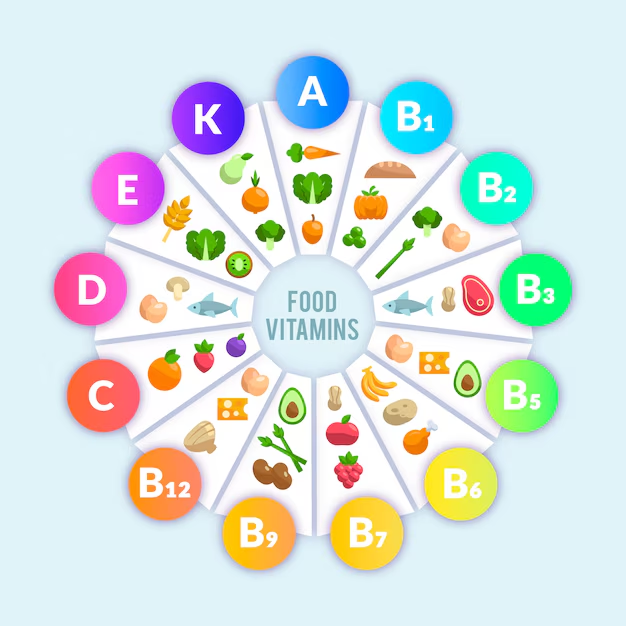
All Vitamins Names, Their Scientific Names, Sources & Deficiency Diseases
Below is a handy reference table of all vitamins name, their official scientific names, common food sources, common deficiency diseases, and approximate daily requirements. Incorporating these vitamins into your diet can help prevent many health concerns and maintain overall well-being.
Notes:
RAE: Retinol Activity Equivalents (for Vitamin A)
NE: Niacin Equivalents (for Vitamin B3)
DFE: Dietary Folate Equivalents (for Vitamin B9)
Notice how each vitamin’s discovery and chemistry contribute to its naming. For example, the scientific name of vitamin b12 is Cobalamin because of the cobalt ion in its structure. Similarly, the scientific name of vitamin C is Ascorbic Acid, pointing to its role in preventing scurvy (“scorbutus”). The scientific name of vitamin D is often listed as Calciferol or Cholecalciferol, emphasising its role in calcium absorption. The scientific name of vitamin E is Tocopherol, derived from the Greek words meaning “to bring forth offspring,” since it was initially linked with fertility. Also, read our detailed Balanced Diet to stay strong and healthy.
Why Scientific Names Matter
Consistency in Research: Using standard scientific names in academic articles helps avoid confusion caused by multiple common names.
Clear Chemical Identity: Scientific names reflect the compound’s structure, making it easier for researchers to pinpoint and study it.
Global Communication: Scientists and healthcare professionals worldwide rely on these names to share accurate information.
Unique Facts to Boost Your Knowledge
History of Discovery: The term “vitamine” was first proposed by Casimir Funk. Later, the “e” was dropped when it was found not all vitamins are amines.
Vitamin B Complex Family: When we say vitamin B scientific name, we often refer to a group (B1, B2, B3, B5, B6, B7, B9, B12). They work closely together to maintain cell metabolism.
Sunlight & Vitamin D: The body can synthesise vitamin D from cholesterol in the skin under sunlight exposure, which is why it’s called the “sunshine vitamin.”
Storage & Toxicity: Fat-soluble vitamins (A, D, E, and K) can accumulate in body fat, so excessive intake might lead to toxicity—a reminder that balance is key.
Fun Task: Create a Personal Vitamin Tracker
Step 1: List out everything you eat for a day or two.
Step 2: Identify which vitamins are predominantly present in each meal or snack.
Step 3: Note any gaps—are you missing any essential vitamins consistently?
Step 4: Try adding one new food rich in that missing vitamin.
See if you can find the vitamin scientific name and the disease risk you’re avoiding by improving your diet. This hands-on activity helps you become more aware of what you eat and how to balance your nutrition.
Interactive Quiz: Test Your Vitamin Knowledge
Which vitamin is known for helping our body absorb calcium for strong bones?
What is the scientific name of vitamin b12?
Scurvy is caused by the deficiency of which vitamin?
Name the scientific name of vitamin d commonly produced in your skin upon sunlight exposure.
Which vitamin is crucial for blood clotting and has vitamin k scientific name as Phytonadione?
Check Your Answers Below
Vitamin D (Calciferol or Cholecalciferol).
Cobalamin.
Vitamin C (Ascorbic Acid).
Cholecalciferol (a form of Vitamin D).
Vitamin K (Phytonadione).


FAQs on Scientific Names and Chemical Forms of Vitamins
1. What are the scientific names of all vitamins?
The scientific names of vitamins are specific chemical names assigned to each vitamin based on their structure and composition.
- Vitamin A – Retinol
- Vitamin B1 – Thiamine
- Vitamin B2 – Riboflavin
- Vitamin B3 – Niacin
- Vitamin B5 – Pantothenic acid
- Vitamin B6 – Pyridoxine
- Vitamin B7 – Biotin
- Vitamin B9 – Folic acid
- Vitamin B12 – Cobalamin
- Vitamin C – Ascorbic acid
- Vitamin D – Calciferol
- Vitamin E – Tocopherol
- Vitamin K – Phylloquinone
2. What is the scientific name of Vitamin A?
The scientific name of Vitamin A is Retinol. It is a fat-soluble vitamin essential for:
- Normal vision (especially night vision)
- Healthy skin and epithelial tissues
- Proper immune system function
3. What is the scientific name of Vitamin B complex?
The Vitamin B complex consists of multiple vitamins, each with its own scientific name.
- B1 – Thiamine
- B2 – Riboflavin
- B3 – Niacin
- B5 – Pantothenic acid
- B6 – Pyridoxine
- B7 – Biotin
- B9 – Folic acid
- B12 – Cobalamin
4. What is the scientific name of Vitamin C?
The scientific name of Vitamin C is Ascorbic acid. It is a water-soluble vitamin that functions as:
- An antioxidant
- A cofactor in collagen synthesis
- An enhancer of iron absorption
5. What is the scientific name of Vitamin D?
The scientific name of Vitamin D is Calciferol. The two major forms are:
- Vitamin D2 – Ergocalciferol
- Vitamin D3 – Cholecalciferol
6. What is the scientific name of Vitamin E?
The scientific name of Vitamin E is Tocopherol. It is a fat-soluble antioxidant that:
- Protects cell membranes from oxidative damage
- Prevents lipid peroxidation
- Supports immune function
7. What is the scientific name of Vitamin K?
The scientific name of Vitamin K is Phylloquinone. It is essential for:
- Blood clotting (synthesis of clotting factors)
- Bone metabolism
8. What is the difference between chemical names and common names of vitamins?
The common name of a vitamin is its alphabetical label, while the chemical name describes its molecular structure.
- Common name: Vitamin C
- Chemical name: Ascorbic acid
- Common name: Vitamin B1
- Chemical name: Thiamine
9. Why do vitamins have scientific names?
Vitamins have scientific names because each vitamin is a specific chemical compound with a defined molecular structure. Scientific names help to:
- Identify the exact compound
- Avoid confusion between similar vitamins
- Standardize usage in biology and medical research
10. Are all vitamins chemically similar?
No, vitamins are chemically different compounds grouped together because they are essential micronutrients. They are classified into:
- Fat-soluble vitamins – A, D, E, K
- Water-soluble vitamins – B complex and C



