




What Is the Structure and Function of the Plasma Membrane
The concept of plasma membrane is essential in biology and helps explain real-world biological processes and exam-level questions effectively.
Understanding Plasma Membrane
Plasma membrane refers to the thin, flexible boundary that surrounds every living cell. It acts as a selective barrier, controlling movement of substances in and out of the cell. This concept is important in areas like cell structure, selective permeability, and transport mechanisms in biology.
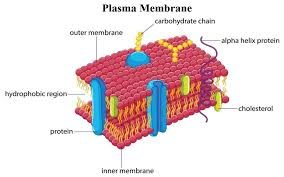
Structure of Plasma Membrane
The plasma membrane is built on the fluid mosaic model. It consists of a double layer of phospholipids with proteins and carbohydrates scattered throughout. This structure not only creates flexibility but also allows the cell to perform various essential functions.
- Double phospholipid bilayer (hydrophilic heads outward, hydrophobic tails inward)
- Proteins (integral and peripheral) embedded or attached
- Cholesterol molecules providing stability and fluidity
- Carbohydrate chains attached to proteins and lipids (form glycocalyx)
Functions of Plasma Membrane
- Acts as a protective barrier between the cell and its environment
- Regulates transport of nutrients, ions, and wastes in and out of the cell
- Helps cells communicate through signal transduction and receptor proteins
- Maintains homeostasis and internal cell environment
- Supports cell recognition, adhesion, and immune response
- Provides attachment points for cytoskeleton (cell shape and structure)
- Facilitates processes like endocytosis and exocytosis
Components of Plasma Membrane
Here’s a helpful table to understand plasma membrane better:
Plasma Membrane Table
| Component | Role | Example |
|---|---|---|
| Phospholipids | Form the bilayer; base of membrane structure | Lipid molecules with hydrophilic heads and hydrophobic tails |
| Proteins | Transport, receptor, enzymatic, adhesion | Channel proteins, carrier proteins, glycoproteins |
| Cholesterol | Maintains membrane fluidity and stability | Animal cell membranes |
| Carbohydrates | Cell recognition, communication | Glycolipids, glycoproteins |
Special Features and Types
In muscle cells, the plasma membrane is called the sarcolemma. Different cells may have specialized plasma membranes to suit their function. For example, microvilli in intestinal cells increase absorption area, while cilia in respiratory cells help move mucus.
Difference Between Plasma Membrane and Cell Membrane
| Parameter | Plasma Membrane | Cell Membrane |
|---|---|---|
| Definition | Flexible boundary of all cells | Usually interchangeable with plasma membrane in most texts |
| Presence | Found in all cells | Refers mostly to the outermost layer in animal cells |
| Other Layers | May have cell wall outside it (plants/bacteria) | Not always the outermost boundary (especially in plants/fungi) |
Practice Questions
- What is the main function of plasma membrane?
- Draw a labelled diagram of plasma membrane and explain its structure.
- Differentiate between plasma membrane and cell wall.
- List the main components of plasma membrane.
Common Mistakes to Avoid
- Confusing plasma membrane with cell wall (cell wall is only found in plants, bacteria, fungi; plasma membrane is found in all cells)
- Thinking plasma membrane is rigid (it is semi-fluid and flexible)
- Assuming all substances can pass through easily (it is selectively permeable)
Real-World Applications
The concept of plasma membrane is used in fields like medicine (drug delivery, cell targeting), agriculture (plant cell modification), biotechnology (genetic engineering), and environmental science (understanding pollution impact on cells). Vedantu helps students relate such topics to practical examples in daily life.
In this article, we explored plasma membrane, its key processes, real-life significance, and how to solve questions based on it. To learn more and build confidence, keep practicing with Vedantu.
- Difference Between Cell Membrane and Plasma Membrane
- Cell Structure and Function
- Fluid Mosaic Model Theory
- Plant Cell
- Cytoplasm Structure and Function
- Ribosomes
- Unicellular Organisms
- Discovery of Cells
- Difference Between Plant Cell and Animal Cell
- Cell Theory
- Biomolecules


FAQs on Plasma Membrane Structure and Functions in Cells
1. What is the plasma membrane?
The plasma membrane is a thin, flexible barrier that surrounds the cell and controls what enters and leaves it. It is primarily made of a phospholipid bilayer with embedded proteins, cholesterol, and carbohydrates. This structure separates the internal cellular environment from the external surroundings and helps maintain cell homeostasis.
2. What is the structure of the plasma membrane?
The structure of the plasma membrane follows the fluid mosaic model, consisting of a phospholipid bilayer with proteins embedded within it. Its main components include:
- Phospholipid bilayer – forms the basic framework with hydrophilic heads and hydrophobic tails
- Membrane proteins – integral and peripheral proteins for transport and signaling
- Cholesterol – maintains membrane fluidity and stability
- Carbohydrate chains – attached to proteins or lipids for cell recognition
This dynamic structure allows flexibility and selective permeability.
3. What is the function of the plasma membrane?
The primary function of the plasma membrane is to regulate the movement of substances into and out of the cell. Its key functions include:
- Selectively permeable barrier – controls transport of molecules
- Cell communication – contains receptor proteins for signaling
- Structural support – anchors the cytoskeleton
- Cell recognition – uses glycoproteins for identification
These functions are essential for maintaining cellular integrity and survival.
4. Why is the plasma membrane called selectively permeable?
The plasma membrane is called selectively permeable because it allows some substances to pass through while restricting others. For example:
- Small nonpolar molecules like oxygen diffuse freely
- Water moves through aquaporins or by osmosis
- Large or charged molecules require transport proteins
This selective transport helps maintain proper internal conditions within the cell.
5. What is the fluid mosaic model of the plasma membrane?
The fluid mosaic model describes the plasma membrane as a flexible bilayer of lipids with proteins embedded like a mosaic. In this model:
- Fluid refers to the lateral movement of phospholipids and proteins
- Mosaic refers to the patchwork arrangement of proteins
Proposed by Singer and Nicolson in 1972, this model explains membrane flexibility and functionality.
6. What are the main components of the plasma membrane?
The main components of the plasma membrane are phospholipids, proteins, cholesterol, and carbohydrates. Specifically:
- Phospholipids – form the bilayer structure
- Proteins – function in transport and signaling
- Cholesterol – regulates membrane fluidity in animal cells
- Carbohydrates – aid in cell recognition and adhesion
Together, these components ensure membrane stability and function.
7. How does transport occur across the plasma membrane?
Transport across the plasma membrane occurs through passive and active mechanisms depending on energy use. The main types include:
- Passive transport – diffusion, osmosis, and facilitated diffusion (no ATP required)
- Active transport – moves substances against the gradient using ATP
- Vesicular transport – endocytosis and exocytosis for large molecules
These processes regulate nutrient uptake and waste removal.
8. What is the difference between the plasma membrane and the cell wall?
The plasma membrane is a flexible, selectively permeable lipid bilayer, whereas the cell wall is a rigid outer layer that provides structural support. Key differences include:
- Plasma membrane is present in all cells; cell wall is found in plants, fungi, and bacteria
- Plasma membrane controls transport; cell wall provides protection and shape
- Cell wall is made of cellulose (plants), chitin (fungi), or peptidoglycan (bacteria)
Both structures work together in plant cells for protection and regulation.
9. What role do proteins play in the plasma membrane?
Proteins in the plasma membrane perform transport, signaling, and structural functions. They are classified as:
- Integral proteins – embedded within the bilayer for transport and receptors
- Peripheral proteins – attached to the surface for support or signaling
Examples include channel proteins, carrier proteins, and receptor proteins that enable communication and molecule movement.
10. Why is the plasma membrane important for cell survival?
The plasma membrane is essential for cell survival because it maintains internal balance and protects cellular components. Its importance includes:
- Maintaining homeostasis by regulating ion and nutrient levels
- Preventing harmful substances from entering
- Allowing communication with other cells
- Supporting cellular structure
Without a functional plasma membrane, a cell cannot survive or function properly.



