









Ribosomes Structure and Function Explained for NEET Biology
Ribosomes are essential cell organelles responsible for protein synthesis in all living organisms. Understanding the structure, types, and functions of ribosomes is crucial for NEET aspirants, as questions about these cell factories often appear in the exam. Mastery of this topic helps build a strong foundation in cell biology, which is vital for both direct questions and conceptual connections with other chapters.
What are Ribosomes?
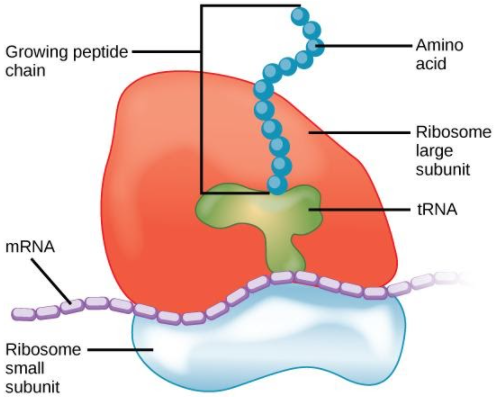
Ribosomes are small, dense organelles found in both prokaryotic and eukaryotic cells. They are made up of ribonucleic acid (rRNA) and proteins. Ribosomes act as the site of protein synthesis, where amino acids are assembled into proteins based on the genetic code carried by messenger RNA (mRNA). In simple terms, ribosomes are the molecular machines that translate genetic instructions into functional proteins, supporting nearly every cellular process.
Core Fundamentals of Ribosomes
Structure of Ribosomes
Ribosomes consist of two subunits - a larger subunit and a smaller subunit. These subunits are composed of rRNA and proteins, and their sizes are measured in Svedberg units (S), which refer to their sedimentation rates during centrifugation. The subunits join together during protein synthesis and separate when no longer active.
Location in Cells
Ribosomes are found floating freely in the cytoplasm or attached to the surface of the rough endoplasmic reticulum (RER) in eukaryotic cells. Free ribosomes generally synthesize proteins used within the cell, while those attached to RER make proteins for secretion or for use in cell membranes.
Types of Ribosomes
- 70S ribosomes: Found mainly in prokaryotes (bacteria and archaea), and also in mitochondria and chloroplasts of eukaryotic cells. Made up of a 50S large subunit and a 30S small subunit.
- 80S ribosomes: Found in the cytoplasm of eukaryotic cells. Made up of a 60S large subunit and a 40S small subunit.
Important Related Sub-Concepts
Ribosomal RNA (rRNA) and Proteins
Ribosomes are made of rRNA and proteins. rRNA molecules form the structural and catalytic core of the ribosome, while ribosomal proteins provide structural support and help stabilize rRNA conformations necessary for protein synthesis.
Polysomes (Polyribosomes)
When several ribosomes attach to a single mRNA strand and translate it simultaneously, this structure is called a polysome or polyribosome. This allows rapid and efficient production of many copies of a protein from one mRNA molecule.
Protein Synthesis and Ribosomes
Ribosomes facilitate translation, the process where genetic information from mRNA is read to assemble amino acids into a specific protein chain. This process has three main stages: initiation, elongation, and termination, all carried out on the ribosome surface.
Key Principles and Relationships
While ribosomes do not involve complex mathematical formulas, understanding a few principles and relationships is important for NEET:
- Svedberg Unit (S): The S value does not add up arithmetically (for example, 50S + 30S gives a 70S ribosome, not 80S) because it is based on sedimentation rate, not mass.
- The relationship between ribosome structure and function is direct: the two subunits come together during translation and separate after protein synthesis is finished.
- Antibiotics such as tetracycline and chloramphenicol act by specifically targeting bacterial (70S) ribosomes, which is different from eukaryotic (80S) ribosomes, making antibiotic action possible.
Characteristics and Features of Ribosomes
- Consist of rRNA and proteins
- Found in both prokaryotic and eukaryotic cells
- Exist as two subunits: one large and one small
- Can be free in the cytoplasm or bound to the rough ER
- Are non-membranous organelles
Why Are Ribosomes Important for NEET?
Ribosomes are one of the most frequently tested topics in NEET Biology, especially within Cell Structure and Function. Conceptual questions often deal with their differences in prokaryotes vs. eukaryotes, their roles in protein synthesis, and their medical importance (such as how antibiotics target ribosomes). Having a clear understanding of ribosome structure and function helps students answer questions not only about ribosomes themselves but also about protein synthesis and cell organisation, which are fundamental for cellular biology and related topics in the NEET syllabus.
How to Study Ribosomes Effectively for NEET
- First, understand the basic definition, structure, and types of ribosomes. Use diagrams to memorise subunit compositions of 70S and 80S ribosomes.
- Study the function of ribosomes in protein synthesis by watching animations or drawing the steps involved in translation.
- Remember key differences between prokaryotic and eukaryotic ribosomes with a comparison table.
- Link the topic to other cell organelles, especially the endoplasmic reticulum and protein trafficking.
- Regularly solve NEET-based MCQs and previous years’ questions on ribosomes and related processes.
- Revise key concepts, diagrams, and differences near exam time using summary notes.
Common Mistakes Students Make in Ribosomes
- Confusing 70S and 80S ribosome types and their locations
- Misunderstanding the meaning of 'S' (Svedberg units are not additive)
- Forgetting that ribosomes are non-membranous
- Missing the link between ribosomes and antibiotic action
- Not revising diagrams or skipping visual learning
Quick Revision Points on Ribosomes for NEET
- Ribosomes are the site of protein synthesis in all living cells.
- Prokaryotes have 70S ribosomes (50S + 30S subunits); eukaryotes have 80S ribosomes (60S + 40S subunits).
- Ribosomes are non-membranous and made of rRNA and proteins.
- Free ribosomes synthesize proteins for internal use; RER-bound ribosomes make proteins for export or organelles.
- Polysomes allow multiple ribosomes to translate a single mRNA molecule at once.
- Antibiotics can specifically inhibit bacterial ribosomes, not eukaryotic ones.
- 'S' in 70S/80S stands for Svedberg units, related to sedimentation rate, not size or mass.
Comparison of 70S and 80S Ribosomes
| Property | 70S Ribosomes | 80S Ribosomes |
|---|---|---|
| Found In | Prokaryotes, mitochondria, chloroplasts | Eukaryotic cell cytoplasm |
| Subunits | 50S (large) + 30S (small) | 60S (large) + 40S (small) |
| Sensitivity to Antibiotics | Yes, many antibiotics target 70S | No, not affected by classic antibiotics |
| Function | Protein synthesis in prokaryotes and some organelles | Protein synthesis in eukaryotic cytoplasm |
This table helps you quickly compare the two types of ribosomes, an essential point that is frequently asked in NEET examinations.


FAQs on Ribosomes in Biology: Essential Guide for NEET Aspirants
1. What are ribosomes and what is their main function in cells?
Ribosomes are tiny molecular machines responsible for synthesising proteins in all living cells, essential for NEET exam understanding.
- Ribosomes help build proteins from amino acids based on genetic instructions.
- Located either freely in the cytoplasm or attached to the endoplasmic reticulum.
- Vital for cell growth and repair processes.
- Found in both prokaryotic and eukaryotic cells.
- Their main role in the NEET syllabus is translating mRNA into proteins, a process known as protein synthesis.
2. Where are ribosomes found in a cell?
Ribosomes are located both freely in the cytoplasm and attached to certain cell organelles in NEET-relevant topics.
- Free ribosomes: float in the cytoplasm
- Bound ribosomes: attached to the rough endoplasmic reticulum (RER)
- Also found inside mitochondria and chloroplasts in eukaryotic cells
- Present in both prokaryotic and eukaryotic cells
3. What is the structure of ribosomes according to the NEET syllabus?
Ribosomes are composed of two unequal subunits made of ribosomal RNA (rRNA) and proteins.
- Each ribosome has a large and a small subunit
- In prokaryotes: 70S ribosomes (50S large + 30S small)
- In eukaryotes: 80S ribosomes (60S large + 40S small)
- Subunits are measured in Svedberg units (S), reflecting their size and density.
- Both subunits are essential for protein synthesis in cells.
4. Why are ribosomes called protein factories?
Ribosomes are called protein factories because they assemble amino acids into proteins based on genetic codes from DNA.
- They translate messenger RNA (mRNA) into functional proteins.
- Actively involved in protein synthesis, a central process in the NEET Biology syllabus.
- All cell activities depend on the proteins made by ribosomes.
- Essential for growth, repair, and metabolism in living organisms.
5. What is the difference between prokaryotic and eukaryotic ribosomes?
Prokaryotic and eukaryotic ribosomes differ in their size, structure, and rRNA composition, important for NEET questions.
- Prokaryotic ribosomes: 70S (50S + 30S subunits)
- Eukaryotic ribosomes: 80S (60S + 40S subunits)
- Eukaryotic ribosomes are larger and contain more rRNA and proteins.
- Both perform the same protein synthesis function.
6. Are ribosomes membrane-bound organelles?
No, ribosomes are not membrane-bound organelles; they are the only cell structures involved in protein synthesis without a surrounding membrane.
- Unlike nucleus, mitochondria, and other organelles, ribosomes lack a lipid bilayer.
- Present in the cytoplasm or attached to the rough endoplasmic reticulum.
- Their non-membrane nature is a key NEET Biology fact.
7. How are ribosomes involved in protein synthesis?
Ribosomes play a central role in protein synthesis by decoding genetic information and linking amino acids.
- Bind to mRNA (messenger RNA).
- Use tRNA (transfer RNA) to add correct amino acids.
- Join amino acids to form polypeptide chains.
- Complete process is called translation.
- Directly examined in NEET Biology and genetics sections.
8. Why are ribosomes important for survival?
Ribosomes are vital for cell survival, as they create proteins needed for all cellular activities.
- Produce enzymes, hormones, structural proteins.
- Support growth, tissue repair, and immune function.
- No cell can function without active ribosomes.
- Knowledge of this is frequently tested in NEET Biology exams.
9. What are the types of ribosomes found in human cells?
Human cells contain two main types of ribosomes based on their location, relevant for NEET preparation.
- Cytoplasmic ribosomes: 80S type, in the cytoplasm and on RER
- Mitochondrial ribosomes: similar to prokaryotic (70S) ribosomes, inside mitochondria
- Both types are essential for cell function and protein production
10. Who discovered ribosomes and when?
Ribosomes were discovered by George Emil Palade in 1953, a key historical NEET Biology fact.
- Called Palade particles initially.
- Discovery helped scientists understand protein synthesis.
- Plays a foundational role in cell biology and genetic studies.
11. Why are ribosomes often called Palade particles?
Ribosomes are frequently called Palade particles in honor of their discoverer George Emil Palade.
- Named after the scientist who first identified them
- Recognised for their role in protein synthesis
- Understanding of this term is useful for NEET exam preparation
12. Are ribosomes present in both plant and animal cells?
Yes, ribosomes are present in both plant and animal cells, making them a universal feature in NEET exam questions.
- Essential for protein synthesis in all living organisms
- Found in the cytoplasm, on RER, and inside organelles
- Their basic structure and function are conserved across plant and animal kingdoms
13. What happens if ribosomes do not function properly?
If ribosomes malfunction, cells cannot make essential proteins, leading to serious cellular and organismal issues.
- Impaired cell growth and repair
- Failure in enzyme and hormone production
- Can result in genetic diseases and developmental disorders
- Highlighted in NEET for understanding the importance of protein synthesis
