




What are the functions of tapetum in pollen development and microsporogenesis
The concept of functions of tapetum is essential in biology and helps explain real-world biological processes and exam-level questions effectively. Understanding the role of tapetum is especially important for students preparing for class 12 board exams and medical entrance tests such as NEET.
Understanding Functions of Tapetum
Functions of tapetum refer to the various key roles played by the specialized nutritive cell layer found inside the anther of flowering plants. This concept is important in areas like pollen grain development, plant reproduction, and plant anatomy. In animals, a similar structure called the tapetum lucidum is found in the eyes of some night-vision adapted species.
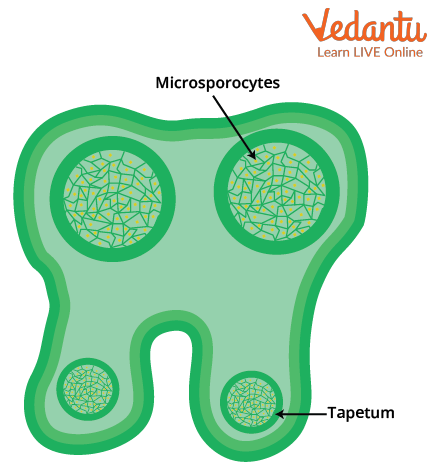
Functions of Tapetum in Plants
The tapetum in plants is the innermost layer of the anther wall, directly surrounding the developing microspores (pollen grains). Its main functions include:
- Supplying nutrition to the developing microspores or pollen grains.
- Providing precursors for pollen wall (exine) formation, especially via secretion of sporopollenin (a durable biopolymer).
- Production and secretion of Ubisch bodies (or orbicules) that contribute to exine (outer wall) formation.
- Contributing pollenkitt—a sticky substance aiding pollen dispersal and recognition on the stigma.
- Secretion of enzymes like callase, which helps in separating pollen tetrads by breaking down callose walls.
- Producing proteins (exine proteins) crucial for pollen–stigma recognition during pollination.
Disintegration of tapetal cells at maturity provides further materials for pollen coat formation. An unhealthy or defective tapetum usually leads to pollen sterility and low fertility.
Types of Tapetum
Tapetum is generally classified into two main types based on behavior and function:
| Type | Description | Example |
|---|---|---|
| Glandular (Secretory) Tapetum | Tapetal cells remain in place, secrete materials into the locule | Angiosperms (most flowering plants) |
| Amoeboid (Plasmodial) Tapetum | Tapetal cells fuse and their protoplast invades the anther locule | Some aquatic/wetland plants (e.g., Alisma, Tradescantia) |
Mechanism of Tapetum Function
The basic mechanism involves continuous uptake and re-mobilization of nutrients, enzymes, and regulatory molecules by tapetal cells. These substances are then secreted toward developing microspores, promoting proper development, wall formation, and eventual pollen release.
Tapetum and Ubisch Granules
A notable function of the tapetum is the production of Ubisch bodies (orbicules). These are tiny, sporopollenin-coated particles secreted into the anther locule, helping in the formation and reinforcement of the pollen grain wall. This process is vital for pollen protection and viability.
Functions of Tapetum Lucidum (Eye)
Tapetum lucidum is the reflective layer found in the eyes of nocturnal animals (e.g., cats, dogs, deer), enhancing their night vision by reflecting light back through the retina. This is different from plant tapetum, but the function keyword sometimes overlaps in exam questions. In animals, it improves the ability to see in low light.
Functions of Tapetum – Quick Table Summary
Here’s a helpful table to compare tapetum in plants and animals:
| Feature | Plant Tapetum | Animal Tapetum (Eye) |
|---|---|---|
| Location | Anther, surrounding microspores | Behind retina of eye |
| Main Function | Nourish developing pollen, pollen wall formation | Enhance night vision by reflecting light |
| Example | Flowering plants | Cat, dog, deer |
Practice Questions
- List any four functions of tapetum in the anther.
- Explain the significance of tapetum in pollen wall formation.
- Name the two types of tapetum and mention their differences.
- What would happen if the tapetum is non-functional?
- What is the function of tapetum lucidum in animal eyes?
Common Mistakes to Avoid
- Confusing tapetum in plants with the tapetum lucidum in animal eyes.
- Forgetting tapetum's role in both nutrition and pollen wall formation.
- Not mentioning the role of tapetum in Ubisch body and pollenkitt production in exams.
Real-World Applications
The concept of functions of tapetum is used in fields like plant breeding, biotechnology, and crop fertility research. Defective tapetum often leads to male sterility in crops, which is used in hybrid seed production. Vedantu helps students relate such topics to practical examples they may encounter in labs or competitive exams.
In this article, we explored functions of tapetum, its key processes, real-life significance, and how to solve questions based on it. To learn more and build confidence, keep practicing with Vedantu.
What is Tapetum?
Anther
Pollen Grains
Stamen
Plant Tissues
Types of Pollination
Flower
Sexual Reproduction in Plants
Microsporogenesis
Cells
Plant Cell


FAQs on Functions of Tapetum in Flowering Plants
1. What is the function of tapetum in plants?
The primary function of the tapetum is to nourish and support the development of microspores (pollen grains) inside the anther. It is the innermost layer of the microsporangium and plays a vital role in pollen formation.
- Supplies nutrients to developing microspore mother cells and pollen grains
- Produces enzymes like callase to separate microspores
- Contributes materials for pollen wall (exine) formation
- Forms Ubisch bodies that help in sporopollenin deposition
2. What is tapetum in biology?
In biology, the tapetum is the innermost nutritive layer of cells in the anther that surrounds the developing pollen grains. It is part of the anther wall and plays a crucial role during microsporogenesis.
- Located inside each pollen sac (microsporangium)
- Usually multinucleate or polyploid
- Degenerates after pollen maturation
3. Why is tapetum important for pollen development?
The tapetum is important because it provides essential nutrients and materials required for proper pollen development. Without it, pollen grains become sterile or malformed.
- Supplies proteins, lipids, and carbohydrates
- Secretes precursors of sporopollenin for exine formation
- Releases enzymes that free microspores from tetrads
4. How does tapetum help in exine formation?
The tapetum helps in exine formation by supplying precursors of sporopollenin, the main component of the pollen wall. Sporopollenin is deposited on the outer surface of developing microspores.
- Produces lipid-rich substances
- Forms Ubisch bodies (orbicules) that transport sporopollenin
- Ensures thick, resistant exine development
5. What are the types of tapetum?
There are two main types of tapetum: secretory (glandular) tapetum and amoeboid (plasmodial) tapetum. These types differ in structure and mode of nourishment.
- Secretory tapetum: Cells remain intact and secrete nutrients into the anther cavity
- Amoeboid tapetum: Cell walls break down and cytoplasm surrounds developing microspores
6. What happens if the tapetum does not function properly?
If the tapetum does not function properly, it leads to defective or sterile pollen grains. This condition often results in male sterility in plants.
- Insufficient nutrient supply
- Improper exine formation
- Failure of microspore separation
7. Does tapetum produce enzymes during microsporogenesis?
Yes, the tapetum produces important enzymes such as callase during microsporogenesis. Callase dissolves the callose wall surrounding microspore tetrads.
- Helps separate individual microspores
- Ensures proper pollen grain release
- Supports normal pollen maturation
8. Where is tapetum located in the anther?
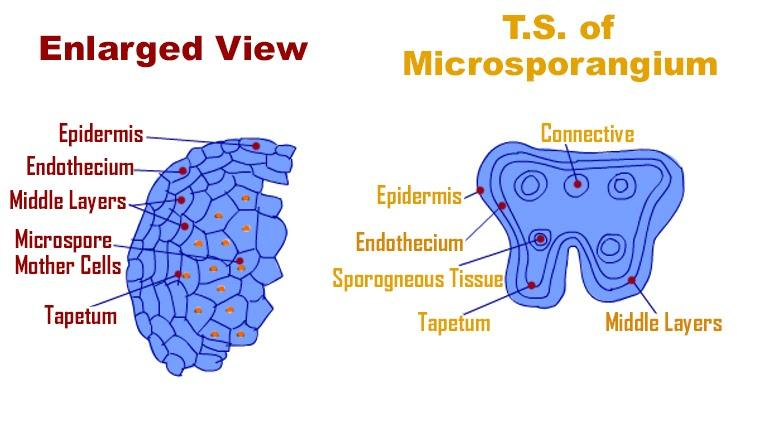
The tapetum is located as the innermost layer of the anther wall, directly surrounding the pollen sac (microsporangium). It lies just inside the middle layers.
- Anther wall layers (outer to inner): epidermis, endothecium, middle layers, tapetum
- Encircles developing microspore mother cells
- Degenerates after pollen maturation
9. How does tapetum contribute to plant reproduction?
The tapetum contributes to plant reproduction by ensuring the formation of viable and functional pollen grains. Healthy pollen is essential for fertilization.
- Nourishes developing male gametophytes
- Helps form protective pollen wall
- Supports pollen maturation and viability
10. What is the difference between secretory and amoeboid tapetum?
The main difference between secretory and amoeboid tapetum lies in whether the tapetal cells remain intact or break down during pollen development.
- Secretory tapetum: Cells remain cellular and release nutrients by secretion
- Amoeboid tapetum: Cell walls dissolve and cytoplasm forms a multinucleate plasmodium around microspores
- Secretory type is more common in angiosperms



