




What is Ecology Definition Levels of Organization and Ecosystem Function
Ecology is the branch of biology that examines how organisms interact with each other and their physical surroundings. It encompasses the study of individual organisms, populations, communities, ecosystems, and the biosphere. By analysing these interactions, ecologists aim to understand the distribution and abundance of life on Earth.
Biotic and Abiotic Factors
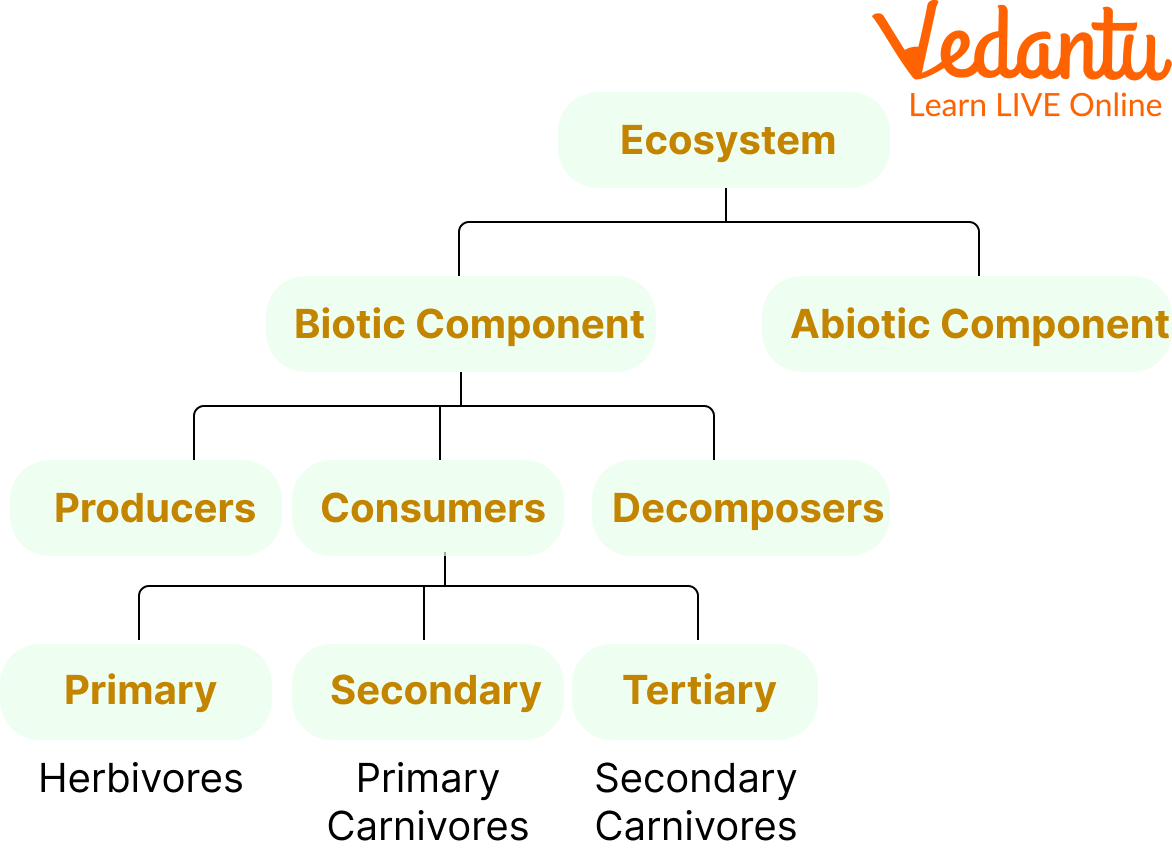
In ecology, the environment is composed of both living (biotic) and non-living (abiotic) components.
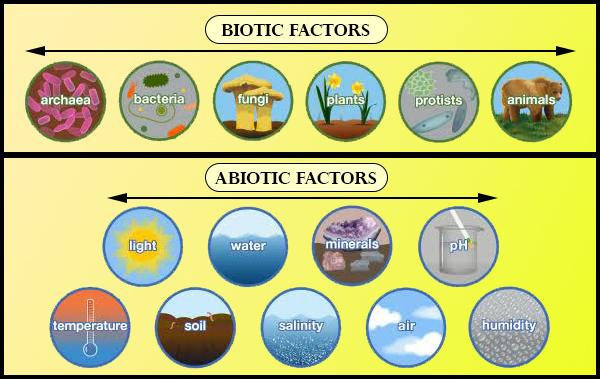
Biotic Factors: These include all living organisms within an ecosystem, such as plants, animals, fungi, bacteria, and protists. They interact in various ways, including predation, competition, symbiosis, and mutualism.
Also Read: Biotic Components
Abiotic Factors: These are the non-living physical and chemical elements of an environment. Examples include sunlight, temperature, water, air, minerals, and soil. Abiotic factors significantly influence the survival and reproduction of organisms.
Also Read: Abiotic Component
Types of Ecology
Ecology is a broad field with several sub-disciplines, each focusing on different aspects of organisms and their environments.
1. Organismal Ecology: This branch studies individual organisms' behaviours, physiology, and morphology in response to environmental challenges. It examines how organisms adapt to their abiotic and biotic environments.
2. Population Ecology: Focusing on groups of individuals of the same species, population ecology investigates factors affecting population size, density, distribution, and growth over time. It also explores interactions such as competition and predation.
3. Community Ecology: This area examines how different species interact within a community and the consequences of these interactions. It studies patterns such as species diversity, community structure, and the dynamics of predator-prey relationships.
4. Ecosystem Ecology: Ecosystem ecology looks at energy flow and nutrient cycling among the various biotic and abiotic components. It aims to understand how ecosystems function and maintain their productivity.
5. Landscape Ecology: This field studies the spatial patterns and ecological processes across large geographic areas. It focuses on how landscape structure affects the abundance and distribution of organisms.
6. Global Ecology: Also known as biosphere ecology, it examines ecological phenomena at the planetary scale. This includes studying global biogeochemical cycles and the effects of climate change on biodiversity.
7. Molecular Ecology: Integrating molecular biology with ecological studies, this branch explores genetic relationships within and between populations. It aids in understanding evolutionary patterns and processes.
Importance of Ecology
Ecology plays a crucial role in enhancing our understanding of the natural world and addressing environmental challenges.
1. Conservation of Biodiversity: By understanding species interactions and their habitats, ecologists can develop strategies to protect endangered species and preserve biodiversity.
2. Natural Resource Management: Ecological knowledge guides the sustainable management of resources like forests, fisheries, and water systems, ensuring their availability for future generations.
3. Pollution Control: Ecologists study how pollutants affect ecosystems and devise methods to mitigate their impact, leading to healthier environments.
4. Climate Change Mitigation: Understanding ecological processes helps predict the impacts of climate change and develop strategies to combat its effects on ecosystems.
5. Ecosystem Services: Ecology highlights the benefits ecosystems provide, such as pollination, water purification, and soil fertility, which are essential for human survival.
Examples of Ecology in Action
1. Human Ecology: This examines the relationships between humans and their environments, focusing on how cultural and social factors influence ecological interactions.
2. Niche Construction: Organisms often modify their environments to enhance their survival. For example, beavers build dams, creating wetlands that benefit various species.
3. Urban Ecology: Studying ecological processes in urban settings helps in designing cities that support both human well-being and biodiversity.
4. Restoration Ecology: This involves restoring degraded ecosystems to their natural state, such as reforestation projects or wetland rehabilitation.


FAQs on Ecology and Its Core Concepts in Biology
1. What is ecology in biology?
Ecology is the branch of biology that studies how organisms interact with each other and with their environment. It focuses on relationships between living organisms (plants, animals, microbes) and non-living factors such as light, water, soil, and temperature.
- Examines interactions within and between species
- Studies ecosystems, populations, and communities
- Explains how energy and nutrients move through nature
2. What are the main levels of organization in ecology?
The main levels of ecological organization are organism, population, community, ecosystem, biome, and biosphere. These levels describe how life is structured in nature.
- Organism: A single living individual
- Population: Members of the same species in an area
- Community: Different species living together
- Ecosystem: Community plus abiotic environment
- Biome: Large region with similar climate and life forms
- Biosphere: All ecosystems on Earth
3. What is an ecosystem in ecology?
An ecosystem is a functional unit where a biotic community interacts with its abiotic environment. It includes living organisms and non-living components working together as a system.
- Biotic factors: plants, animals, bacteria, fungi
- Abiotic factors: sunlight, water, soil, temperature
- Involves energy flow and nutrient cycling
4. What is the difference between a habitat and a niche?
A habitat is the physical place where an organism lives, while a niche is its functional role and way of life in that environment. In simple terms, habitat is the "address" and niche is the "job."
- Habitat: Forest, pond, desert, grassland
- Niche: Diet, behavior, interactions, reproduction strategy
- Two species cannot occupy the same niche indefinitely (competitive exclusion)
5. What is a food chain and how does it work?
A food chain is a linear pathway that shows how energy flows from one organism to another in an ecosystem. It begins with producers and moves through consumers.
- Producers: Plants that make food by photosynthesis
- Primary consumers: Herbivores that eat plants
- Secondary and tertiary consumers: Carnivores or omnivores
- Decomposers: Break down dead matter
6. What is the difference between a food chain and a food web?
A food chain shows a single pathway of energy flow, while a food web shows interconnected food chains in an ecosystem. Food webs are more realistic because organisms often have multiple food sources.
- Food chain: Simple, linear sequence
- Food web: Complex network of feeding relationships
- Increases ecosystem stability through alternative pathways
7. What is ecological succession?
Ecological succession is the gradual change in species composition of a community over time. It describes how ecosystems develop and recover.
- Primary succession: Begins on bare rock or newly formed land
- Secondary succession: Occurs after disturbance like fire or flood
- Ends in a relatively stable climax community
8. What is biodiversity and why is it important?
Biodiversity is the variety of life at the genetic, species, and ecosystem levels. It is essential for ecosystem stability and human survival.
- Genetic diversity: Variation within a species
- Species diversity: Number of different species
- Ecosystem diversity: Variety of habitats and ecosystems
9. What are biotic and abiotic factors in ecology?
Biotic factors are the living components of an ecosystem, while abiotic factors are the non-living physical and chemical components. Both influence organism survival and distribution.
- Biotic factors: Plants, animals, microorganisms, predators, competitors
- Abiotic factors: Light, temperature, water, soil, pH
10. What is the 10% law of energy transfer in ecology?
The 10% law states that only about 10% of the energy at one trophic level is transferred to the next level. The remaining energy is lost mainly as heat through respiration and metabolism.
- Explains why food chains are short
- Limits the number of trophic levels
- Results in energy pyramids



