




What Is the Structure and Function of Ti Plasmid
Ti plasmid (tumour-inducing plasmid) is an extra-chromosomal DNA molecule found in Agrobacterium tumefaciens. This bacterium causes crown gall disease in plants, primarily through the transfer of specific DNA regions from the Ti plasmid into plant cells. Researchers have harnessed this natural gene transfer system to develop powerful tools for plant genetic engineering. In this guide, we will explore the ti plasmid full form, its function, its structure, and its significance in biotechnology. We will also compare the Ti plasmid with the Ri (root-inducing) plasmid, discuss its diverse applications, and provide some additional resources to help you understand this topic comprehensively.
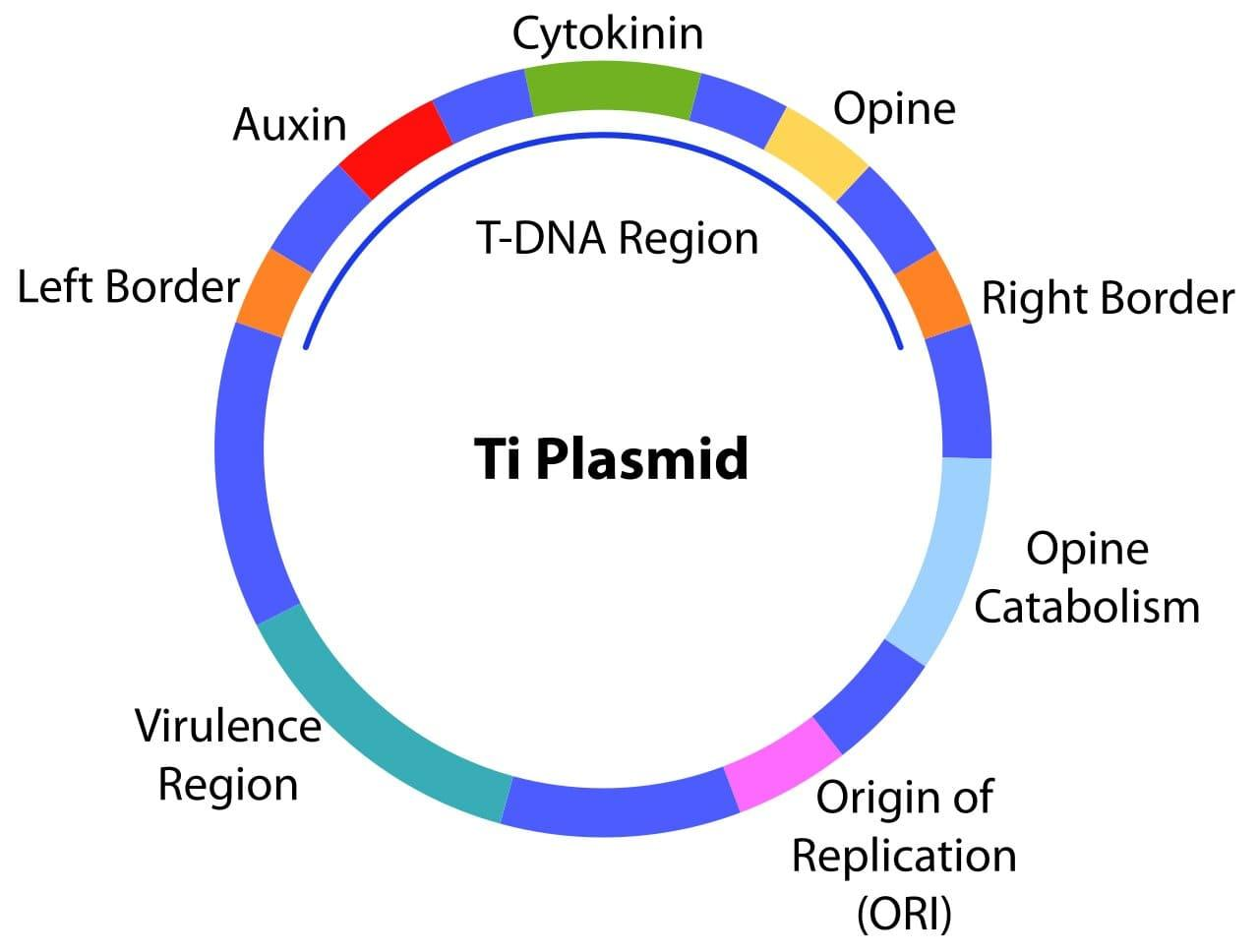
Ti Plasmid Structure Overview
A simplified structure of the Ti plasmid typically includes:
Virulence (vir) Genes: Required for T-DNA processing and transfer.
Left and Right Borders (LB and RB): Flank the T-DNA region, crucial for precise excision and integration.
T-DNA Region: Contains genes that, in the wild-type plasmid, manipulate the plant’s hormone production, leading to tumour formation. In genetically modified plasmids, these genes are replaced with beneficial ones.
Opine Catabolism Genes: Help the bacterium utilise opines produced by infected plant cells.
Origin of Replication: Ensures plasmid replication in the bacterial host.
History and Background
Agrobacterium tumefaciens is a Gram-negative bacterium belonging to the class Alphaproteobacteria. While many members of this class (such as Caulobacter, Rhodobacter, and Rhizobium) are non-pathogenic or symbiotic, A. tumefaciens is pathogenic to plants. The discovery that A. tumefaciens transfers a region of the Ti plasmid (T-DNA) into plant cells to induce tumours (crown galls) paved the way for modern plant genetic engineering.
Key Features of the Ti Plasmid
Virulence Region
The virulence (vir) region contains genes essential for transferring T-DNA into plant cells. These genes encode proteins that mediate the processing and transfer of T-DNA and help the bacterium infect host cells.
T-DNA (Transferred DNA) Region
The T-DNA region is typically 15–20 kbp in length.
It integrates into the plant genome, altering the plant’s hormonal balance and leading to tumour formation.
In genetic engineering, this region can be modified to carry desirable genes instead of disease-causing segments.
Opine Catabolism
Opines are derivatives of amino acids or sugar phosphates.
Once the plant cells produce opines under the influence of T-DNA, the bacterium utilises them as a nutrient source.
Common opine types include nopaline and octopine.
Origin of Replication
This region ensures the plasmid can replicate within bacterial cells.
Stable replication is crucial for maintaining the plasmid and the virulence factors needed for infection.
Size
Ti plasmids can vary widely in size, generally ranging from about 100 kbp to as large as 2 Mbp.
Disarmed Ti Plasmid
A disarmed Ti plasmid lacks the tumour-causing T-DNA region, making it non-pathogenic.
These modified plasmids are used in biotechnology for transferring genes of interest without causing crown gall disease.
Ti Plasmid Function in Genetic Engineering
Natural Gene Transfer: The Ti plasmid function in nature is to transfer T-DNA into plants, causing tumorous growths. Scientists exploit this transfer mechanism to introduce beneficial genes into crop plants.
Creating Transgenic Plants: By replacing the tumour-inducing genes with target genes, the Ti plasmid becomes a vector for crop improvement, helping produce plants with enhanced traits such as pest resistance, drought tolerance, or improved nutritional content.
“Nature’s Genetic Engineer”: Because of its unique ability to transfer DNA across kingdoms (from bacteria to plants), the Ti plasmid is often referred to as "nature’s genetic engineer."
Difference Between Ti Plasmid and Ri Plasmid
While the Ti plasmid is commonly associated with crown gall disease (tumour formation), the Ri plasmid (root-inducing plasmid) is linked to “hairy root” disease in plants. Here is a quick comparison:
Uses in Bioengineering
Production of Transgenic Plants
Ti plasmid notes often highlight its role in transferring genes of interest, enabling the creation of genetically modified plants with desirable traits such as enhanced resistance to pests, increased yield, or improved nutritional value.
Cloning Vector
By removing pathogenic genes, scientists have developed safe cloning vectors derived from the Ti plasmid.
These vectors allow the introduction of foreign genes into plant cells for research and crop improvement.
Gene Function Studies
Researchers use the Ti plasmid system to study the function of genes by selectively inserting or knocking out gene sequences in plant cells.
Additional Insights: Crown Gall Disease
Crown gall disease is characterised by tumorous growths near the crown of the plant, where the stem meets the roots.
The disease results from the expression of genes in the integrated T-DNA, which alter the plant’s hormonal pathways.
Quick Quiz (With Answers)
Which bacterium carries the Ti plasmid?
Answer: Agrobacterium tumefaciens.
What does ‘T’ in T-DNA stand for?
Answer: Transferred DNA.
What disease is caused by the Ti plasmid in plants?
Answer: Crown gall disease.
Name a key difference between Ti plasmid and Ri plasmid.
Answer: Ti plasmid induces tumour formation (crown gall), while Ri plasmid induces hairy root formation.
What is the main advantage of using a disarmed Ti plasmid in biotechnology?
Answer: It can transfer genes of interest into the plant without causing tumour formation.
Related Topics


FAQs on Ti Plasmid in Agrobacterium Tumefaciens
1. What is a Ti plasmid?
A Ti plasmid (Tumor-inducing plasmid) is a large circular DNA molecule found in the bacterium Agrobacterium tumefaciens that causes crown gall disease in plants. It is a naturally occurring plasmid that transfers a segment of its DNA into plant cells.
- Present in Agrobacterium tumefaciens
- Contains a transferable DNA region called T-DNA
- Induces tumor (gall) formation in infected plants
- Widely used as a tool in plant genetic engineering
2. What does Ti plasmid stand for?
Ti plasmid stands for Tumor-inducing plasmid, referring to its ability to cause tumor formation in plants. The name comes from its role in inducing abnormal plant cell growth.
- "T" = Tumor
- "i" = inducing
- Associated with crown gall disease
3. What is the structure of the Ti plasmid?
The Ti plasmid is a large circular double-stranded DNA molecule with distinct functional regions. Its structure includes:
- T-DNA region – transferred into the plant genome
- Virulence (vir) genes – help in DNA transfer
- Origin of replication (ori) – allows plasmid replication in bacteria
- Opine catabolism genes – enable bacteria to metabolize opines produced by transformed plant cells
4. What is T-DNA in the Ti plasmid?
The T-DNA (Transfer DNA) is the specific segment of the Ti plasmid that integrates into the plant genome during infection. It carries genes responsible for tumor formation and opine synthesis.
- Flanked by border sequences
- Transferred from bacterium to plant cell
- Integrates into plant chromosomal DNA
- Modified in biotechnology to carry desired genes
5. How does the Ti plasmid transfer DNA into plant cells?
The Ti plasmid transfers DNA into plant cells through a virulence-mediated gene transfer process. The steps include:
- Plant wound releases chemical signals (e.g., phenolics)
- Activation of vir genes in Agrobacterium
- Processing of T-DNA into a single-stranded form
- Transfer of T-DNA into the plant cell via a secretion system
- Integration of T-DNA into the plant genome
6. What is the function of vir genes in the Ti plasmid?
The vir genes in the Ti plasmid encode proteins required for the transfer of T-DNA into plant cells. They do not integrate themselves but facilitate DNA movement.
- Recognize plant wound signals
- Process and excise T-DNA
- Form a transfer complex
- Mediate transport into the plant nucleus
7. How is the Ti plasmid used in genetic engineering?
The Ti plasmid is used as a vector to introduce foreign genes into plants in genetic engineering. Scientists modify it to remove tumor-causing genes and insert desired genes.
- Tumor genes are removed from T-DNA
- Desired gene is inserted between border sequences
- Recombinant plasmid introduced into Agrobacterium
- Transformed bacteria infect plant cells
8. What is crown gall disease and how is it related to the Ti plasmid?
Crown gall disease is a plant tumor disease caused by the transfer of T-DNA from the Ti plasmid of Agrobacterium tumefaciens into plant cells. The inserted genes cause uncontrolled cell division.
- Results in tumor-like growths (galls)
- Common in dicot plants
- Driven by T-DNA-encoded growth hormones
9. What is the difference between a disarmed Ti plasmid and a wild Ti plasmid?
A wild Ti plasmid causes tumor formation, whereas a disarmed Ti plasmid has its tumor-inducing genes removed for safe genetic engineering use. The key differences include:
- Wild plasmid: contains tumor genes in T-DNA
- Disarmed plasmid: tumor genes deleted
- Disarmed version used as a cloning vector
- Both retain functional vir genes for DNA transfer
10. Why is the Ti plasmid important in biotechnology?
The Ti plasmid is important in biotechnology because it serves as a natural and efficient vector for plant genetic transformation. It enables stable integration of foreign genes into plant genomes.
- Used to develop genetically modified crops
- Helps improve yield, pest resistance, and stress tolerance
- Essential tool in plant molecular biology
- Provides a model for studying horizontal gene transfer



