









What is the Role of the Pancreas in Human Digestion for NEET?
The pancreas is a key organ in the human digestive and endocrine systems, making it an important concept for NEET Biology aspirants. Understanding the structure, functions, and hormonal roles of the pancreas helps students build a strong foundation for topics like digestion, metabolism, and metabolic disorders. As NEET frequently asks questions related to the pancreas and its hormones, mastering this topic is essential for achieving a good score in the exam.
What is the Pancreas?
The pancreas is a soft, elongated gland located in the abdomen, behind the stomach. It plays a dual role in the human body: as an exocrine gland (secreting digestive enzymes) and as an endocrine gland (releasing hormones like insulin and glucagon). This unique combination of functions makes the pancreas an essential organ for maintaining digestive health and regulating blood sugar levels. For NEET, understanding both the structure and functions of the pancreas is critical for mastering several interconnected topics in human physiology.
Core Ideas and Fundamentals of the Pancreas
1. Location and Structure
The pancreas is situated in the upper part of the abdomen, nestled between the duodenum (the first part of the small intestine) and the spleen. It is about 12-15 cm long and appears leaf-shaped or tadpole-like. Structurally, the pancreas consists of a head, body, and tail. This organ has both exocrine and endocrine tissues that serve distinct functions.
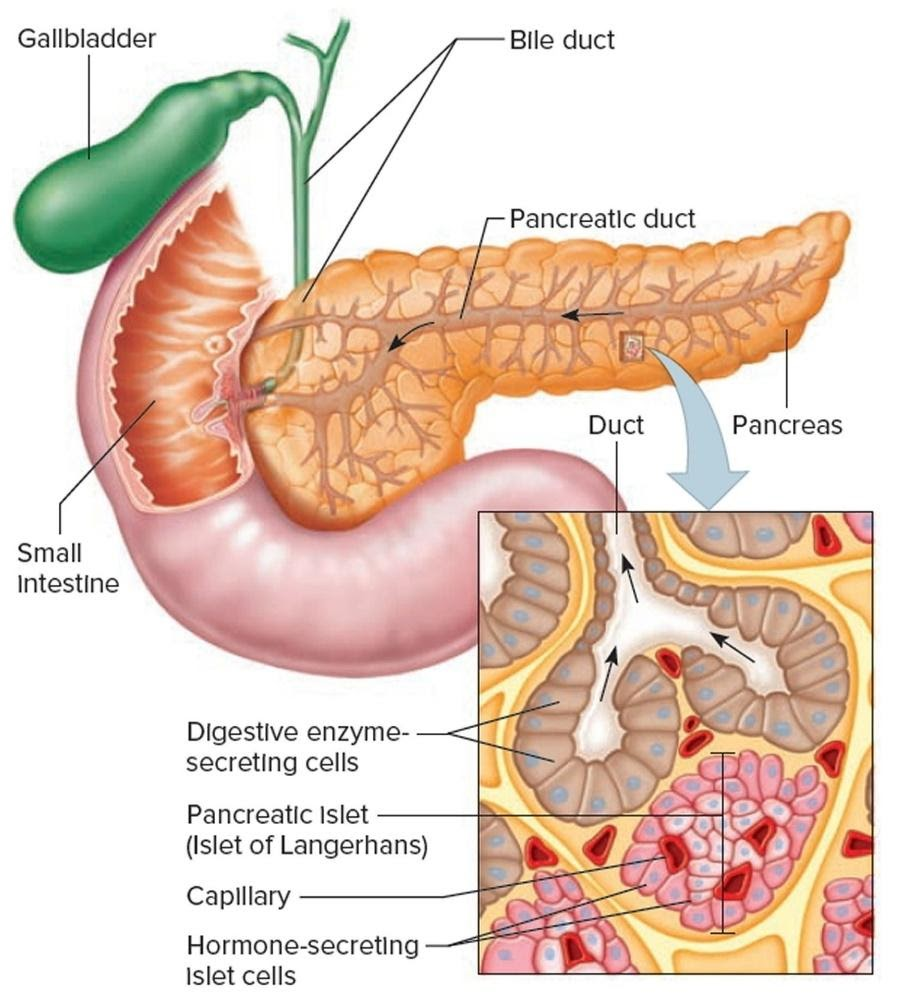
2. Exocrine Functions
Around 98-99 percent of pancreatic tissue is exocrine. These cells (acini) secrete pancreatic juice containing digestive enzymes like amylase, lipase, and proteases. The enzymes break down carbohydrates, fats, and proteins in the small intestine, facilitating nutrient absorption. The pancreatic juice is carried to the duodenum via the pancreatic duct.
3. Endocrine Functions
The remaining 1-2 percent of the pancreas is made up of endocrine cells organized into the islets of Langerhans. These islets have several cell types, each secreting a specific hormone that helps regulate blood glucose levels and metabolic activities.
Important Sub-Concepts Related to the Pancreas
1. Islets of Langerhans and Hormones
The islets of Langerhans are clusters of different cell types scattered throughout the pancreas. The major cells and their hormones are:
- Alpha (α) cells - secrete glucagon
- Beta (β) cells - secrete insulin
- Delta (δ) cells - secrete somatostatin
- PP (F) cells - secrete pancreatic polypeptide
2. Role in Glucose Homeostasis
Insulin and glucagon have opposite effects on blood glucose concentration. Insulin lowers blood sugar by promoting glucose uptake and storage, while glucagon increases blood sugar by stimulating glycogen breakdown and glucose release by the liver. This hormonal balance maintains stable glucose levels in the body.
3. Pancreatic Disorders
Common disorders related to the pancreas include diabetes mellitus (due to insulin deficiency or insensitivity), pancreatitis, and pancreatic cancer. Understanding these disorders helps in solving NEET questions on disease mechanisms and symptoms.
Key Principles and Relationships in Pancreas Physiology
There are no complex numerical formulas for the pancreas, but it's crucial to understand the regulatory relationships between the hormones secreted by the islets of Langerhans. The following table summarizes the main hormones, their source cells, and effects:
Hormones of the Pancreas: Summary Table
| Hormone | Source Cell Type | Main Function |
|---|---|---|
| Insulin | Beta (β) cells | Lowers blood glucose, promotes storage of glucose as glycogen |
| Glucagon | Alpha (α) cells | Raises blood glucose, stimulates glycogen breakdown |
| Somatostatin | Delta (δ) cells | Inhibits secretion of both insulin and glucagon |
| Pancreatic Polypeptide | PP (F) cells | Regulates pancreatic secretion activities |
Memorizing these hormone names, their sources, and basic actions is essential for answering NEET MCQs correctly during the exam.
Features and Importance of the Pancreas
- The pancreas is both an exocrine and an endocrine gland (a mixed gland).
- It is vital for digestion (enzyme production) and regulation of blood glucose (hormone secretion).
- Its hormonal imbalances can result in metabolic disorders like diabetes mellitus.
- It connects topics such as digestion, absorption, metabolism, and endocrinology for NEET.
Why is the Pancreas Important for NEET?
The pancreas is a frequently tested topic in NEET Biology. Questions are often asked about its structure, dual functions, hormones, and the role of insulin and glucagon in glucose homeostasis. Understanding the pancreas helps students solve questions related to:
- Digestive system and enzymes
- Endocrine system and hormone functions
- Metabolic diseases such as diabetes
- Interlinking physiological processes in humans
A clear conceptual understanding of the pancreas boosts accuracy in NEET MCQs and strengthens preparation for related human physiology topics.
How to Study the Pancreas Effectively for NEET
- Start with basic anatomy - understand the location and structure with the help of clear diagrams.
- Memorize the exocrine and endocrine functions separately.
- Create summary tables or flashcards for pancreatic hormones and their actions.
- Practice NEET-style MCQs focused on hormone effects, disorders, and regulation.
- Revise regularly by drawing and labeling the pancreas diagram.
- Link pancreas-based topics with related systems (digestion, endocrine, metabolism) to reinforce understanding.
- Identify and correct common conceptual mistakes by reviewing explanations for difficult questions.
Common Mistakes Students Make in the Pancreas Topic
- Confusing exocrine and endocrine functions of the pancreas
- Mixing up the hormone sources and their functions (e.g., insulin vs. glucagon roles)
- Forgetting the role of somatostatin and pancreatic polypeptide
- Ignoring the relationship between pancreatic disorders and their symptoms
- Neglecting diagram-based questions (structure, labeling, identification)
Quick Revision Points: The Pancreas
- Pancreas = Mixed gland - performs exocrine (enzymes) & endocrine (hormones) functions
- Acini - produce digestive enzymes; Islets of Langerhans - secrete hormones
- Beta cells = Insulin (lowers blood sugar); Alpha cells = Glucagon (raises blood sugar)
- Somatostatin inhibits both insulin and glucagon
- Key disorders: Diabetes mellitus (insulin-related), pancreatitis
- Diagrams and tables help with quick revision and answer accuracy
- Frequently tested in NEET human physiology and diseases sections
FAQs on Pancreas in NEET Biology: Structure and Functions
1. What is the pancreas and what are its main functions in the human body (NEET)?
The pancreas is a dual-function gland that plays a critical role in both the digestive and endocrine systems. For NEET and exams, focus on these main functions:
- Exocrine function: Secretes digestive enzymes (like amylase, lipase, and trypsin) into the duodenum to aid digestion of carbohydrates, proteins, and fats.
- Endocrine function: Produces hormones such as insulin, glucagon, and somatostatin from the Islets of Langerhans for regulating blood sugar levels.
2. Where is the pancreas located in the human body?
The pancreas is a soft, elongated organ situated behind the stomach in the upper left quadrant of the abdomen. Its position is important for digestive and hormonal activities:
- Lies horizontally, extending from the duodenum (right side) to the spleen (left side).
- Retroperitoneal in location (behind the peritoneal cavity).
- Divided into three parts: head, body, and tail.
3. What are the hormones produced by the pancreas and their functions? (NEET)
The pancreas produces key hormones, primarily from the Islets of Langerhans, each with specific physiological functions:
- Insulin: Lowers blood glucose by facilitating cellular uptake and promoting glycogen synthesis.
- Glucagon: Raises blood glucose by stimulating glycogen breakdown in the liver.
- Somatostatin: Inhibits the release of both insulin and glucagon, and slows digestive processes.
- Pancreatic Polypeptide: Regulates pancreatic secretion activities.
4. Why is the pancreas called a mixed gland?
The pancreas is called a mixed gland because it performs both exocrine and endocrine functions.
- Exocrine: Secretes digestive enzymes into the small intestine via ducts.
- Endocrine: Releases hormones directly into the bloodstream through the Islets of Langerhans.
5. What are the disorders associated with the pancreas class 11 NEET?
Disorders of the pancreas often involve improper secretion of enzymes or hormones. For NEET, focus on:
- Diabetes mellitus: Caused by insulin deficiency or action failure, leading to high blood sugar.
- Pancreatitis: Inflammation due to autodigestion by pancreatic enzymes.
- Pancreatic cancer: Malignant tumor disrupting normal functions.
- Hormonal imbalances: Affecting glucose homeostasis and digestion.
6. What is the exocrine function of the pancreas?
The exocrine function of the pancreas involves secreting digestive enzymes essential for digestion. Specifically:
- Acinar cells produce enzymes like amylase (carbohydrate digestion), lipase (fat digestion), and trypsin/chymotrypsin (protein digestion).
- These enzymes are released via the pancreatic duct into the duodenum.
7. Which cells in the pancreas produce insulin and what is their role?
Beta cells (β-cells) in the Islets of Langerhans produce insulin in the pancreas. Their main roles are:
- Secreting insulin to lower blood glucose levels.
- Facilitating glucose uptake by cells and promoting glycogenesis.
8. How does the pancreas help in regulation of blood sugar? (NEET)
The pancreas regulates blood sugar through coordinated hormone secretion:
- Insulin (from Beta cells) decreases blood glucose by stimulating uptake and storage.
- Glucagon (from Alpha cells) increases blood glucose by promoting glycogen breakdown.
- The dynamic balance between these hormones maintains glucose homeostasis.
9. What are the structural parts of the pancreas?
The pancreas is structurally divided into three main parts for effective functioning:
- Head: Broad section nestled in the curve of the duodenum.
- Body: Central elongated part behind the stomach.
- Tail: Narrowing end close to the spleen.
10. What is the importance of pancreas in digestion (NEET)?
The pancreas is vital for digestion by releasing essential enzymes that break down all major nutrients. Key aspects:
- Secretes pancreatic juice rich in enzymes for carbohydrates, fats, and proteins.
- Ensures efficient nutrient absorption in the small intestine.
- Maintains pH balance via bicarbonate secretion.
