




Types of Nutrition in Living Organisms Autotrophic and Heterotrophic with Examples
The concept of nutrition modes in living organisms is essential in biology and helps explain real-world biological processes and exam-level questions effectively.
Understanding Nutrition Modes in Living Organisms
Nutrition modes in living organisms refer to the different ways by which living things obtain and utilize nutrients or food for growth, energy, and maintenance of life. This concept is important in areas like plant biology, animal physiology, and environmental adaptation. Living organisms can be classified based on how they acquire nutrition, mainly as autotrophs or heterotrophs. These modes support all life functions from cell growth to reproduction and are commonly asked in board exams and MCQs.
Here’s a helpful table to understand nutrition modes in living organisms better:
Modes of Nutrition Table
| Mode | Definition | Examples |
|---|---|---|
| Autotrophic Nutrition | Organisms make their own food from inorganic substances (often through photosynthesis or chemosynthesis) | Green plants, algae, cyanobacteria |
| Heterotrophic Nutrition | Organisms depend on other organisms for their food | Animals, fungi, many bacteria |
| Parasitic Nutrition | Organisms obtain food from a host, often harming it | Cuscuta (dodder), tapeworms, leeches |
| Saprotrophic Nutrition | Organisms feed on dead and decaying matter | Mushrooms, molds, some bacteria |
| Holozoic Nutrition | Ingestion of solid or liquid food followed by digestion and assimilation | Humans, Amoeba, dogs |
| Mixotrophic Nutrition | Organisms use more than one mode of nutrition | Euglena |
Detailed Explanation of Each Nutrition Mode
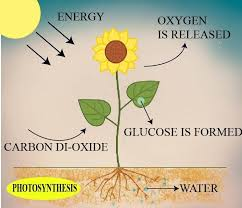
Autotrophic Nutrition: In this mode, organisms like green plants, algae, and some bacteria prepare their own food from simple inorganic substances such as carbon dioxide and water, usually using light energy (photosynthesis). Photosynthesis takes place mainly in the leaves, in structures called chloroplasts. Some bacteria use chemical energy—this is called chemosynthesis.
Heterotrophic Nutrition: All animals, fungi, and many bacteria fall under this mode, depending on other sources for ready-made organic nutrients. Heterotrophic nutrition is further divided into:
- Parasitic Nutrition: Living on or inside a host, obtaining nutrients at the host’s expense. Example: tapeworm, Cuscuta (parasitic plant).
- Saprotrophic Nutrition: Breaking down dead organic matter outside the body and absorbing the simple nutrients. Example: mushrooms, molds, yeast.
- Holozoic Nutrition: Ingesting complex food, digesting it, and then absorbing nutrients. Example: humans, Amoeba. More details are available at Nutrition in Amoeba.
Some single-celled organisms like Euglena can be both autotrophic (photosynthesizing when light is available) and heterotrophic (absorbing food when light is absent). This flexible mode is called mixotrophic nutrition.
Comparison Table – Autotrophic vs Heterotrophic Nutrition
| Feature | Autotrophic Nutrition | Heterotrophic Nutrition |
|---|---|---|
| Food Source | Self-synthesized from inorganic substances | Obtained from other living beings |
| Example | Green plants, cyanobacteria | Animals, fungi |
| Energy Process | Photosynthesis or chemosynthesis | Ingestion, digestion, absorption |
| Dependency | Independent | Dependent on others |
Worked Example – Biological Process
Let’s understand autotrophic nutrition in plants, step by step:
1. Green plants absorb sunlight, carbon dioxide, and water.
2. In the leaf chloroplasts, photosynthesis converts these raw materials into glucose and oxygen.
3. The glucose provides energy and forms the basic food for the plant and, directly or indirectly, for other organisms.
Final Understanding: Plants serve as the original producers in all food chains.
Practice Questions
- What is the difference between autotrophic and heterotrophic nutrition?
- Give examples of organisms with saprotrophic nutrition.
- Explain the process of holozoic nutrition in Amoeba.
- Why are green plants called producers?
Common Mistakes to Avoid
- Confusing autotrophic and heterotrophic nutrition or their examples.
- Assuming all plants are exclusively autotrophic—some, like Cuscuta, are parasitic.
- Missing the role of fungi as saprotrophs, not autotrophs.
Real-World Applications
The concept of nutrition modes in living organisms is used in fields like medicine, agriculture, biotechnology, and environmental science. Understanding these modes helps us improve crop yield, manage diseases, and balance ecosystems. Vedantu helps students relate such topics to practical examples in daily life and exam questions.
In this article, we explored nutrition modes in living organisms, their key types, real-life significance, and how to approach related questions. To learn more and build confidence, keep practicing with Vedantu and refer to detailed notes for revision.
Explore Related Topics and Further Reading:
- Photosynthesis Process – Learn how plants perform autotrophic nutrition.
- Nutrition in Plants – Complete notes for quick revision.
- Heterotrophic Nutrition – Understand all heterotrophic types and comparisons.
- Nutrition in Amoeba – Examples of nutrition in microorganisms.
- Modes of Nutrition – Full summary and revision list for all types.
- Living Organisms: Characteristics and Habitats – Connects nutrition with life processes and adaptation.
- Biotic and Abiotic – Puts nutrition into context in ecosystems.
- Plant Cell – See where photosynthesis and nutrition happen in plants.
- Nutrition in Human Beings – CBSE Class 10 and NEET-aligned notes.
- Useful Microorganisms – Links nutrition concepts to real-world biotechnology and health.


FAQs on Nutrition in Living Organisms and Its Modes
1. What are the modes of nutrition in living organisms?
The modes of nutrition in living organisms are the different ways by which organisms obtain and use food for energy and growth. They are mainly classified into:
- Autotrophic nutrition – organisms make their own food (e.g., green plants).
- Heterotrophic nutrition – organisms depend on others for food (e.g., animals, fungi).
2. What is autotrophic nutrition?
Autotrophic nutrition is a mode of nutrition in which organisms prepare their own food from simple inorganic substances like carbon dioxide and water. Most autotrophs use:
- Photosynthesis – using sunlight (e.g., green plants, algae).
- Chemosynthesis – using chemical energy (e.g., certain bacteria).
3. What is heterotrophic nutrition?
Heterotrophic nutrition is a mode of nutrition in which organisms obtain food from other living organisms instead of making it themselves. Heterotrophs include:
- Animals (humans, cows, lions)
- Fungi (mushrooms)
- Most bacteria
4. What is the difference between autotrophic and heterotrophic nutrition?
The main difference between autotrophic and heterotrophic nutrition is whether an organism can make its own food.
- Autotrophs prepare their own food using light or chemical energy.
- Heterotrophs obtain ready-made food from other organisms.
- Autotrophs are producers, while heterotrophs are consumers.
5. What are the types of heterotrophic nutrition?
The main types of heterotrophic nutrition are holozoic, saprophytic, and parasitic nutrition. These include:
- Holozoic nutrition – ingestion and digestion of solid food (e.g., humans).
- Saprophytic nutrition – feeding on dead and decaying matter (e.g., fungi).
- Parasitic nutrition – deriving food from a living host (e.g., tapeworm).
6. What is holozoic nutrition with example?
Holozoic nutrition is a type of heterotrophic nutrition in which organisms ingest solid food and digest it internally. It involves five steps:
- Ingestion
- Digestion
- Absorption
- Assimilation
- Egestion
7. What is saprophytic nutrition?
Saprophytic nutrition is a mode of nutrition in which organisms obtain nutrients from dead and decaying organic matter. Saprophytes:
- Secrete digestive enzymes outside the body.
- Break down complex substances into simpler forms.
- Absorb the dissolved nutrients.
8. What is parasitic nutrition?
Parasitic nutrition is a type of heterotrophic nutrition in which an organism lives on or inside another organism and derives food from it. In this relationship:
- The parasite benefits.
- The host is harmed.
9. What is photosynthesis in autotrophic nutrition?
Photosynthesis is the process by which green plants prepare food using sunlight, carbon dioxide, and water. It occurs in the chloroplasts with the help of chlorophyll and produces:
- Glucose (food)
- Oxygen as a by-product
10. Why are nutrition modes important for living organisms?
Modes of nutrition are important because they provide energy and raw materials necessary for growth, repair, and survival. Proper nutrition helps in:
- Energy production through respiration.
- Body building and tissue repair.
- Maintaining metabolism and life processes.



