




What Is Nutrition in Living Organisms Definition Types and Process
Nutrition is the process by which living organisms obtain and utilise food to carry out vital life processes. It supplies the energy needed for growth, repair, and daily activities, making it one of the most important biological functions. The energy obtained from food fuels various cellular functions and helps organisms stay healthy and alive.
Autotrophic Nutrition
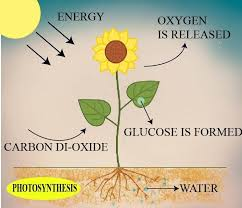
Autotrophic nutrition refers to the ability of certain organisms to produce their own food using simple inorganic substances like water and carbon dioxide. This process usually takes place in the presence of sunlight and a green pigment called chlorophyll, making [photosynthesis] the main pathway for food production in autotrophic organisms. Examples include green plants, algae, and some bacteria.
Key Stages in Photosynthesis
Light Absorption: Chlorophyll in the leaves traps sunlight.
Conversion of Energy: The light energy absorbed is converted into chemical energy, and water molecules split into hydrogen and oxygen.
Reduction of Carbon Dioxide: Hydrogen from water combines with carbon dioxide to form carbohydrates (sugars), which are then stored as starch.
Although the above steps help in understanding photosynthesis clearly, they do not always occur one after another in a strict sequence. Some organisms open or close special leaf pores called stomata at different times of the day to control the exchange of gases and conserve water.
Did you know? Some bacteria, called chemoautotrophs, synthesise their food using chemical energy (from inorganic compounds) instead of sunlight.
Heterotrophic Nutrition
Heterotrophic nutrition is found in organisms that cannot make their own food. Instead, they depend on other organisms for their nourishment. All animals, fungi, and some bacteria follow this type of nutrition. They are called heterotrophs, and they rely directly or indirectly on autotrophs for their energy needs.
Modes of Heterotrophic Nutrition
Parasitic Nutrition: Organisms live on or inside a host and derive nutrients at the host’s expense. Examples include ticks, tapeworms, and leeches.
Saprophytic Nutrition: Organisms feed on dead and decaying matter, secreting digestive enzymes onto it and then absorbing the nutrients. Fungi, such as mushrooms, follow this type.
Holozoic Nutrition: Organisms ingest solid or liquid food and then carry out digestion, absorption, and assimilation. Amoeba and humans exhibit holozoic nutrition by taking in complex substances and breaking them down into simpler ones.
Mode of Nutrition in Plants
Most plants show an autotrophic nutrition pattern, using sunlight, water, and carbon dioxide to make glucose. However, a few plants have additional or modified methods:
Insectivorous Plants (e.g., Pitcher Plants, Venus Flytraps): They trap insects to supplement their nitrogen requirements.
Parasitic Plants (e.g., Cuscuta or Dodder): They absorb nutrients directly from the host plant’s tissues.
In general, the mode of nutrition in plants remains primarily autotrophic, as they possess chlorophyll and carry out photosynthesis to produce their food.
Blue-Green Algae (Cyanobacteria)
Blue-green algae can be autotrophs, heterotrophs, or a mix of both (mixotrophs). Some species perform photosynthesis like plants, whereas others can switch to a heterotrophic mode if conditions require.
Quiz Time!
Test your understanding of modes of nutrition class 10 with the following questions:
1. Which type of nutrition involves an organism producing its own food using sunlight?
Answer: Autotrophic nutrition.
2. Name a mode of heterotrophic nutrition where organisms feed on dead organic matter.
Answer: Saprophytic nutrition.
3. Which structure in plant leaves mainly controls the exchange of gases during photosynthesis?
Answer: Stomata.
4. Give one example of an organism that shows holozoic nutrition.
Answer: Amoeba (humans also exhibit holozoic nutrition).
Related Topics


FAQs on Nutrition in Living Organisms Explained Clearly
1. What is nutrition in living organisms?
Nutrition in living organisms is the process by which organisms obtain and utilize food for energy, growth, repair, and maintenance of life. It involves the intake of nutrients and their conversion into usable forms through metabolic processes.
- Ingestion – taking in food
- Digestion – breaking down complex food
- Absorption – nutrients entering the bloodstream
- Assimilation – utilization by cells
- Egestion – removal of undigested waste
2. What are the different modes of nutrition in living organisms?
The two main modes of nutrition in living organisms are autotrophic nutrition and heterotrophic nutrition. Autotrophs make their own food, while heterotrophs depend on others for food.
- Autotrophic nutrition – seen in green plants that perform photosynthesis
- Heterotrophic nutrition – includes holozoic, saprophytic, and parasitic nutrition
3. What is autotrophic nutrition?
Autotrophic nutrition is a mode of nutrition in which organisms prepare their own food from inorganic substances like carbon dioxide and water using light or chemical energy. This process is commonly carried out through photosynthesis.
- Occurs in green plants, algae, and some bacteria
- Requires chlorophyll, sunlight, carbon dioxide, and water
- Produces glucose and oxygen
4. What is heterotrophic nutrition?
Heterotrophic nutrition is a mode of nutrition in which organisms depend on other organisms for their food. They cannot synthesize their own food like autotrophs.
- Holozoic nutrition – ingestion and digestion of solid food (e.g., humans)
- Saprophytic nutrition – feeding on dead and decaying matter (e.g., fungi)
- Parasitic nutrition – deriving food from a host organism (e.g., tapeworm)
5. How does photosynthesis occur in green plants?
Photosynthesis is the process by which green plants synthesize food using sunlight, carbon dioxide, and water in the presence of chlorophyll. It takes place mainly in the chloroplasts of leaf cells.
- Carbon dioxide enters through stomata
- Water is absorbed by roots
- Sunlight is trapped by chlorophyll
- Glucose and oxygen are produced
6. What is holozoic nutrition with example?
Holozoic nutrition is a type of heterotrophic nutrition in which organisms ingest solid food and digest it internally. It is common in humans and other animals.
- Ingestion – taking food into the body
- Digestion – breakdown of food
- Absorption – nutrients enter blood
- Assimilation – use by body cells
- Egestion – removal of waste
7. What is saprophytic nutrition?
Saprophytic nutrition is a mode of nutrition in which organisms obtain nutrients from dead and decaying organic matter. It is commonly seen in fungi and some bacteria.
- They secrete digestive enzymes outside the body
- Food is broken down externally
- Simple nutrients are absorbed
8. What is parasitic nutrition?
Parasitic nutrition is a type of heterotrophic nutrition in which one organism (parasite) lives on or inside another organism (host) and derives food from it. The host is usually harmed in the process.
- Endoparasites – live inside the host (e.g., tapeworm)
- Ectoparasites – live on the host’s surface (e.g., lice)
9. Why is nutrition important for living organisms?
Nutrition is important because it provides energy and raw materials necessary for growth, repair, reproduction, and maintenance of life processes. Without proper nutrition, organisms cannot survive.
- Provides energy for metabolic activities
- Supports growth and development
- Helps in tissue repair
- Maintains body functions and immunity
10. What is the difference between autotrophic and heterotrophic nutrition?
The main difference between autotrophic and heterotrophic nutrition is that autotrophs make their own food, while heterotrophs depend on other organisms for food. This difference determines their role in the ecosystem.
- Autotrophic nutrition: Food prepared from inorganic substances; example – green plants
- Heterotrophic nutrition: Food obtained from other organisms; example – animals
- Autotrophs are producers, heterotrophs are consumers



