




What Is the Difference Between Leopard and Cheetah in Size Speed Spots and Habitat
When people think of big cats, two names often come to mind: the leopard and the cheetah. Because both species have spotted coats and share habitats in certain parts of Africa and Asia, many wonder about the difference between cheetah and leopard and jaguar or even the difference between leopard and cheetah spots. While all these wild cats belong to the Felidae family, they differ significantly in appearance, hunting techniques, social behaviour, and more. In this article, we will dig deep into leopard vs cheetah distinctions, and we will also touch upon topics such as the difference between leopard and jaguar and the difference between cheetah and tiger, ensuring you gain a holistic understanding of these majestic felines.
Overview of Classification and Distribution
Leopard (Panthera pardus)
Habitat: Widely distributed across Africa, the Middle East, parts of Asia, and even remote regions in Siberia.
Preferred Environment: Adaptable to grasslands, dense forests, deserts, and mountainous regions.
Conservation Status: Listed as Vulnerable on the IUCN Red List due to habitat loss and poaching.
Cheetah (Acinonyx jubatus)
Habitat: Predominantly found in African savannahs; a small population persists in Iran.
Preferred Environment: Open grasslands, savannahs, and sometimes open forests.
Conservation Status: Listed as Vulnerable on the IUCN Red List; threatened by habitat fragmentation, conflict with livestock farmers, and declining prey.
Major Physical Differences
One quick way to answer what is the difference between cheetah and leopard and jaguar is to look closely at their body shape and coat patterns. While jaguars have distinctly stockier bodies and rosettes with central spots, let’s first focus on leopard vs cheetah distinctions:
Body Build
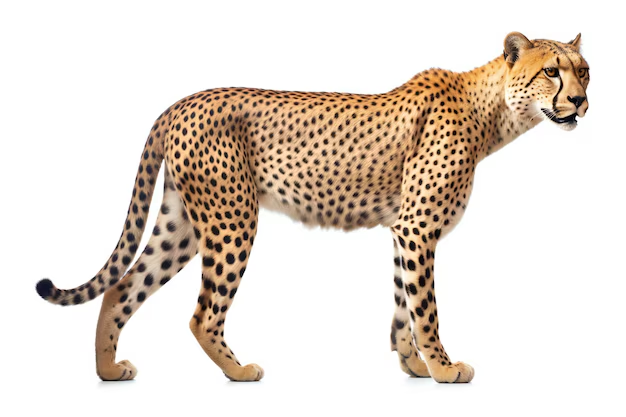
Cheetah: Slender, aerodynamic frame, built for sprinting. Long legs and a flexible spine allow it to achieve remarkable acceleration.
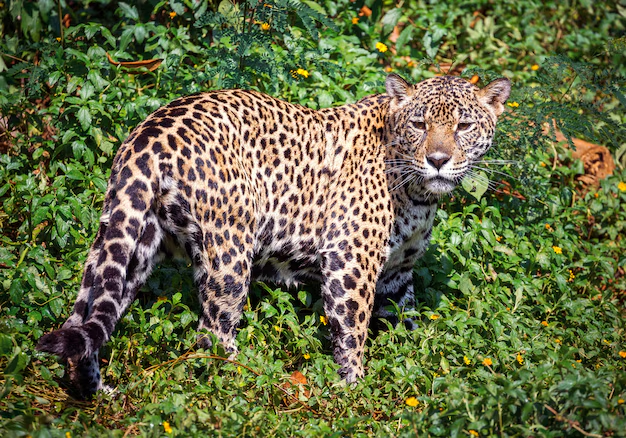
Leopard: More muscular and stocky. They excel in climbing and ambush hunting, needing powerful limbs and robust shoulders.
Coat Patterns
Cheetah: Has small, solid black spots covering the entire body. The fur is somewhat coarse, suiting the open savannah habitats. This is a key difference between leopard and cheetah spots—cheetahs never develop rosettes.
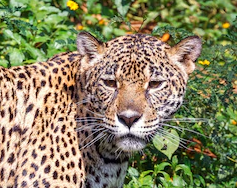
Leopard: Features rosette-like spots (irregular circle shapes with lighter centres) across its coat. These rosettes provide excellent camouflage in forested or shaded habitats.
Facial Markings
Cheetah: Distinctive black tear-like streaks run from the inner corners of the eyes down to the mouth. They help reduce glare from the sun during daytime hunts.
Leopard: Absent of these tear marks; instead, leopards often have solid or rosette markings on the face.
Claws
Cheetah: Semi-retractable claws that function much like track spikes, offering traction during rapid sprints.
Leopard: Fully retractable claws, which help grip prey and climb trees effectively.
Hunting Strategies and Social Behaviour
Hunting Styles
Cheetah: A classic example of a pursuit predator. Famous for cheetah vs leopard speed comparisons, cheetahs can sprint up to 110–115 km/h over short distances. They usually hunt during the day to avoid competition with larger nocturnal predators.
Leopard: Stealthy, ambush hunter. Leopards excel at stalking prey under cover and pouncing unexpectedly. They can tackle prey at night, relying on powerful jaws and strong limbs to drag kills up trees.
Social Structure
Cheetah: Generally social compared to other big cats. Female cheetahs raise cubs alone, but male siblings may form coalitions that stay together for life.
Leopard: Solitary creatures. Adults mostly come together only for mating. Females raise cubs independently, defending a territory against other leopards.
Cheetah vs Leopard Speed
When people ask about cheetah vs leopard speed, the numbers speak for themselves:
Cheetah: The fastest land animal, reaching bursts of about 110–115 km/h. Their lightweight frame, elongated limbs, and non-retractable claws optimise them for speed.
Leopard: While leopards are no slowpokes (topping around 50–60 km/h), they rely less on outright speed and more on stealth and power.
What is the Difference Between Cheetah and Leopard and Jaguar?
So far, we have compared the leopard vs cheetah thoroughly. But you might still wonder about the difference between a leopard and a jaguar. Although leopards and jaguars can appear quite similar at first glance (both have rosettes), there are key distinctions:
Jaguar (Panthera onca):
Native Range: The Americas (from the southern United States to northern Argentina).
Physical Build: More robust and stockier than leopards, with larger rosettes that often contain a central black spot.
Behaviour: Known for a powerful bite force, capable of crushing skulls with a single bite. Often associated with aquatic habitats and very strong swimmers.
Hence, the difference between leopard and jaguar includes habitat, rosette patterns, and body size.
Difference Between Cheetah and Tiger in Table
Below is a summary table highlighting key differences between leopards and cheetahs:

Five Fascinating Facts You May Not Know
Vocalisations:
Cheetahs can purr, chirp, and hiss but cannot roar.
Leopards can roar (though not as loudly as lions).
Respiratory Adaptations:
Cheetahs have large nostrils and lungs for rapid oxygen intake during sprints.
Leopards’ respiratory system is strong enough for exertion, but they rely more on stealth than on prolonged chases.
Preferred Hunting Times:
Cheetahs are mainly diurnal hunters.
Leopards are mostly nocturnal, though they can adapt if needed.
Habitat Flexibility:
Cheetahs thrive in open spaces where speed is advantageous.
Leopards can live in diverse environments—from deserts to forests—thanks to their adaptability.
Global Reintroduction Efforts:
Several wildlife organisations are attempting to reintroduce cheetahs into regions like India.
Leopards remain one of the most widespread big cats but face increasing habitat pressure.
Interactive Quiz: Test Your Knowledge
1. Which big cat has tear-like streaks on its face?
a) Leopard
b) Cheetah
c) Jaguar
2. Who typically hunts during the day?
a) Leopard
b) Cheetah
c) Both
3. Which species is known for dragging its prey up trees?
a) Cheetah
b) Leopard
c) Tiger
4. Which cat can run up to 110–115 km/h?
a) Leopard
b) Jaguar
c) Cheetah
5. Which big cat has fully retractable claws?
a) Cheetah
b) Leopard
c) Neither
Check Your Answers
b) Cheetah
b) Cheetah
b) Leopard
c) Cheetah
b) Leopard


FAQs on Difference Between Leopard and Cheetah in Biology
1. What is the main difference between a leopard and a cheetah?
The main difference between a leopard and a cheetah lies in their body structure, speed, and spot pattern.
- Cheetah (Acinonyx jubatus) is built for speed, with a slim body, long legs, and solid black round spots.
- Leopard (Panthera pardus) is muscular and powerful, with rosette-shaped spots and a broader head.
- Cheetahs are the fastest land animals, while leopards are stronger climbers and more adaptable hunters.
2. How can you tell a leopard and a cheetah apart by their spots?
You can distinguish them by their spot patterns: cheetahs have solid black spots, while leopards have rosette-shaped spots.
- Cheetah spots are small, round, and evenly spaced.
- Leopard rosettes are clustered spots forming a flower-like pattern without a central dot.
- This difference in coat pattern helps in quick visual identification in the wild.
3. Which is faster, a leopard or a cheetah?
The cheetah is much faster than the leopard and is the fastest land animal.
- Cheetahs can reach speeds of up to 100–120 km/h in short bursts.
- Leopards can run up to about 55–60 km/h.
- Cheetahs rely on speed for hunting, while leopards depend on strength and stealth.
4. Do leopards and cheetahs belong to the same genus?
No, leopards and cheetahs belong to different genera within the family Felidae.
- Leopard belongs to the genus Panthera.
- Cheetah belongs to the genus Acinonyx.
- This taxonomic difference reflects variations in anatomy, behavior, and evolutionary history.
5. Why does a cheetah have black tear marks on its face?
A cheetah has black tear marks to reduce glare from sunlight and improve focus while hunting.
- These dark lines run from the inner corners of the eyes to the mouth.
- They help absorb excess light, similar to anti-glare marks used by athletes.
- Leopards do not have prominent tear marks like cheetahs.
6. Can leopards and cheetahs climb trees?
Leopards are excellent tree climbers, while cheetahs are not as skilled at climbing.
- Leopards often drag prey into trees to avoid scavengers.
- Cheetahs have lighter bodies and semi-retractable claws adapted for running, not climbing.
- This difference reflects their distinct hunting and survival strategies.
7. What are the differences in body structure between a leopard and a cheetah?
Leopards have a muscular, stocky build, while cheetahs have a slim, aerodynamic body adapted for speed.
- Cheetah: long legs, small rounded head, flexible spine, deep chest.
- Leopard: broad chest, strong jaws, powerful limbs, larger head.
- Cheetah adaptations support sprinting, whereas leopard adaptations support strength and climbing.
8. Do leopards and cheetahs hunt in the same way?
No, leopards and cheetahs use different hunting strategies based on their physical adaptations.
- Cheetahs rely on high-speed chases during the day (diurnal hunting).
- Leopards use stealth and ambush, often hunting at night (nocturnal behavior).
- Leopards are stronger and can take larger prey relative to their size.
9. Where do leopards and cheetahs live?
Leopards and cheetahs both live in Africa, but leopards have a wider geographic distribution.
- Leopards are found in Africa and parts of Asia, including India.
- Cheetahs are mainly found in sub-Saharan Africa, with a small population in Iran.
- Leopards adapt to forests, mountains, and savannas, while cheetahs prefer open grasslands.
10. Are leopards stronger than cheetahs?
Yes, leopards are physically stronger than cheetahs due to their muscular build and powerful jaws.
- Leopards can carry heavy prey into trees.
- Cheetahs are lighter and built for speed rather than strength.
- This strength difference explains why leopards dominate in direct confrontations.



