




Criteria for Animal Kingdom Classification with Major Phyla Explained
The animal kingdom is a large and diverse group of living organisms that are multicellular and eukaryotic. Unlike plants, animals do not have cell walls or chlorophyll, which means they cannot make their own food through photosynthesis. Instead, they rely on various heterotrophic modes of nutrition.
Scientists classify the animal kingdom into different phyla based on characteristics such as body structure, presence or absence of a true body cavity, type of symmetry, and more. This animal kingdom classification helps us organise the vast diversity of animals into manageable groups.
Classification of the Animal Kingdom
The animal kingdom is generally divided into ten major phyla:
Porifera
Coelenterata (Cnidaria)
Platyhelminthes
Nematoda
Annelida
Arthropoda
Mollusca
Echinodermata
Hemichordata
Chordata
A quick mnemonic to remember these phyla is:
“Po Co Pla Ni An Ar Mo Ec He Cho”
Po – Porifera
Co – Coelenterata
Pla – Platyhelminthes
Ni – Nematoda
An – Annelida
Ar – Arthropoda
Mo – Mollusca
Ec – Echinodermata
He – Hemichordata
Cho – Chordata
Below is a detailed classification of animals within each phylum, including key features and examples.
Phylum Porifera
Key Features:
Commonly called sponges.
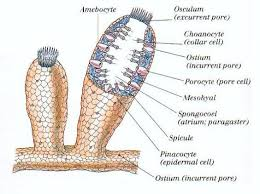
They have a porous body with numerous tiny openings or pores.
They are multicellular but do not have well-defined tissues or organs.
A canal system formed by these pores aids in the circulation of water and nutrients.
Mostly found in marine habitats, and they are non-motile.
Examples: Spongilla, Sycon
Did You Know?
Sponges can regenerate if broken into smaller pieces, as each piece can grow into a new sponge.
Phylum Coelenterata (Cnidaria)
Key Features:
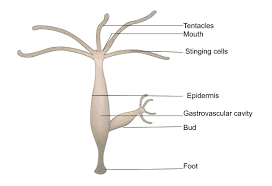
Body contains a hollow cavity.
Tissues are arranged in two layers (diploblastic).
Can exist in colonies (like corals) or live solitarily (like sea anemones).
They have special stinging structures called nematocysts for defence and capturing prey.
Mostly aquatic, found in marine and sometimes freshwater habitats.
Examples: Hydra, Jellyfish
Fun Fact
Corals, though appearing like colourful plants, are actually colonies of tiny animals called polyps.
Phylum Platyhelminthes
Key Features:
Commonly known as flatworms.
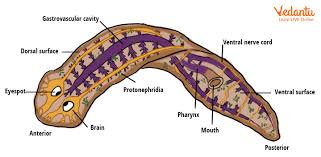
They are dorsoventrally flattened (thin from top to bottom).
Tissues are triploblastic (three layers), but they lack a true coelom (body cavity).
Bilaterally symmetrical.
They can be free-living (Planaria) or parasitic (liver flukes).
Examples: Tapeworm, Planaria
Interesting Note
Planaria can regenerate a complete worm from small body segments, making them popular in regeneration studies.
Phylum Nematoda
Key Features:
Also called roundworms.
Triploblastic and bilaterally symmetrical.
Possess a pseudocoelom (false body cavity).
Many nematodes are parasitic and can cause diseases in humans and other organisms (for example, Ascaris causes ascariasis).
Examples: Ascaris (roundworm), Wuchereria (filarial worm)
.png)
Health Tip
Washing fruits and vegetables thoroughly helps prevent nematode infections.
Phylum Annelida
Key Features:
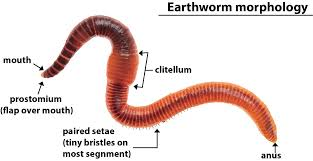
Commonly known as segmented or ringed worms.
Body is segmented and shows bilateral symmetry.
Triploblastic with a true body cavity (coelom).
They can be found in marine environments, freshwater, or on land (moist soil).
Have well-developed organ systems.
Examples: Earthworm, Leech
Useful Fact
Earthworms are often called “friends of farmers” because they help in aerating and fertilising the soil.
Phylum Arthropoda
Key Features:
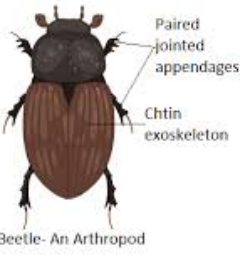
This is the largest phylum in the animal kingdom.
Name means “jointed legs”.
Bilaterally symmetrical, triploblastic, with a segmented body.
Have an exoskeleton made of chitin.
They possess an open circulatory system (blood does not flow in closed vessels).
Examples: Spiders, Butterflies, Mosquitoes, Cockroaches
Fun Observation
Arthropods can be found in every possible habitat – from deep seas to high mountains.
Phylum Mollusca
Key Features:
Second-largest phylum in the animal kingdom.
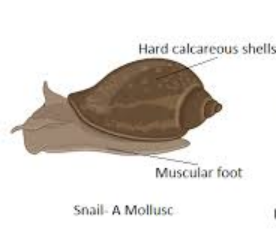
Bilaterally symmetrical, triploblastic, and less segmented than annelids and arthropods.
Possess a well-developed organ system and generally have an open circulatory system.
Many have a muscular foot for movement and a mantle that secretes a shell.
Examples: Snails, Octopus, Clams
Extra Info
Octopuses are among the most intelligent invertebrates, capable of problem-solving.
Phylum Echinodermata
Key Features:
Means “spiny-skinned” animals (echino = spines, derma = skin).
They are exclusively marine.
Adult echinoderms have radial symmetry, but their larvae show bilateral symmetry.
Triploblastic and have a true coelom.
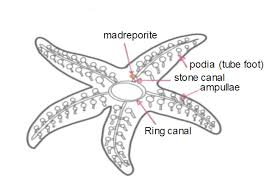
Have a water vascular system that helps in movement, feeding, and respiration.
Examples: Sea Urchins, Starfish, Brittle Stars
Cool Fact
Starfish can regenerate lost arms, which can sometimes lead to a completely new individual arm regrowing into a full starfish.
Phylum Hemichordata
Key Features:
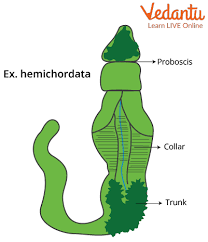
Worm-like marine animals with a soft, fragile body.
The body is divided into a proboscis, collar, and trunk.
Organ-system level of organisation, with an open circulatory system.
Respiration occurs through gill slits.
Sexes are usually separate, and fertilisation is external.
Examples: Balanoglossus, Saccoglossus
Note
Hemichordates are sometimes considered a link between invertebrates and chordates, due to certain similar features.
Phylum Chordata and Its Subphyla
Key Features of Chordates:
Bilaterally symmetrical, triploblastic.
Possess a notochord (in some stage of life) and a dorsal nerve cord.
Closed circulatory system.
Phylum Chordata is further divided into three subphyla:
Urochordata (Tunicates)
Notochord is present only in the larval stage.
Adults are mostly sessile (non-motile).
Cephalochordata (Lancelets)
Notochord is present throughout life.
The body is fish-like, and they live in marine habitats.
Vertebrata
Have a vertebral column (backbone) replacing the notochord in adults.
Further classified into classes such as Pisces (fishes), Amphibia, Reptilia, Aves (birds), and Mammalia (mammals).
Quick Quiz (With Answers)
1. Which phylum is known for spiny skin?
Answer: Echinodermata
2. Name the largest phylum in the animal kingdom.
Answer: Arthropoda
3. Which phylum includes roundworms?
Answer: Nematoda
4. Which phylum is characterised by a water vascular system?
Answer: Echinodermata
5. In which phylum do animals have a pseudocoelom?
Answer: Nematoda
Related Topics


FAQs on Animal Kingdom Classification and Taxonomic Hierarchy
1. What is animal kingdom classification?
Animal kingdom classification is the systematic grouping of animals into categories based on shared characteristics and evolutionary relationships. It helps scientists organize the vast diversity of animals using features such as:
- Level of body organization (cellular, tissue, organ system)
- Symmetry (asymmetrical, radial, bilateral)
- Type of coelom (acoelomate, pseudocoelomate, coelomate)
- Segmentation and body plan
- Presence or absence of a notochord
2. What are the main criteria used in animal classification?
The main criteria used in animal classification are structural and developmental features that reflect evolutionary relationships. These include:
- Level of organization (cellular, tissue, organ, organ system)
- Body symmetry (radial or bilateral)
- Germ layers (diploblastic or triploblastic)
- Type of body cavity (coelom)
- Segmentation of the body
- Presence of a notochord
3. What are the major phyla of the Animal Kingdom?
The major phyla of the Animal Kingdom are broad groups of animals classified based on body structure and organization. The commonly studied phyla include:
- Porifera (sponges)
- Cnidaria (Hydra, jellyfish)
- Platyhelminthes (flatworms)
- Nematoda (roundworms)
- Annelida (earthworms)
- Arthropoda (insects, crabs)
- Mollusca (snails, octopus)
- Echinodermata (starfish)
- Chordata (animals with notochord)
4. What is the difference between invertebrates and vertebrates?
The main difference between invertebrates and vertebrates is the presence of a vertebral column. Vertebrates have a backbone and an internal skeleton, while invertebrates lack a backbone.
- Vertebrates: Include fishes, amphibians, reptiles, birds, and mammals; possess a notochord at some stage.
- Invertebrates: Include arthropods, molluscs, annelids, etc.; may have an exoskeleton or no skeleton.
5. What is symmetry in animal classification?
Symmetry in animal classification refers to the balanced arrangement of body parts around a central axis. It is classified into:
- Asymmetry: No definite shape (e.g., sponges).
- Radial symmetry: Body parts arranged around a central axis (e.g., jellyfish).
- Bilateral symmetry: Body divided into two equal halves (e.g., humans, insects).
6. What is a coelom and why is it important in classification?
A coelom is a fluid-filled body cavity completely lined by mesoderm, and it is important because it helps classify animals based on internal body structure. Animals are grouped as:
- Acoelomates: No body cavity (e.g., flatworms).
- Pseudocoelomates: Body cavity not fully lined by mesoderm (e.g., roundworms).
- Coelomates: True coelom present (e.g., annelids, chordates).
7. What is the significance of the notochord in animal classification?
The notochord is a flexible rod-like structure that defines the phylum Chordata. Its significance includes:
- Provides structural support during embryonic development.
- Present in all chordates at least at one life stage.
- Replaced by the vertebral column in vertebrates.
8. How is the phylum Arthropoda classified?
Phylum Arthropoda is classified based on body segments, number of legs, and type of appendages. Major classes include:
- Insecta: Three body parts, six legs (e.g., butterfly).
- Arachnida: Four pairs of legs, no antennae (e.g., spider).
- Crustacea: Mostly aquatic, two pairs of antennae (e.g., crab).
- Myriapoda: Many legs (e.g., centipede).
9. What are the main characteristics of phylum Chordata?
Phylum Chordata is characterized by the presence of specific features at some stage of life. These include:
- Notochord
- Dorsal hollow nerve cord
- Pharyngeal slits
- Post-anal tail
10. Why is animal classification important in biology?
Animal classification is important because it helps scientists identify, study, and understand the evolutionary relationships among animals. Its importance includes:
- Provides a systematic way to name organisms using binomial nomenclature.
- Helps trace evolutionary history and common ancestry.
- Makes identification and comparison of species easier.
- Supports research in ecology, medicine, and conservation biology.



