




What are the parts of a seed and their functions
Seeds are the foundation of new plant growth. They lie dormant until they receive the right conditions to germinate, such as adequate sunlight, water, and soil. In this article, we will discuss the 3 parts of a seed and show simple parts and their functions. We will also cover monocot and dicot seeds, provide learning tips, and include a short quiz at the end. Read this article to learn and understand about seeds easily.
Overview of Seed Structure
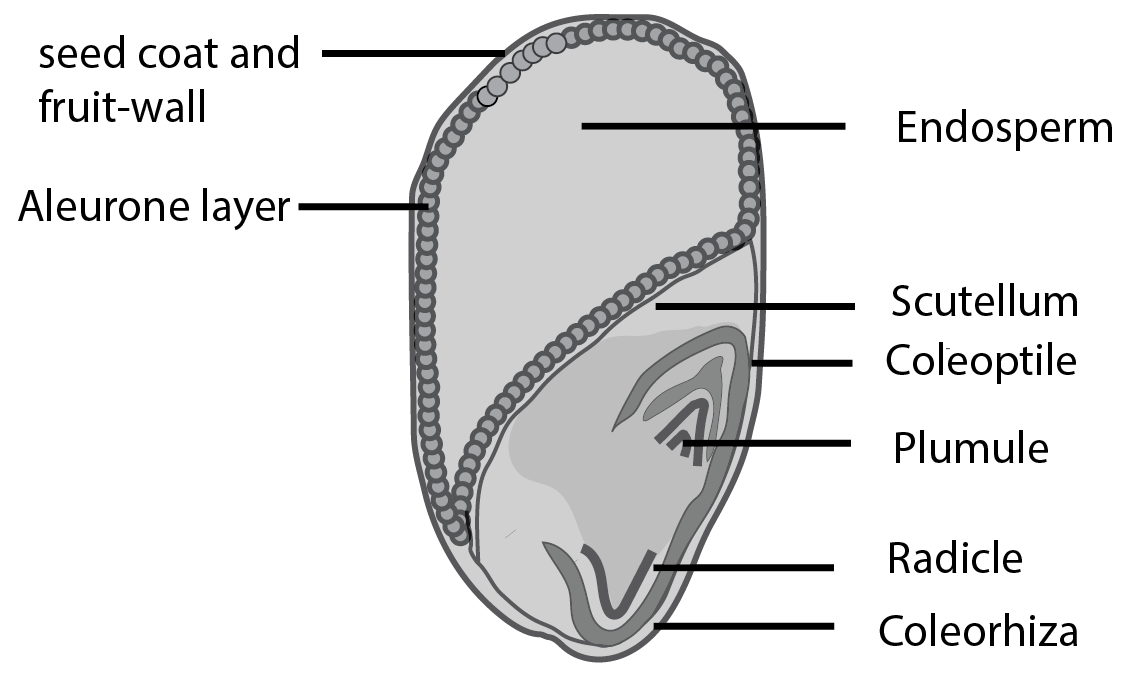
What are the parts of seeds? In general, every seed contains three major components:
Seed Coat
Endosperm
Embryo
These 3 main parts of a seed and their functions work together to ensure successful seed germination and the development of a healthy plant. Let us explore each one in detail.
Seed Coat: The Protective Shield
The seed coat is the tough outer layer that safeguards the inner components of the seed from damage, extreme temperatures, and parasites. It has two layers:
Testa: The thick outer layer which shields the seed from physical harm and prevents excessive water loss.
Tegmen: The thinner inner layer, which also helps protect the developing embryo.
Two important structures visible on some seed coats are:
Micropyle: A tiny opening through which the seed absorbs water and minerals necessary for germination.
Hilum: The scar left behind where the seed was once attached to the fruit (similar to a ‘navel’ in humans).
A strong seed coat helps prevent germination under unfavourable conditions, allowing the seed to survive until the environment is suitable.
Endosperm: The Nutrient Storehouse
The endosperm lies just beneath the seed coat in many seeds. It is a rich source of nutrition that supports the embryo until it can produce leaves and begin photosynthesis. Key points include:
Nutritional Content: Primarily composed of starch, carbohydrates, and proteins.
Role in Different Seeds:
In cereals like corn, the endosperm is a large portion of the seed.
In seeds such as beans, the endosperm is used up during embryonic development, so it is usually absent in the mature seed.
Coconuts contain liquid endosperm (the coconut water) as well as solid endosperm (the white coconut flesh).
The endosperm ensures the young embryo can remain viable until it sprouts.
Embryo: The Future Plant
The embryo is the heart of the seed. It is diploid (containing two sets of chromosomes) and develops from a fertilised egg cell. All the cells required to form a new plant are present here. The embryo has several parts:
Epicotyl: This tiny shoot will eventually develop into the plant’s shoot system (stems and leaves).
Hypocotyl: The region connecting the radicle and the cotyledons; sometimes referred to as the part that forms the primary root in certain germination types.
Radicle: The first embryonic root to appear during germination. It anchors the plant in the soil and starts absorbing water and nutrients.
Cotyledons: Also called “seed leaves”, they store food (starch and proteins) and may also appear above the ground during germination to aid in early photosynthesis.
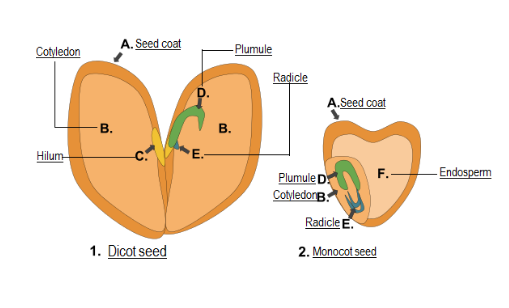
Monocot and Dicot Seeds
Seeds can be broadly grouped into two types:
Monocotyledonous (Monocot) Seeds
Contain a single cotyledon (e.g., rice, wheat, maize).
Often, they have a large endosperm that provides nourishment to the embryo.
Dicotyledonous (Dicot) Seeds
Contain two cotyledons (e.g., bean, tomato, pea).
The cotyledons are typically fleshy and may store nutrients instead of an endosperm.
Learning the difference between monocot and dicot seeds further enriches your understanding of parts of a seed and their functions.
Practice Quiz with Answers
Test your understanding with this quick quiz:
Which part of the seed stores food for the developing embryo?
A. Seed Coat
B. Endosperm
C. Hilum
D. Micropyle
Which of the following is the first structure to emerge during germination?
A. Epicotyl
B. Radicle
C. Cotyledon
D. Hilum
Which layer of the seed coat is thick and protective?
A. Tegmen
B. Testa
C. Micropyle
D. Epicotyl
What are the parts of seeds?
A. Seed Coat, Endosperm, and Embryo
B. Testa, Tegmen, and Micropyle
C. Epicotyl, Radicle, and Cotyledons
D. Monocot and Dicot
Answers:
B
B
B
A
Related Topics


FAQs on Parts of a Seed Explained with Structure and Diagram
1. What are the main parts of a seed?
The main parts of a seed are the seed coat, embryo, and cotyledon(s) (food storage tissue).
- Seed coat – Protective outer covering.
- Embryo – Young developing plant inside the seed.
- Cotyledon(s) – Store or absorb food for the embryo.
2. What is the function of the seed coat?
The seed coat protects the seed from physical damage, infection, and dehydration.
- It is formed from the integuments of the ovule.
- It prevents mechanical injury.
- It reduces water loss during dormancy.
- It may help in seed dispersal.
3. What is the embryo in a seed?
The embryo is the young, undeveloped plant inside the seed that grows into a new plant during germination.
- It contains the radicle (future root).
- The plumule (future shoot).
- One or two cotyledons.
4. What is the role of cotyledons in a seed?
The cotyledons store or absorb nutrients to nourish the embryo during germination.
- In dicots, there are two cotyledons (e.g., bean).
- In monocots, there is one cotyledon (e.g., maize).
- They may store food directly or absorb it from the endosperm.
5. What is the difference between monocot and dicot seeds?
The main difference between monocot and dicot seeds is the number of cotyledons present.
- Monocot seeds – One cotyledon (e.g., maize, wheat).
- Dicot seeds – Two cotyledons (e.g., bean, pea).
- Monocots usually retain a prominent endosperm.
- Dicots often store food in cotyledons.
6. What is the endosperm in a seed?
The endosperm is a nutrient-rich tissue that provides food to the developing embryo.
- Formed after double fertilization in angiosperms.
- Contains starch, proteins, or oils.
- Common in monocot seeds like maize and rice.
7. What are the radicle and plumule in a seed?
The radicle and plumule are parts of the embryo that develop into the root and shoot of a new plant.
- Radicle – First part to emerge; forms the primary root.
- Plumule – Develops into the stem and leaves.
8. What is the hilum and micropyle in a seed?
The hilum is the scar where the seed was attached to the ovary, and the micropyle is a small opening in the seed coat.
- Hilum – Point of attachment to the funiculus.
- Micropyle – Allows water entry during germination.
9. How do the parts of a seed help in germination?
The parts of a seed work together to support germination and early seedling growth.
- Seed coat – Protects until conditions are favorable.
- Micropyle – Allows water absorption.
- Cotyledons/endosperm – Provide stored nutrients.
- Radicle – Forms the root.
- Plumule – Forms the shoot.
10. Can you give an example of the parts of a bean seed?
A bean seed (a dicot seed) contains all the major parts of a typical dicotyledonous seed.
- Seed coat – Outer protective layer.
- Two cotyledons – Store food.
- Embryo – Includes radicle and plumule.
- Hilum and micropyle – Visible external marks.



