




What Is a Nightshade Plant Classification Characteristics and Examples
Hello, plant explorers! Today at Vedantu, let’s take a magical journey into the world of the Nightshade Plant family. Did you know that some of your favorite veggies (even French fries!) come from nightshade relatives? But watch out—not all nightshade plants are safe to munch! Ready to spot the differences, learn their secrets, and become a nightshade plant pro? Let’s dig in!
Meet the Nightshade: Not Just a Spooky Name!
The nightshade plant might sound like something from a fairy tale, but it’s actually a huge family of real plants. Scientists call this family Solanaceae. Nightshade plants live all over the world, from home gardens to wild fields.
Where Nightshades Grow and Who’s in the Family?
Plants in the Solanaceae family grow in many climates—some like cool places, while others love the sun. The family has nearly 2,300 species. That’s a LOT of plant cousins! When you eat potatoes, tomatoes, brinjal (that’s eggplant), or even pick spicy chilies, you’re enjoying tasty members of the nightshade team.
Nightshade Family Quick List:
- Potato (Solanum tuberosum)
- Tomato (Solanum lycopersicum)
- Brinjal/Eggplant (Solanum melongena)
- Chili and Capsicum
- Deadly Nightshade (Atropa belladonna)
- Tobacco (Nicotiana tabacum)
- Datura (thorn apple)
Root to Fruit: Secret Parts of Nightshade Plants
Nightshade plants may look simple, but every part works hard! Even their flowers have cool features that help you spot them in any science test or garden.
Let’s Explore Plant Parts
- Roots: Usually fibrous or with tubers (think potatoes!).
- Stems: Can be green and soft (herbaceous) or woody in bushes.
- Leaves: Most often simple (one piece) and arranged one after another. They can have wavy or toothed edges.
- Flowers: Always radially symmetrical ("wheel-shaped"), often with five petals joined together, five sepals, and five stamens. Look for yellow, purple, or white flowers on many nightshades.
- Fruits: Usually berries (like tomatoes) or dry capsules (like in Datura).
Can You Picture a Nightshade Plant?
Imagine you have a tomato plant in front of you. It has soft stems, bright green leaves, yellow star-shaped flowers, and grows yummy red berries (the tomatoes!). If you peel back the flower, you’ll see five petals, five sepals, and the tiny parts that make pollen and seeds.
Nightshade Leaf Quick Diagram
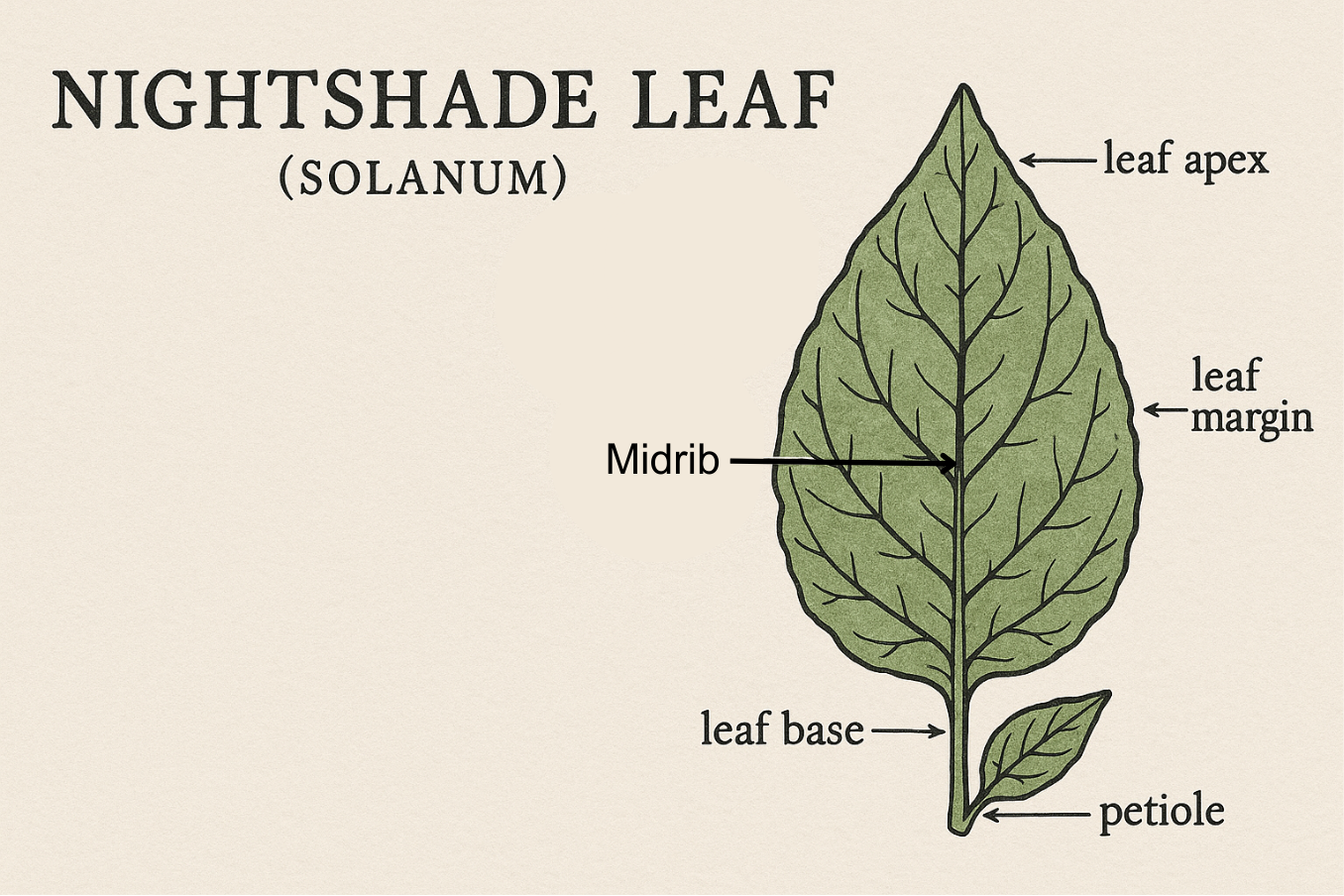
Parts: Petiole, Lamina, Margin, Veins
How Nightshades Live, Grow, & Trick the World
Photosynthesis and Beyond!
Nightshade plants, just like many others, use photosynthesis to make their own food from sunlight. Their leaves are green because of chlorophyll. They soak up sunlight and turn it—like magic—into food!
Smart Survival Tricks
- Some nightshade roots store extra food (like potato tubers) to help the plant survive winter.
- Bright red or yellow fruits attract animals and humans, who help spread their seeds.
- A few have special chemicals called "alkaloids"—good for medicine, but can be toxic!
Why Are Nightshade Plants So Famous?
Nightshade plants are superheroes in our kitchens and science labs. They can be tasty vegetables, important medicines, scary poison plants—or all three!
Super Uses (Food, Medicine, More!)
| Plant | Main Use | Extra Fact |
|---|---|---|
| Tomato | Food (fruit/veggie) | Rich in Vitamins |
| Potato | Food (tuber) | Grows underground |
| Brinjal/Eggplant | Food (fruit) | Called "Baingan" in India |
| Chili/Capsicum | Spice, medicine | Source of capsaicin |
| Deadly Nightshade | Medicine, poison | Very toxic—do not eat! |
| Tobacco | Industry, medicine | Nicotine plant |
Some nightshades save lives with their medicine, but others can be dangerous if eaten by mistake. Always check before tasting a wild plant!
Nightshade vs. Bean Family – Spot the Surprising Differences!
How Can You Tell Them Apart?
| Feature | Nightshade (Solanaceae) | Bean Family (Fabaceae) |
|---|---|---|
| Flower symmetry | Actinomorphic ("star" shape) | Zygomorphic ("butterfly" shape) |
| Fruit type | Berry/capsule | Legume (pod) |
| Famous members | Potato, Tomato, Brinjal | Peas, Beans, Gram |
So, if you see a plant with a “pod” (like a pea), it’s probably not a nightshade!
Speedy Quick Facts: Nightshade Table
| Feature | What It Means | Fun to Know |
|---|---|---|
| Family | Solanaceae | Called the nightshade family |
| Fruits | Usually berry or capsule | Tomato is a berry! |
| Edible parts | Fruits, tubers, leaves (rare) | Potato's "fruit" is underground! |
| Dangerous cousins? | Yes! Some are very poisonous | Like Deadly Nightshade |
| Famous for | Food, medicine, poison | Essential to global cuisine |
Who’s Who? Fun Example Time!
Question: Is a potato a root or a stem? Which family does it belong to?
Answer: Potato is actually a stem called a tuber (it has buds called "eyes"), not a root. It belongs to the nightshade family (Solanaceae)!
Time to Practice: Can You Answer These?
- Name two edible and one poisonous nightshade plant.
- What kind of fruit do most nightshades have?
- How do you tell a nightshade flower from a bean flower?
Don’t Get Tricked! Common Mix-Ups and Mistakes
Be careful—some members of the nightshade family look like harmless vegetables but are really toxic (like deadly nightshade or Datura!). Don’t eat wild nightshade berries unless you are 100% sure they are safe! The tomato and the potato are both nightshades, but one is fruit and the other is a tuber. And not every berry-shaped fruit is safe to eat!
Wrap-Up: Nightshade Ninjas—You Did It!
Now you know all about the amazing nightshade plant family—Solanaceae. From delicious food to important medicines and even poisons, these plants have a big story! Next time you see a tomato or potato, remember you’re looking at a superstar from the nightshade world. If you need more plant puzzles, word meanings, or help with botany, Vedantu is here for you.
Want to keep exploring the plant world? Try learning about plant classification and the plant kingdom—there’s always more to discover. Happy learning, plant detectives!


FAQs on Nightshade Plant Overview and Botanical Classification
1. What is a nightshade plant?
A nightshade plant is any plant belonging to the family Solanaceae, a diverse group of flowering plants that includes both edible and poisonous species. The Solanaceae family contains over 2,500 species and is characterized by:
- Alternate leaves and five-petaled flowers
- Fruits that are berries or capsules
- Production of bioactive compounds called alkaloids
2. What are some common examples of nightshade plants?
Common examples of nightshade plants include both edible crops and toxic species within the Solanaceae family. Examples include:
- Tomato (Solanum lycopersicum)
- Potato (Solanum tuberosum)
- Eggplant (Solanum melongena)
- Bell pepper and chili pepper (Capsicum species)
- Deadly nightshade (Atropa belladonna)
- Tobacco (Nicotiana tabacum)
3. Why are some nightshade plants poisonous?
Some nightshade plants are poisonous because they produce toxic alkaloids that affect the nervous system. These chemical compounds function as natural defense mechanisms against herbivores. Important toxic alkaloids include:
- Atropine in deadly nightshade
- Solanine in green potatoes
- Nicotine in tobacco
4. What is solanine and how does it affect the body?
Solanine is a toxic glycoalkaloid found mainly in green or sprouting potatoes and other Solanum species. It acts as a natural pesticide for the plant and can affect humans when consumed in large amounts. Effects of solanine include:
- Nausea and vomiting
- Abdominal pain and diarrhea
- Neurological symptoms in severe cases
5. What is the scientific classification of nightshade plants?
Nightshade plants belong to the family Solanaceae within the flowering plants. Their scientific classification is:
- Kingdom: Plantae
- Clade: Angiosperms (flowering plants)
- Clade: Eudicots
- Order: Solanales
- Family: Solanaceae
6. What are the main characteristics of the Solanaceae family?
The Solanaceae family is characterized by specific floral, fruit, and chemical features common to nightshade plants. Key characteristics include:
- Five fused petals forming a tubular or star-shaped flower
- Five stamens attached to the corolla
- Fruits that are berries (e.g., tomato) or capsules (e.g., tobacco)
- Presence of biologically active alkaloids
7. How do nightshade plants defend themselves from herbivores?
Nightshade plants defend themselves primarily by producing toxic alkaloids that deter herbivores and insects. These chemical defenses:
- Interfere with nerve transmission in animals
- Create bitter taste to discourage feeding
- Reduce insect growth or survival
8. Are tomatoes and potatoes considered nightshades?
Yes, tomatoes and potatoes are members of the Solanaceae family and are classified as nightshade plants. Specifically:
- Tomato: Solanum lycopersicum
- Potato: Solanum tuberosum
9. What is deadly nightshade and why is it dangerous?
Deadly nightshade is a highly toxic plant known scientifically as Atropa belladonna that contains potent alkaloids affecting the nervous system. It produces compounds such as:
- Atropine
- Scopolamine
- Hyoscyamine
10. What is the economic importance of nightshade plants?
Nightshade plants are economically important because they include major food crops, medicinal plants, and commercial products. Their importance includes:
- Food crops such as tomato, potato, eggplant, and peppers
- Medicinal uses of alkaloids like atropine
- Industrial crop tobacco for nicotine production



