







What Is an Alphabet Game for Kids and How Does It Help Early Learning
To help with letter recognition, experts advocate introducing your child to letters early and regularly. Once your kid has mastered the recognition of each letter of the alphabet and its matching sound, they can go on to the more difficult task of recognizing full words and their sounds, both of which are critical components in the development of essential reading abilities.
Alphabet activities are a great method for your youngster to become more familiar with letters, both visually and verbally. Your child will enjoy learning in a variety of ways without even noticing it since it will exercise both fine and gross motor skills and provide a wonderful opportunity for sensory play.
You can begin by introducing your youngster to basic ABC Learning activities, which introduce the letters in a fun way. When the children are introduced to the noises, these activities improve both visual and aural recognition. The next logical step is to introduce tracing activities and alphabet writing games so that your youngster can practise writing each letter. For young children, our activities are entertaining and engaging, and they provide a stress-free approach to learning how to write the alphabet.
So, let's have a look at simple and enjoyable alphabet games you can play with your child at home right now!
Beach Ball Alphabet Game
An inflatable beach ball and a sharpie marker are all you'll need for this game. Toss the ball to your child and write each letter of the alphabet on it at random. Request that they identify the letter that is closest to their left thumb. They must transmit the ball to the next individual who must do the same. Ask them to state the number closest to their right pinky finger as an added challenge, adding an extra finger for each subsequent round.
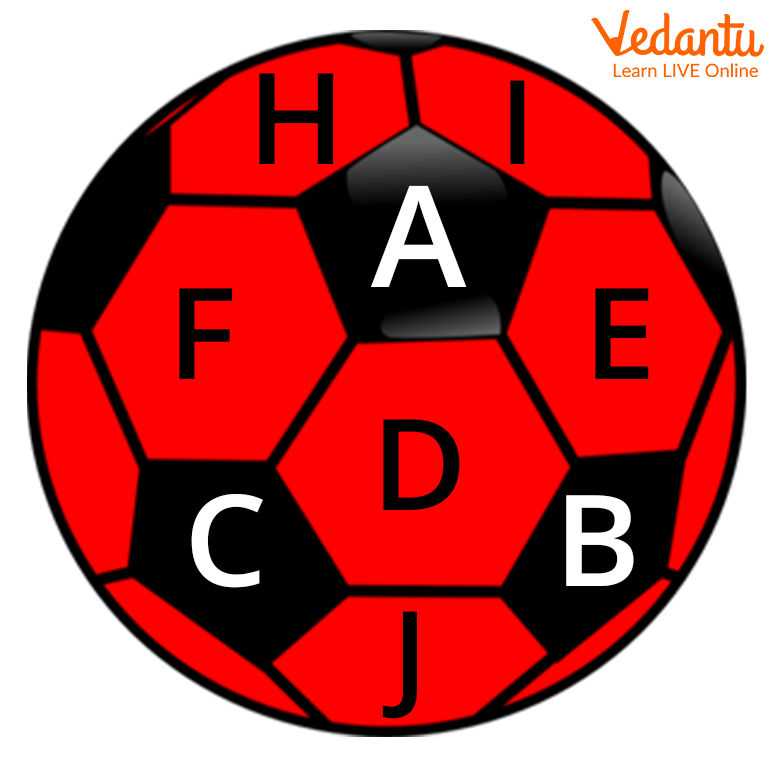
Beach Ball Alphabet Game
Alphabet Soup
Playing Alphabet Soup is a great method to introduce your child to the alphabet. This game can be played in a variety of ways, but the original version only requires toy alphabet letters and a large kitchen pot. Simply drop the letters into the pot and let your child play with them, stirring the "soup" with a spatula or practising scooping up the letters with measuring cups while naming each letter. You can even do this in the bath with some tiny bowls and waterproof lettering. With so many options, you can easily change up this alphabet game to keep it interesting for your kids.
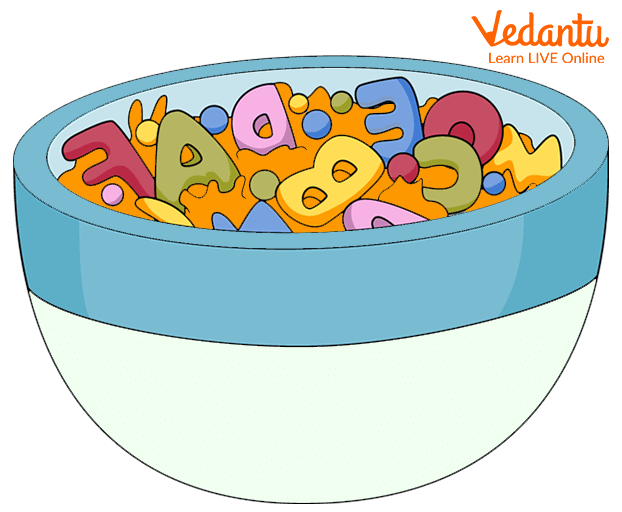
Alphabet Soup
Alphabet Scavenger Hunt
Scavenger hunts are enjoyable for people of all ages! Begin by writing each letter of the alphabet on a separate sheet of paper and scattering them across the floor. Request that your youngster collect items that begin with each letter and arrange them on the appropriate paper. Start with groups of five letters for younger children. If you're working with older kids, set a time limit for each letter.
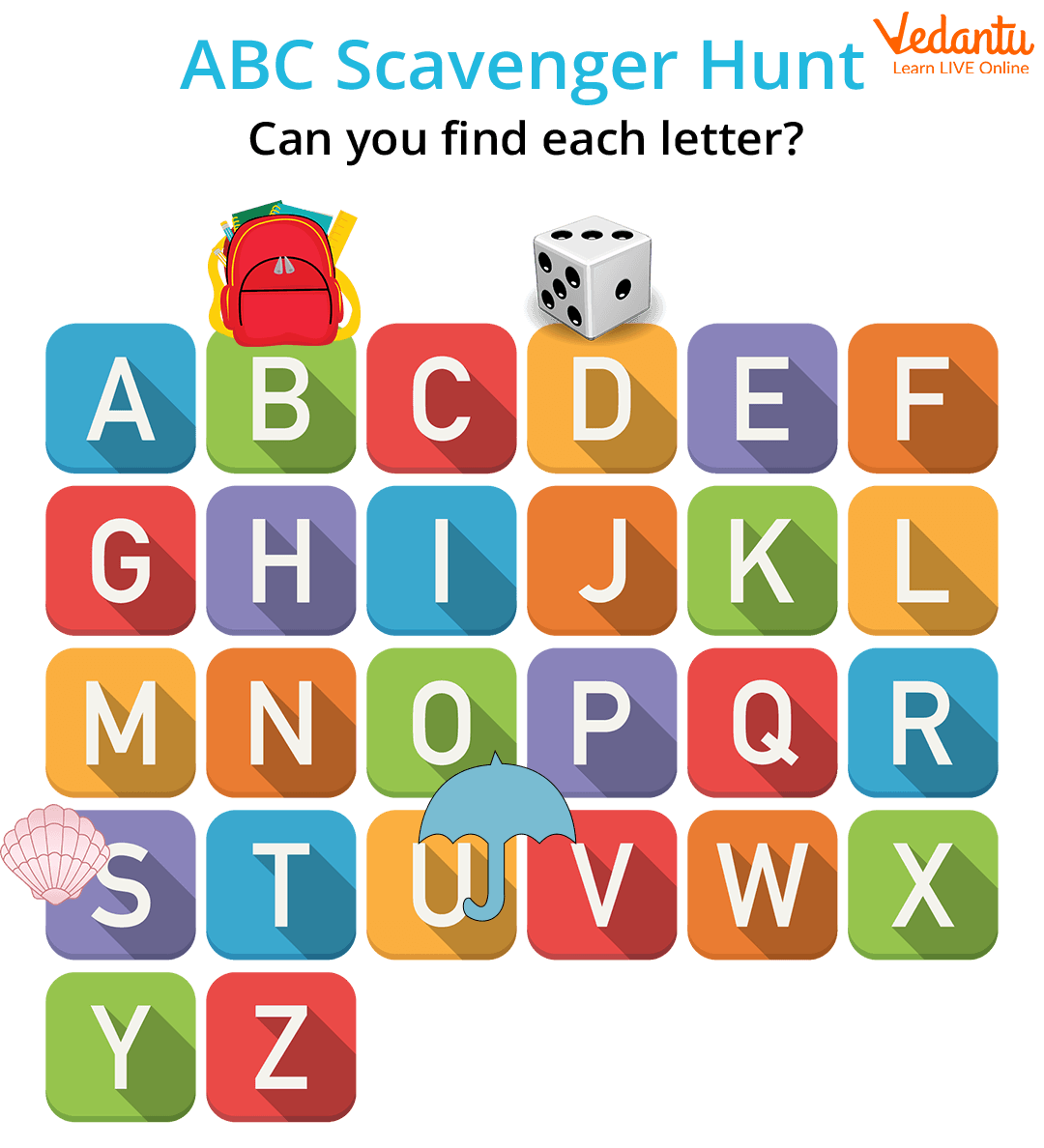
ABC Scavenger hunt
Scrabble Matching Game
Make a set of basic images that start with each letter of the alphabet. Ask your child to match the first letter tile to each image using a set of scrabble tiles. Ask them to use the scrabble tiles to spell out the image's name for a more complex variation.
ABC Jelly Letter Hunt
This is a beautiful sensory alphabet game for individuals who are willing to get their hands dirty. Prepare a batch of Jelly ahead of time, then drop alphabet letters into the mixture and put it aside. Your child's task is to "search" for all of the alphabet letters and name them as they come across them. You could even find yourself singing along to the tune of "We're going on a bear hunt!"
Alphabet Puzzles
The alphabet puzzle is another excellent activity for learning letters. Because children can touch and manipulate letters as well as see them in 3D, puzzles are ideal for kinesthetic and visual learners. For audio learners, speak the letter loudly and have your child say it once they've placed it in the correct spot.
FAQs on Alphabet Game for Kids That Makes Learning Letters Fun
1. What is an alphabet game for kids?
An alphabet game for kids is a fun learning activity that helps children recognize, say, and use letters from A to Z. These games improve letter recognition, phonics skills, and early reading ability.
- Children practice identifying uppercase and lowercase letters.
- They connect letters with sounds (e.g., A – apple).
- They build early vocabulary through playful activities.
2. How do you play a simple alphabet game with kids?
A simple alphabet game can be played by asking children to name a word for each letter from A to Z. This strengthens phonemic awareness and vocabulary.
- Step 1: Say a letter (e.g., B).
- Step 2: The child says a word starting with that letter (e.g., ball).
- Step 3: Continue through the alphabet in order.
3. Why are alphabet games important for preschoolers?
Alphabet games are important for preschoolers because they build the foundation for reading and writing skills. Learning letters is the first step in literacy development.
- They improve letter recognition.
- They strengthen phonics and sound awareness.
- They boost confidence in early learning.
4. What are some fun alphabet games for kindergarten?
Some fun alphabet games for kindergarten include interactive activities that combine movement and learning. These games make letter practice enjoyable.
- Alphabet scavenger hunt – Find objects that start with a chosen letter.
- Alphabet bingo – Match spoken letters to printed ones.
- Letter matching game – Pair uppercase and lowercase letters.
5. How can alphabet games help with phonics?
Alphabet games help with phonics by teaching children the connection between letters and their sounds. This skill is essential for decoding words while reading.
- Children repeat letter sounds (e.g., C says /k/).
- They blend sounds to form simple words like cat.
- They identify beginning sounds in words.
6. What is the difference between uppercase and lowercase letters in alphabet games?
The difference between uppercase letters and lowercase letters is their size and usage in writing. Uppercase letters are also called capital letters.
- Uppercase: Used at the beginning of sentences and for proper nouns (e.g., A, B, C).
- Lowercase: Used in most other parts of writing (e.g., a, b, c).
7. At what age should kids start playing alphabet games?
Kids can start playing simple alphabet games around the age of 2 to 4 years old, depending on their readiness. Early exposure supports language development.
- Age 2–3: Sing the ABC song and recognize letters.
- Age 3–4: Match letters and say basic sounds.
- Age 4–5: Identify letters and form simple words.
8. Can alphabet games improve vocabulary in children?
Yes, alphabet games improve vocabulary by encouraging children to think of words for each letter. This expands word knowledge naturally.
- For D: dog, duck, doll.
- For M: milk, moon, monkey.
- For S: sun, star, snake.
9. What are some online alphabet games for kids?
Online alphabet games for kids are digital activities that teach letters through interactive learning. They combine visuals, sounds, and animations.
- Letter tracing games to practice writing.
- Phonics matching games to connect sounds and letters.
- Alphabet puzzles for sequencing A to Z.
10. How do alphabet games prepare kids for reading?
Alphabet games prepare kids for reading by helping them understand that words are made of letters and sounds. This awareness is called early literacy.
- They learn letter names and sounds.
- They practice blending sounds into words like bat.
- They recognize common beginning letters in books.
