







What Is Air Transport for Children Definition Types and Examples
An aeroplane flying overhead with a rumbling sound intrigues us. We run to the roofs and balconies to check what it looks like. There are different types of air travel methods we use in the modern world. Let us find out about these types and their functions. Before that, let us learn what air travel means.
What is Air Travel?
The process of using a machine that can fly and take humans or things from one place to another is called air travel. In this type of travel, air vehicles don’t use roads or waterways. The vehicles travel mid-air. Common examples are aeroplanes, helicopters, etc. These vehicles can be found in airports and aerodromes.
How Air Travel was Invented?
Humans have been very curious about the ways birds fly in the air. They always thought the reason behind the flight of birds and could not figure out the reason behind us being flightless. Over the years, inventors and scientists tried to make vehicles that will help humans travel by air.
In 1903, Orville Wright and Wilbur Wright were the two inventors who successfully designed and tested the first engine-powered aeroplane. Before that, humans invented and used gliders in 1783 but the flight span was limited.
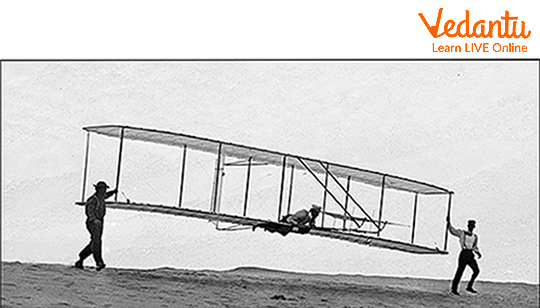
The First Flight in 1903
As time passed, we made significant developments in air travel and transport. We have designed and successfully used aeroplanes, rockets, spaceships, hot air balloons, and helicopters. Today, we can easily complete a round of our world in a day.
Types of Air Travel
People use air transport for various purposes. They travel in these air vehicles for personal and professional reasons. It is used by common people and governments for various purposes.
In a broader sense, there are two types of air travel for common people considering political boundaries. They are:
Domestic Flight: It is a flight service offered to citizens travelling inside the boundaries of their respective countries. Flights travelling within a country are called domestic flights.
International Flights: It is a flight service that takes passengers and things from one country to the other.
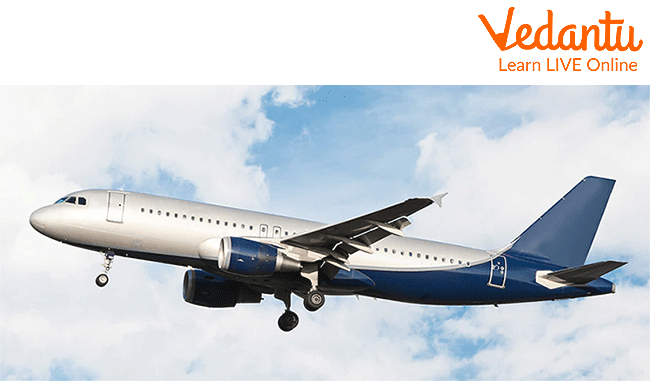
Modern Aeroplane Carrying Passengers
There are different types of classes based on the types of service a passenger wants.
Economy
Premium Economy
Business Class/Club Class
First Class
As we go down on this list, the facilities become better and the service charges increase.
Government Air Travel Purposes
Apart from common people, government bodies and military organisations use air travel for different purposes. They use different air vehicles to transport military personnel and machinery. They also use such modes for conducting missions.
Advantages of Air Travel
High-speed transportation method
Fast service availability
Can carry passengers and freight
No traffic jam
Less pollution when compared to road transport and the number of passengers
Disadvantages of Air Travel
It is riskier to travel in aeroplanes mid-air.
The cost of air tickets is higher than other conventional transport mediums.
Passengers cannot carry certain things they want.
Conclusion
This is all about air transport for preschool. It is the fastest way of travelling from one location to the other but is costlier than the other transport methods. It is being made more affordable for common people. There is no doubt that air travel makes life faster in the modern world.
FAQs on Air Transport for Children Explained in Simple Words
1. What is air transport for children?
Air transport for children refers to travel by airplanes or other aircraft designed to safely carry young passengers from one place to another. It includes domestic and international flights used for family trips, school travel, medical transport, or unaccompanied minor services. In simple terms, it means children traveling by air travel instead of by road, rail, or sea.
2. What are the rules for children traveling on airplanes?
The rules for children traveling on airplanes depend on the airline, but most require age-based guidelines and safety measures. Common airline rules for children include:
- Infants (usually under 2 years) may travel on a parent’s lap or in an approved child seat.
- Children over 2 years must have their own seat.
- Some airlines offer unaccompanied minor services for children traveling alone.
- Valid identification or passport is required for international flights.
Always check specific airline policies before booking.
3. What is an unaccompanied minor on a flight?
An unaccompanied minor is a child who travels by airplane without a parent or legal guardian. Airlines provide a special unaccompanied minor service to supervise the child from check-in to arrival. This service usually includes:
- Airport staff assistance
- Priority boarding
- Supervision during the flight
- Safe handover to an authorized adult
Age limits and fees vary by airline.
4. At what age can a child fly alone?
Most airlines allow children to fly alone from the age of 5, but only under an unaccompanied minor program. Typical age categories include:
- 5–11 years: Must use unaccompanied minor service.
- 12–17 years: May travel alone, sometimes optionally using supervision services.
Airline policies differ, so checking specific age requirements is important.
5. Is air travel safe for babies and toddlers?
Yes, air travel is generally safe for healthy babies and toddlers when proper precautions are taken. Pediatricians recommend:
- Using an approved child restraint system (CRS) for safety.
- Feeding during takeoff and landing to reduce ear pressure discomfort.
- Consulting a doctor for premature infants or children with health conditions.
Most airlines allow infants as young as a few days old to fly, depending on health guidelines.
6. What documents does a child need for international air travel?
A child traveling internationally by air usually needs a valid passport and sometimes a visa. Additional requirements may include:
- A birth certificate (for proof of relationship)
- A consent letter if traveling without both parents
- Travel insurance documents
Entry requirements depend on the destination country’s immigration laws.
7. How can parents prepare a child for a long flight?
Parents can prepare a child for a long flight by planning comfort, entertainment, and health needs in advance. Helpful steps include:
- Explaining the flight process in simple words.
- Packing snacks, toys, books, or tablets.
- Bringing a neck pillow or blanket.
- Encouraging movement during safe times to prevent stiffness.
Preparation reduces anxiety and makes air travel easier for children.
8. What safety measures are in place for children on airplanes?
Airplanes follow strict aviation safety rules to protect child passengers. Key air travel safety measures include:
- Mandatory seat belts for every passenger.
- Approved child safety seats.
- Trained flight attendants for emergencies.
- Cabin pressure control systems.
These measures ensure that flying remains one of the safest modes of transport.
9. What are the advantages of air transport for children?
The main advantage of air transport for children is faster and more efficient long-distance travel. Other benefits include:
- Reduced travel time compared to road or rail.
- Access to international destinations.
- Improved comfort on modern aircraft.
- Emergency medical air transport availability.
Air travel helps families relocate, vacation, or handle urgent situations quickly.
10. What are common challenges children face during air travel?
Children commonly face ear discomfort, boredom, and travel anxiety during air travel. Typical challenges include:
- Ear pain due to cabin pressure changes.
- Jet lag on long international flights.
- Restlessness during long-haul journeys.
- Fear of flying.
Parents can reduce these issues with preparation, reassurance, and proper in-flight care.
