







How to Plan Treasure Hunt Games for Children with Rules and Themes
Who does not like to play games, especially after school with our friends and siblings? Hide and seek, lock and key, solving puzzles and many more games seem to be fascinating to all of us. These games also help us learn team-building skills and improve our bonding skills with friends.
But have you all heard about the kids' treasure hunt game? It is a very interesting game where you need to solve exciting puzzles and search for hidden treasures. Doesn’t that sound interesting?
In this article, we have provided some tips to play fun treasure hunt games and all the steps that need to follow so that you can enjoy it with your friends.
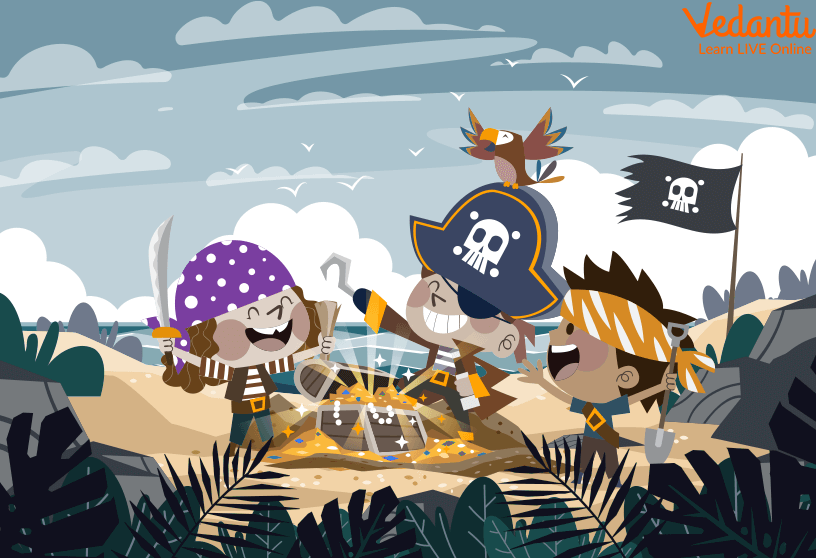
Treasure Hunt Game for Kids
How to Play Treasure Hunt Games?
Treasure Hunt is all about finding and solving the clues, and once you solve the clue you head towards searching for the treasure. Therefore, the very first step in playing a treasure hunt is to provide clues and find an appropriate place to hide the clues.
The clues must be easy to crack and helpful in finding the treasure. You can also add the clue in the form of drawings or pictures. The final clue must lead to the place where the treasure is hidden.
Follow the steps below to set up a treasure hunt with your friends:
First, prepare for the hunt. Choose a location for the treasure and work backwards from there. You could, for example, plot to place the treasure beneath the slide. The water fountain may hold the key to the slide. The park bench, for example, could provide a clue to the location of the water fountain.
Make a drawing for each of the clues. Draw a slide, a water fountain, a park bench, and so on.
While your friends are busy elsewhere, hide the treasure and the clues.
Tell your friends that it's time for the treasure search when you're ready. Give the first hint and tell them to keep looking for more until they find the prize.
Conclusion
Yaay! So, that is how we play treasure hunt. Were you able to find the treasure with your friends? I hope you understood the treasure hunt game and had fun playing it. It is very important for the kids to play and be involved in such games because it will help them to act wisely and improve their logical thinking skills too
FAQs on Treasure Hunt Games for Children Creative and Educational Fun
1. What is a treasure hunt game for children?
A treasure hunt game for children is a fun activity where kids follow clues to find hidden objects or a final prize. It usually involves:
- A starting clue
- A series of hidden hints or riddles
- A final “treasure” such as toys, treats, or certificates
2. How do you organize a treasure hunt for kids at home?
To organize a treasure hunt at home, you need simple clues, hiding spots, and a small prize. Follow these basic steps:
- Choose a theme (pirates, superheroes, animals)
- Create 5–10 age-appropriate clues
- Hide each clue in a safe location
- Place the final treasure at the last spot
3. What are some easy treasure hunt clues for children?
Easy treasure hunt clues for children are short riddles that point to common household objects. Examples include:
- “I keep your food cold.” (Answer: Refrigerator)
- “You sleep on me at night.” (Answer: Bed)
- “I have four legs but cannot walk.” (Answer: Table)
4. What is the difference between a treasure hunt and a scavenger hunt?
The main difference is that a treasure hunt follows sequential clues to one final prize, while a scavenger hunt involves collecting multiple listed items. In a treasure hunt, each clue leads to the next location. In a scavenger hunt, players search for several objects at the same time. Both games are popular for children’s parties and school activities.
5. How long should a treasure hunt game last for kids?
A treasure hunt game for kids should typically last between 20 and 45 minutes, depending on age and group size. General guidelines:
- Ages 4–6: 15–20 minutes
- Ages 7–9: 20–30 minutes
- Ages 10+: 30–45 minutes
6. What are the rules for a children’s treasure hunt?
The basic rules for a children’s treasure hunt are to follow clues in order and play fairly. Common rules include:
- Do not run indoors
- Open only the areas mentioned in clues
- Work as a team (if in groups)
- Respect other players
7. What are some creative treasure hunt themes for children?
Creative treasure hunt themes for children make the game more exciting and immersive. Popular themes include:
- Pirate adventure with maps and gold coins
- Superhero mission with secret tasks
- Jungle safari with animal clues
- Space explorer with planet hints
8. How do you make a treasure map for kids?
To make a treasure map for kids, draw a simple layout showing key landmarks and the final treasure spot. Follow these steps:
- Sketch basic shapes for rooms or outdoor areas
- Add symbols like trees, furniture, or playground items
- Mark the treasure with a bold “X”
- Age the paper by lightly coloring the edges brown (optional)
9. What skills do treasure hunt games develop in children?
Treasure hunt games help children develop problem-solving, teamwork, and critical thinking skills. They also improve:
- Reading comprehension (understanding clues)
- Logical reasoning
- Communication skills
- Physical coordination during active play
10. Can treasure hunt games be educational?
Yes, treasure hunt games can be highly educational when clues include learning tasks or subject-based questions. For example:
- Math problems leading to the next clue
- Spelling words to unlock a location
- History or science trivia questions
