



NCERT Solutions for Class 9 English Kaveri Chapter 3 Winds of Change
Reflect and Respond
I. Does anyone in your family use a hand fan? What do you call it in your language? What is it made of?
Answer: Yes, hand fans are still used in many families, especially in rural areas or during power cuts. In Hindi, a hand fan is called a “pankha” or “haath ka pankha”. It is usually made of palm leaves, bamboo, grass, cloth, or paper.
II. Work in pairs. Study the pictures given below carefully and complete the information. Discuss your answers with your classmates and teacher.
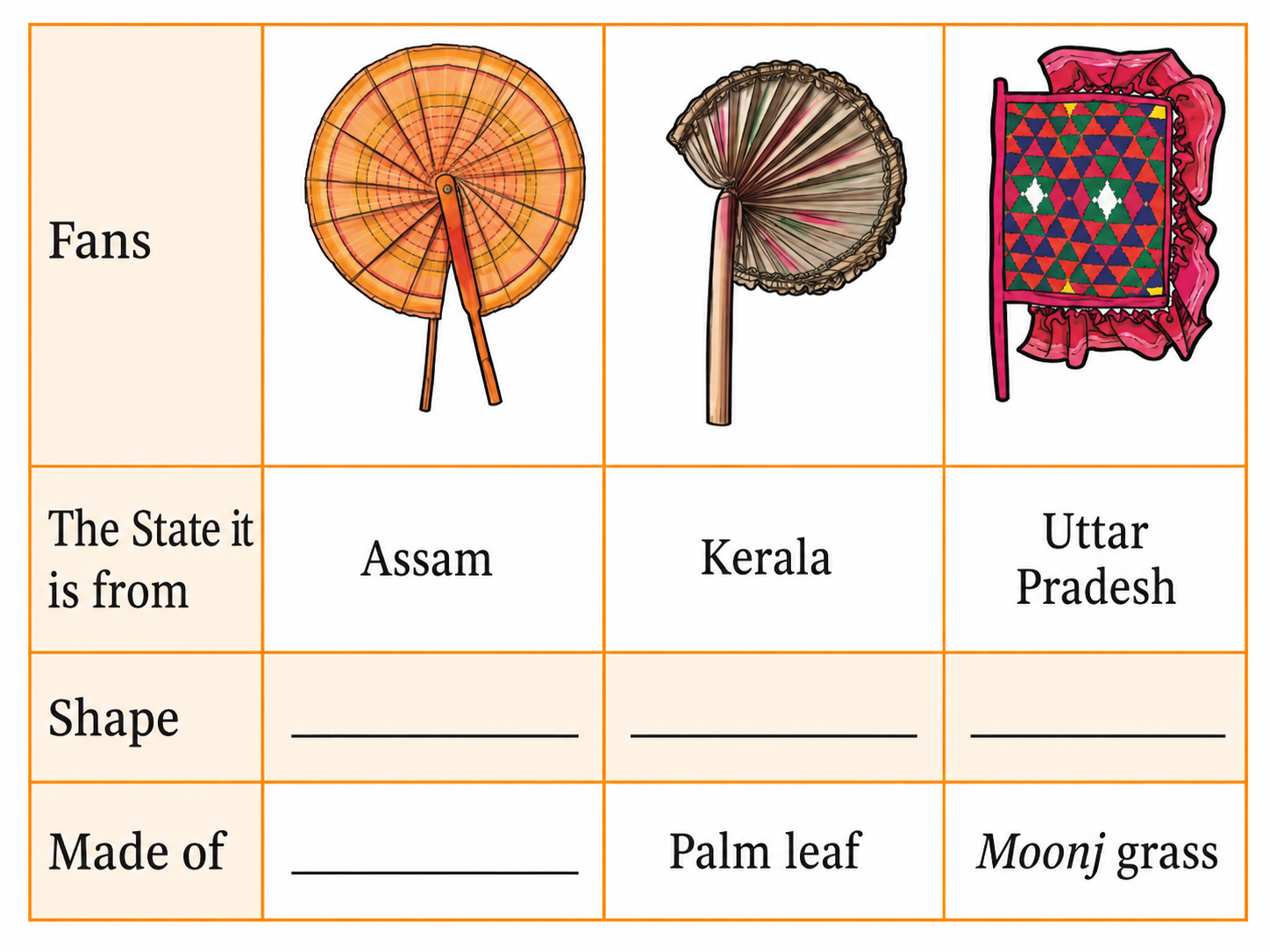
Answer:
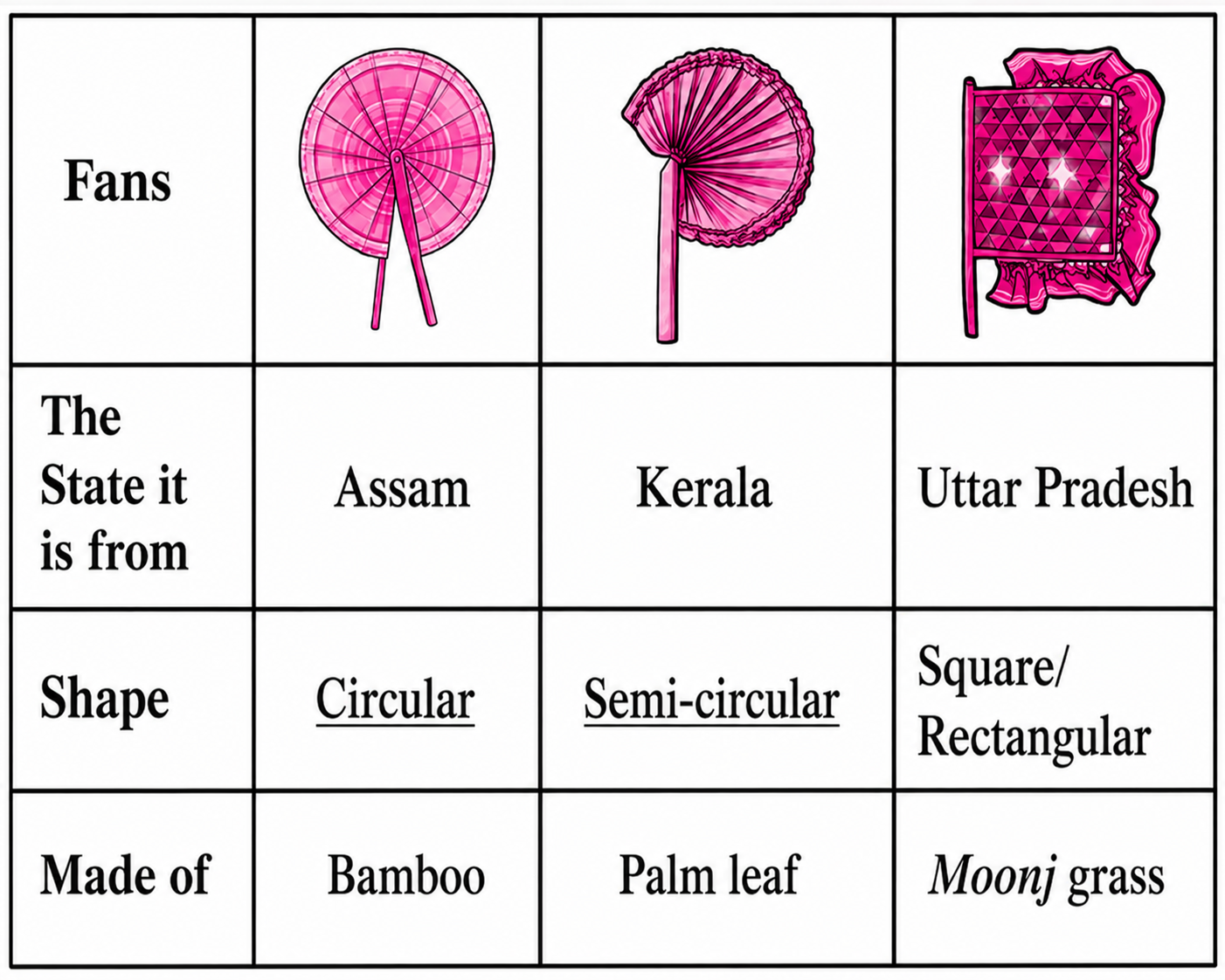
Students can study the given pictures carefully and complete the information based on the type of fan, the material used, its design, and its possible region or use. They can then compare their observations with their classmates and teacher.
III. Work in pairs. Match the underlined words in Column 1 with the meanings in Column 2 given on the next page. Share your answers with your classmates and teacher.
I visited the craft fair yesterday. It was a wonderful experience. Each indigenous artefact was an innovative creation of industrious craftspersons with its intricate design. It invoked a sense of respect for the initiatives taken by the government to showcase them.
Answer:
Check Your Understanding
I. Work in pairs to complete the table on pankha. Share your answers with your classmates and teacher.
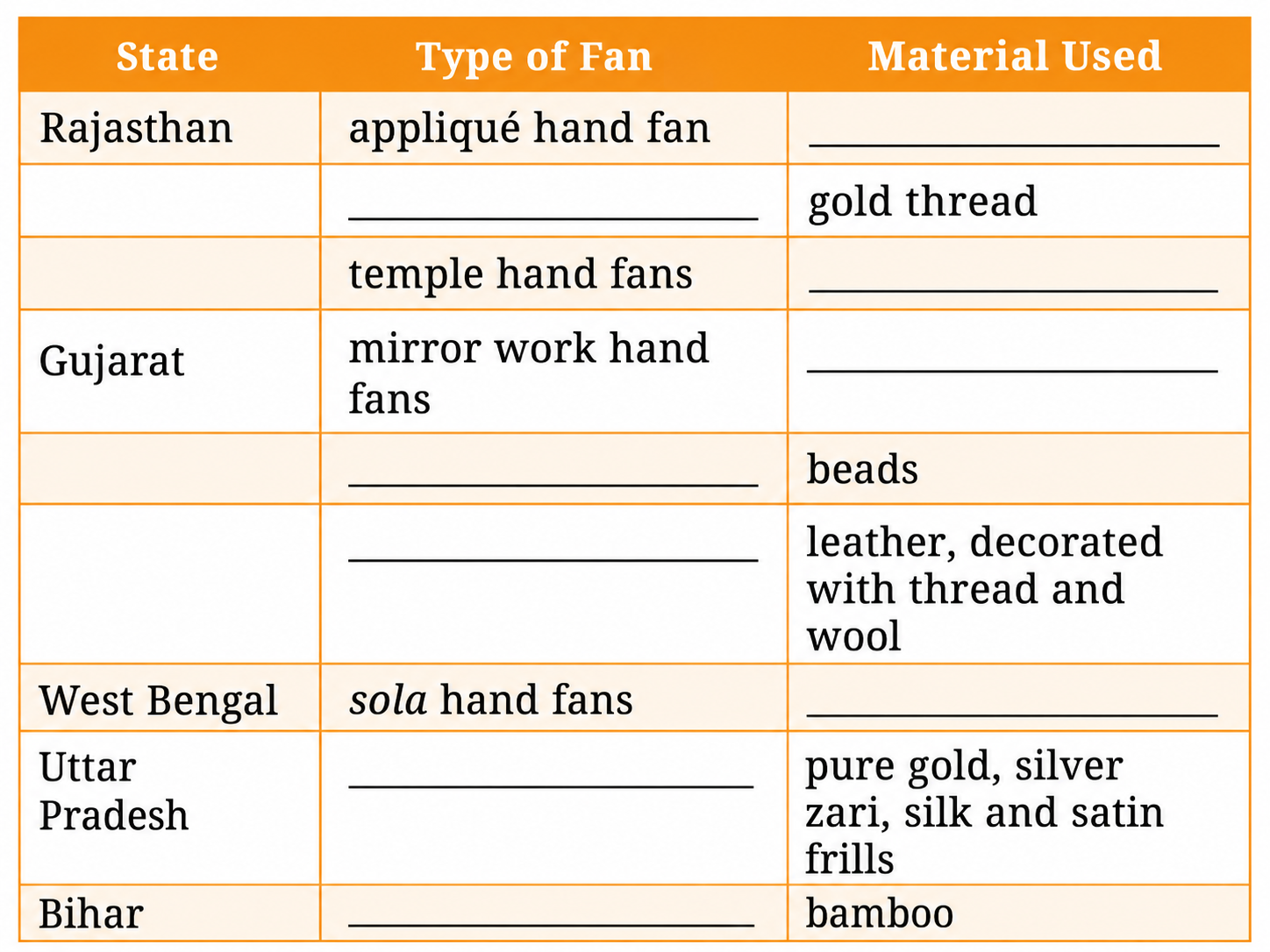
Answer:
Critical Reflection
I. Read the extracts given below and answer the questions that follow.
1. Over time, pankhas became significant cultural goods distributed through trade routes. They were considered exotic and stylish. Although there was substantial commonality in their use across India, different villages and towns developed their own varieties of traditional pankhas. Each place developed pankhas with distinct materials or a variety of intricate designs, that set them apart from one another.
(i) State whether the following sentence is true or false.
Pankhas were one of the most popular items of commerce.
Answer: True. Pankhas were distributed through trade routes and were valued as important cultural goods.
(ii) Why has the word ‘traditional’ been used to describe pankhas?
Answer: The word ‘traditional’ has been used to describe pankhas because they have been used for a long time and are closely connected with local customs, regional culture, and handmade craftsmanship.
(iii) Complete the following statement.
The sentence ‘They were considered exotic and stylish’ is an opinion and not a fact because
Answer: The sentence is an opinion because words like “exotic” and “stylish” express personal judgment. Different people may have different views about whether pankhas are exotic or stylish.
(iv) Infer one reason for commonality in the use of pankhas across India.
Answer: One reason for the common use of pankhas across India is the country’s hot climate. People in many regions needed a simple and practical way to cool themselves before electric fans became common.
(v) Select which one of the two statements is the correct assertion for the given reason.
Reason: Pankhas were made of indigenous materials, unique to the region, with elaborate designs.
A. Each kind of pankha could be distinguished from the others.
B. Pankhas were used by many people.
Answer: A. Each kind of pankha could be distinguished from the others.
2. With time and the advent of technology and innovative creations, the beautiful culture of pankhas runs the risk of slowly losing its presence among IndiAnswer: Once made for personal use, over time this handicraft has transformed into a commercial business and now provides some form of livelihood to India’s artisAnswer: The slight increase in popularity and demand is significantly factored by the different versions of the pankha being crafted.
(i) Infer one negative impact of technological advancement on pankha.
Answer: One negative impact of technological advancement is that handmade pankhas are no longer used as commonly in daily life. Electric fans, coolers, and air conditioners have reduced their practical use.
(ii) Complete the statement with an appropriate reason.
The writer refers to ‘pankhas’ not just as an object but as a ‘culture’ because
Answer: The writer refers to pankhas as a culture because they represent regional traditions, local materials, artistic designs, community skills, and the lifestyle of people from different parts of India.
(iii) Select a line from the extract which depicts how the role of the pankha has changed over the years.
Answer: “Once made for personal use, over time this handicraft has transformed into a commercial business.”
(iv) List one way in which the increase in demand of pankhas might benefit artists. Answer:
Answer: An increase in demand can help artisans earn a better income and continue practising their traditional craft.
(v) Select the factor that has contributed to the commercialisation of pankhas.
A. cultural preservation
B. economic demand
C. technological advancements
D. artisan initiative
Answer: B. economic demand
II. Answer the following questions.
Question 1: How does the title ‘Winds of Change’ capture the essence of the chapter?
Answer: The title “Winds of Change” captures the essence of the chapter because it shows the shift from traditional handmade pankhas to modern cooling devices such as electric fans. The word “winds” directly connects with fans, while “change” suggests the transformation brought by technology and changing lifestyles.
Earlier, pankhas were used widely for cooling and were also valued for their artistic and cultural importance. Over time, electric fans became popular because they were easier to use and could cool many people at once. The title therefore, reflects both the literal movement of air and the larger social change from traditional craft to modern convenience.
Question 2: Support the following statement with any two relevant examples from the chapter.
‘The structure and design of pankhas are testimony to the cultural identity of the region.’
Answer: The structure and design of pankhas reflect the cultural identity of different regions because each area uses local materials, designs, and craft traditions.
For example, Rajasthan is known for appliqué and zardozi pankhas, which use colourful fabric, gold thread, and decorative needlework. These designs reflect the region’s rich ornamental craft tradition.
Similarly, West Bengal’s sola pankhas are made from the soft, white centre of the sola plant. They show the region’s skill in using natural materials to create delicate and useful craft items. These examples prove that pankhas are not just objects of use but also symbols of regional culture.
Question 3: The chapter mentions pankhas running the risk of slowly losing their presence among IndiAnswer: Evaluate how the balance between preserving traditional craftsmanship and incorporating innovative designs in the creation of pankhas will help in this regard.
Answer: Balancing traditional craftsmanship with innovative designs can help keep pankhas relevant in modern times. Traditional techniques preserve the cultural value of the craft, while new designs make pankhas attractive to present-day buyers.
For example, artisans can continue using regional materials and patterns but create pankhas for decoration, gifting, festivals, and eco-friendly lifestyle products. This approach can increase demand, support artisans, and prevent the craft from disappearing. Thus, tradition and innovation together can help pankhas survive in a changing world.
Question 4: How might initiatives such as pankha-making workshops contribute to the preservation of this traditional craft?
Answer: Pankha-making workshops can help preserve this traditional craft by teaching people how pankhas are made and by creating interest among younger generations. Such workshops allow artisans to share their skills, techniques, and cultural knowledge with students and craft lovers.
They also help people understand the effort and creativity involved in handmade products. When more people appreciate the craft, artisans receive better recognition and support, which helps keep the tradition alive.
Question 5: The writer mentions celebrating pankhas in the concluding part of the chapter. Assess how this could be beneficial to artisans and the craft.
Answer: Celebrating pankhas can increase public awareness about their cultural and artistic value. It can help people see them not only as old cooling tools but also as beautiful examples of traditional craftsmanship.
This recognition can improve the demand for handmade pankhas, provide better income opportunities to artisans, and encourage them to continue the craft. It can also inspire younger people to learn and preserve this traditional skill.
Question 6: How does the restriction of the use of pankha for decorative purposes reflect the changing cultural role of these traditional fans in modern India?
Answer: The use of pankhas mainly as decorative items shows that their role has changed in modern India. Earlier, they were used regularly for cooling, but modern technology has reduced their practical use.
However, pankhas still survive as symbols of culture, art, and tradition. Their decorative use shows that people continue to value their beauty and craftsmanship, even if they no longer depend on them for everyday comfort.
Vocabulary and Structures in Context
I. Read the following pairs of words from the text.
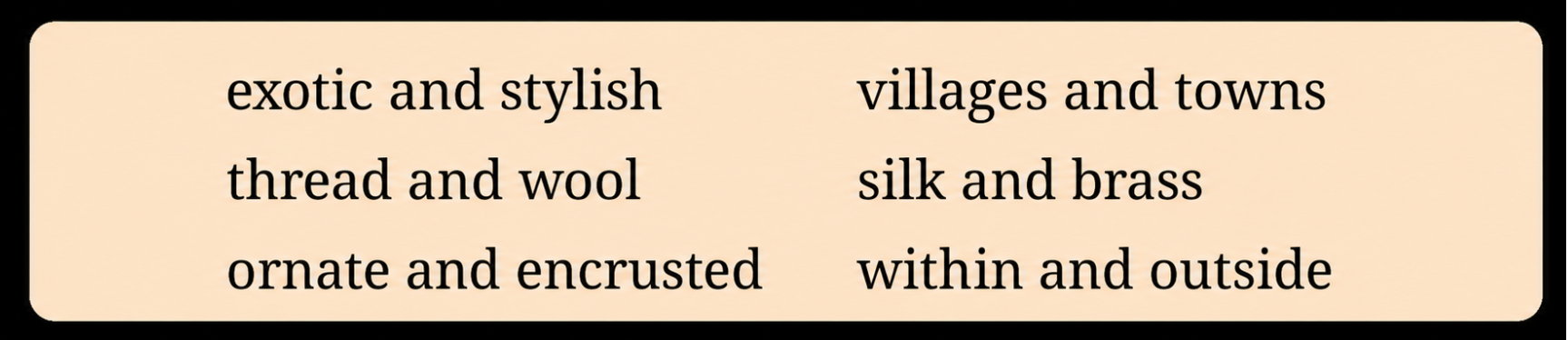
1. Classify the pairs of words given above in the following categories. One example has been done for you.
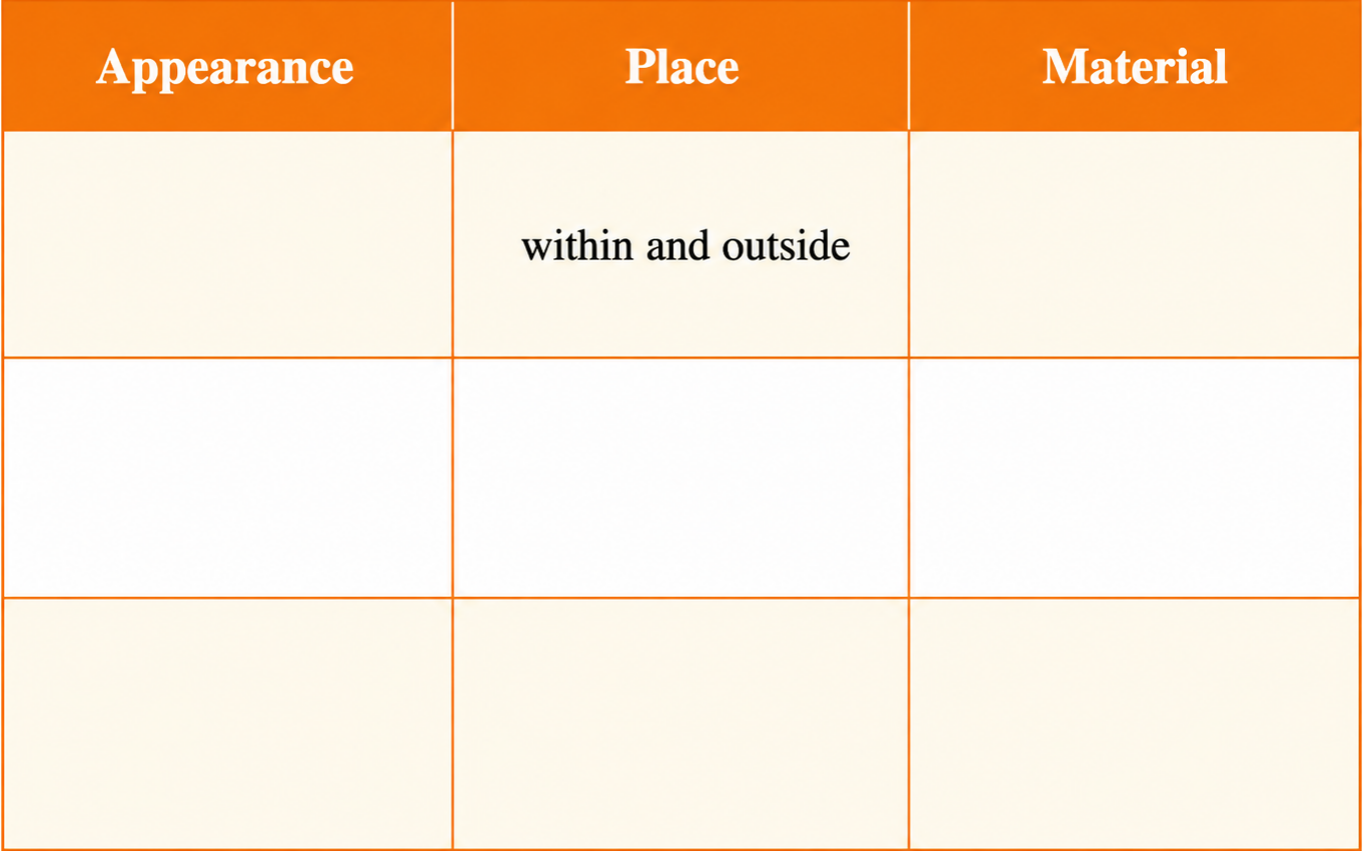
Answer:
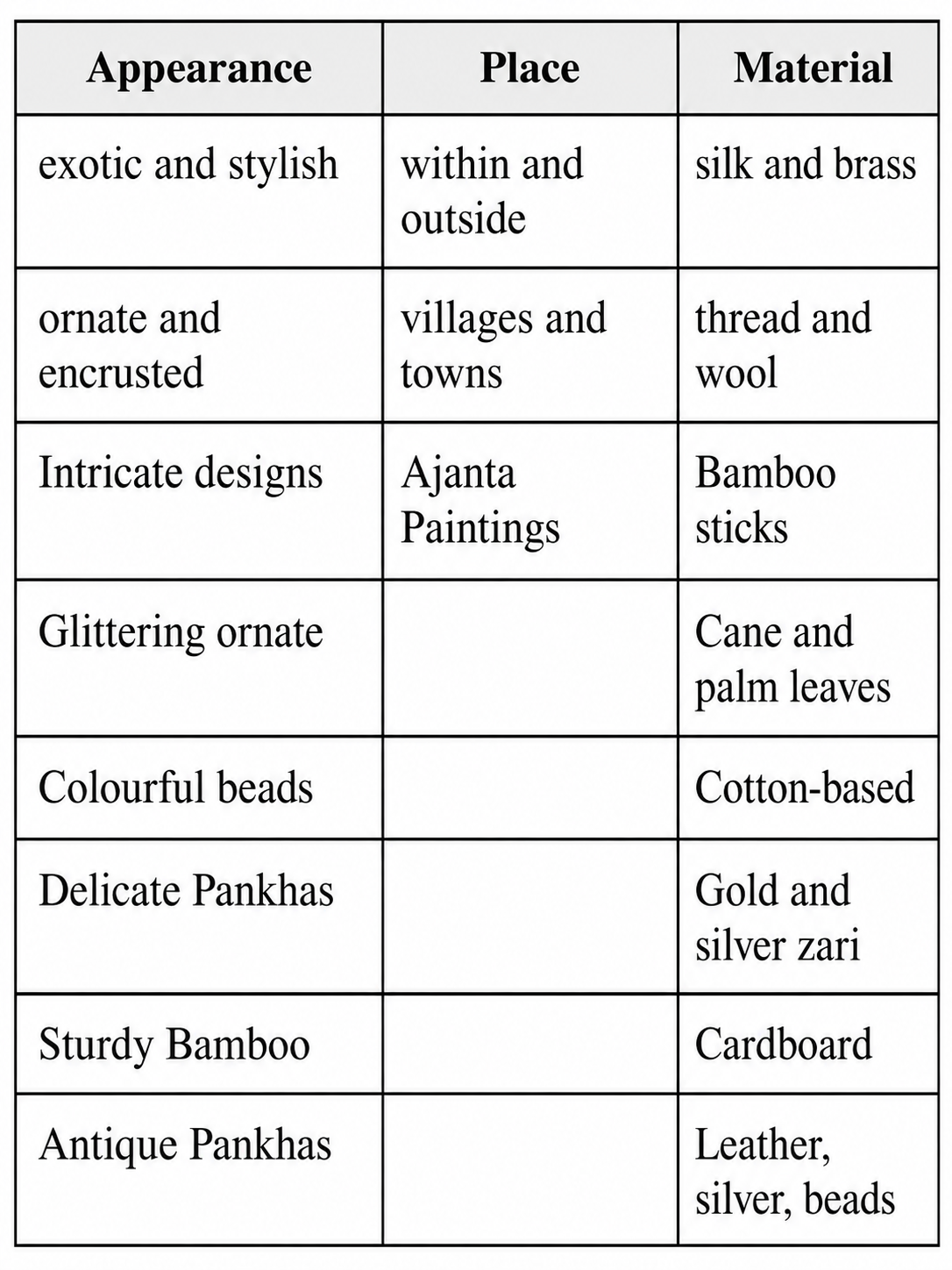
Students can classify the word pairs from the text according to the categories given in the textbook. They should identify fixed word combinations and arrange them under the correct headings.
Now, find more such word pairs from the text and share them with your classmates and teacher.
Students can reread the chapter and note more word pairs used in the text. They can then discuss these examples with classmates and the teacher.
II. Find the word pairs for the following fixed expressions. Write the meanings of these expressions by selecting them from the box given below. One example has been done for you.
Some common expressions with ‘and’ have a fixed order that cannot be changed. The shortest expression comes first. For example, bread and butter (*not butter and bread)
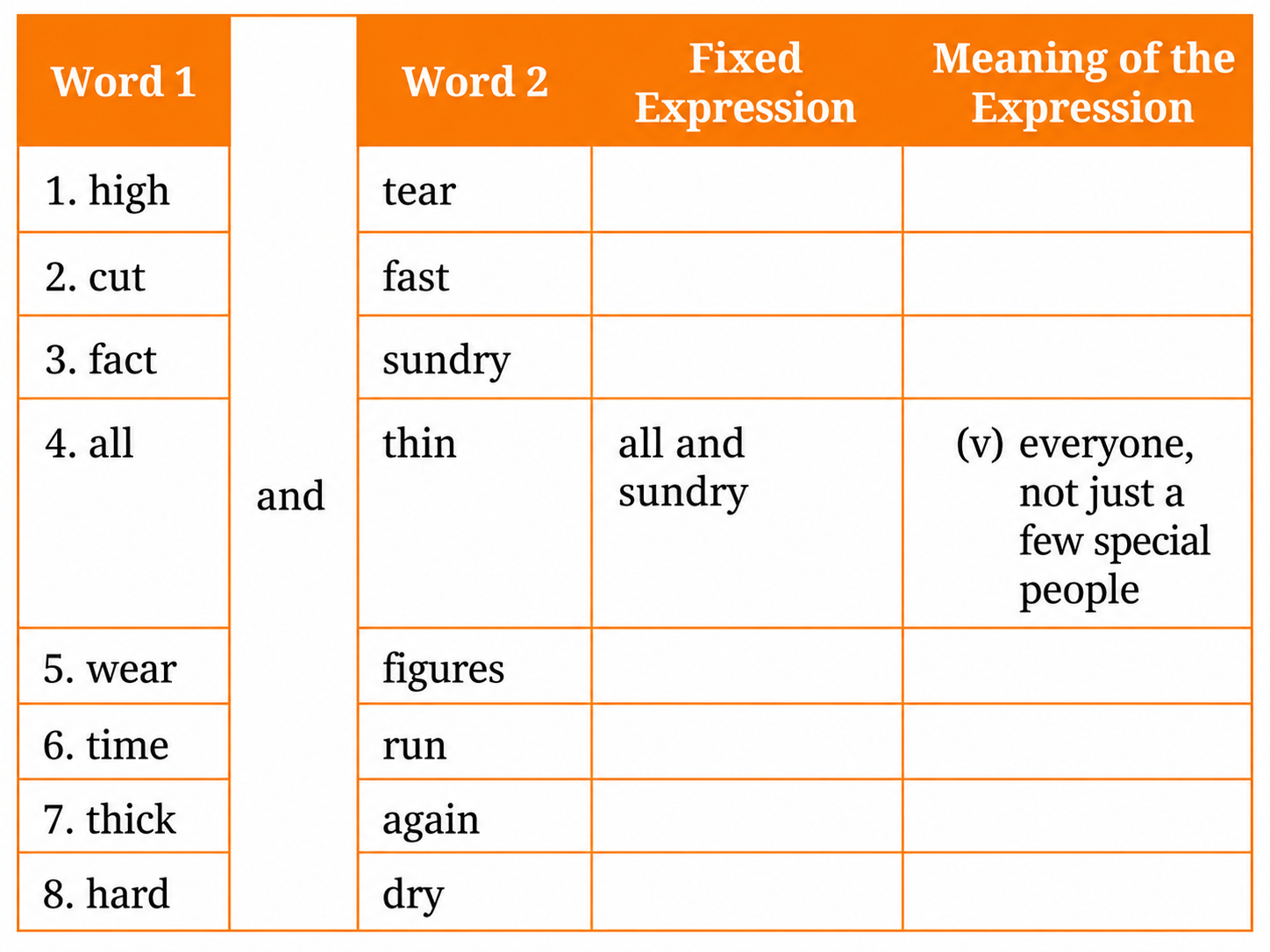
Now, match the following meanings with the correct word pairs created above.
1. in a difficult situation, without help or money-
2. the damage to the object due to normal use –
3. accurate and detailed information –
4. even when there are problems or difficulties –
5. everyone, not just a few special people –
6. often; on many or all occasions –
7. to make a quick or sudden escape –
Answer:
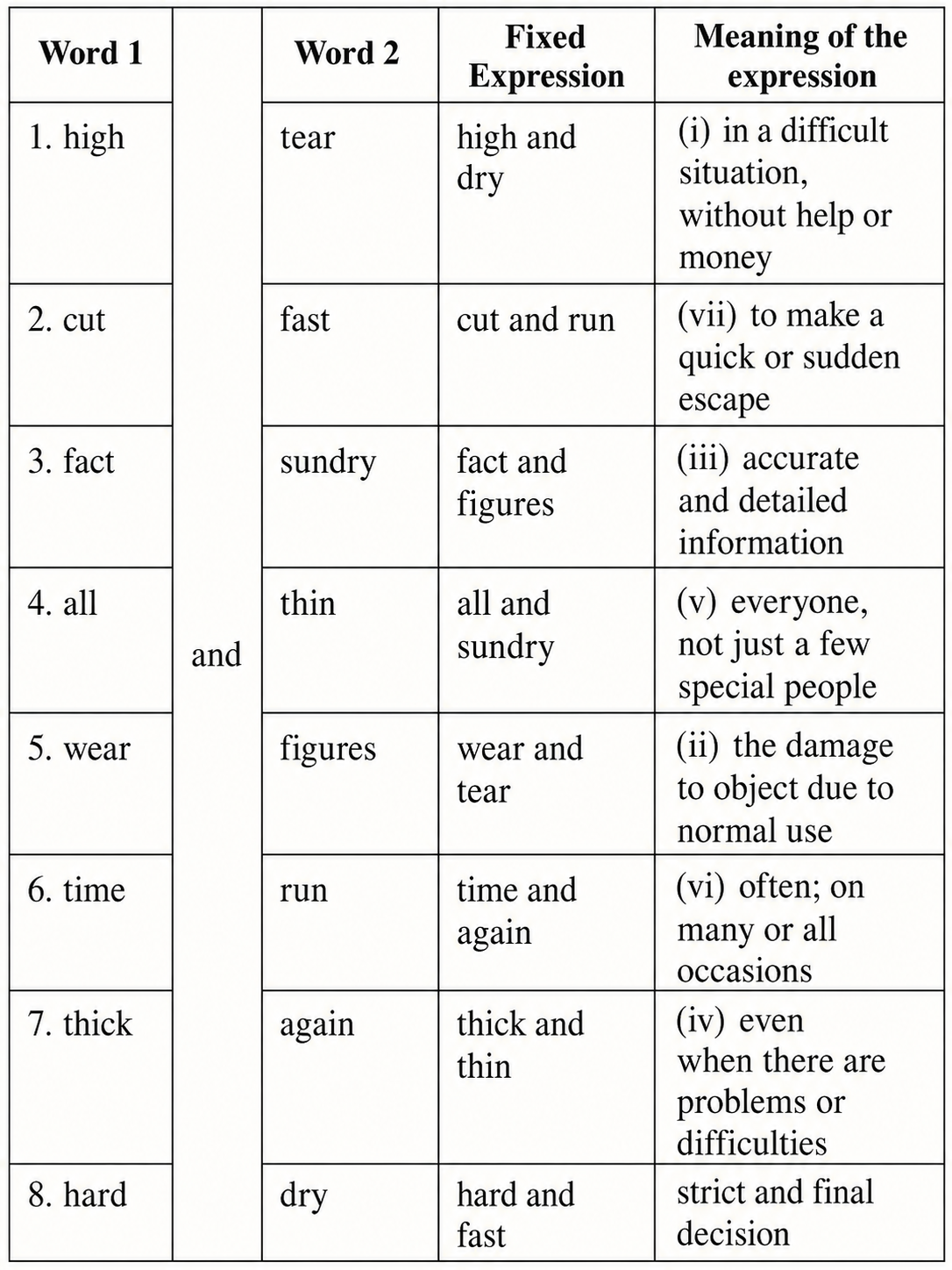
Students can match the fixed expressions with their meanings by referring to the word pairs given in the textbook. These expressions usually have a fixed order and should not be reversed.
III. Read the following word combinations from the text.
sustainable livelihood
aesthetically pleasing
appreciating the culture
The given phrases are conventional combinations just like fixed expressions. Such combinations are called collocations.
A collocation is when two or more words are often used together in a natural way. These word combinations sound “right” to native speakers because they commonly occur in everyday language.
Examples:
Heavy rain
Strong coffee
Catch a bus
Make a mistake
Tell a story
Fast food
Question 1: Choose the appropriate word collocations for the following sentences.
(i) The students have to (take/give) the English exam tomorrow.
Answer: The students have to take the English exam tomorrow.
(ii) The interviewer asked the candidate to (take/ have) a seat.
Answer: The interviewer asked the candidate to take a seat.
(iii) My scooter (dashed against/ran into) a car.
Answer: My scooter ran into a car.
(iv) I must (take/own) responsibility for my success.
Answer: I must take responsibility for my success.
(v) I would like to (tone up/improve) my grammar
Answer: I would like to improve my grammar.
IV. Read the following sentences. Underline the verbs.
Answer:
The verbs in the sentences are:
In modern times, pankhas have become traditional craft items in India.
Gujarat’s industrious home-based women workers have worked tirelessly in the handicraft of pankha-making.
Many tribes in India have adopted this handicraft.
Once made for personal use, this handicraft has transformed into a commercial business.
The underlined verbs refer to actions that began in the past but are still relevant in the present. This tense is called the present perfect tense.
Now, fill in the blanks with the present perfect form of verbs in the following paragraph. One example has been done for you.
Puppets have long fascinated (fascinate) audiences worldwide. Puppeteers (i) ______ (create) intricate characters and captivating stories with their skillful artistry. They (ii) ______ (master) the delicate movements that bring these lifeless figures to life, entertaining both children and adults. Over the years, puppetry (iii) ______ (evolve), using modern technology while preserving traditional techniques. Many puppeteers (iv) ______ (pass) down their craft through generations, ensuring its continuity. They (v) ______ (perform) in theatres, on television, and at festivals, conveying important cultural narratives.
Answer: Puppets have long fascinated audiences worldwide. Puppeteers (i) have created intricate characters and captivating stories with their skillful artistry. They (ii) have mastered the delicate movements that bring these lifeless figures to life, entertaining both children and adults. Over the years, puppetry (iii) has evolved, using modern technology while preserving traditional techniques. Many puppeteers (iv) have passed down their craft through generations, ensuring its continuity. They (v) have performed in theatres, on television, and at festivals, conveying important cultural narratives.
Listen and Respond
I. You will listen to a dialogue between a boy and a girl discussing which type of pankha they should choose as a gift. As you listen, choose four statements out of seven that are true from 1 – 7 given below. (Transcript for teacher on page 263).
Rohan thinks Grandma prefers heavier items because they feel more substantial.
Priya suggests getting a pankha that can be easily moved around.
Rohan believes Grandma enjoys sitting in the verandah during the evenings.
Priya knows Grandma likes to keep special items close to her.
Rohan thinks a pankha with intricate designs would be too delicate for Grandma’s liking.
Priya suggests choosing between a bamboo pankha with beadwork or an embroidered pankha with mirror work.
Rohan decides they should buy the pankha without consulting their mom.
Answer: The four true statements are:
2. Priya suggests getting a pankha that can be easily moved around.
3. Rohan believes Grandma enjoys sitting in the verandah during the evenings.
4. Priya knows Grandma likes to keep special items close to her.
6. Priya suggests choosing between a bamboo pankha with beadwork or an embroidered pankha with mirror work.
Speaking Activity
I. Work in groups of four. Look at the pictures of the four different kinds of fans given below.
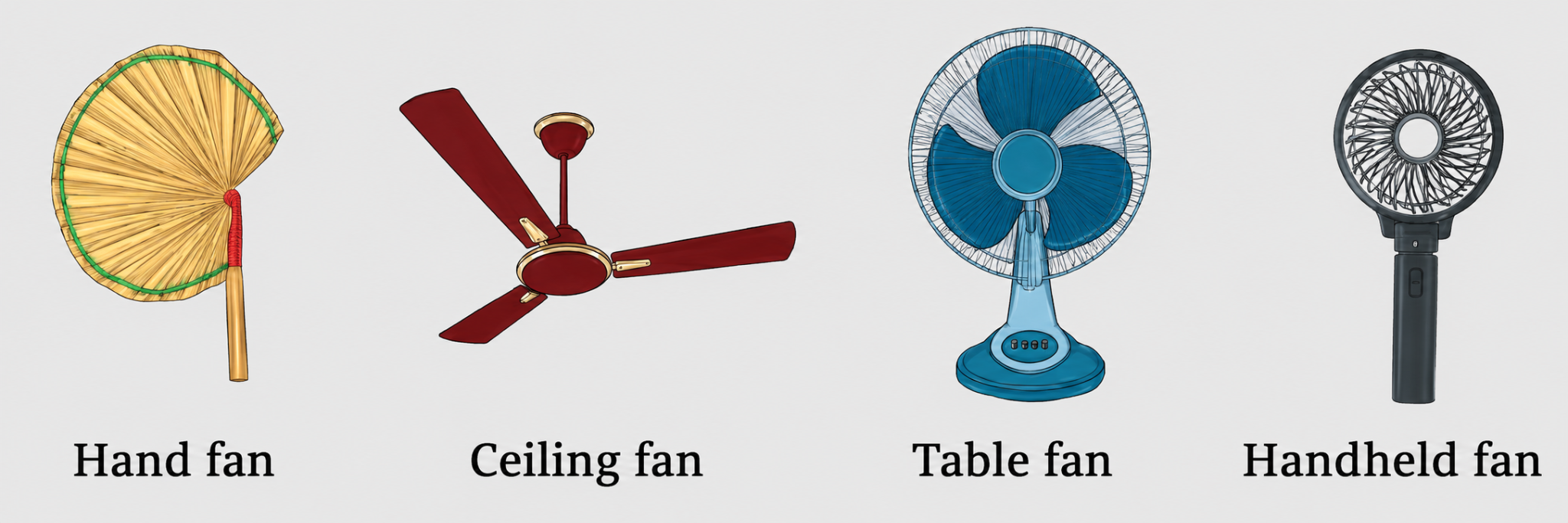
Each of you in the group will pick one kind of fan.
Imagine yourself to be that fan.
Use the points given in the box below.
Introduce yourself as the fan which you have chosen.
Describe yourself, for example, your features, etc.
What do you like about yourself?
What do you feel is your weakness?
What makes you unique?
What makes you unique?
Answer:
I am a Hand Fan
Hello everyone! I am a hand fan. I am small, light, and easy to carry. I am usually made of bamboo, palm leaves, cloth, or paper. Sometimes, I am decorated with colourful patterns, embroidery, beadwork, or mirror work.
People use me by moving me back and forth with their hands to create cool air. I do not need electricity, so I am useful during power cuts, outdoor travel, and village fairs.
What I like about myself is that I am eco-friendly and portable. My weakness is that I can cool only one person at a time and require manual effort. I am unique because I represent traditional art, regional culture, and handmade craftsmanship.
Or
I am a Ceiling Fan
Hello everyone! I am a ceiling fan. I am fixed to the ceiling and usually have three or four blades. I am made of metal and plastic and come in different colours and sizes.
I work with electricity and rotate quickly to circulate air across a room. I can cool many people at the same time, which makes me useful in homes, classrooms, and offices.
What I like about myself is that I am powerful and can cover a large area. My weakness is that I cannot work without electricity and cannot be moved easily. I am unique because I provide comfort to everyone in the room equally.
Or
I am a Table Fan
Hello, I am a table fan. I am placed on desks, tables, or shelves and spread cool air around a room. My blades are strong, and I can move from side to side to distribute air.
What I like about myself is that I am reliable and can be shifted from one place to another more easily than a ceiling fan. My weakness is that I need electricity to work. I am unique because I provide direct airflow and can be used in different rooms as needed.
Or
I am a Handheld Fan
Hi, I am a handheld fan. I am small, light, and easy to carry. I can fit into a hand or bag and provide quick personal cooling.
I often work with batteries or rechargeable power. I am useful while travelling, walking outdoors, or sitting in crowded places. My weakness is that I depend on battery power. I am unique because I am portable and can offer comfort anywhere.
Writing Task
Factual Description is a type of writing that presents information about a person, place, object, or event in a clear, accurate, and objective way-without adding personal opinions or imagination.
A factual description has several key features that make it clear and effective. It is objective, meaning it avoids personal feelings or judgments and focuses only on what can be observed or verified. It is detailed, providing specific facts such as measurements, dates, or observable qualities to give a complete picture of the subject. The language used is clear and simple, ensuring that the information is easy to understand and free from exaggeration or unnecessary complexity. Finally, it is organised, often following a logical order such as describing appearance first, then function, and finally importance, so that the reader can grasp the information in a structured and meaningful way.
I. Describe an artefact you have made in your craft class or learnt from someone.
Begin with collection and organisation of the facts with the help of the pointers given above. Do not include your opinion in the factual description.
Answer: The artefact I made in my craft class is a hand-painted earthen diya holder. It is made from baked clay and has a circular shape with four small spaces to hold diyas. The base is approximately 15 centimetres in diameter.
The materials used to make the artefact include clay, acrylic paints, paint brushes, varnish, glue, and decorative beads. First, the clay was shaped and moulded into the required form. It was then dried in the sun and baked to make it hard.
After drying, the surface was painted using bright colours such as red, yellow, and green. Simple floral patterns were drawn on the edges, and decorative beads were fixed along the border with glue. Finally, a coat of varnish was applied to make the surface shiny and durable.
The diya holder is used during festivals such as Diwali and on special occasions to hold oil lamps safely. It can also be placed on tables or at entrances as a decorative item.
Learning Beyond the Text
I. Identify any art or craft item from your region and make a presentation describing its features, materials, and process involved in making it, its usage, etc. You may refer to the points given on the next page.
Name of the object and its physical characteristics appearance, shape, size, colour, etc.
What is it made up of?
Which region does it belong to? How has it been used traditionally?
Is there an origin story associated with it? How has it evolved over time?
How can it be used effectively and safely in today’s time?
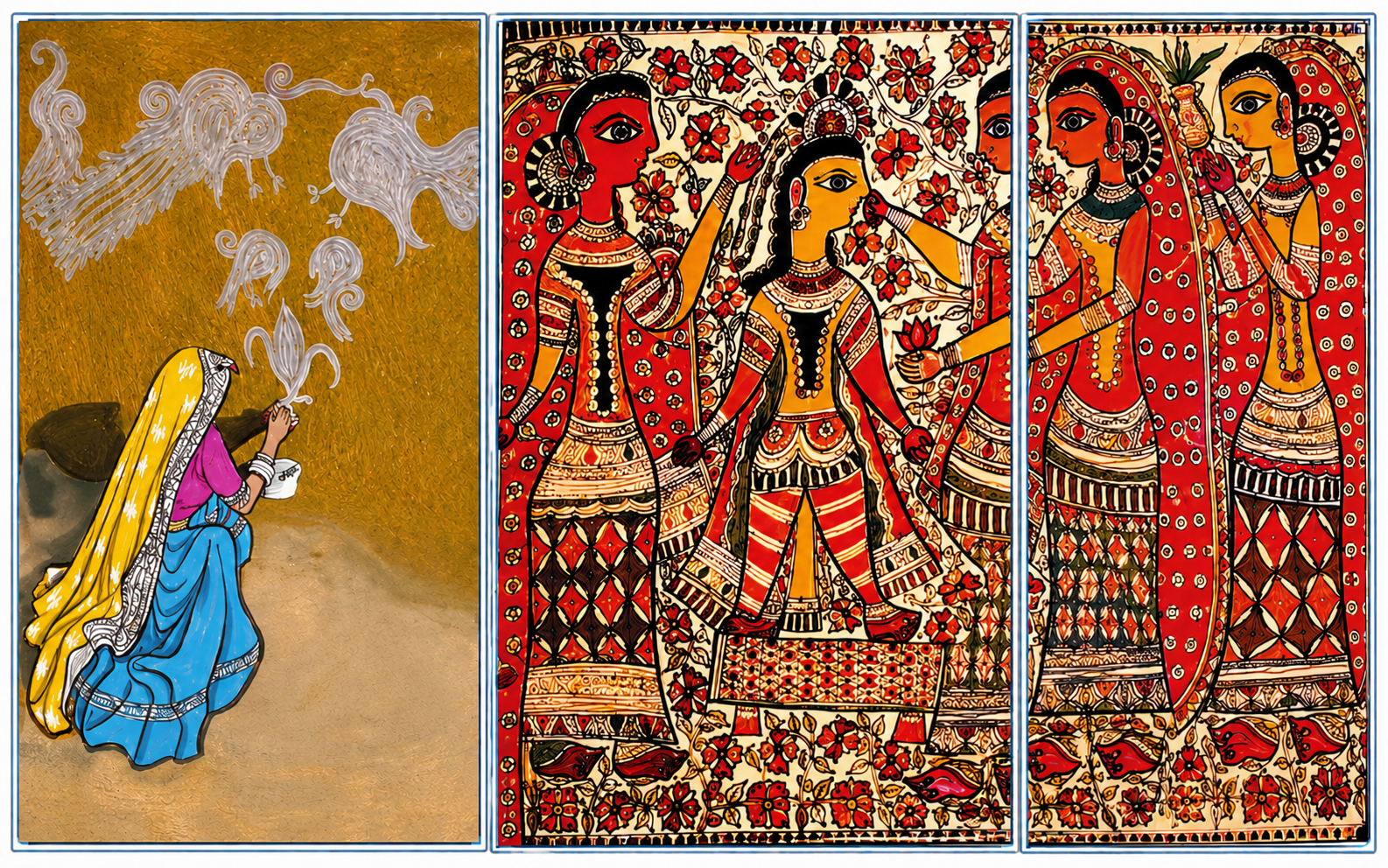
Answer: Paper lanterns, also called kandils, are popular decorative crafts in Maharashtra, especially during Diwali. They are usually made from coloured chart paper and are commonly cylindrical, square, or star-shaped.
The materials required include chart paper, glue, scissors, thread, decorative beads, and coloured strips of paper. The paper is folded, cut into strips, shaped, pasted, and decorated. A handle or thread is attached at the top for hanging.
Paper lanterns are traditionally used to decorate homes, schools, balconies, and public spaces during festivals and celebrations. They have evolved from simple handmade decorations into colourful craft items available in many designs. They should be used safely by keeping them away from open flames unless they are made with fire-safe materials.
II. You can also make your own hand fan. Take ideas from the pictures given below and in groups of four, make your own hand fan. Display the hand fans in the class and describe the process used to make it.
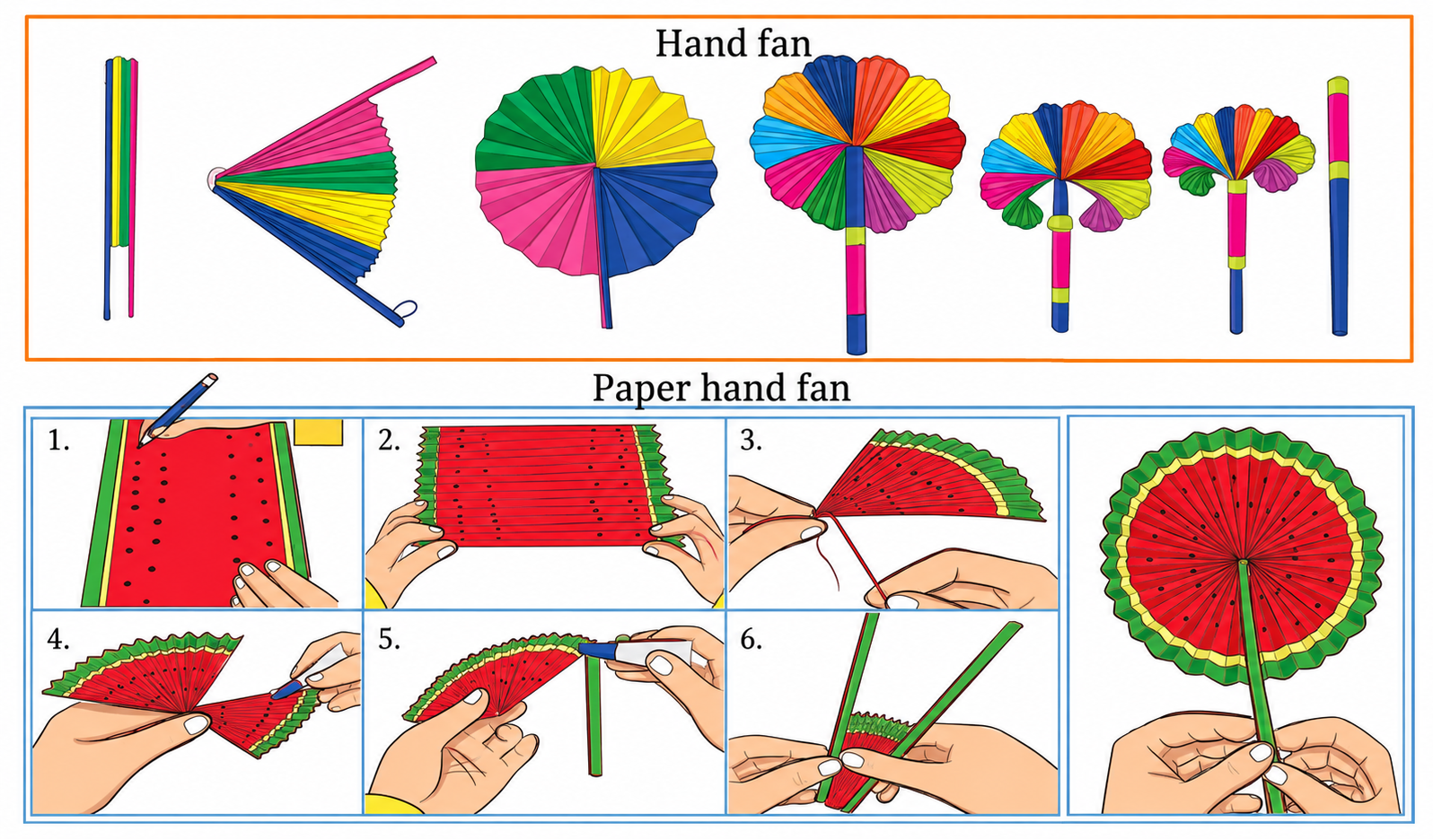
Answer: Students can observe the given pictures and use their creativity to make their own hand fan. They may use paper, cardboard, bamboo sticks, fabric, glue, colours, and decorative materials. After making the fan, they can display it in class and explain the materials used and the steps followed.
III. You must have read stories about the impact of art, painting, etc. in your life, in English and in your own languages. Now, read and enjoy the story given below.
Answer: Students can read the story given in the textbook on pages 82-85 and discuss how art, painting, or craft can influence a person’s life, imagination, and emotions.
Class 9 English Kaveri Chapter 3 Winds of Change Solutions
Vedantu provides NCERT Solutions for Class 9 English Kaveri Chapter 3 Winds of Change for the 2026-27 academic session. The chapter presents pankhas as more than simple hand fans. It explains how they reflect regional culture, indigenous materials, artistic designs, traditional livelihoods, and the changing relationship between craft and modern technology.
The solutions include clear answers for extract-based questions, short-answer questions, vocabulary tasks, grammar exercises, speaking activities, factual description writing, and learning-beyond-the-text activities. Students can use these solutions for classroom learning, homework support, quick revision, and exam preparation. The downloadable FREE PDF also helps students revise the complete chapter offline.
CBSE Class 9 English Kaveri Chapter 3 Study Materials
Students can use the Chapter 3 study materials below to revise the lesson, practise extra questions, and strengthen their understanding of the chapter’s themes and language exercises.
Explore More NCERT Solutions for Class 9 English Kaveri Chapters
The chapter-wise NCERT Solutions for Class 9 English Kaveri help students revise all lessons from the textbook in a structured way. These resources provide clear explanations and answers for textbook questions, grammar activities, vocabulary tasks, and writing exercises.
Related Study Material for Class 9 English
The following Class 9 English study materials support regular learning, grammar practice, writing improvement, and exam preparation. Students can use them along with the Kaveri textbook solutions for better understanding.
FAQs on NCERT Solutions for Class 9 English Kaveri Chapter 3 Winds of Change - 2026-27 Free PDF Download (Sign-in Required)
1. What is Class 9 English Kaveri Chapter 3 Winds of Change about?
Winds of Change is about traditional pankhas and how their role has changed over time due to modern technology. The chapter highlights regional craftsmanship, indigenous materials, cultural identity, and the need to preserve traditional crafts.
2. What is the main idea of Winds of Change?
The main idea of the chapter is to show how traditional hand fans, or pankhas, represent India’s cultural diversity and craftsmanship, even though their practical use has reduced in modern times.
3. Why is the chapter titled Winds of Change?
The title Winds of Change refers to both the air created by fans and the changes brought by technology. It shows the shift from handmade pankhas to electric fans and modern cooling devices.
4. What are pankhas?
Pankhas are traditional hand fans made using materials such as bamboo, cloth, leather, beads, brass, sola plant, zari, and other regional materials. They were once used for cooling and are now also valued as decorative craft items.
5. How do pankhas show regional culture?
Different regions make pankhas using local materials and unique designs. For example, Rajasthan has appliqué and zardozi fans, West Bengal has sola fans, and Bihar has bamboo fans.
6. Why are pankhas losing their presence in modern India?
Pankhas are losing their everyday use because electric fans, coolers, and air conditioners have become more common and convenient. However, they still remain important as cultural and artistic objects.
7. How can pankha-making workshops help preserve the craft?
Pankha-making workshops can teach people about traditional techniques, train new learners, create awareness, and help artisans pass their skills to the next generation.
8. What grammar topics are covered in Class 9 English Kaveri Chapter 3?
The chapter includes language topics such as fixed expressions, collocations, and the present perfect tense. It also includes factual description writing.
9. How do NCERT Solutions for Winds of Change help students?
These solutions help students understand the chapter, answer textbook questions clearly, revise grammar topics, improve vocabulary, and prepare for class tests and exams.
10. Where can students download Class 9 English Kaveri Chapter 3 solutions?
Students can download the FREE PDF of NCERT Solutions for Class 9 English Kaveri Chapter 3 Winds of Change from Vedantu for homework, revision, and exam preparation.
