



NCERT Solutions for Class 9 English Kaveri Chapter 8 Follow That Dream
Reflect and Respond (Page 231)
I. Read the questions given below and share your answers with your classmates and teacher.
Question 1: What is your dream?
Answer: My dream is to build a successful and responsible business that contributes positively to society. I want to work in a field that interests me and grow through hard work, innovation, and continuous learning. I also hope to support my family and create opportunities that can help others.
Question 2: Who inspires you to dream?
Answer: My grandfather inspires me to dream. He is a visionary and a successful businessman who built a large dairy through hard work and dedication. His determination encourages me to aim high and work sincerely towards my goals. He always advises me to be realistic, disciplined, and deeply committed if I want to make my dream come true.
Question 3: What qualities should you have in order to fulfil your dream?
Answer: To fulfil my dream, I need dedication, patience, discipline, and confidence. I must be willing to work hard, learn from mistakes, and face challenges with courage. Focus and perseverance are also important because dreams take time to achieve. These qualities will help me overcome difficulties and move steadily towards my goals.
Question 4: Abdul Kalam said, “Dream is not that you see in sleep, dream is something that does not let you sleep,” Discuss.
Answer: Dr A.P.J. Abdul Kalam’s words mean that true dreams are not ordinary thoughts or idle wishes. A real dream is a powerful goal that keeps us active, focused, and determined. It makes us work hard and think constantly about how to achieve it.
Such dreams do not allow us to remain comfortable or lazy. They push us to improve ourselves, face challenges, and move towards success with discipline and dedication.
II. What role can parents and community play to help children achieve their dreams?
Answer: Parents and the community play an important role in helping children achieve their dreams. Parents can guide, encourage, and emotionally support children while helping them make wise decisions. They can also provide discipline, motivation, and a safe space to grow.
The community can help by offering opportunities, resources, role models, and a positive environment. Together, parents and society can build confidence in children and help them stay focused on their goals.
III. Complete the given web chart. Give as many reasons as you can.
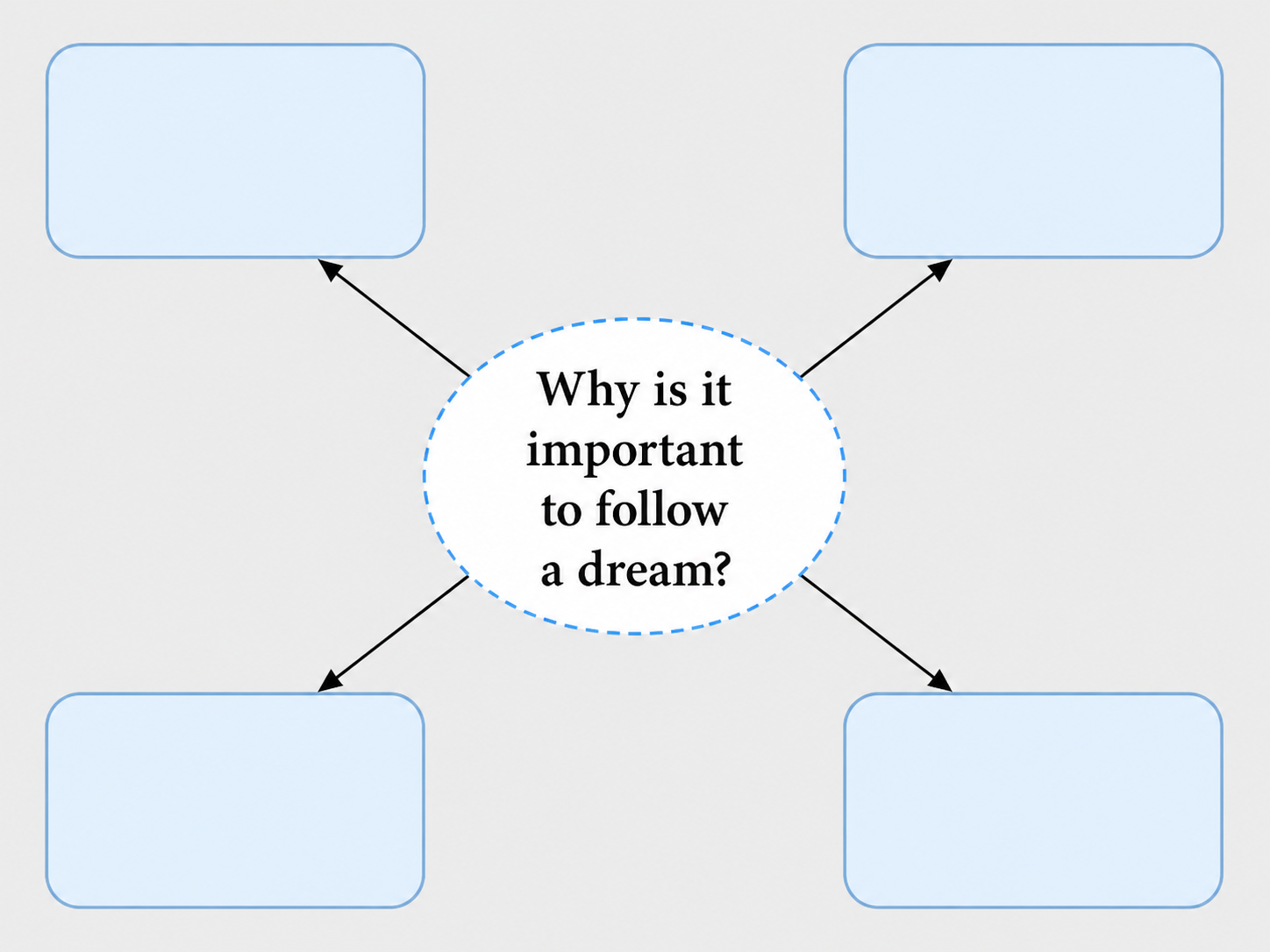
Answer:
(a) A dream gives purpose and meaning to life.
(b) Pursuing a dream helps uncover one’s true passions and abilities.
(c) It inspires a person to work diligently and remain focused.
(d) Achieving a dream brings fulfilment, strength, and confidence.
Check Your Understanding (Page 234)
I. State whether the following sentences are true or false.
Share your answers with your classmates and teacher.
1. Reaching the peak of skill in a field typically demands a focused and intense dedication for about a decade.
Answer: True.
The mother explains that reaching world-class skill requires singular focus, intense effort, and nearly ten years of dedication.
2. The mother believes that significant effort and personal sacrifices are essential for turning aspirations into reality.
Answer: True.
The mother clearly says that dreams demand effort, sacrifice, time, and commitment. Success does not come only through desire or luck.
3. The path to achieving the deepest desires has very little difficulty or a few obstacles.
Answer: False.
The mother explains that the path to achieving one’s dream is difficult and often full of obstacles.
4. The mother is of the opinion that a person’s life goals and hopes can evolve over time.
Answer: True.
The mother shares from her own experience that life itself can change a person’s dreams, hopes, and aspirations.
5. Having a strong network of individuals can be a hurdle in pursuing one’s ambition.
Answer: False.
A strong support network is helpful, not harmful. Successful people often receive guidance, encouragement, and support from others.
6. The mother feels that pursuing a major life goal will not involve any financial expense or sacrifice.
Answer: False.
The mother advises Ming to consider the cost of pursuing a dream, including effort, financial investment, and personal sacrifice.
7. For many individuals, their aspirations remain just wishes because they don’t move beyond mere daydreaming.
Answer: True.
Many people only imagine success but do not take action. Their dreams remain wishes because they do not work seriously towards them.
Critical Reflection (Pages 235-237)
I. Read the extracts given below and answer the questions that follow.
1. It starts with a passion for a particular interest, then comes the conviction that it is imperative to realise it. Count the cost in years of effort, financial investments and sacrifice. Then if it is still burning in your blood and you are ready to commit yourself to the task, plunge. It could be in any field-sports, science, arts, business, or design. The road may be uphill most of the way and often you are buoyed up only by the knowledge that you are doing what you love best and are doing the right thing. When stamina is running out, the prospect of success will keep you on track.
(i) Complete the analogy with a suitable word from the extract.
enthusiasm: passion:: belief: _______.
Answer: conviction
(ii) Choose the correct option to complete the following sentence appropriately.
The author says that a realistic assessment of effort, investment and sacrifice is crucial for preventing _______ .
A. the need for external support network
B. an early abandonment of the dream
C. initial excitement from fading over time
D. others from questioning one’s commitment
Answer: C. initial excitement from fading over time
(iii) Complete the following with the correct option from those given in the brackets.
The word ‘plunge’ as used in the extract indicates a _______ (complete/gradual) involvement in a task.
Answer: complete
(iv) Complete the sentence with an appropriate reason.
The author’s emphasis on ‘when you are doing what you love best and are doing the right thing’ works as a form of intrinsic motivation because _______ .
Answer: The author’s emphasis works as a form of intrinsic motivation because it gives a person inner satisfaction, happiness, and purpose. It encourages people to continue working because they love what they are doing, not because of external rewards or pressure.
(v) Mention one motivating factor besides ‘prospect of success’, that might keep a person on track, despite running out of stamina.
Answer: One motivating factor is the knowledge that the person is doing what they love and what they believe is right. This inner belief can help them continue even when they feel tired.
2. From my own experience, life itself may change a person’s dreams. These hopes and aspirations are no less than the original dream of younger days. To fulfil them you will need to negotiate a path through a maze of hurdles. The dream will take a much longer time to realise, and the people who are participants in your dreamscape would be many more.
(i) Complete the sentence appropriately.
The phrase ‘life itself may change a person’s dreams’ suggests that dreams are not static but rather _______ . (evolving/dynamic)
Answer: dynamic
(ii) What does the author mean by, ‘hopes and aspirations are no less than the original dream of younger days’?
Answer: The author means that dreams may change with time, but changed dreams are no less important than childhood dreams. New hopes and aspirations can be equally meaningful and valuable.
(iii) Identify the phrase from the extract that indicates a complex and challenging journey.
Answer: “A path through a maze of hurdles.”
(iv) Complete the sentence with an appropriate reason.
The author says, ‘people who are participants in your dreamscape would be many more’ because _______ .
Answer: The author says this because achieving a dream often requires support, guidance, cooperation, and encouragement from many people.
(v) What is the tone of the author in this extract?
A. appreciative and celebratory
B. excited and cheerful
C. optimistic and encouraging
D. eager and inquisitive
Answer: C. optimistic and encouraging
II. Answer the following questions.
Question 1: The letter begins thus, ‘By all means follow that dream’. What do you think Ming must have written to her mother about?
Answer: Ming must have written to her mother about her dreams, ambitions, and desire to achieve something meaningful in life. She may have shared her hopes, doubts, and questions about whether she should follow her dream. She probably wanted her mother’s support, guidance, and encouragement before taking a serious step towards her goal.
Question 2: How can one attain an international level of skill in any field? Mention any two ways.
Answer: One can attain an international level of skill in any field through long-term dedication and focused effort. A person must practise consistently for many years and remain committed to improvement.
Two important ways are:
Devoting oneself completely to the chosen field with discipline and regular practice.
Being ready to make sacrifices in terms of time, comfort, money, and effort.
Question 3: What differentiates the mere dreamers from actual achievers?
Answer: The main difference between mere dreamers and actual achievers is action. Mere dreamers only imagine success and wish for it, but they do not take serious steps to achieve it.
Actual achievers work hard, plan carefully, make sacrifices, and stay committed even when the journey becomes difficult. Their determination and consistent effort help them turn dreams into reality.
Question 4: How does Ming’s mother use critical questions and personal anecdotes to persuade Ming and convey her message effectively?
Answer: Ming’s mother uses critical questions to make Ming think deeply about her dream, the effort required, and the sacrifices involved. These questions help Ming understand that following a dream needs planning, patience, and commitment.
She also shares personal anecdotes from her own life to make her advice more realistic and meaningful. By telling Ming that dreams may change with life experiences, she helps her understand that ambition should be balanced with practical thinking. This makes her message both encouraging and thoughtful.
Question 5: How does Ming’s mother balance encouragement with caution in her advice?
Answer: Ming’s mother balances encouragement with caution by supporting Ming’s dream while also reminding her of the challenges ahead. She encourages Ming to follow her passion, but she also asks her to think about the cost in terms of time, money, effort, and sacrifice.
Her advice is inspiring because she does not discourage Ming. At the same time, it is practical because she wants Ming to be prepared for difficulties. This balance makes her guidance mature and useful.
Question 6: In the letter, Ming’s mother specifically addresses the challenges people face in pursuing their dreams. Do you think this advice is still relevant in contemporary society? If yes, why? If no, why not?
Answer: Yes, this advice is still relevant in contemporary society. Today, people face strong competition, pressure, financial challenges, and uncertainty while pursuing their dreams. Many fields require years of training, discipline, and sacrifice.
Ming’s mother’s advice reminds us that success needs planning, patience, hard work, and endurance. It also teaches us that dreams should not remain wishes; they must be followed with action and commitment.
Question 7: What ‘costs’ in terms of effort, sacrifice, and time are you willing or unwilling to invest to pursue your goals?
Answer: To pursue my goals, I am willing to invest time, effort, focus, and discipline. I am also ready to sacrifice comfort, entertainment, and unnecessary distractions if they stop me from moving forward.
However, I am unwilling to compromise my values, honesty, health, or relationships. I believe that success should be achieved with balance, responsibility, and integrity.
Vocabulary and Structures in Context (Pages 237-240)
I. Read the following sentence from the text. The dream will take a much longer time to realise, and the people who are participants in your dreamscape would be many more.
The word ‘dreamscape’ is a compound word where ‘-scape’ means ‘a view or scene of’.
Now, refer to a dictionary and find out the meaning of the following words.

Answer:
Mindscape: The range of a person’s thoughts, imagination, memories, or mental world.
Seascape: A view, scene, or picture of the sea or coastline.
Landscape: The visible features of an area of land, such as hills, fields, rivers, and buildings.
Cityscape: The visual appearance or view of a city, including its buildings, roads, and skyline.
Question 1: Fill in the blanks in the following dialogue between two friends with the words given in the box.
Sneha: Your Goa pictures were beautiful! That (i) _______ was dreamy.
Kiran: Thanks! It was way better than our usual (ii) _______ , so peaceful.
Sneha: I get that. But sometimes the city lights have their own charm.
Kiran: True, but I’m craving a quiet (iii) _______ . Forests, hills-something real.
Sneha: Yes, nature clears the (iv) _______ , doesn’t it?
Kiran: Exactly. Let’s plan a trip that soothes inside and out.
Answer:
(i) seascape
(ii) cityscape
(iii) landscape
(iv) mindscape
II. Read each sentence carefully and choose the best meaning for the underlined expression. Then, use that expression in a sentence of your own.
Question 1: She had a dream that seemed to burn in her blood, and she wasn’t going to give up on it easily.
(i) make her angry
(ii) have a passionate desire
(iii) cause physical pain
(iv) become violent
Answer: (ii) have a passionate desire
Sentence: Ever since he was a child, the dream of becoming a pilot seemed to burn in his blood and pushed him to work hard every day.
Question 2: Preparing for the final exam without proper notes felt like an uphill task.
(i) a tough challenge
(ii) a slow progress
(iii) a hard routine
(iv) a difficult choice
Answer: (i) a tough challenge
Sentence: Starting a new business with limited resources can be an uphill task.
Question 3: The team was buoyed up by their recent victory and felt confident about the next game.
(i) energised by success
(ii) encouraged by the result
(iii) motivated to improve
(iv) lifted in spirit
Answer: (i) energised by success
Sentence:
The students were buoyed up by their good results and prepared confidently for the next exam.
Question 4: He thought he could ace the exam without studying, but that was just wishful thinking.
(i) a clever shortcut but no real effort behind it
(ii) a confident guess but lacking proper knowledge
(iii) a hopeful belief but unlikely to be true
(iv) a strong desire but based on facts and planning
Answer: (iii) a hopeful belief but unlikely to be true
Sentence: I hoped to finish the entire book in one hour, but I knew that was just wishful thinking.
Question 5: Don’t be a wet blanket – we’re trying to have fun!
(i) spoil-sport
(ii) latecomer
(iii) rule-breaker
(iv) daydreamer
Answer: (i) spoil-sport
Sentence: Everyone was excited about the picnic, but Rohan was being a wet blanket by complaining all the time.
Question 6: Excitement was coursing through her veins as she stepped onto the stage for the first time.
(i) hiding deep inside
(ii) flowing through her body
(iii) lingering in her thoughts
(iv) causing numbness
Answer: (ii) flowing through her body
Sentence: As the race was about to begin, energy was coursing through the runner’s veins.
III. Read the following sentence from the text.
After all the obstacles are considered, if the burning conviction is still coursing through your veins, then go ahead and do something about it.
Here, the first conditional is used to talk about real or possible situations in the future. Sometimes, instead of saying ‘will + verb’ in the main clause, we use an imperative (a command or advice).
Complete the sentences using your own words (imperatives):
1. If the idea excites you, _______ .
Answer: If the idea excites you, follow that dream.
2. If you hear strange noises, _______ .
Answer: If you hear strange noises, check the door.
3. If this seems too hard, _______ .
Answer: If this seems too hard, ask for help.
4. If you care about the issue, _______ .
Answer: If you care about the issue, take action.
5. If you finish early, _______ .
Answer: If you finish early, check your work.
IV. Read the following sentences from the text. Analyse the usage of ‘could’ and match the sentences with their functions given in the box below.
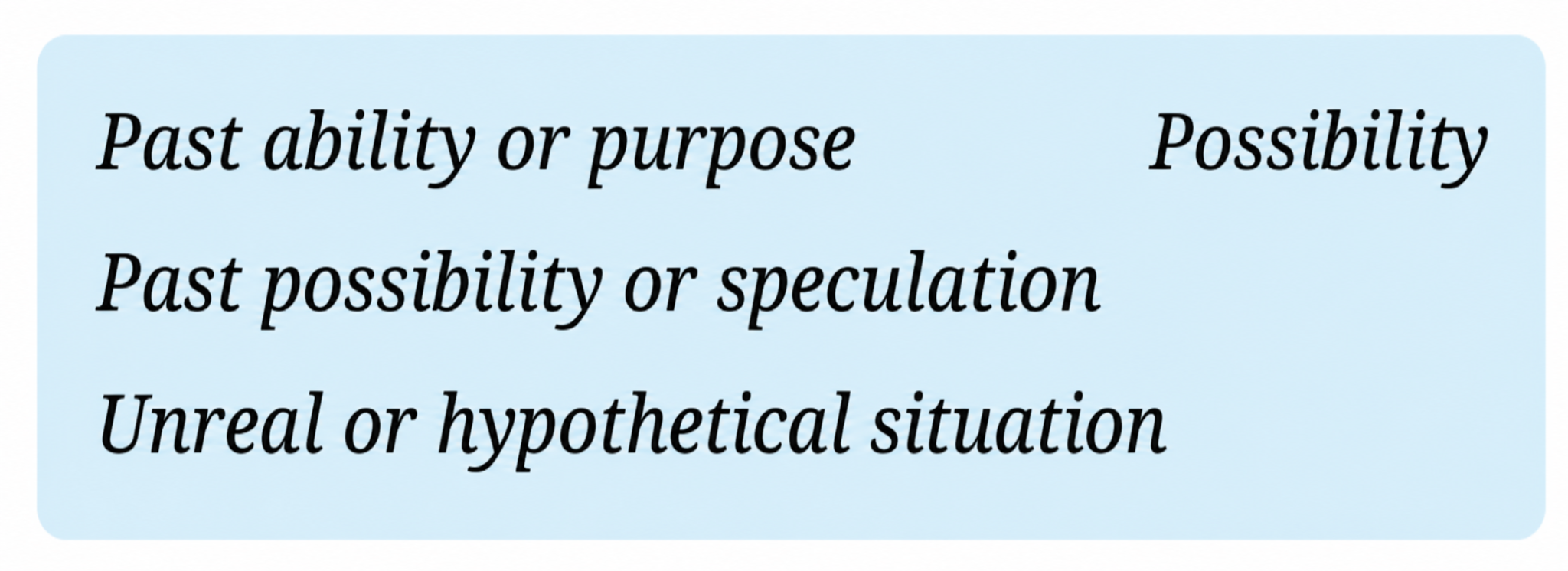
1. It could be in any field-sports, science, arts, business or design.
2. “I wish I could be this or the other,” they have never got beyond just wishful thinking.
3. They could have preferred to trade their dream for security.
4. I know too, of people who had wished to finish secondary school but they had to go out to work so that they could support their siblings through school.
Answer:
It could be in any field-sports, science, arts, business or design. – Possibility
“I wish I could be this or the other,” they have never got beyond just wishful thinking. – Unreal or hypothetical situation
They could have preferred to trade their dream for security. – Past possibility or speculation
They had to go out to work so that they could support their siblings through school. – Past ability or purpose
V. Complete the following sentences using ‘could’ with the functions mentioned within brackets.
1. I wish _______ without worrying about money. (unreal or hypothetical)
Answer: I wish I could live without worrying about money.
2. They _______ the shorter route, but they didn’t know about it. (past possibility or speculative)
Answer: They could have taken the shorter route, but they didn’t know about it.
3. When I was younger, I _______ without stopping. (past ability)
Answer: When I was younger, I could run without stopping.
4. She _______ the library right now-she had mentioned it. (possibility)
Answer: She could be in the library right now-she had mentioned it.
5. _______ repeat the question? I didn’t hear it clearly. (formal/polite request)
Answer: Could you repeat the question? I didn’t hear it clearly.
VI. Fill in the blanks with suitable grammatical forms of the words given in brackets.
Experiential learning is an approach to education that focuses on learning through experience, action and reflection. It 1. _______ (help) students gain practical knowledge and develop real-world skills. Traditionally, students 2. _______ (learn) by listening to lectures and memorising facts, but experiential learning has changed this process.
In an experiential setting, students 3. _______ (work) on projects, solve problems, and take part in activities that reflect real-life challenges. They 4. _______ (apply) what they have learned in class to new and unfamiliar situations. For example, a student studying science 5. _______ (conduct) experiments to test a theory, while a business student 6. _______ (analyse) a case study to understand market trends.
Reflection is key to this process. After completing a task, learners 7. _______ (must/ reflect) on what went well and what could be improved. This reflection 8. _______ (help) them build a deeper understanding of the topic.
Educators believe that experiential learning 9. _______ (be) more effective than passive learning methods because it is engaging and meaningful. In the future, more schools and universities 10. _______ (incorporate) experiential learning into their curriculum to prepare students for the real world.
Answer:
helps
learned
work
apply
conducts
analyses
must reflect
helps
is
will incorporate
Listen and Respond (Page 241)
I. You will listen to an announcement regarding vocational courses starting in school. As you listen, fill in the blanks with one to three exact words that you hear. (Transcript for teacher on page 275)
1. Vocational courses will begin in the month of _______ .
Answer: April
2. The objective of the courses is to prepare you with _______ for future studies and jobs.
Answer: practical skill
3. Offered courses include Graphic Design, _______ ,Web Application, and Entepreneurship Skills, etc.
Answer: Basic Coding, Artificial Intelligence, Multimedia, Data Science
4. Classes will be conducted by _______ at school.
Answer: trained professionals
5. The application forms will be available at the _______ .
Answer: school office
6. Choice of course will be given to _______ applicants.
Answer: All
Speaking Activity (Pages 241-242)
I work in groups of four. Each member of the group takes up one of the roles given below. Use the sentence prompts given under each role to present your role play.
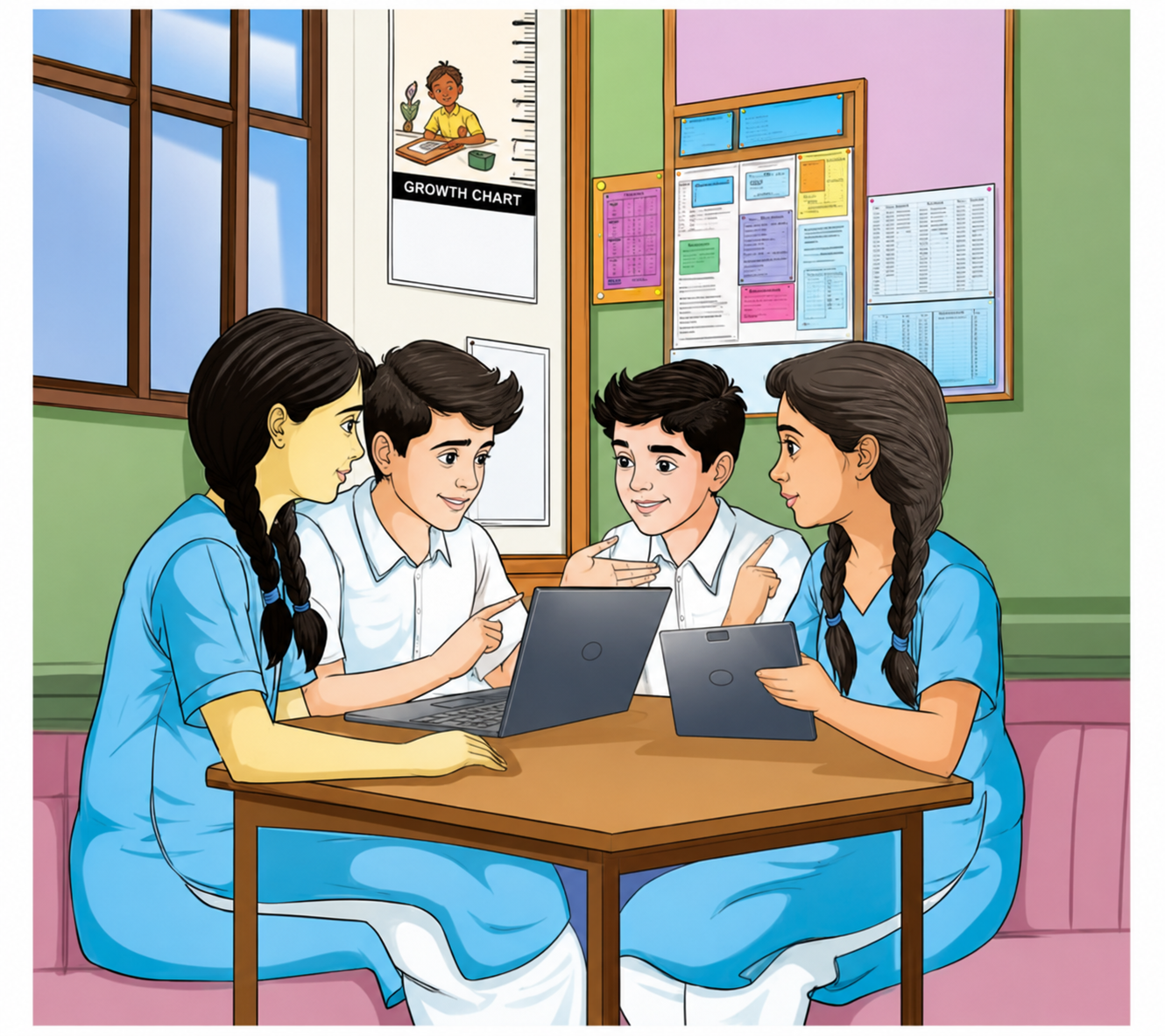
1. The Dreamer (for example: wants to be a trekking guide)
I know this might sound challenging, but _______.
Ever since I was a child, I’ve dreamed of…
I understand it’s not a usual path, but I believe…
It’s an uphill journey, but I’m ready for it because…
2. A Parent (worried about financial stability)
I know you’re passionate, but…
I only want what’s best for you, and…
You can always pursue your dream later…
What if it doesn’t…?
3. A Mentor or Teacher (offers balanced advice)
Remember dreams need planning…
Let’s look at the long-term view…
There are ways to combine your dream and…
Are you ready to…?
4. A Friend/Sibling (neutral or supportive voice)
You’ve always been good at…don’t give up now.
I don’t want to be a wet blanket, but what’s your backup plan?
If anyone can do this, it’s you, so…
If this dream makes you happy…
Answer: Students can perform this role play in groups of four. Each member should choose one role and use the given prompts to speak naturally. The group should show different viewpoints about following a dream, including passion, practical concerns, balanced advice, and friendly support.
Writing Task (Pages 242-243)
An email (electronic mail) is a method of composing, sending, storing, and receiving messages over an electronic communication system.
I. You are passionate about pursuing a course in designing in future. You come across a summer workshop being conducted by a reputed design institute. Write an email to the Director of the institute enquiring the details of the workshop and expressing your interest in joining it.
Follow the guidelines given below to write the email.
Use formal language
Avoid use of abbreviations
Include the following components:
Header consisting of-sender, receiver, date, and subject
The message-introduction, seeking permission, conclusion
Complementary close-Yours sincerely,
Name, (designation), and contact details of the sender
Format of an email:
Answer:
From: piyushchauhan24@gmail.com
Date: April 10, 2027
To: dir-fashdes@gov.in
Subject: Enquiry Regarding Summer Design Workshop
The Director
Fashion Designing Institute
New Delhi
Dear Sir/Madam,
My name is Piyush, and I am a student of Class IX. I am passionate about pursuing a career in design in the future. I recently came to know about the summer workshop being conducted by your reputed design institute.
I would like to enquire about the workshop details, including the schedule, duration, topics covered, eligibility criteria, registration process, and fee structure. Kindly let me know whether I am eligible to join the workshop and what steps I need to follow for registration.
I am eager to learn from experienced professionals and develop my skills in design. I look forward to receiving your response.
Yours sincerely,
Piyush Chauhan
Student, Class IX
Contact Number: 9XXXXXXXXX
Learning Beyond the Text (Pages 243-244)
I. Create a Vision Board for yourself. A vision board is a visual representation of your goals, dreams, and inspirations. It helps you focus on what you want to achieve and stay motivated. Vision boards often include pictures, words, or symbols that reflect your hopes and intentions for the future.

1. My Dreams-Think about what you wish for in the future. This could be becoming an artist, serving the Nation, or learning a new skill. Write or draw it in the ‘My dreams’ section.
2. I Want to Try-List new things you want to experience this year. These might include trying out for a play, starting a journal, learning to ride a bicycle, etc.
3. Goals-Think about specific things you want to achieve. Use this space to write goals like ‘Read 10 books this year’ or ‘Improve my writing’.
4. Places I Will Go-These can be real or imaginary places you’d like to visit. Draw or paste pictures of cities, nature spots, or even dream destinations like the space or the ocean.
5. Inspiration-Who or what inspires you? It could be a family member, teacher, a famous personality, or a quote that gives you strength.
Answer: Students can create their own vision board by adding drawings, pictures, words, and quotes that represent their dreams and goals. They can include their future career dream, new activities they want to try, personal goals, places they wish to visit, and people or ideas that inspire them.
II. Great personalities in history were inspired by their parents.
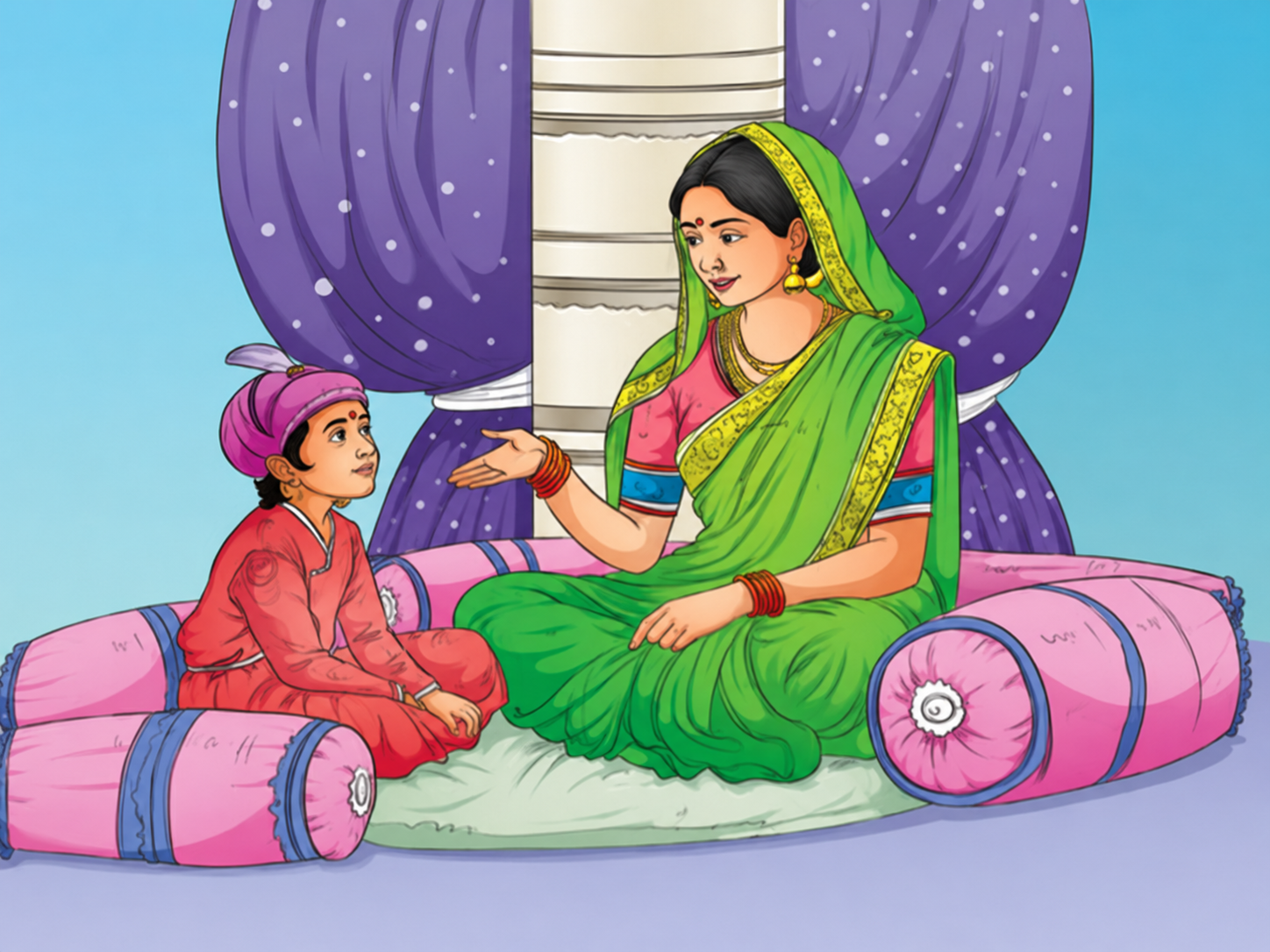
1. Chhatrapati Shivaji’s mother, Jijabai, instilled in him a strong sense of dharma, patriotism, and justice. She told him tales from the Ramayana and Mahabharata, which shaped his leadership ideals and bravery.
2. Queen Madālasa, wife of King Ritudhwaja, a revered figure from Indian scriptures, nurtured in her children a deep understanding of the soul and detachment from material desires. Her wisdom led her sons to seek spiritual liberation. Madalasa is a timeless example of a mother guiding her children on the path of enlightenment.
Answer: These examples show that parents can deeply influence the dreams, values, and character of their children. Jijabai inspired Chhatrapati Shivaji with courage, patriotism, and justice, while Queen Madālasa guided her children towards wisdom and spiritual understanding. This teaches us that parental guidance can shape great personalities and help children follow meaningful dreams.
Class 9 English Kaveri Chapter 8 Follow That Dream Solutions
Vedantu provides NCERT Solutions for Class 9 English Kaveri Chapter 8 Follow That Dream for the 2026-27 academic session. The chapter presents an inspiring message about following one’s dreams with passion, discipline, sacrifice, and practical planning. It helps students understand that dreams require more than imagination; they need action, patience, hard work, and the courage to face challenges.
The solutions include clear answers for reflection-based questions, extract-based questions, short-answer questions, vocabulary exercises, grammar practice, modal usage, first conditional sentences, listening tasks, role-play activities, formal email writing, and learning-beyond-the-text activities. Students can use these solutions for classroom learning, homework support, quick revision, and exam preparation. The downloadable FREE PDF also helps students revise the complete chapter offline.
CBSE Class 9 English Kaveri Chapter 8 Study Materials
Students can use the Chapter 8 study materials below to revise the lesson, practise extra questions, and strengthen their understanding of the chapter’s theme, message, vocabulary, and grammar exercises.
Explore More NCERT Solutions for Class 9 English Kaveri Chapters
The chapter-wise NCERT Solutions for Class 9 English Kaveri help students revise all lessons from the textbook in a structured way. These resources provide clear explanations and answers for textbook questions, grammar activities, vocabulary tasks, and writing exercises.
Related Study Material for Class 9 English
The following Class 9 English study materials support regular learning, grammar practice, writing improvement, and exam preparation. Students can use them along with the Kaveri textbook solutions for better understanding.
FAQs on NCERT Solutions for Class 9 English Kaveri Chapter 8 Follow That Dream - 2026-27 Free PDF Download (Sign-in Required)
1. What is Class 9 English Kaveri Chapter 8 Follow That Dream about?
Follow That Dream is about the importance of pursuing dreams with passion, planning, discipline, and hard work. The chapter explains that dreams can be achieved only when a person is ready to invest effort, time, sacrifice, and commitment.
2. What is the main message of Follow That Dream?
The main message of the chapter is that dreams should not remain only wishes. To achieve a dream, one must take action, stay focused, prepare for difficulties, and continue working with patience and determination.
3. Why does Ming’s mother say, “By all means follow that dream”?
Ming’s mother says this to encourage Ming to follow her dream. However, she also advises her to think carefully about the effort, sacrifice, time, and financial investment required to achieve it.
4. How does the chapter explain the difference between dreamers and achievers?
The chapter explains that dreamers only imagine success, while achievers take action. Achievers work hard, stay committed, overcome obstacles, and turn their dreams into reality through consistent effort.
5. What role do parents and community play in helping children achieve dreams?
Parents and the community can guide, support, encourage, and motivate children. They can provide emotional support, useful advice, opportunities, and a positive environment to help children stay focused on their goals.
6. Why is realistic planning important while following a dream?
Realistic planning is important because every dream requires time, effort, money, sacrifice, and patience. Planning helps a person understand challenges clearly and prevents them from giving up too early.
7. What does the phrase ‘burning conviction’ mean in the chapter?
The phrase ‘burning conviction’ means a strong belief or deep passion for achieving a goal. It shows that the person is serious, determined, and ready to work hard for the dream.
8. What grammar topics are covered in Class 9 English Kaveri Chapter 8?
The chapter includes compound words with ‘-scape’, idiomatic expressions, first conditional sentences, the use of ‘could’, suitable grammatical forms, listening tasks, speaking activities, and formal email writing.
9. How do NCERT Solutions for Follow That Dream help students?
These solutions help students understand the chapter, answer textbook questions clearly, revise grammar topics, improve vocabulary, practise writing tasks, and prepare well for class tests and school exams.
10. Where can students download Class 9 English Kaveri Chapter 8 solutions?
Students can download the FREE PDF of NCERT Solutions for Class 9 English Kaveri Chapter 8 Follow That Dream from Vedantu for homework, revision, and exam preparation.
