








Management: An Overview
Management is the backbone of every organisation, big or small. It assures the free flow of work in the organisation using the limited resources available to achieve certain pre-defined goals with efficiency and effectiveness. Proper management helps businesses and organisations to achieve certain organisational goals. The managers at different levels perform different functions to achieve these goals. Coordination and continuity in the management process further help in maintaining effectiveness in the business. Planning, organising, staffing, directing, and controlling are considered important functions of the management to achieve the goals of the company.
What is Management?
Management is a core process of business that deals with the planning and organising of limited resources to achieve an organisational goal with utmost efficiency and effectiveness. In other words, management is the process of effective planning, organising, staffing, and controlling with the purpose of reaching an organisational goal.
Management
Efficiency and Effectiveness
Here, efficiency refers to completing a particular task with minimal organisational resources/cost usage. Production firms utilise all its resources both physical and human resources productively. It ensures that the workforce with the help of the machineries attains maximum possible outputs with the employed resources. Whereas, effectiveness is all about completing a given task on time. It is concerned with doing things that are right for the firm or tasks that will yield positive results to the firm. Both of these parameters are liable for the general productivity of business operations.
Significance of Management in the 21st Century
Since the arrival of computers and the advancement in the field of information technology, the nature of the association has changed. Drucker ( 1999), a forerunner in knowledge operation, stressed that the growing refinements in the field of technology and individual knowledge are organisational assets.
In the digital era, businesses focusing on knowledge can expect to excel in their respective fields. Knowledge should evolve as Intelligence capital which will further boost the performance of the establishment.
However, it is not about having knowledge but using it properly. People and their unique ideas are valuable from a business perspective. We can state that management in the 21st century is knowledge management.
What is Coordination?
Coordination is a management function that assures every department works along with each other in sync. There must be unity among the staff, departments, and groups in order to achieve the organisational goal efficiently. It is crucial for management to have coordination within the different departments to avoid havoc and disturbance. Lack of coordination among employees and the various departments will lead to delays and confusion and will take up valuable time.
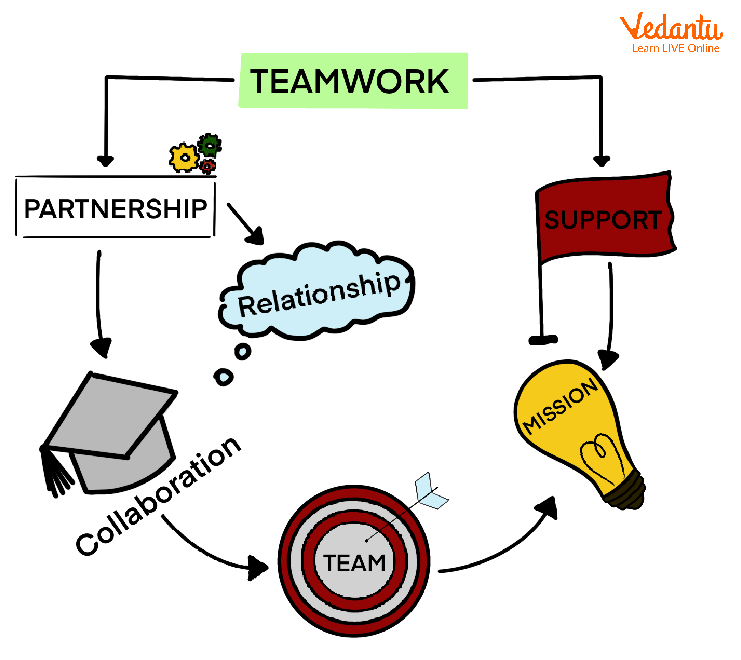
Teamwork is the Foundation to Success
Features of Coordination
Coordination Ensures Unity of Action
It confirms that every employee, along with the different departments, works flawlessly and focuses primarily on attaining the common organisational goals.
Coordination is a Continuous Process
Coordination is an integral part of an organisation and is required at every level and department. It starts right from the beginning of planning and ends at the controlling stage.
Coordination is a Deliberate Function
Managers at different levels should always keep an eye on the status of coordination. He is solely responsible for maintaining coordination among the line and different departments for the smooth flow of the organisation.
Coordination Integrates Group Efforts
It sums up various organisational activities into a single meaningful unit. It also aligns every employee's effort toward the common goal of the organisation.
Coordination is a Responsibility of all Managers
It is the collective responsibility of all the available managers of an organisation to ensure that each department is coordinating with each other seamlessly. Furthermore, a middle-level manager needs to coordinate with the top-level managers and the managers below him.

Leader Communicating the Work Plan to Her Team
Differences Between Management and Coordination
Case Studies
Electronic Heaven LTD is a manufacturing company that manufactures electronic goods such as refrigerators, Washing Machines, Air conditioners, etc. The organization is under pressure as its profits and shares are falling. The Production department of the company put accountability on the marketing for not meeting the sales target. On the other hand, the marketing department blames the production department for producing lower-grade quality goods that are unable to meet the customer's satisfaction level. The Finance department collectively blames both the two departments for the dropping return on investment and bad marketing.
1. Mention the possible problems inside the organisation.
The above company lacks exemplary management. As we all know, management having the right knowledge can easily tackle such issues within the organisation by clearly mentioning the guidelines on the day-to-day workings. The management will also encourage all the departments to coordinate so as to complete the operations effectively and efficiently to reach the objective.
2. How can coordination help an organisation achieve its targets?
It is an intangible function yet powerful. Coordination is all about synchronisation among the various departments or with employees of any unit. Organisations having seamless coordination are less likely to have day-to-day problems and will yield profit for the organisation.
Conclusion
In other words, management is the sole of every business entity existing. The management lays out certain working procedures, and regulations to keep a check on the day-to-day working of the entity. Management is also responsible for successful cost cutting in the production phase with optimum use of the resources available. Efficiency and effectiveness are two important parameters of management. It is necessary to have coordination in the management to achieve desired goals of the organisation.
FAQs on Significance of Management in the 21st Century
1. Why is management so important for a business to succeed in the 21st century?
Management is crucial in the 21st century because it helps organisations navigate modern challenges like globalisation, rapid technological advancements, and intense competition. Effective management ensures the optimal use of resources, helps in adapting to change, and provides a clear direction to achieve goals in a complex and dynamic business environment. Its significance lies in integrating individual efforts into a team effort to achieve organisational objectives efficiently.
2. What are the main objectives of management as per the CBSE Class 12 syllabus for 2025-26?
According to the NCERT framework, management has three primary objectives:
- Organisational Objectives: These are the economic goals an organisation needs to achieve, including survival (earning enough revenue to cover costs), profit (to cover risks and costs), and growth (increasing sales, employees, or capital investment).
- Social Objectives: This involves the commitment of a business towards society, such as using eco-friendly production methods, providing quality products at fair prices, and creating employment opportunities.
- Personal Objectives: These relate to satisfying the diverse needs of the employees, like competitive salaries, a good working environment, peer recognition, and opportunities for personal growth and development.
3. What is the difference between 'effectiveness' and 'efficiency' in management?
Effectiveness and efficiency are two critical aspects of management. Effectiveness means completing the given task or achieving the goal on time; it is concerned with the end result. In contrast, efficiency means performing the task correctly with minimum cost and resource wastage. For long-term success, an organisation must be both effective and efficient, as being effective without being efficient leads to high costs, while being efficient without being effective means the goals are never met.
4. How does management help in making an organisation dynamic?
Management helps create a dynamic organisation by enabling it to adapt to its constantly changing external environment. Every business operates within a context of social, economic, political, and technological factors that are always evolving. Management's role is to monitor these changes, assess their impact, and implement necessary modifications in the organisation's goals and activities. This process helps the organisation overcome resistance to change and ensures its continued survival and growth.
5. Why is management considered a group activity?
Management is considered a group activity because an organisation is a collection of diverse individuals with different needs and skills. The purpose of management is to coordinate these diverse individuals and direct their efforts towards achieving a common organisational goal. It requires teamwork and the synchronisation of individual efforts in a common direction, which is impossible for a single person to achieve alone.
6. How has globalisation impacted the significance of management?
Globalisation has significantly increased the importance of management. With businesses operating across borders, managers must now handle a more diverse workforce, navigate different cultural norms, and comply with international laws. They face competition from global players and must manage complex international supply chains. This requires a more sophisticated and strategic approach to planning, organising, and controlling, making skilled management more critical than ever for global survival and success.
7. Is management considered a pure science or an art in the modern business world?
In the modern business world, management is considered both a science and an art. It is a science because it has a systematised body of knowledge with principles based on observation and experimentation. However, unlike pure science, these principles are not universally rigid and must be adapted to the situation. It is an art because it involves the skillful and personalised application of this knowledge to achieve desired results. A successful manager uses their creativity, experience, and intuition to deal with unique situations, much like an artist.
