



Exercise-wise Solutions for Class 5 Maths Chapter 7 Shapes and Patterns
NCERT Textbook Pages 92-93
Weaving Mats
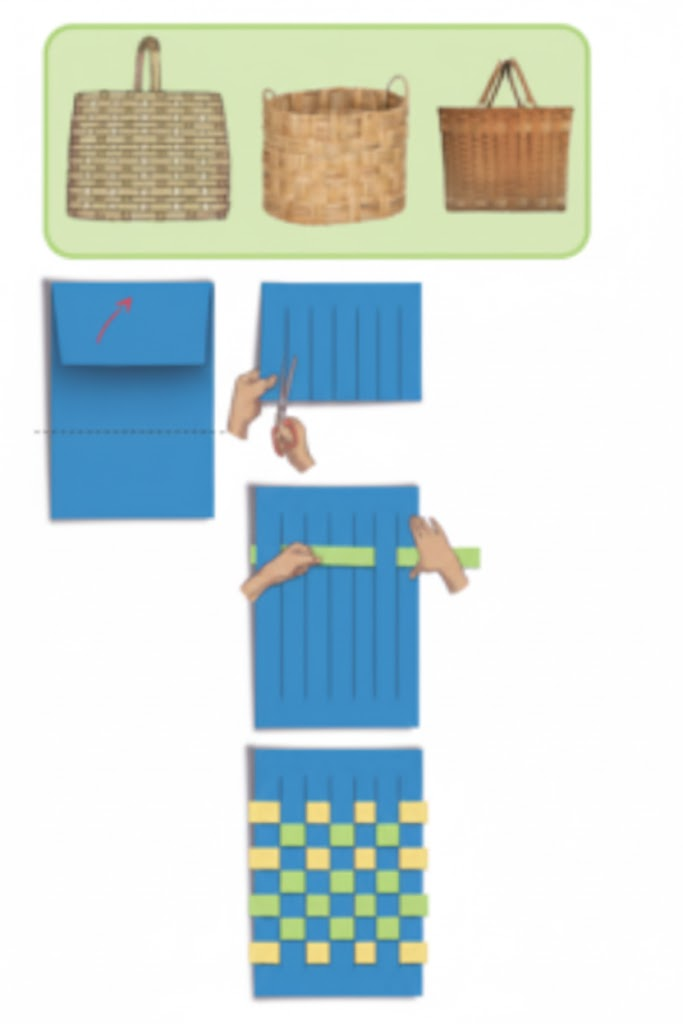
You may have seen woven baskets of different kinds. If you look closely, you will notice different weaving patterns on each basket.
We will try weaving some mats with paper strips.
Question 1.
Let us make paper mats.
You will need —A coloured paper (30 cm long and 20 cm wide) and eight paper strips of two different colours (3 cm wide and longer than 20 cm).
Solution:
Steps to make the mat:
(a) Take a sheet of coloured paper measuring 30 cm in length and 20 cm in width.
(b) Fold the paper into two along its longer side.
(c) From the folded edge, draw evenly spaced vertical lines and cut along them, leaving a 3 cm margin uncut at the top.
(d) Gently open the paper; the top and bottom edges will remain uncut.
(e) Cut 8 strips of paper, each 3 cm wide, using two different colours, with each strip slightly longer than 20 cm.
(f) Choose a strip of one colour and weave it through the slits in an under–over pattern. Complete the first row in this way.
(g) Take a strip of the second colour and weave it in the opposite pattern, starting over–under, to form the second row.
(h) Continue weaving the remaining strips by alternating the pattern. Fold the extra ends neatly behind the mat. Your paper mat is complete.
Question 2.
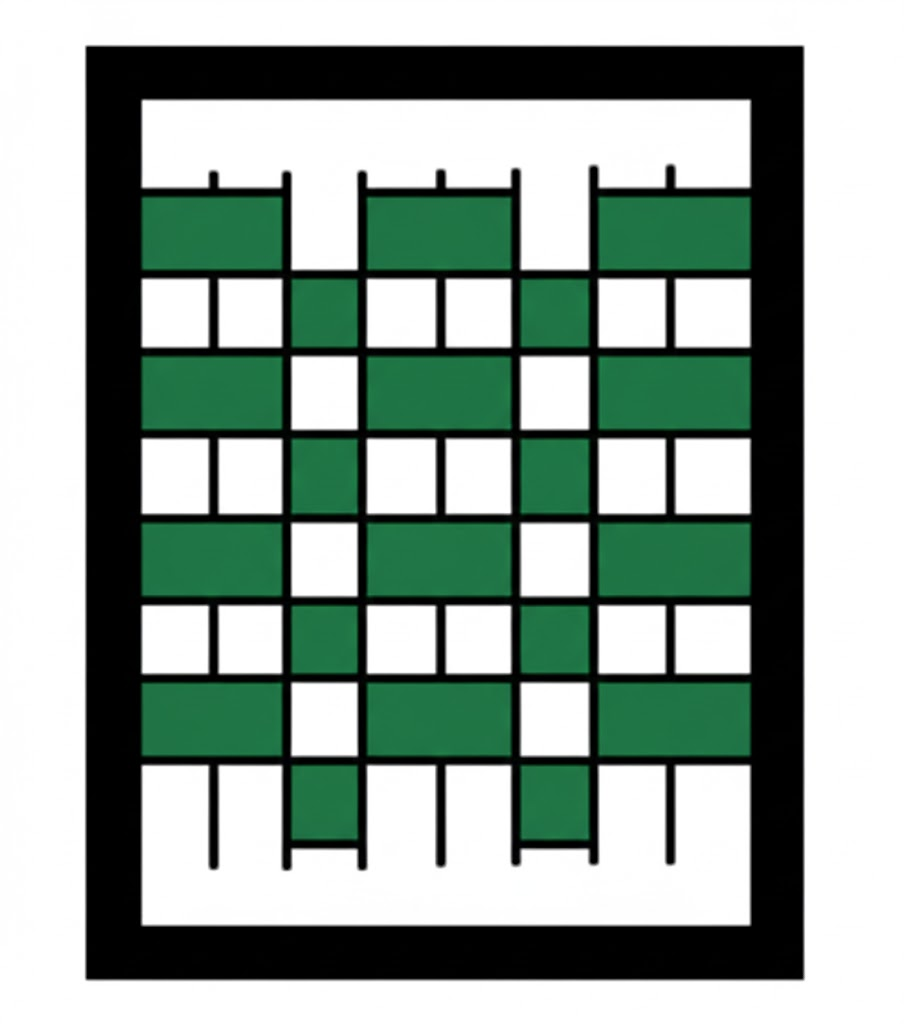
Can you figure out how to make this mat?
Solution:
Let us understand the weaving process by observing the pattern used in the first two rows.
Row 1: 2 strips over, 1 strip under, 2 strips over, 1 strip under, …
Row 2: 2 strips under, 1 strip over, 2 strips under, 1 strip over, …
You may use strips of a single colour or choose two different colours, using one colour for each row.
Question 3.
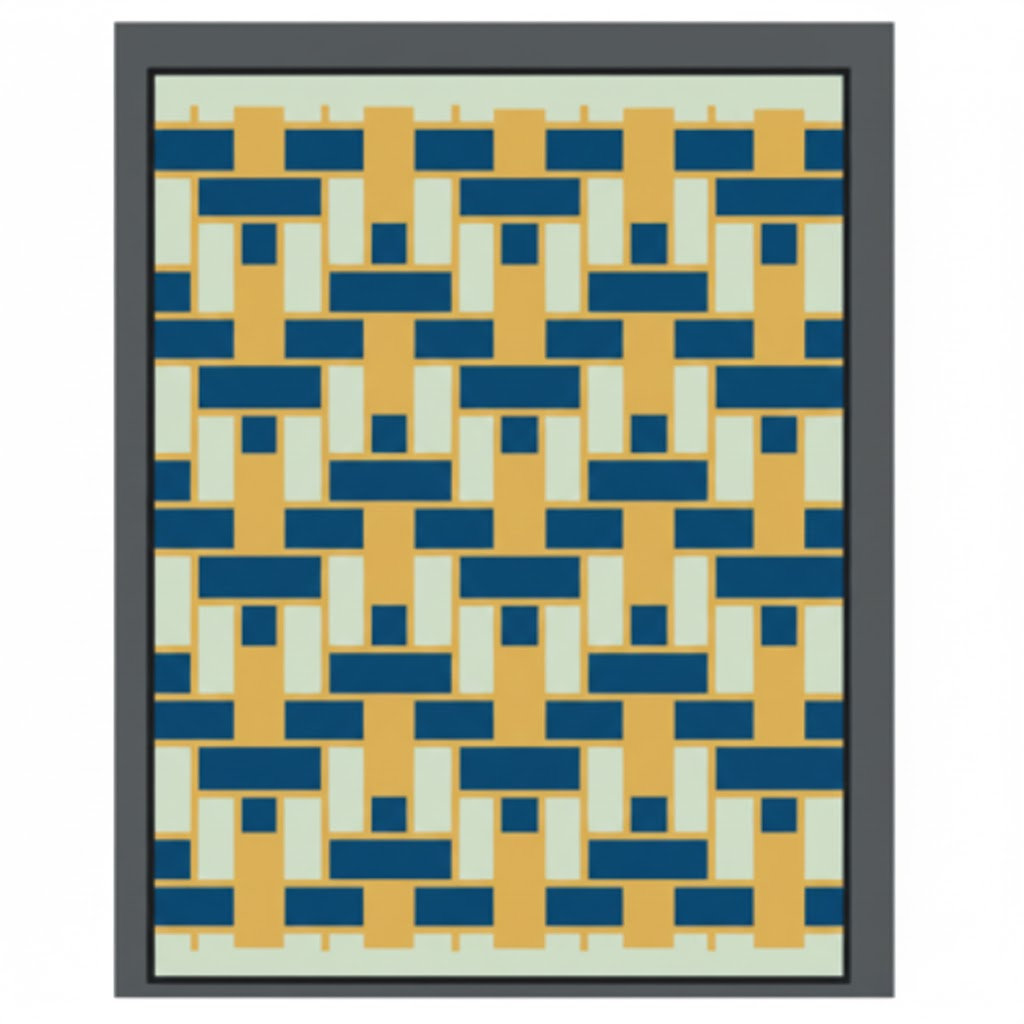
Try to weave a pattern, using the rules given below
Solution:
Row 1: 2 over, 1 under, 2 over, 1 under, … (repeat)
Row 2: 1 under (do not repeat), 3 over, 3 under, 3 over, 3 under, … (repeat)
Row 3: 2 under, 1 over, 2 under, … (repeat)
Row 4: 1 over (do not repeat), 3 under, 3 over, … (repeat)
Continue weaving by following this same sequence of rows.
Question 4.
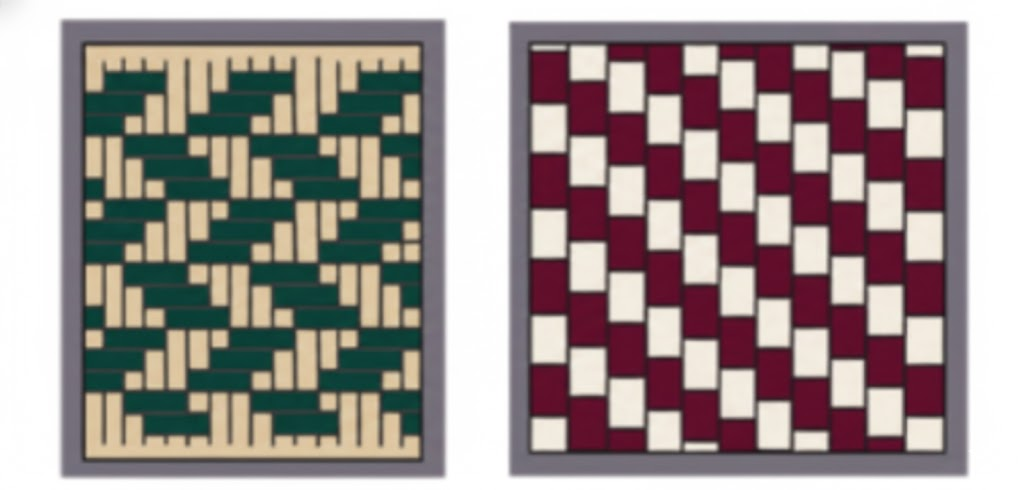
Can you work out the steps for any of these designs and weave the pattern?
Write the steps of the pattern in your notebook for each row until it starts repeating.
Solution:
For Image 1
Row 1: 1 under (do not repeat), 3 over, 3 under, 3 over, … (repeat)
Row 2: 3 over, 3 under, 3 over, 3 under, 3 over, … (repeat)
Row 3: 2 over (do not repeat), 3 under, 3 over, 3 under, 3 over, … (repeat)
Row 4: 2 under (do not repeat), 3 over, 3 under, 3 over, … (repeat)
Row 5: 3 under, 3 over, 3 under, 3 over, … (repeat)
Row 6: 1 over (do not repeat), 3 under, 3 over, 3 under, … (repeat)
For Image 2
Row 1: 1 under, 3 over, 1 under, 3 over, 1 under, … (repeat)
Row 2: 2 under (do not repeat), 1 over, 3 under, 1 over, 3 under, 1 over, … (repeat)
Row 3: 1 over, 3 under, 1 over, 3 under, 1 over, … (repeat)
Row 4: 2 over (do not repeat), 1 under, 3 over, 1 under, … (repeat)
Row 5: 1 under, 3 over, 1 under, 3 over, 1 under, … (repeat)
Row 6: 2 under (do not repeat), 1 over, 3 under, 1 over, 3 under, … (repeat)
NCERT Textbook Page 93
Let Us Try
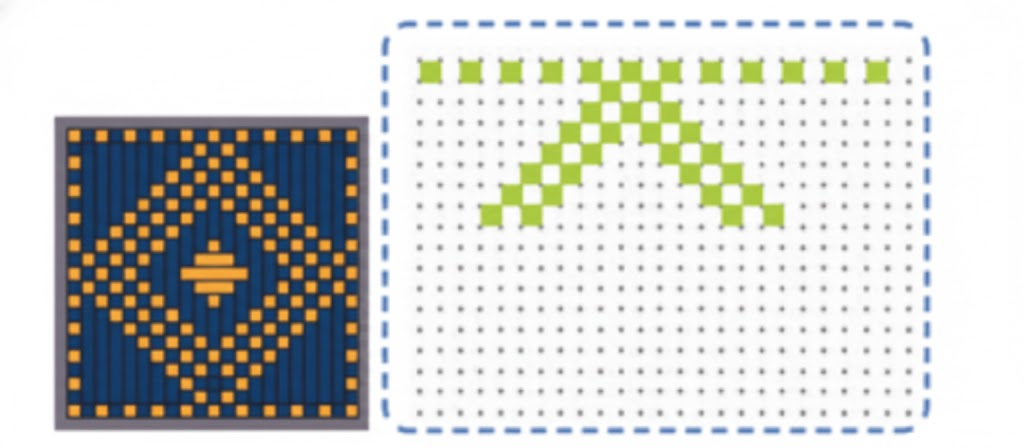
Draw the following pattern on a grid paper. Part of it is done for you.
Now, complete the rest of the grid to get the full design.
Solution:
Students should do it by themselves.
NCERT Textbook Pages 94-99
Find Out
Can five squares fit together around a point without any gaps or overlaps? Why or why not?
Solution:
No, five squares cannot meet neatly at a single point without leaving gaps or causing overlap. Each square has a right angle, and for shapes to fit perfectly around a point, the total of the angles meeting there must be exactly four right angles.
If five squares are placed around one point, their angles add up to five right angles, which is more than required. As a result, the squares overlap instead of fitting smoothly.
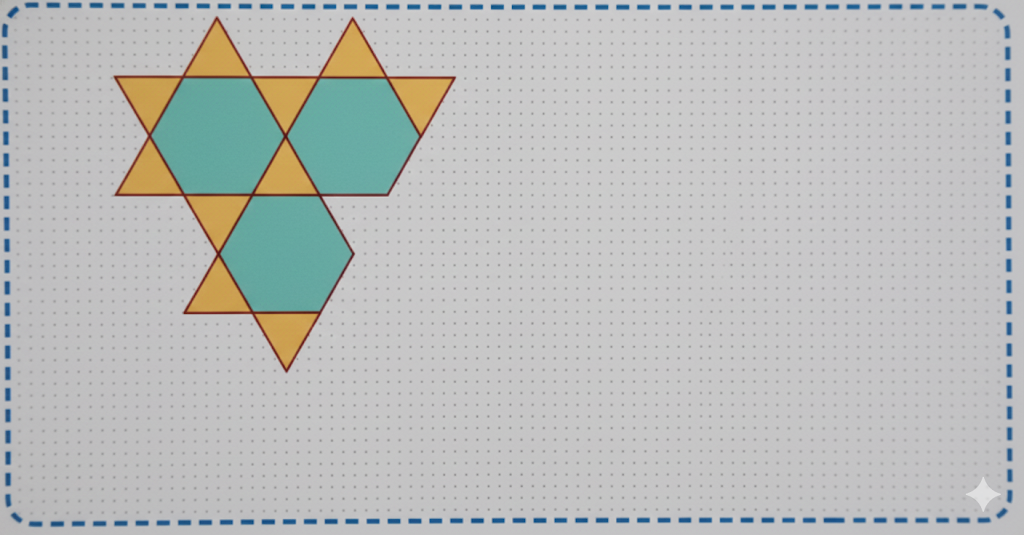
Now consider regular hexagons (six-sided shapes with all sides equal). Can they be arranged around a point without gaps or overlaps? Try arranging them using the sample hexagon provided at the end of the book and observe how many hexagons meet at one point.

Solution:
Yes, regular hexagons can be arranged around a point without leaving any gaps or causing overlaps. Three hexagons fit exactly around a single point, joining neatly like puzzle pieces. They meet perfectly, leaving no empty spaces and without overlapping one another.
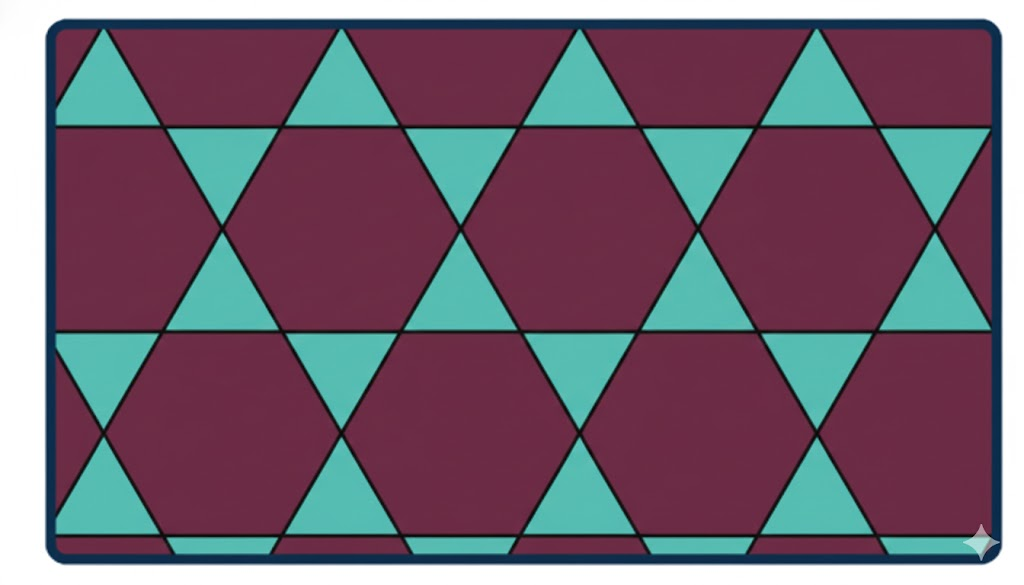
What shapes have been used in this pattern?
Solution:
The pattern shown above is made using equilateral triangles and regular hexagons.
Solution:
Students should do it by themselves.
Do regular octagons fit together without any gaps or overlaps?
Solution:
No, regular octagons cannot be arranged to fit together perfectly without leaving gaps or causing overlaps, so they do not form a tessellation.
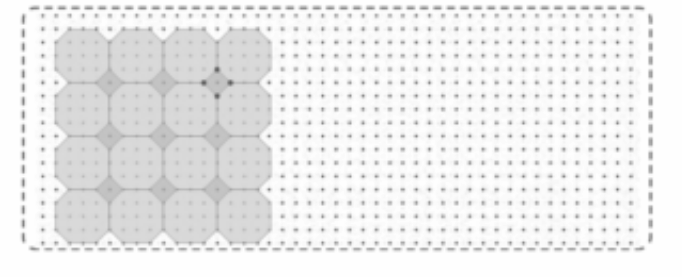
Look at the pattern given below. What shapes are coming together at the marked points? Are the same set of shapes coming together at these points? Continue the pattern and colour it appropriately.
Solution:
The shapes meeting at the marked points are squares. Yes, the same type of shapes come together at each of these points.
Here is a tiling pattern made using two different shapes-squares and triangles. Are the triangles equilateral? Why or why not?
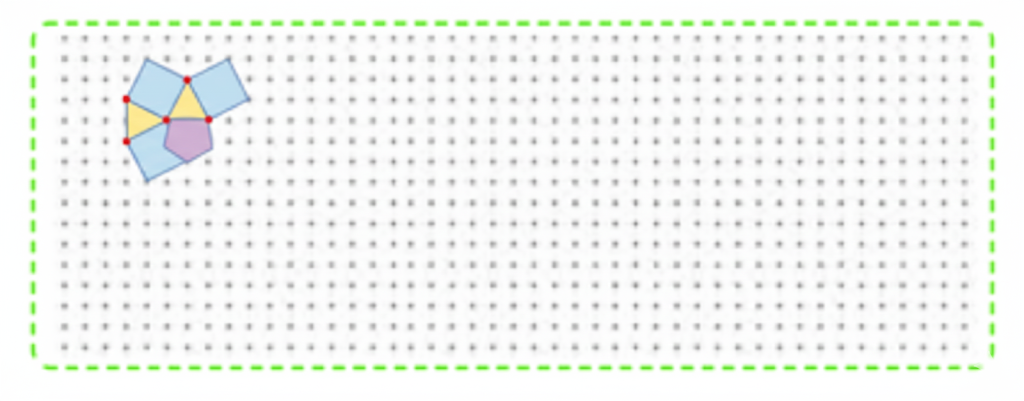
Solution:
Yes, since all sides of a square are equal, the sides of the triangles used to fill the gaps must also be equal. Therefore, the triangles are equilateral.
What geometrical shapes can you make by fitting 2 of these triangles together? Trace the shapes you created.
Solution:
Students should do it by themselves.
Question 1.
How many different types of triangles can you make?
Solution:
There are four types: isosceles triangle, scalene triangle, equilateral triangle, and right triangle.
Question 2.
Is it possible to make a triangle where all three sides are equal (equilateral triangle)?
Solution: Yes, a triangle with all three sides equal can be formed. Such a triangle is known as an equilateral triangle.
Question 3.
Is it possible to make a triangle where all three sides are unequal?
Solution: Yes, a triangle with all three sides of different lengths can be formed. Such a triangle is called a scalene triangle.
Question 4.
How many different 4-sided shapes (quadrilaterals) can you make?
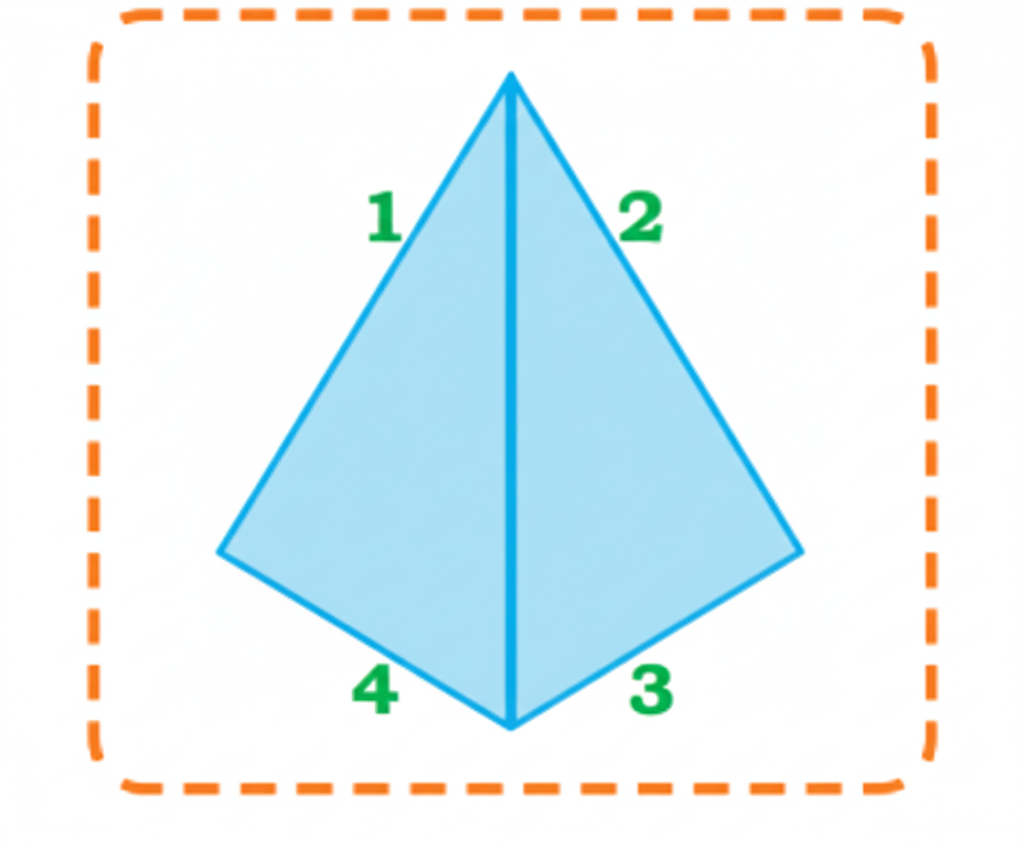
Here are three possible shapes.
Have you made a shape like the one shown on the right?
Solution:
This figure is known as a kite.
In a kite, two pairs of adjacent sides are equal:
Side 1 = Side 2 and Side 3 = Side 4.
The equal sides lie next to each other, which is a key property of a kite.
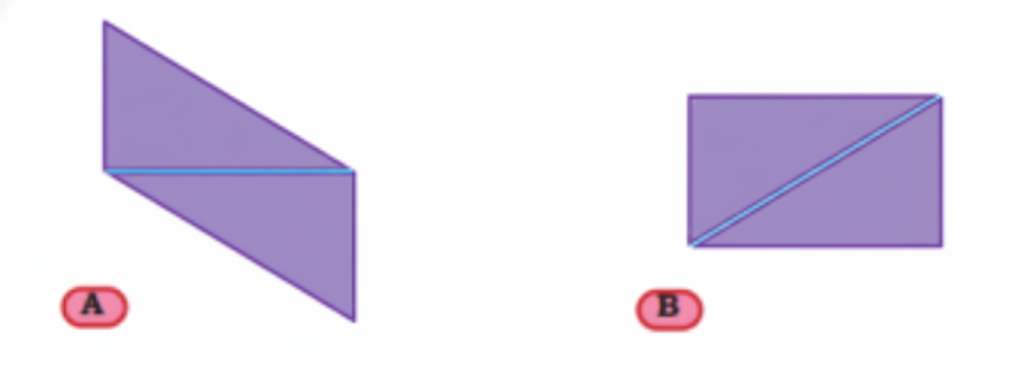
Shown below are two other quadrilaterals that do not have this property and therefore are not kites.
Question 5.
Measure the sides of each of these two quadrilaterals A and B. What do you notice?
Are there any pairs of sides that are equal? Which pairs are equal—adjacent or opposite?
Solution:
Quadrilaterals in which both pairs of opposite sides are equal are called parallelograms.
Now, consider quadrilaterals A and B.
In parallelogram A, the opposite angles are equal.
In parallelogram B, all angles are equal, and each angle is a right angle.
A parallelogram with all right angles is known as a rectangle.
Thus, a rectangle is a special kind of parallelogram.
Question 6.
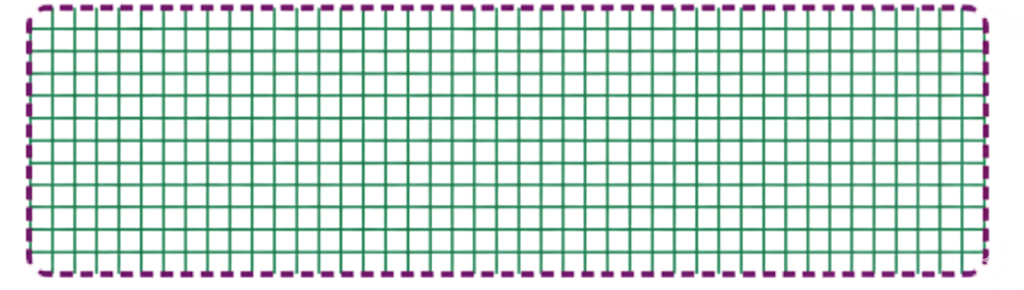
In the grid given below, draw two different kites and parallelograms each.
Solution:
Students should do it by themselves.
Question 7.
Now, use 3 triangles from the rhombus to form shapes. How many sides do each one of them have?
Using 3 triangular pieces of the rhombus, try creating a (a) 3-sided shape, (6) 4-sided shape, and (c) 5-sided shape.
Solution:
Students should do it by themselves.
Question 8.
Which of these shapes can be made with all 4 pieces? Try and find out.
(a) Square
(b) Rectangle
(c) Triangle
(d) Pentagon (5-sided)
(e) Hexagon (6-sided)
(f) Octagon (8-sided)
Solution:
Students should do it by themselves.
NCERT Textbook Page 99
Tangram
Look at the tangram set given at the end of your textbook. Cut out all the shapes. Name them.
(a) How are they same or different from each other?
(b) What do you notice about the angles of each of the shapes?
(c) What do you notice about the sides of each of the shapes?

Solution:
The given tangram is made up of 7 pieces:
Two large right-angled triangles (purple and yellow)
One medium right-angled triangle (orange)
Two small right-angled triangles (blue and green)
One square (pink)
One parallelogram (dark purple)
(a) Similarities and differences
Similarities:
All the shapes are two-dimensional (flat).
Each shape is a polygon, formed using straight sides.
Except for the parallelogram, every shape has at least one right angle. All the triangles are right-angled, and the square has four right angles.
Differences:
Number of sides and angles:
Triangles have 3 sides and 3 angles.
The square and the parallelogram have 4 sides and 4 angles.
Size:
The tangram includes triangles of different sizes—two large, one medium, and two small.
(b) Angles in the shapes
Triangles: All five triangles are right-angled isosceles triangles.
Square: All four angles are right angles.
Parallelogram: It has two acute angles and two obtuse angles, with opposite angles equal.
(c) Sides of the shapes
Triangles: Each is an isosceles right-angled triangle, having two equal sides and one longer side.
Square: All four sides are equal in length.
Parallelogram: It has two pairs of equal opposite sides—the longer sides are equal to each other, and the shorter sides are equal to each other.
NCERT Textbook Page 100
Which Shape Am I?
Match the statements with appropriate shapes. Do some of them describe more than one shape?
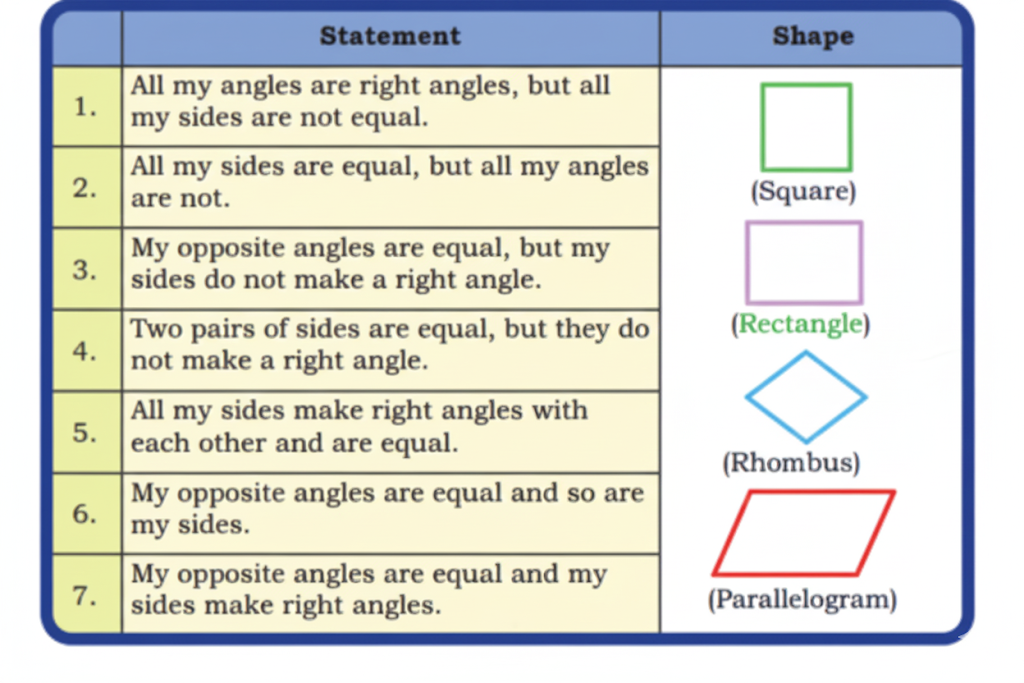
Solution:
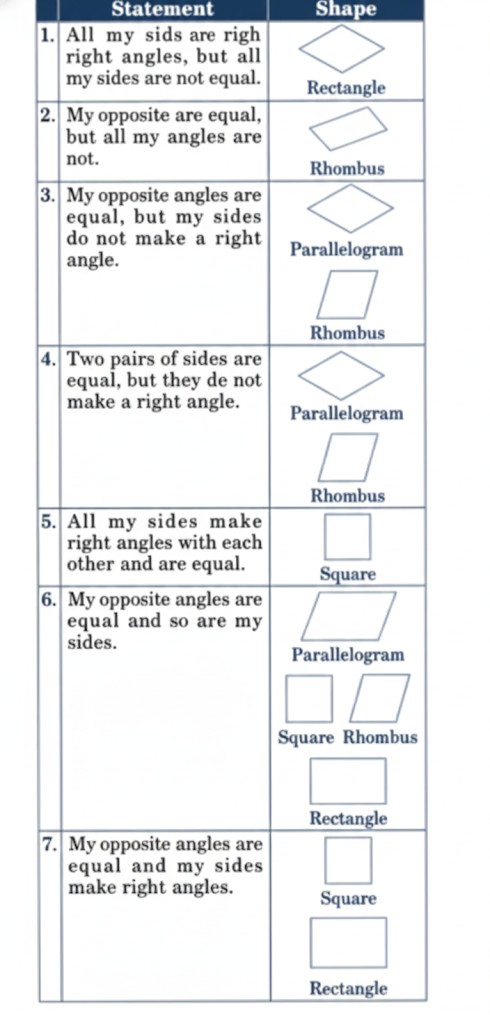
Kites
Make your own kite shape.
(a) Start with a square piece of paper.
(b) Take one corner of the paper and fold it towards the opposite corner, creating a sharp crease along the diagonal.
(c) Open and fold the corner A inwards, aligning the edge with the crease you just made.
(d) Repeat on the other side, folding the other corner B inwards to align with the crease at the centre.
You have a kite shape!
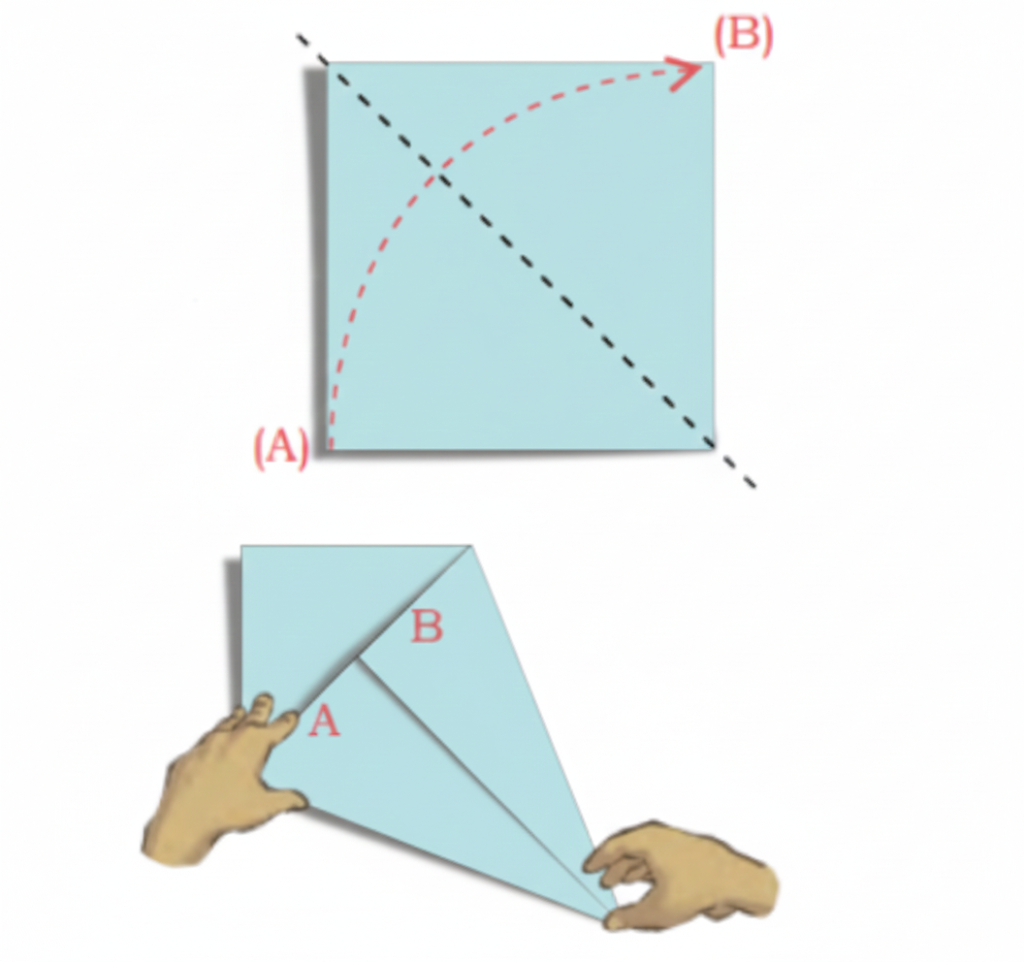
What shapes do you see in the kite?
Solution:
Three right-angled triangles, out of which two are of the same size.
NCERT Textbook Page 101
Circle Designs
Can you think of a way to make a design exactly like the image given here? Try to make it.

Solution:
Students should do it by themselves.
NCERT Textbook Page 102
Cube Connections
Question 1.
Here are three views of a cube. Can you draw them on the net in the correct order?
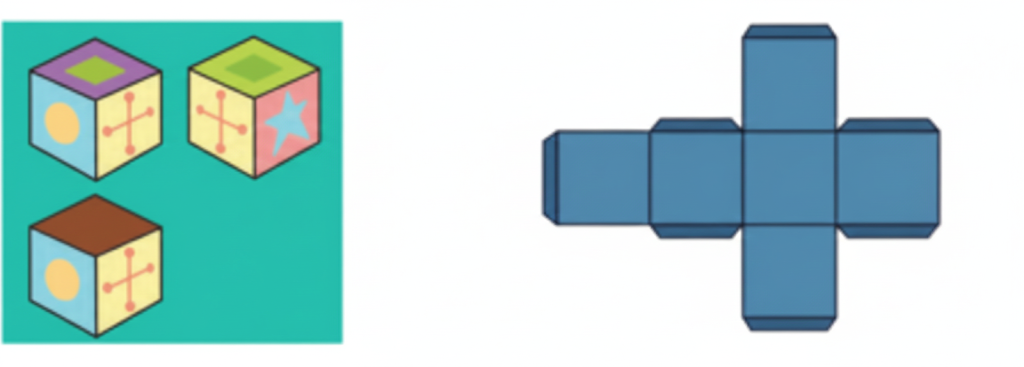
Solution:
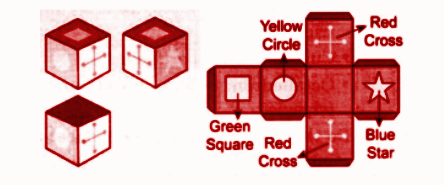
Question 2.
Here are some big solid cube frames. Howr many small cubes have been removed from each cube?
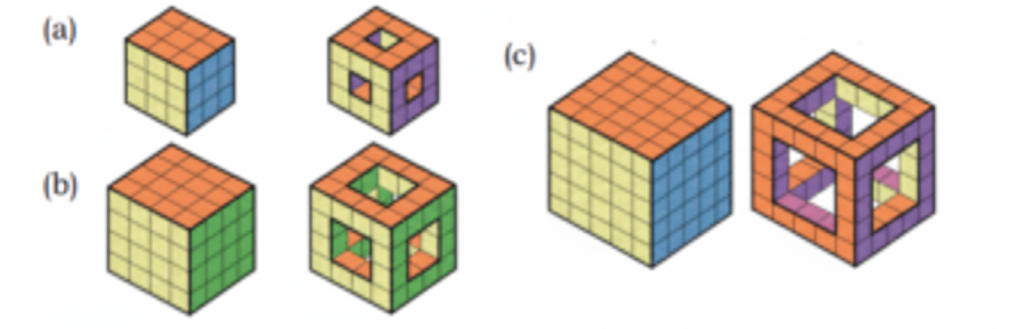
Solution:
(a)
A complete cube made of 3 × 3 × 3 small cubes contains 27 cubes in total.
After removing the inner cubes, the remaining cube frame has 20 small cubes.
So, the number of cubes removed is:
27 − 20 = 7 cubes.
(b)
A cube of size 4 × 4 × 4 consists of 64 small cubes.
Once the inner cubes are removed, the outer frame contains 32 cubes.
Hence, the number of cubes taken out is:
64 − 32 = 32 cubes.
(c)
A cube formed by 5 × 5 × 5 small cubes has 125 cubes in total.
After removing the inner cubes, the cube frame is left with 44 cubes.
Therefore, the number of cubes removed is:
125 − 44 = 81 cubes.
Question 3.
Nisha has glued 27 small cubes together to make a large solid cube. She paints the large cube red. How many of the original small cubes have—
(a) three faces painted red?
(b) two faces painted red?
(c) one face painted red?
(d) no faces painted red?
Solution:
Nisha has a large solid cube made up of 27 small cubes. Since
3 × 3 × 3 = 27, the big cube is a 3 × 3 × 3 cube.
She paints the entire surface of the large cube red.
(a)
The large cube has 8 corner cubes. Each corner cube has three faces exposed, so 8 small cubes have three faces painted red.
(b)
A cube has 12 edges. The small cube located at the middle of each edge has two faces exposed. Hence, 12 small cubes have two faces painted red.
(c)
There are 6 faces on a cube. Each face is a 3 × 3 arrangement of small cubes. The small cube at the center of each face has only one face exposed and painted red. Therefore, 6 small cubes have one face painted red.
(d)
If the outer layer of the 3 × 3 × 3 cube is removed, only the inner cube remains. This leaves one small cube at the very center, which has no faces painted red.
Puzzle
Tanu arranged 7 shapes in a line. She used 2 squares, 2 triangles, 1 circle, 1 hexagon, and 1 rectangle.
Find her arrangement using the following clues:
(a) The square is between the circle and the rectangle.
(b) The rectangle is between the square and the triangle.
(c) The two triangles are next to the square.
(d) The hexagon is to the right of the triangle
(e) The circle is to the left of the square.
Solution:
The sequence of shapes is: Triangle, Circle, Square, Rectangle, Triangle, Hexagon.
NCERT Textbook Page 103
Icosahedron and Dodecahedron
What shapes do you see in an icosahedron and a dodecahedron?
Solution:
An icosahedron is made up of equilateral triangles, while a dodecahedron is composed of regular pentagons.
Do all the faces look the same?
Solution: Icosahedron: Yes
Dodecahedron: Yes
How many faces meet at a vertex (point)?
Solution:
Icosahedron: 5 faces (equilateral triangles)
Dodecahedron: 3 faces (regular pentagons)
Do the same number of faces meet at each vertex?
Solution:
Icosahedron: Yes, Dodecahedron: Yes
How many edges do you see?
Solution:
Icosahedron: 30, Dodecahedron: 30
How did you count them such that you do not miss out any edge or count an edge twice?
Solution:
Students should do it by themselves.
Can you think of any other solid shapes that have faces that look the same?
Solution:
Yes, there are a few special solids in which all the faces are exactly the same. These shapes are called Platonic solids.
Apart from the icosahedron and the dodecahedron, the other Platonic solids are:
Tetrahedron: 4 faces, each an equilateral triangle
Cube: 6 faces, all squares
Octahedron: 8 faces, each an equilateral triangle
Do the same number of faces meet at each common vertex?
Solution:
Yes.
Understanding Shapes and Patterns – NCERT Class 5 Maths
Mastering NCERT Solutions Class 5 Maths Mela Chapter 7 Shapes and Patterns (2026-27) helps students recognize unique patterns, tessellations, and properties of 2D and 3D shapes. Developing a solid foundation here enhances both logical reasoning and exam performance.
Focus on drawing grids, exploring tessellations, and building solids using everyday materials. Practicing these exercises boosts visualization skills and prepares you for school tests with confidence and creativity.
Revise concepts on triangles, quadrilaterals, and patterns regularly. Challenge yourself with puzzles and shape arrangements to sharpen mathematical thinking. Keep practicing for better retention and high exam marks!
FAQs on NCERT Solutions For Class 5 Maths Chapter 7 Shapes And Patterns - 2026-27 Free PDF Download (Sign-in Required)
1. What is covered in NCERT Solutions for Class 5 Maths Mela Chapter 7 Shapes and Patterns?
NCERT Solutions for Class 5 Maths Chapter 7 provide comprehensive, stepwise answers to all exercises on shapes and patterns, following the CBSE 2026–27 syllabus. Key coverage includes:
- Clear explanations of different types of shapes and patterns
- Practice problems with diagrams and labeling
- Step-by-step solutions for intext and back exercises
- Important questions for exam preparation
- Tips to score full marks by following CBSE answer presentation
2. Are diagrams or definitions mandatory in answers for Class 5 Maths Chapter 7 Shapes and Patterns?
Yes, including diagrams and definitions is highly recommended to score full marks in Class 5 Maths Chapter 7. Follow these tips:
- Draw neat and well-labeled diagrams for questions on shapes or symmetry
- Write correct definitions for key terms like ‘pattern’, ‘symmetry’, and ‘geometry’ where asked
- Use appropriate mathematical language and labeling
3. How to write stepwise NCERT answers to score full marks?
To score full marks in NCERT Class 5 Maths Chapter 7:
- Start each answer with the relevant definition or concept
- Show every calculation and logical step clearly
- Include neat diagrams if applicable
- Highlight important keywords from the question
- Align your answer with the CBSE marking scheme
4. Which questions are likely from this chapter in school exams?
Important and likely questions from Chapter 7 include:
- Drawing and identifying symmetrical shapes
- Continuing or completing given patterns
- Classifying shapes based on properties (sides, corners, symmetry)
- Defining key terms like pattern, symmetry
- Drawing and labeling geometric shapes correctly
5. Where can I download the chapter’s solutions PDF?
You can download the free PDF of NCERT Solutions for Class 5 Maths Chapter 7 from trusted educational websites. Look for:
- Exercise-wise solutions in a single PDF
- Stepwise explanations and diagrams included
- CBSE 2026–27 syllabus relevance
6. Is shapes and patterns important for exams?
Yes, Chapter 7 Shapes and Patterns is very important for Class 5 exams. This chapter:
- Covers fundamental geometry concepts asked every year
- Includes high-scoring and practical visual questions
- Sharpens logical and observation skills needed for later classes
7. How to draw accurate geometry diagrams in exams?
To draw accurate geometry diagrams for Class 5 Maths Chapter 7:
- Use pencil and ruler for straight edges
- Label all sides, angles, and points clearly
- Keep diagrams neat and proportional
- Follow textbook examples for correct method
8. What are the most important topics from this chapter?
The most important topics in Class 5 Maths Chapter 7 Shapes and Patterns are:
- Symmetry and mirror images
- Types of shapes (polygons, circles, etc.)
- Pattern completion and continuation
- Identifying and drawing shapes
- Key definitions and properties
9. Do examiners award partial marks for correct steps even if the final answer is wrong?
Yes, CBSE examiners often give partial marks for correct steps in Maths Mela Chapter 7, even if the final answer is incorrect. To maximize your score:
- Show every working step clearly
- Include correct diagrams and labeling
- Use proper definitions and formulae
10. How to revise NCERT Class 5 Maths Chapter 7 Shapes and Patterns quickly before exams?
To revise Class 5 Maths Chapter 7 quickly:
- Go through short revision notes for shapes, patterns, and definitions
- Practice key diagrams and pattern questions
- Review important questions and sample papers
- Use 1-day or 3-day revision planners for last-minute prep
