



Stepwise NCERT Answers for Class 5 Maths Chapter 6 with Exam Tips
NCERT Textbook Pages 70-71
Let Us Think
Question 1.
The given shapes stand for numbers between 1 and 24. The same shape denotes the same number across all problems. Find the numbers hiding in all the shapes.
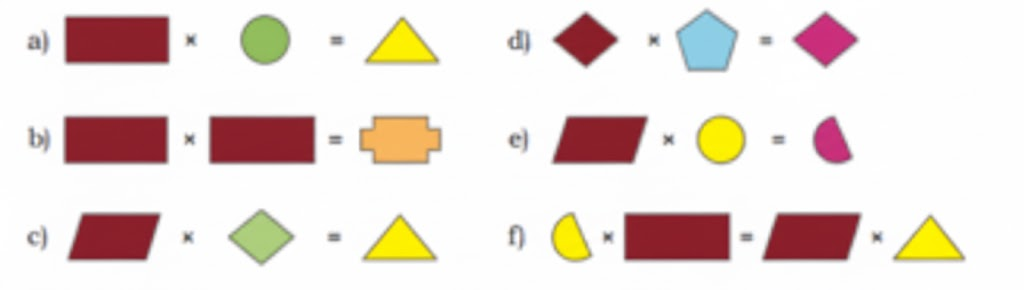
Solution:
This problem can be solved using the trial-and-error method.
One possible set of values for the shapes is given below.
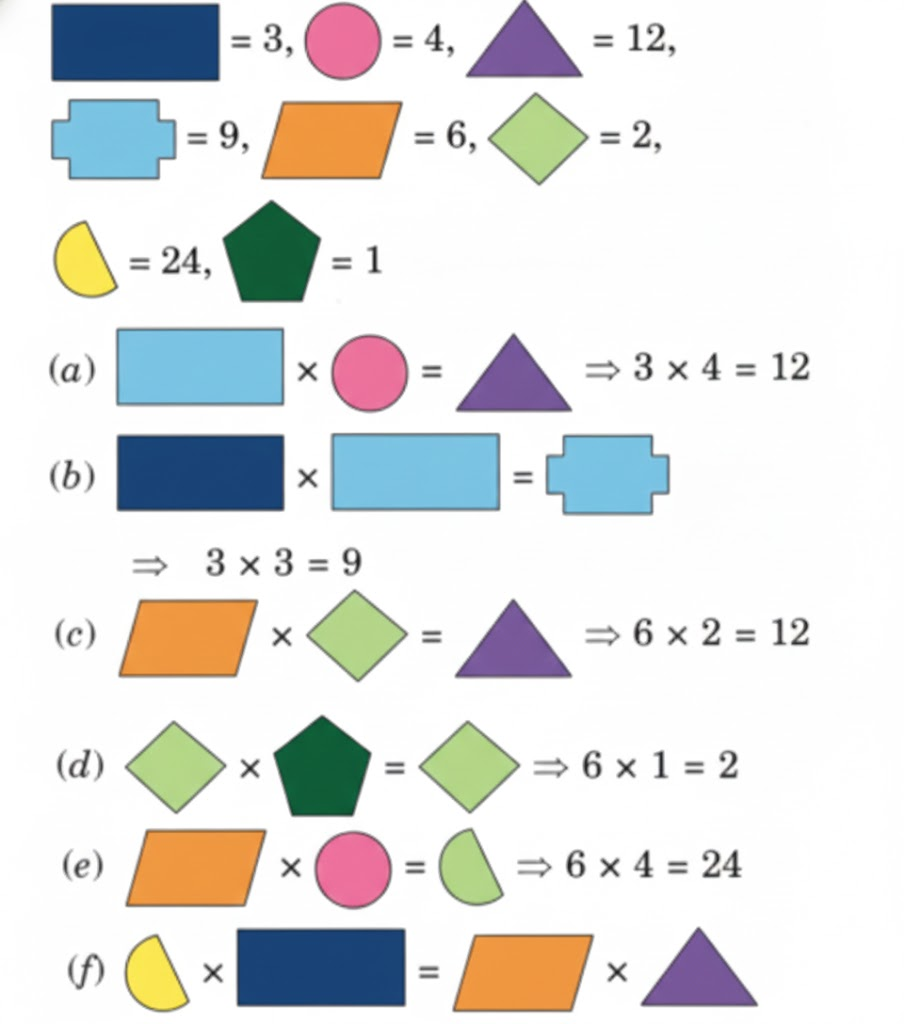
So, 24 × 3 = 6 × 12 = 72
Question 2.
Place the digits 2, 5, and 3 appropriately to get a product close to 100. Share your reasoning in class.
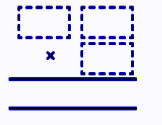
Solution:
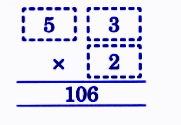
When the product 106 is rounded to the nearest ten, it becomes 110.
This value is closer to 100 than any of the other products that can be formed using the given digits.
Question 3.
A dairy has packed butter milk pouches in the following manner. Find the number of pouches kept in each arrangement. One is done for you.
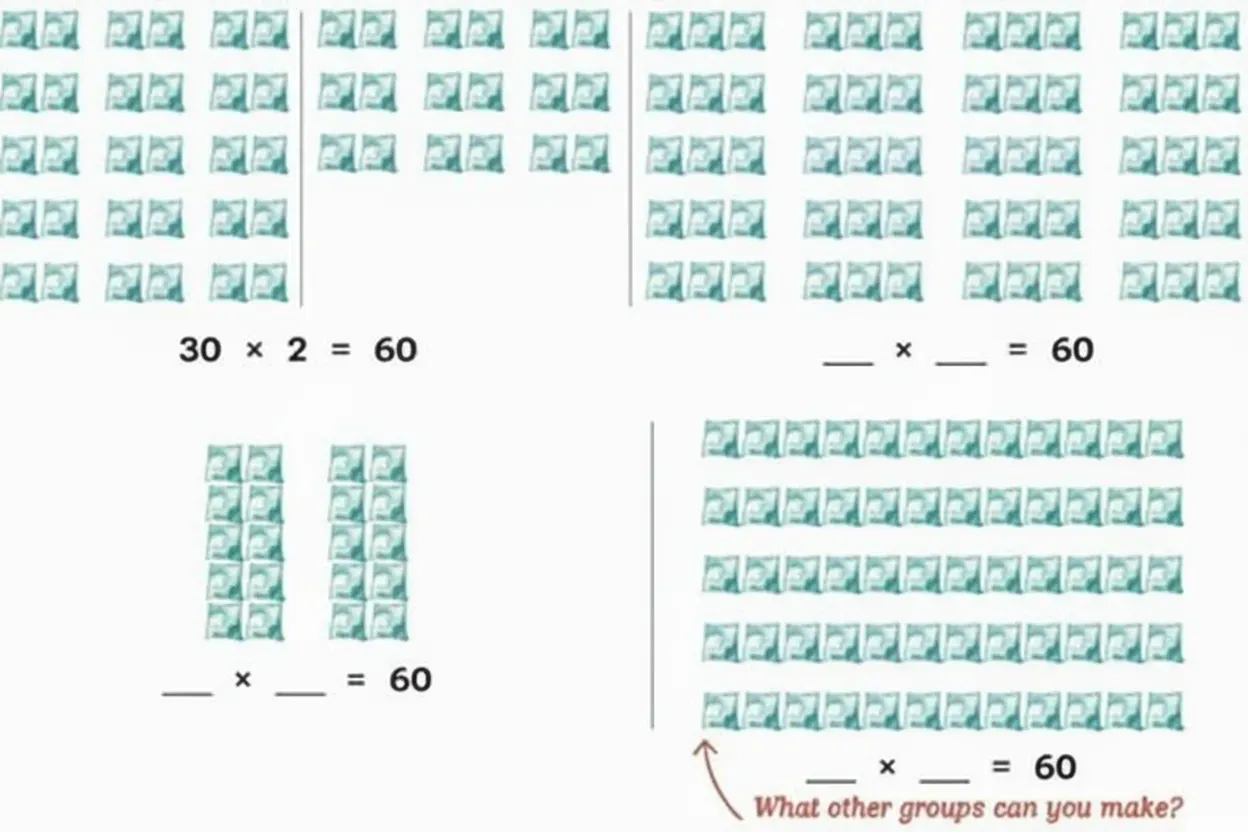
Solution:
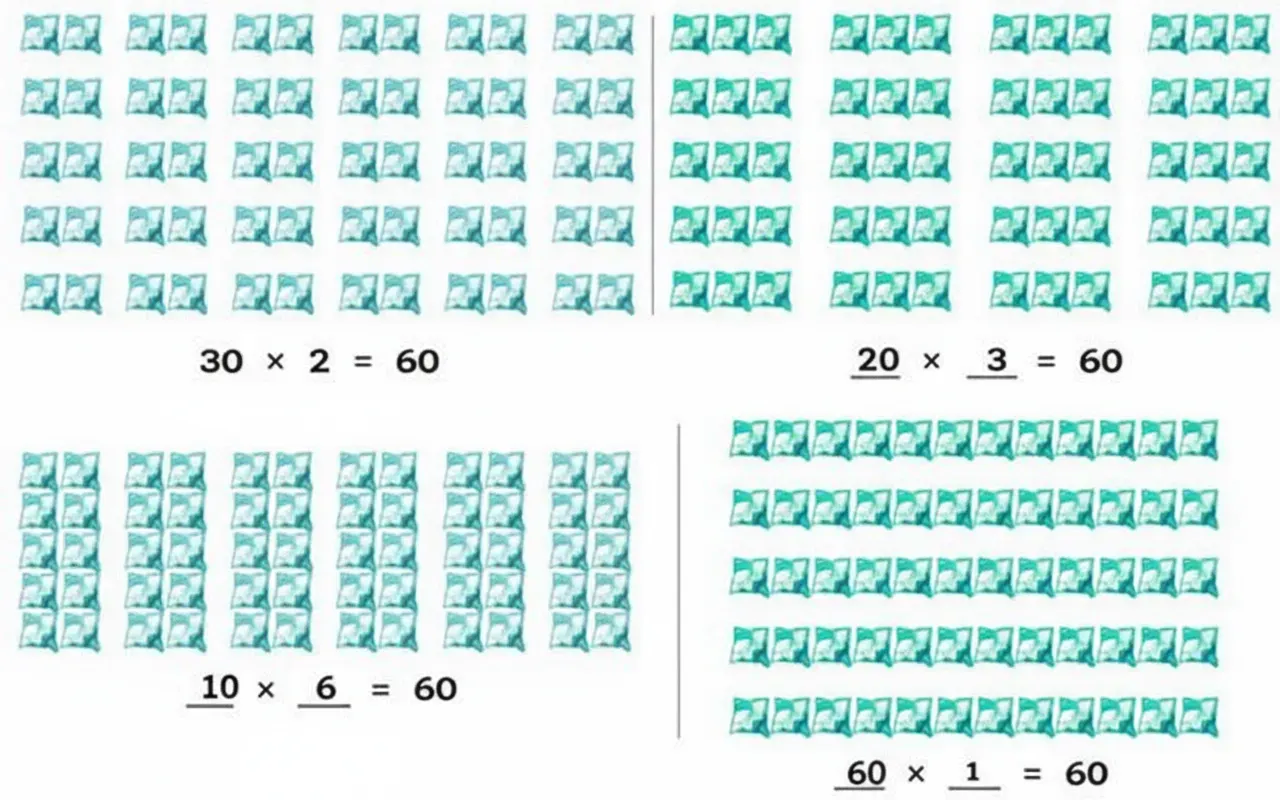
Question 4.
Which number am I?
I am a two-digit number, help of the following clues.
(а) I am greater than 8.
(b) I am not a multiple of 4.
(c) I am a multiple of 9.
(d) I am an odd number.
(e) I am not a multiple of 11.
(f) I am less than 50.
(g) My ones digit is even.
(h) My tens digit is odd.
Solution:
Step 1:
List all two-digit multiples of 9 that are less than 50: 18, 27, 36, 45.
Step 2:
Eliminate numbers that are multiples of 4. Since 36 is divisible by 4, remove it.
The remaining numbers are 18, 27, 45.
Step 3:
Keep only odd numbers. As 18 is even, discard it.
The numbers left are 27 and 45.
Step 4:
Exclude multiples of 11 such as 22, 33, 44, 55, ….
Neither 27 nor 45 is a multiple of 11, so both remain.
Step 5:
Both 27 and 45 are less than 50, so they satisfy this condition.
Step 6:
According to the clue, the ones digit must be even.
However, 27 ends in 7 and 45 ends in 5, both of which are odd.
This creates a contradiction.
Conclusion:
No two-digit number satisfies all the given conditions.
Did you use all the clues to find the number? Which clues did not help you in find the number?
Solution:
All the clues except (a) and (b) were useful in attempting to determine the number.
If clue (d) is ignored, the possible numbers are 18 or 36.
Similarly, if clues (g) and (h) are omitted and only clue (e) is considered, the number could be 27 or 45.
Question 5.
Make your own numbers.
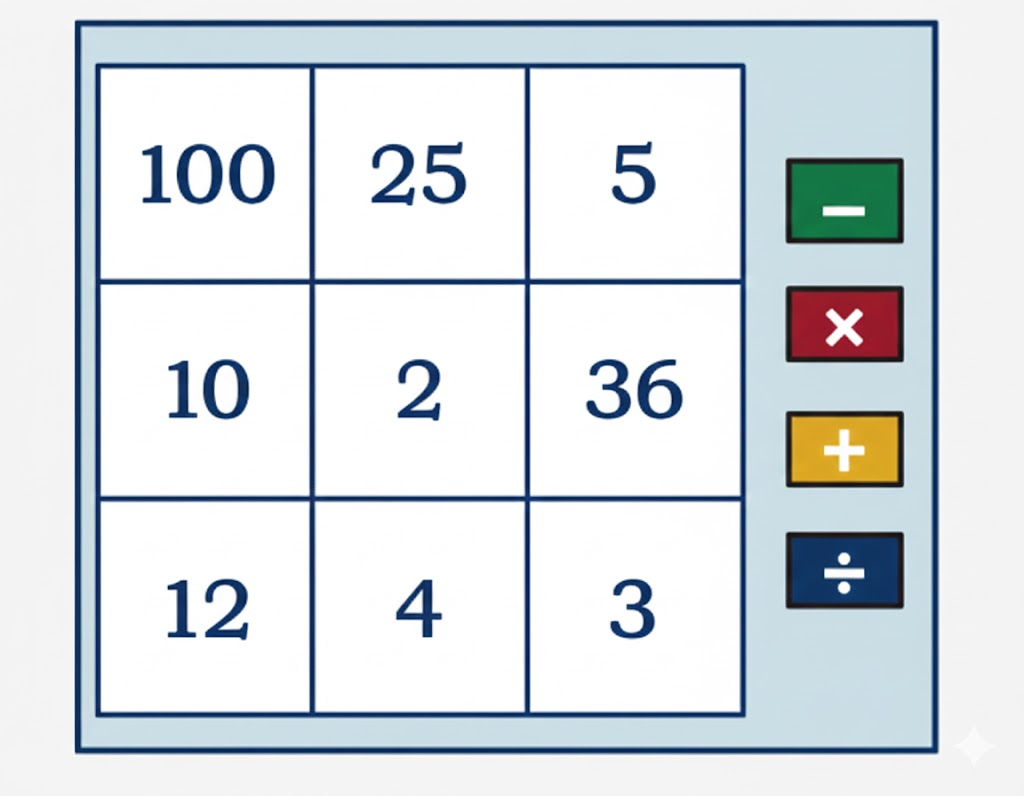
Choose any two numbers and one operation from the grid. Try to make all the numbers between 0 and 20. For example 2 can be formed as 4 – 2. Could you make all the numbers?
Solution:
For example, 36 − 25 = 11 (answers might be different), or 36 ÷ 4 = 9, and so on.
Which numbers could you not make? Is it possible to make these numbers using three numbers? You can use two operations, if needed. Which numbers between 0-20 can you get in more than one way?
Solution:
Students should do it by themselves.
NCERT Textbook Pages 72-74
Order of Numbers in Multiplication
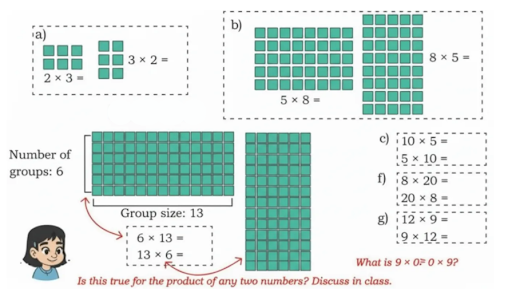
Daljeet Kaur runs a milk processing unit. She has arranged the butter packets in the following ways. Find the number of butter packets in each case. What pattern do you notice (or observe)? Discuss in class.
Solution:
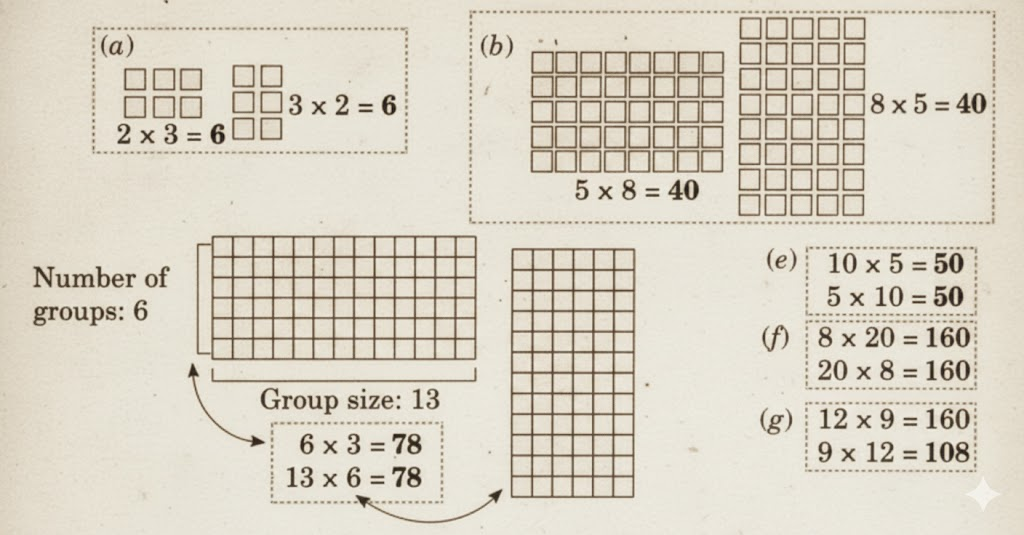
What is 9 × 0? 0 × 9?
Solution:
9 × 0 = 0 and 0 × 9 = 0
Is this true for the product of any two numbers. Discuss in class.
Solution:
In each case, the number of groups and the size of each group are swapped, yet the total number of butter packets stays unchanged.
Patterns in Multiplication by 10s and 100s
Question 1.
Let us revise multiplication by 10s and 100s.
a) 4 × 10 = _____
b) 20 × 10 = _____
c) 10 × 40 = _____
d) 10 × 10 = 100
e) 20 × 50 = ______
f) 80 × 10 = ______
g) 3 × 100 = 100 × 3 = 300
h) 8 × 100 = _____ = ______
i) 10 × 100 = _____ = ______
Solution:
(a) 4 × 10 = 40
(b) 20 × 10 = 200
(c) 10 × 40 = 400
(d) 10 × 10 = 100
(e) 20 × 50 = 1000
(f) 80 × 10 = 800
(g) 3 × 100 = 100 × 3 = 300
(h) 8 × 100 = 100 × 8 = 800
(j) 10 × 100 = 100 × 10 = 1000
Question 2.
Find the answers to the following questions. Fill in the table below and describe the pattern. Discuss in class.
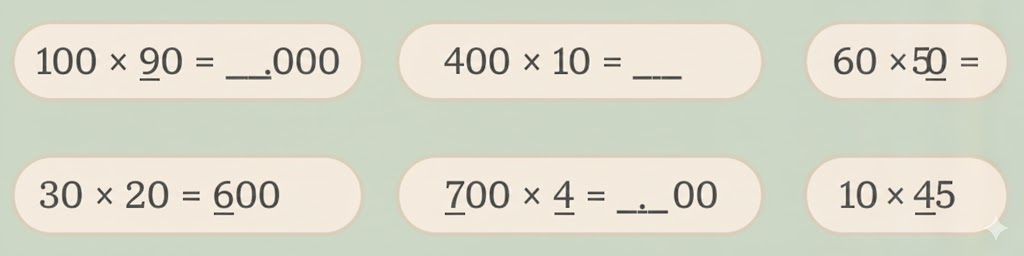
Solution:
(100 × 90 = 9,000)
( 400 × 10 = 4.000)
(60 × 50 = 3.000)
(30 × 20 = 600)
(700 × 4 = 2,800)
(10 × 45 = 450)
How should we write 450 in the table below?
Solution:
Solution:
Let us fill in the table and observe the patterns.
Solution:
NCERT Textbook Pages 75-76
Doubling and Halving
Butter packets are arranged in the following ways. Let us find some strategies to calculate the total number of packets.
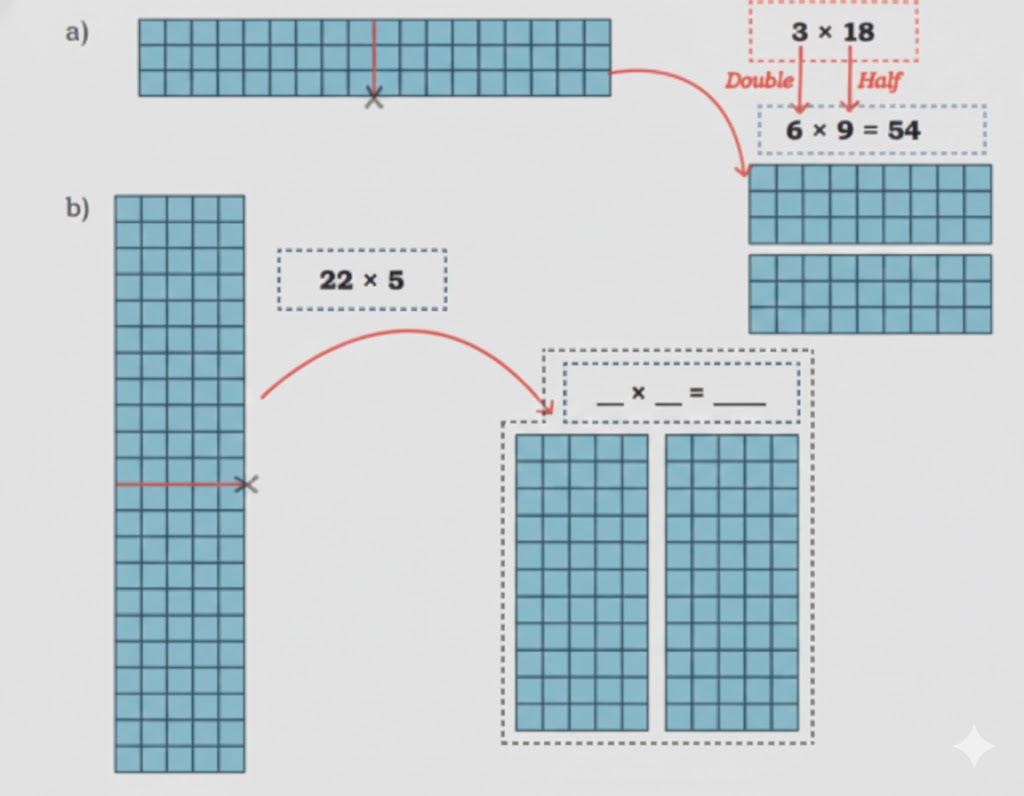
Solution: Given multiplication: 22 × 5
Apply the same strategy:
Halve 22 → 11
Double 5 → 10
So,
22 × 5 = 11 × 10 = 110
Final Answer
22×5=11×10=11022 \times 5 = 11 \times 10 = 11022×5=11×10=110
(c) Solve the following problems like the previous ones.
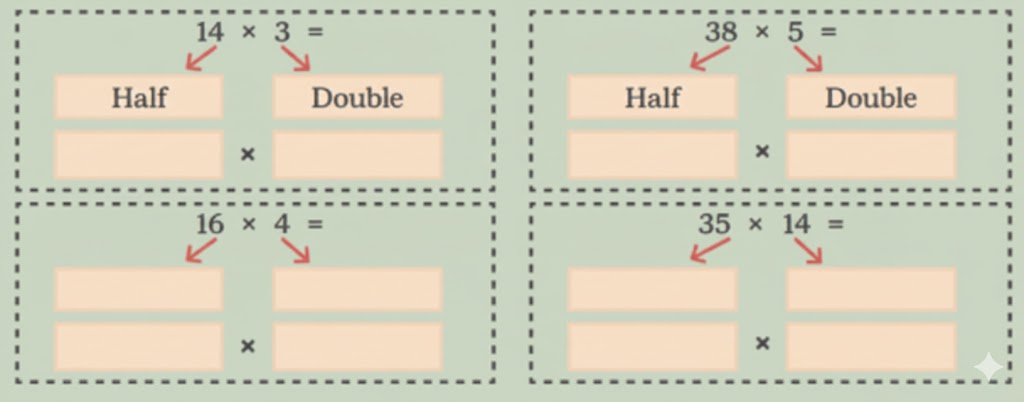
Solution:
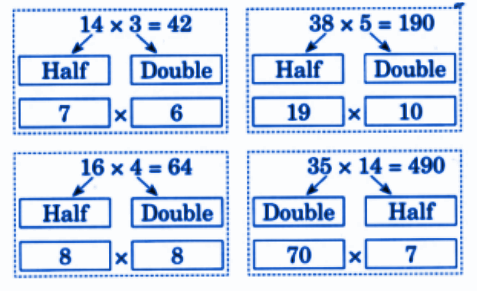
This halving and doubling strategy works well when we have to multiply with numbers like 5 and 25. Discuss why?
Solution:
No, for numbers such as 5 and 25, the same method cannot be applied directly. Since these numbers are odd, halving them is not convenient and would make the calculation more difficult. Therefore, a different strategy needs to be used in such cases.
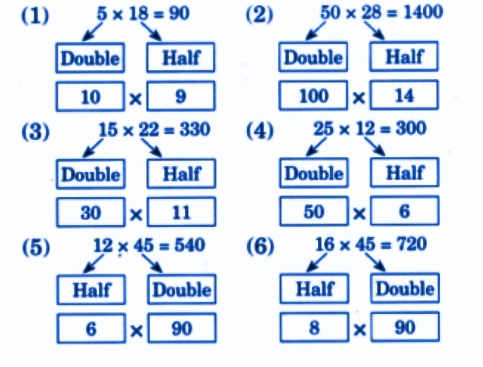
(d) Find the product by halving and doubling either the multiplier or the multiplicand.
1) 5 × 18
2) 50 × 28
3) 15 × 22
4) 25 × 12
5) 12 × 45
6) 16 × 45
Solution:
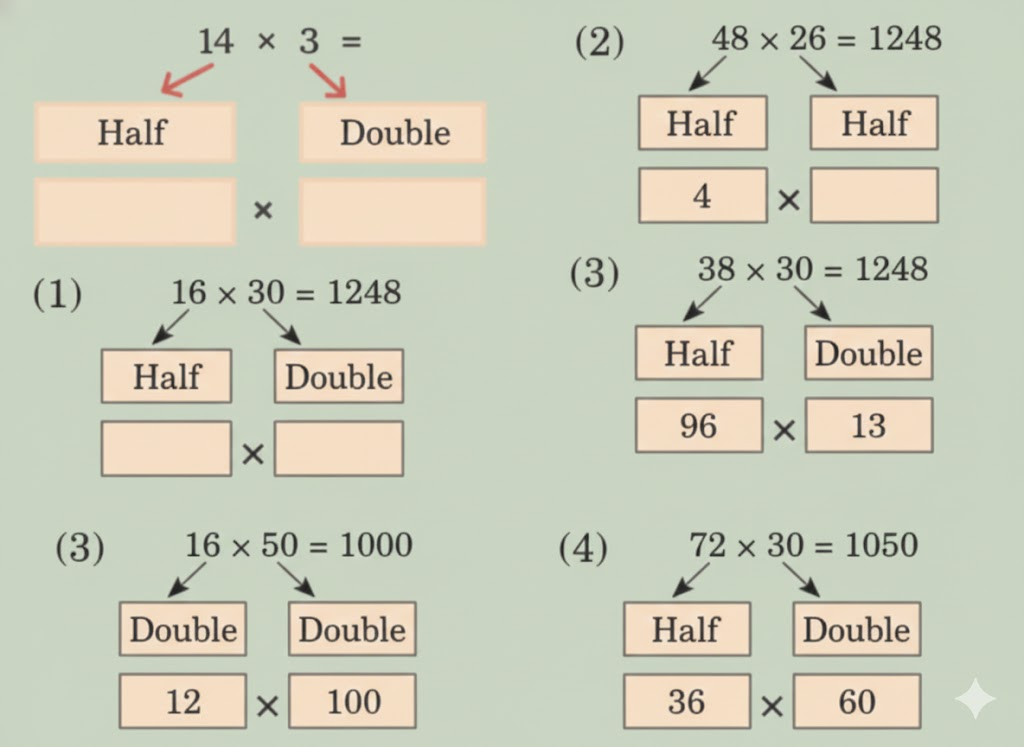
(e) Give 5 examples of multiplication problems where halving and doubling will help in finding the product easily. Find the products as well.
Solution:
NCERT Textbook Page 76
Nearest Multiple
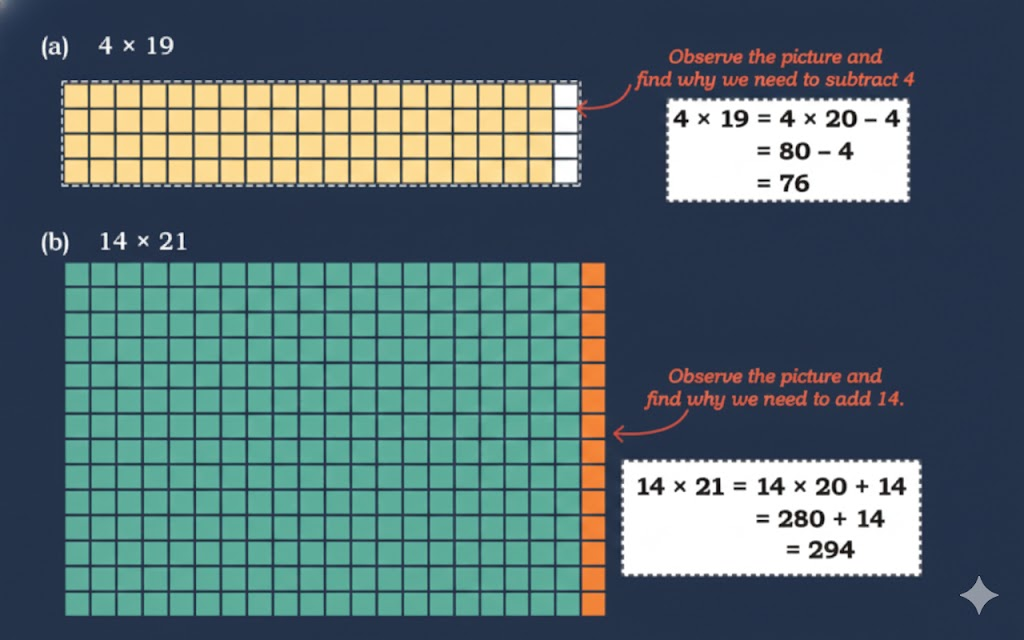
(c) Give 5 examples of problems where you can use the nearest multiple to find the product easily. Find the products as well.
Solution:
(1) Multiply 5 by 31 by breaking 31 into 30 and 1:
5 × 30 = 150, and adding 5 gives 155.
(2) To find 7 × 29, multiply 7 by 30 and then subtract 7:
210 − 7 = 203.
(3) For 12 × 49, first calculate 12 × 50 and then subtract 12:
600 − 12 = 588.
(4) In 8 × 101, multiply 8 by 100 and add 8:
800 + 8 = 808.
(5) To solve 16 × 99, multiply 16 by 100 and subtract 16:
1600 − 16 = 1584.
(Other valid methods and answers are also possible.)
(d) Find the products of the following numbers by finding the nearest multiple.
(1) 7 × 52
(2) 12 × 28
(3) 75 × 31
(4) 99 × 15
(5) 8 × 25
(6) 22 × 42
Solution:
(1) To calculate 7 × 52, split 52 into 50 and 2:
7 × 50 = 350 and 7 × 2 = 14.
Adding them gives 364.
(2) For 12 × 28, multiply 12 by 30 and subtract the product of 12 and 2:
360 − 24 = 336.
(3) In 75 × 31, first find 75 × 30 and then add 75:
2250 + 75 = 2325.
(4) To solve 99 × 15, multiply 15 by 100 and subtract 15:
1500 − 15 = 1485.
(5) For 8 × 25, multiply 25 by 10 and subtract twice 25:
250 − 50 = 200.
(6) To calculate 22 × 42, break 42 into 40 and 2:
22 × 40 = 880 and 22 × 2 = 44.
Adding them gives 924.
NCERT Textbook Page 77
Let Us Solve
Use strategies flexibly to answer the following questions. Discuss you thoughts in class.
Question 1.
A school has an auditorium with 35 rows, with 42 seats in each row. How many people can sit in this auditorium?
Solution:
There are 35 rows in the auditorium, with 42 seats in each row.
The total number of seats is found by multiplying the two:
35 × 42 = (35 × 40) + (35 × 2)
= 1400 + 70
= 1470
Therefore, the auditorium can accommodate 1470 people.
Question 2.
Priya jogs 4 kilometres every day. How many kilometres will she jog in 31 days?
Solution:
Priya jogs 4 km each day.
Over a period of 31 days, the total distance she covers is:
4 × 31 = (4 × 30) + 4
= 120 + 4
= 124 km
Hence, Priya will jog a total of 124 km in 31 days.
Question 3.
A school has received 36 boxes of books with 48 books in each box. How many total books did the school receive in the boxes?
Solution:
Each box contains 48 books, and the school receives 36 boxes.
The total number of books can be calculated as follows:
36 × 48 = (36 × 50) − (36 × 2)
= 1800 − 72
= 1728
Therefore, the school received 1728 books in total.
Question 4.
Priya uses 16 metres of cloth to make 4 kurtas. How much cloth would she need to make 8 kurtas?
Solution:
The cloth required to make 4 kurtas is 16 metres, which means each kurta uses 4 metres of cloth.
To make 8 kurtas, the total cloth needed is calculated as:
4 × 8 = (4 × 10) − (4 × 2)
= 40 − 8
= 32 metres
Therefore, Priya needs 32 metres of cloth to stitch 8 kurtas.
Question 5.
Gollappa has 29 cows on his farm. Each cow produces 5 litres of milk per day. How many litres of milk do the cow produce in total, each day?
Solution:
Gollappa has 29 cows on his farm, and each cow gives 5 litres of milk.
The total milk produced in a day is calculated as:
5 × 29 = (5 × 30) − 5
= 150 − 5
= 145 litres
Therefore, the farm produces 145 litres of milk per day.
Question 6.
Maska Cow Farm has 297 cows. Each cow requires 18 kg of fodder per day. How much total fodder is needed to feed 297 cows every day?
Solution:
There are 297 cows on Maska’s farm, and each cow requires 18 kg of fodder per day.
The total fodder needed daily is calculated as:
18 × 297 = (18 × 300) − (18 × 3)
= 5400 − 54
= 5346 kg
Hence, 5346 kg of fodder is required each day for 297 cows.
NCERT Textbook Pages 79
Let Us Multiply
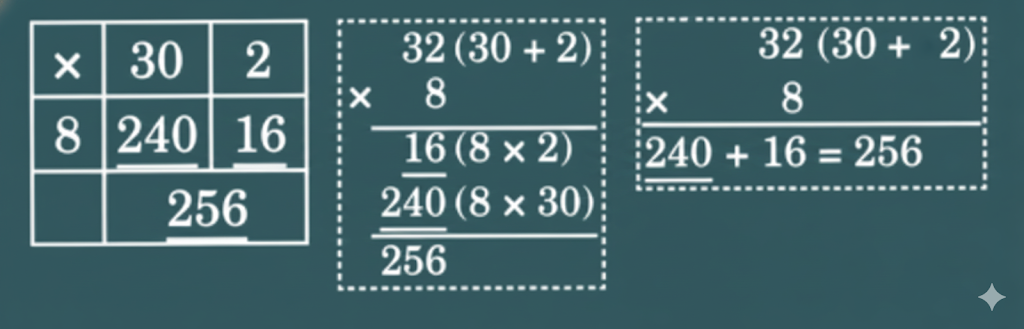
(a) 32 × 8
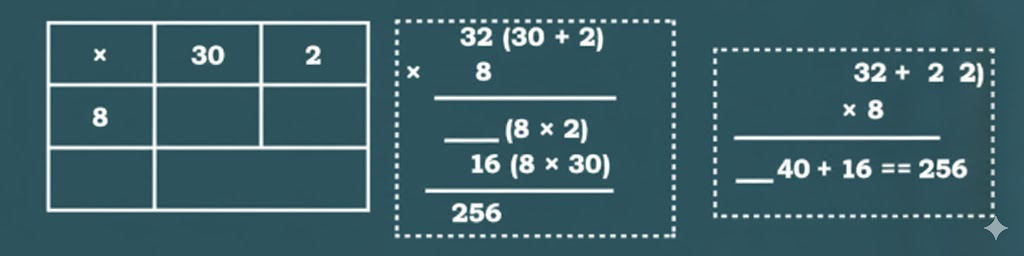
Solution:
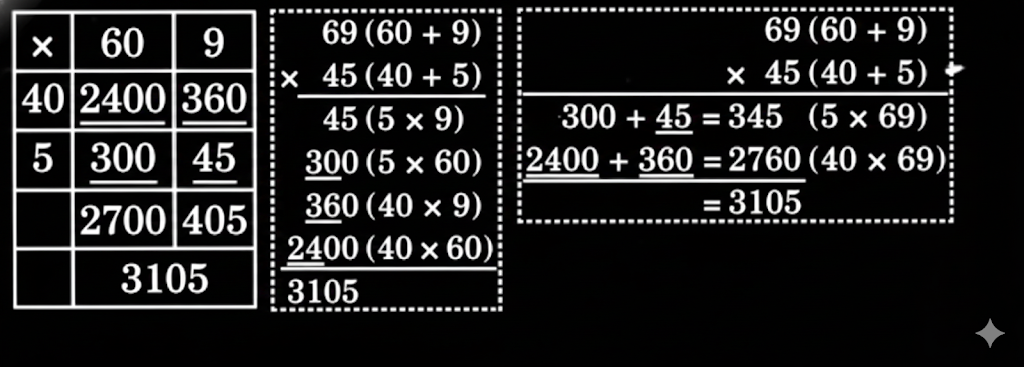
(b) 69 × 45
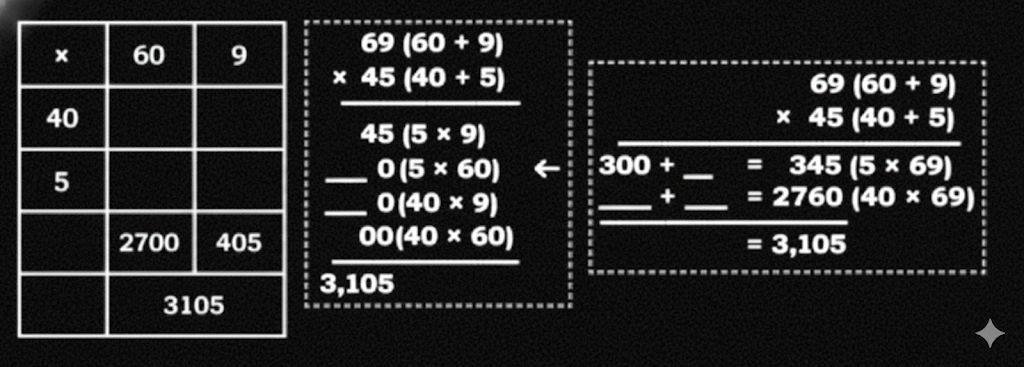
Solution:
NCERT Textbook Pages 79-80
Let Us Do
Question 1.
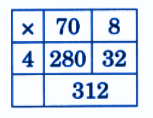
Solve the following problems like Nida did.
(a) 78 × 4
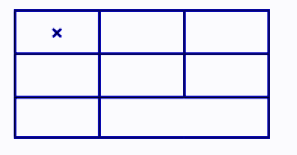
Solution:
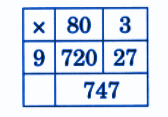
(b) 83 × 9
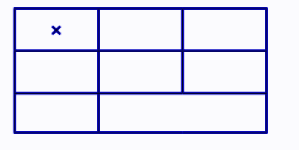
Solution:
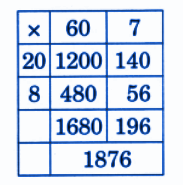
(c) 67 × 28
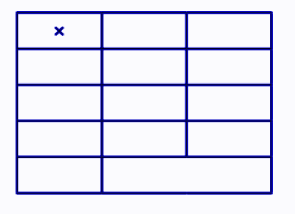
Solution:
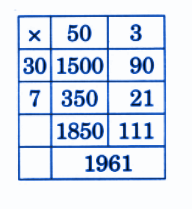
(d) 53 × 37
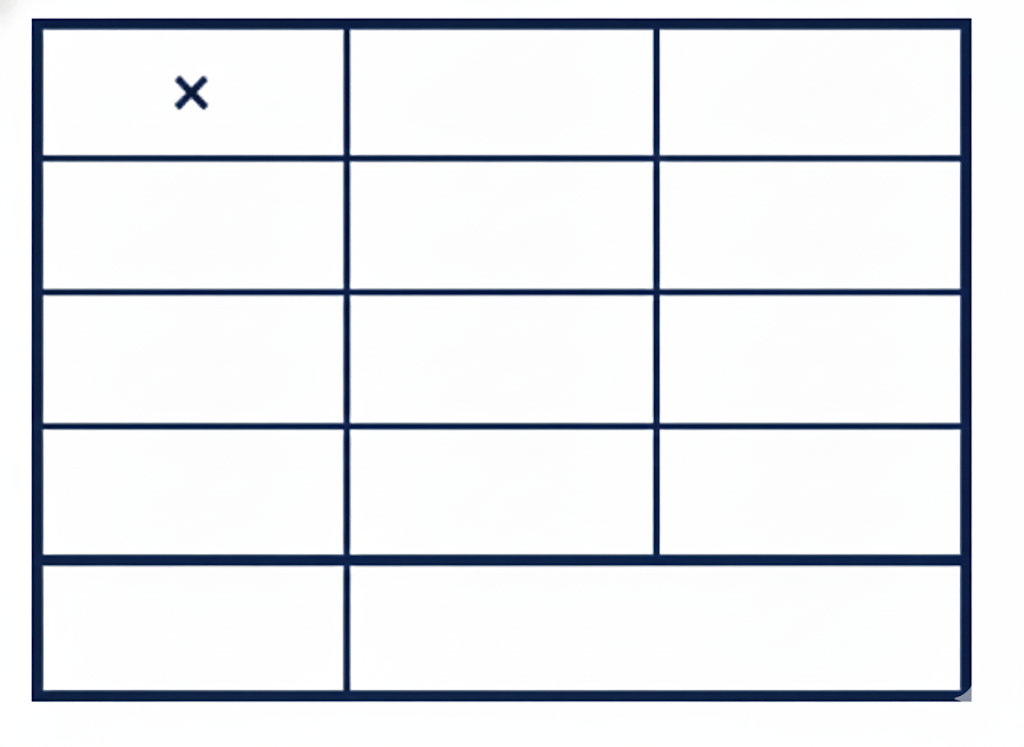
Solution:
Question 2.
Solve the following problems like Kanti did.
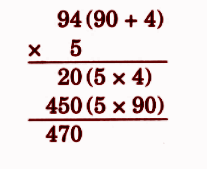
a) 94 × 5
Solution:
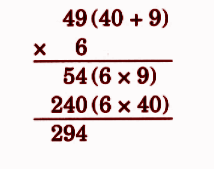
b) 49 × 6
Solution:
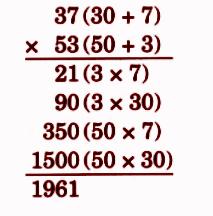
c) 37 × 53
Solution:
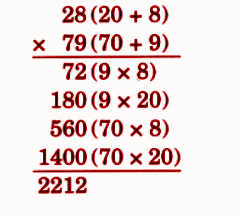
d) 28 × 79
Solution:
Question 3.
Solve the following problems like John.
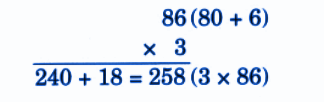
(a) 86 × 3
Solution:
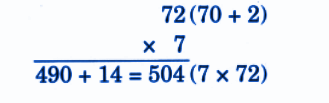
(b) 72 × 7
Solution:
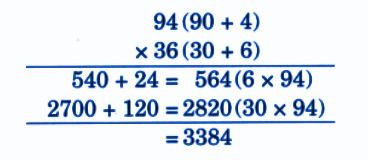
(c) 94 × 36
Solution:
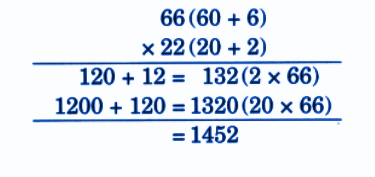
(d) 66 × 22
Solution:
Question 4.
Solve the following problems:
(a) A movie theatre has 8 rows of seats, and each row has 12 seats. If half the seats are filled, how many people are watching the movie? If 3 more rows get filled, how many total people will be there?

Solution:
The movie theatre has 8 rows of seats, with 12 seats in each row.
Since only half the seats are occupied, 4 out of the 8 rows are filled.
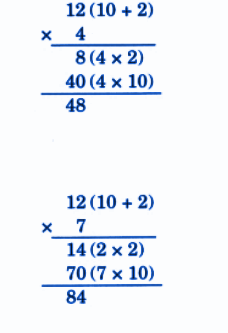
The number of people who watched the movie is calculated by multiplying the number of filled rows by the number of seats in each row:
4 × 12 = 48 people.
If 3 additional rows are filled, the total number of occupied rows becomes 7.
So, the number of people watching the movie then is:
7 × 12 = 84 people.
(b) In a test match between India and West Indies, the Indian team hit twenty- four 4s and eighteen 6s across the two innings. How many runs were scored in 4s and 6s each? 234 runs were made by running between the wickets. If 23 runs were extras, how many runs were scored by Indian team in the two innings?
Solution:
In the test match, the Indian team hit 24 fours, which resulted in
24 × 4 = 96 runs.
They also hit 18 sixes during the match.
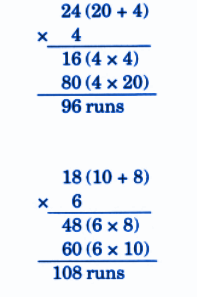
The Indian team scored 18 sixes, giving
18 × 6 = 108 runs.
In addition, 234 runs were made by running between the wickets, and 23 runs came from extras.
Hence, the total runs scored by the Indian team in the two innings are:
96 + 108 + 234 + 23 = 461 runs.
(c) Anjali buys 15 bulbs and 12 tube lights from Sudha Electricals. Each bulb costs ?25 and each tube light costs ?34. How much money should Anjali give to the shopkeeper?
Solution:
The cost of 15 bulbs at ₹25 each is:
15 × ₹25 = ₹375.
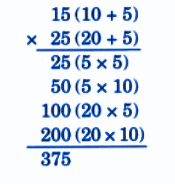
The total cost is calculated as:
12 × ₹34 = ₹408.
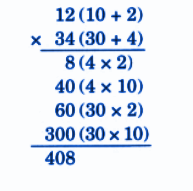
The combined cost of 15 bulbs and 12 tube lights is:
₹375 + ₹408 = ₹783.
Therefore, Anjali needs to pay ₹783 to the shopkeeper for purchasing 15 bulbs and 12 tube lights.
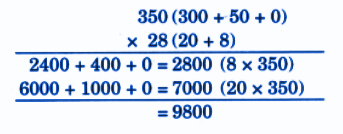
(d) A shopkeeper sold 28 bags of rice. Each bag costs ?350. How much money did he earn by selling rice bags?
Solution:
Each bag of rice costs ₹350.
If a shopkeeper sells 28 bags, the total amount earned is calculated as:
350 × 28 = ₹9800
Hence, by selling 28 bags of rice, the shopkeeper earns ₹9800.
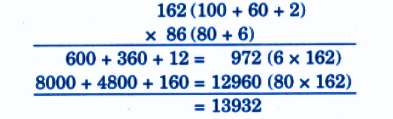
(e) A school library has 86 shelves and each shelf has 162 books. Find the number of books in
the library.
Solution:
The library has 86 shelves, and each shelf contains 162 books.
To find the total number of books, multiply the number of shelves by the number of books per shelf:
162 × 86 = 13,932
Therefore, the library has a total of 13,932 books.
NCERT Textbook Pages 83-84
Let Us Do
Question 1.
Solve the following problems like Nida did.
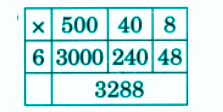
a) 548 × 6
Solution:
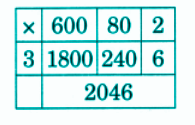
b) 682 × 3
Solution:
c) 324 × 18
Solution:
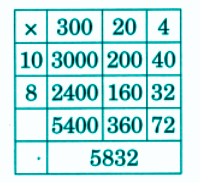
d) 507 × 23
Solution:
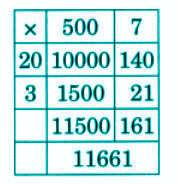
e) 190 × 65
Solution:
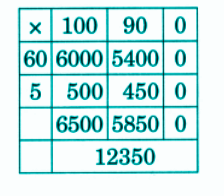
Question 2.
Solve the following problems like John.
a) 123 × 84
Solution:
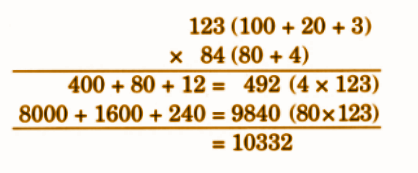
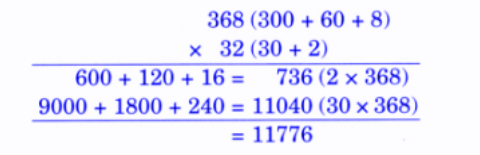
b) 368 × 32
Solution:
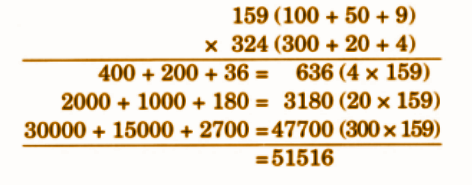
c) 159 × 324
Solution:
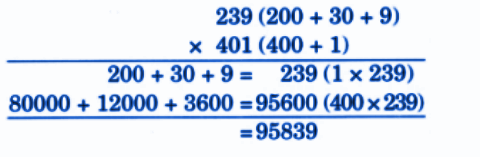
d) 239 × 401
Solution:
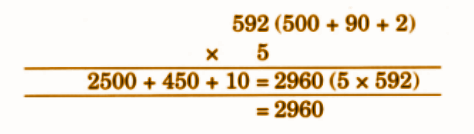
e) 592 × 5
Solution:
f) 101 × 22
Solution:
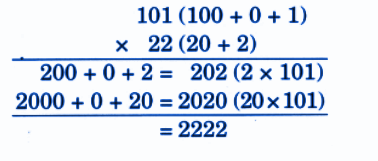
Question 3.
Let us solve a few questions like Mill’s father.
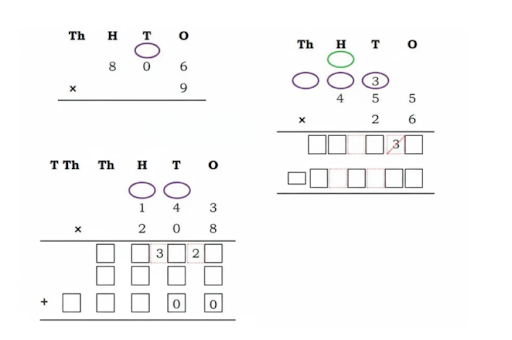
Solution:
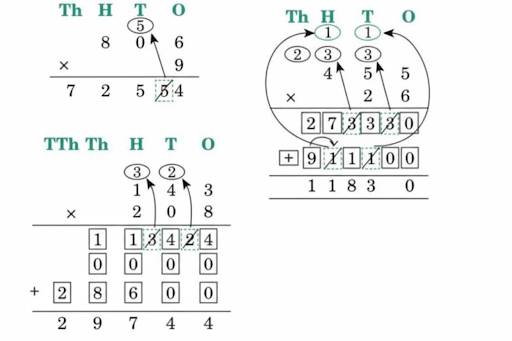
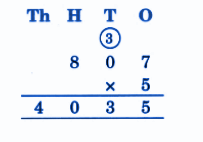
Now use Mili’s father’s method to solve the following questions.
(a) 807 × 5
Solution:
(b) 143 × 28
Solution:
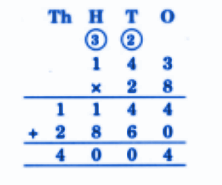
(c) 309 × 9
Solution:
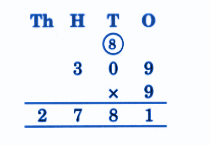
(d) 450 × 38
Solution:
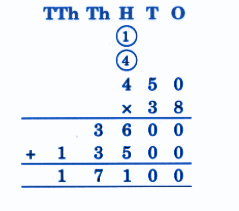
(e) 584 × 23
Solution:
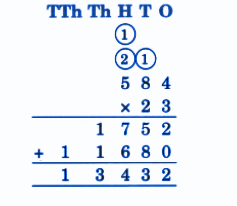
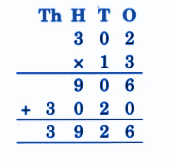
(f) 302 × 13
Solution:
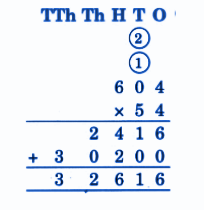
(g) 604 × 54
Solution:
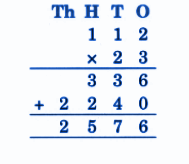
(h) 112 × 23
Solution:
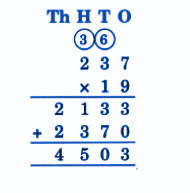
(i) 237 × 19
Solution:
NCERT Textbook Page 85
Check, Check!
Check if the following children’s solutions are correct. If correct, explain why the solution is correct. If it is incorrect, then identify the error and correct the solution.
(a) Asma’s solutions for 46 × 59
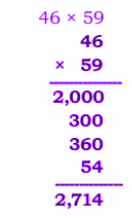
Solution:
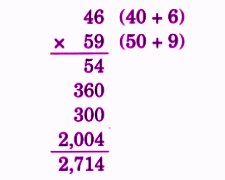
(b) Pankaj’s solution for 203 × 54
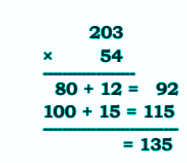
Solution:
In Pankaj’s method for calculating 203 × 54, he makes an error in forming the partial products.
Instead of using 200, he uses 20, and instead of 50, he uses 5 at each step.
Because of this mistake, the final product obtained by him is incorrect.
Correct method:
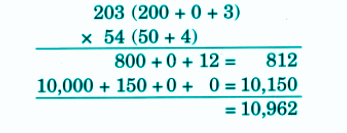
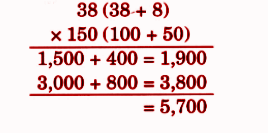
c) Lado’s solution for 38 × 150
Solution:
She most likely broke 38 into 30 + 8 and 150 into 100 + 50.
Using this method, her calculation is correct.
d) Kira’s solution for 193 × 272
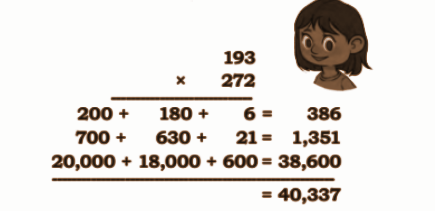
Solution:
Kira’s solution:
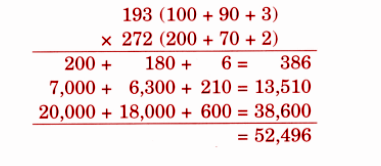
Kira split the first number correctly. However, while working with the second number, she used 7 instead of 70 in the partial product.
Because of this error, her final answer is incorrect.
e) Asher’s solution
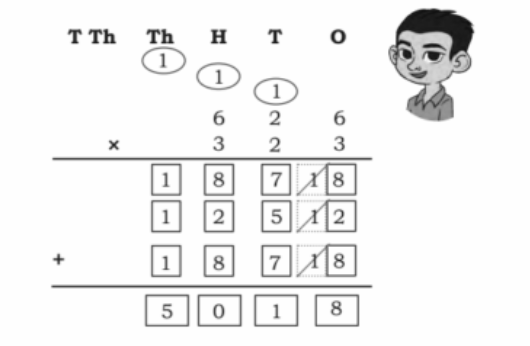
Solution:
Asher made a mistake in identifying the place values of 3 and 2 in the number 323.
After correcting the place values, the correct calculation is:
626 × 323 = 2,02,198
NCERT Textbook Pages 86-87
Let Us Do
Question 1.
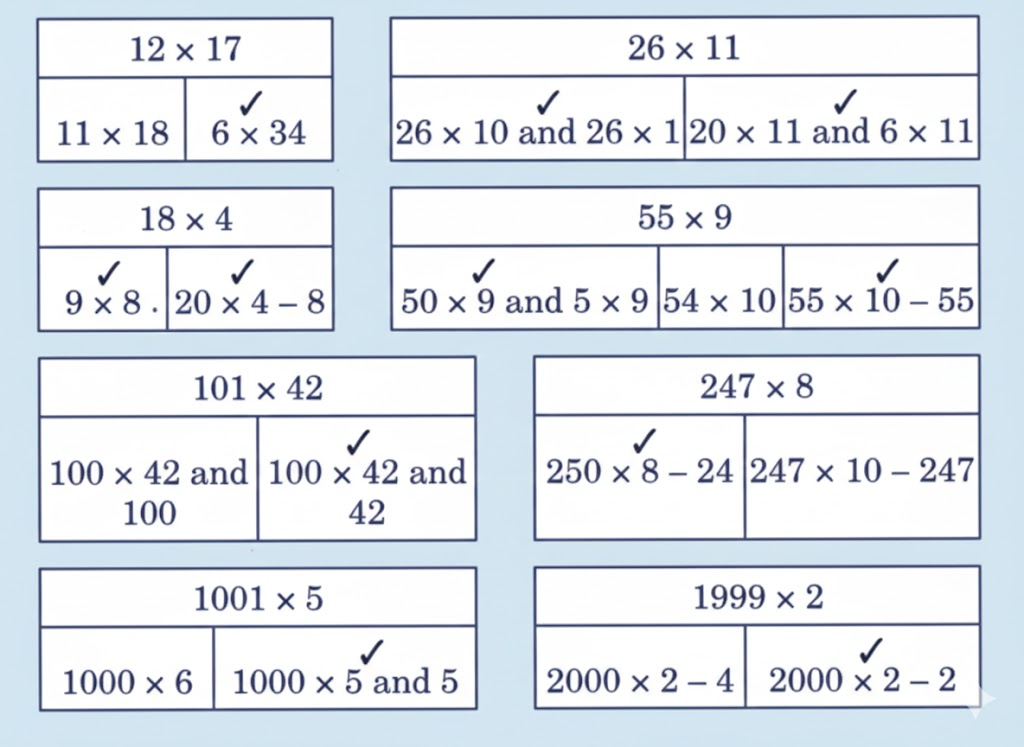
Identify the problems that have the same answer as the one given at the top of each box. Do not calculate.
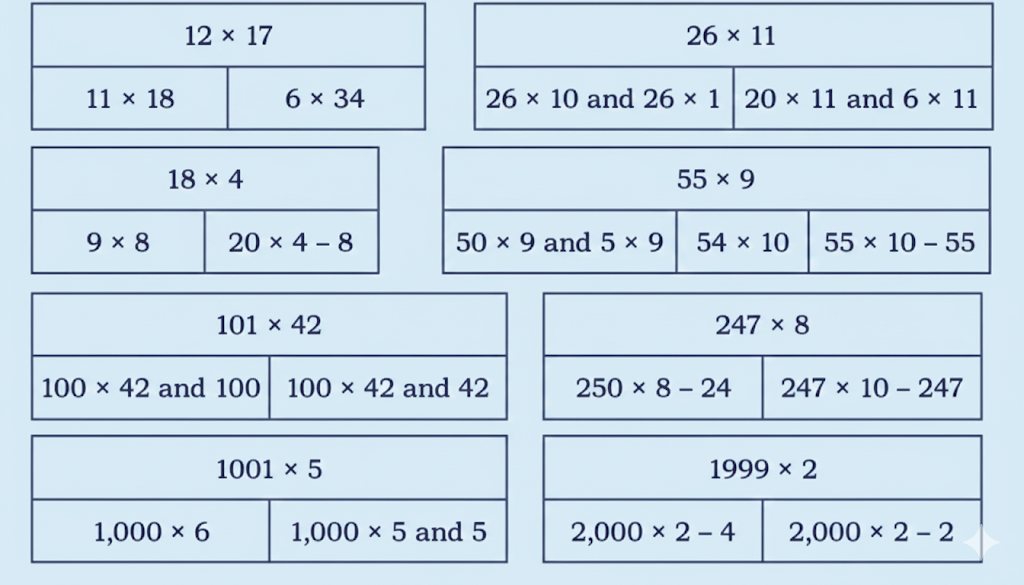
Solution:
Question 2.
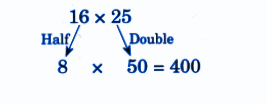
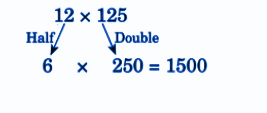
Find easy ways of solving these problems.
(a) 16 × 25
Solution:
(b) 12 × 125
Solution:
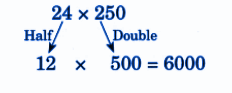
(c) 24 × 250
Solution:
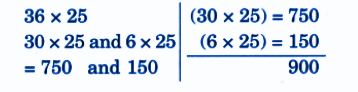
(d) 36 × 25
Solution:
(e) 28 × 75
Solution:
28 × 75 = 30 × 75 – 150
= 2250 – 150
= 2100
(f) 300 × 15
Solution:
300 × 15 = 4500
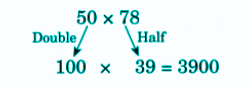
(g) 50 × 78
Solution:
(h) 199 × 63
Solution:
199 × 63 = 200 × 63 – 63
= 12600 – 63
= 12537
(i) 128 × 35
Solution:
128 × 35 = 130 × 35 – 70
= 4550 – 70
= 4480
Question 3.
Write 5 other examples for which you can find easy ways of getting products.
Solution:
(a) 201 × 19
= 200 × 19 + 19
= 3800 + 19
= 3819
(b) 149 × 25
= 150 × 25 – 25
= 3750 – 25
= 3725
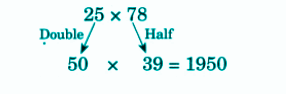
(c) 25 × 78
d) 28 × 18
= 30 × 18 – 18 × 2
= 540 – 36
= 504
(e) 998 × 4
= 1000 × 4 – 8
= 4000 – 8
= 3992
(Answer might be different)
Question 4.
Find the answers to the following questions based on the given information.
(a) 17 × 23 = 391
(b) 17 × 24 = _______
(c) 17 × 22 = _______
(d) 16 × 23 = _______
(e) 8 × 9 = 72
(f) 18 × 9 = _______
(g) 28 × 9 = _______
(h) 108 × 9 = _______
(i) 18 × 23 = _______
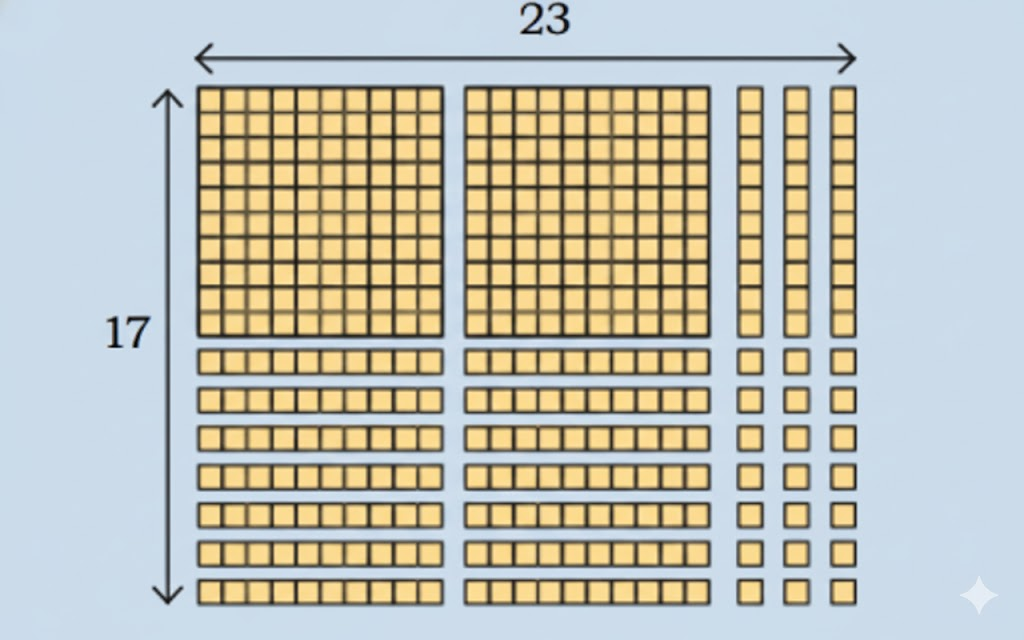
Solution:
(a) 17 × 23 = 391
(b) 17 × 24 = 408
(c) 17 × 22 = 374
(d) 16 × 23 = 368
(e) 8 × 9 = 72
(f) 18 × 9 = 162
(g) 28 × 9 = 252
(h) 108 × 9 = 972
To find 17 × 24, how much is to be added to 17 × 23 _____ 17 or 23?
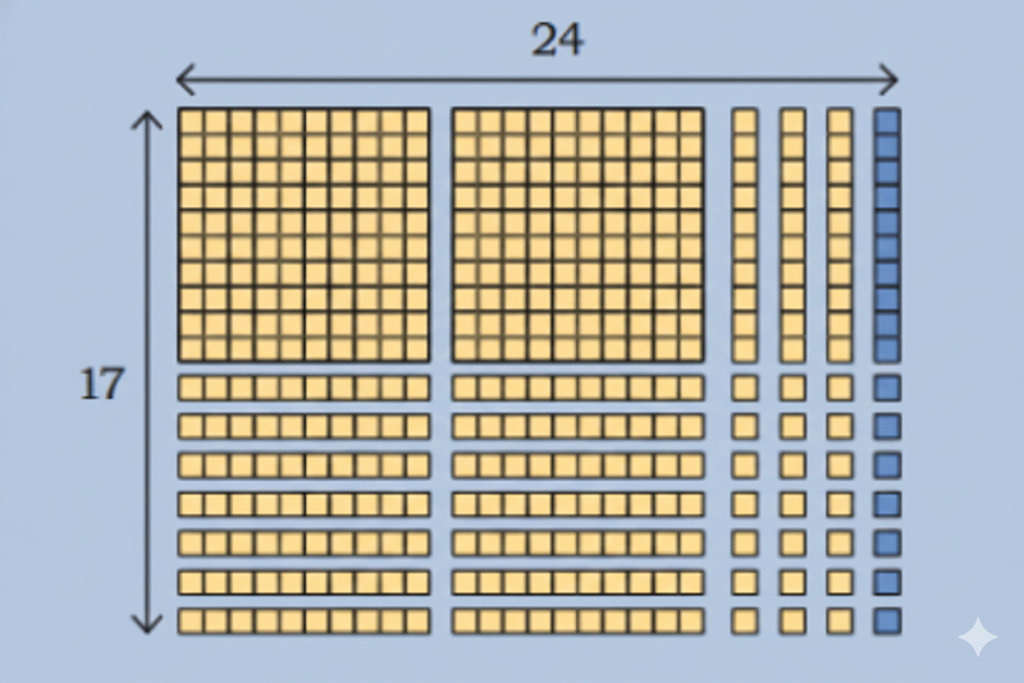
Solution:
17 × 24 = 17 × 23 + (17) = 391 + (17)
To find 18 × 23, how much is to be added to 17 × 23 _____ 17 or 23?
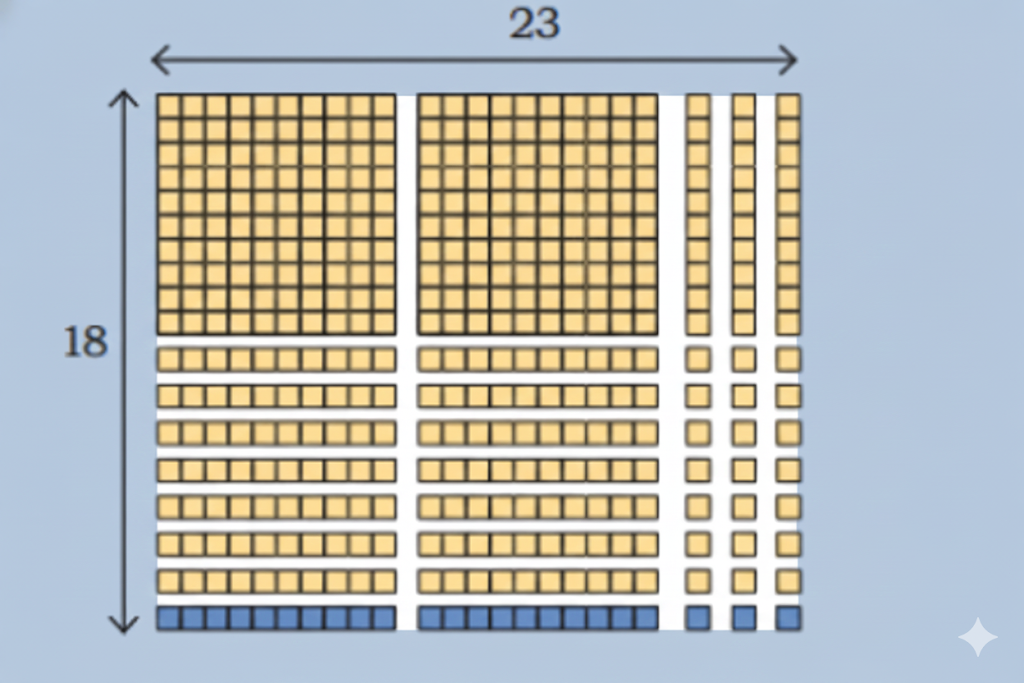
Solution:
18 × 23 = 17 × 23 + (23)
= 391 + (23)
= 414
NCERT Textbook Pages 87-88
Let Us Think
Question 1.
Find the possible values of the coloured boxes in each of the following problems. The same colour indicates the same number in a problem. Some problems can have more than one answer.
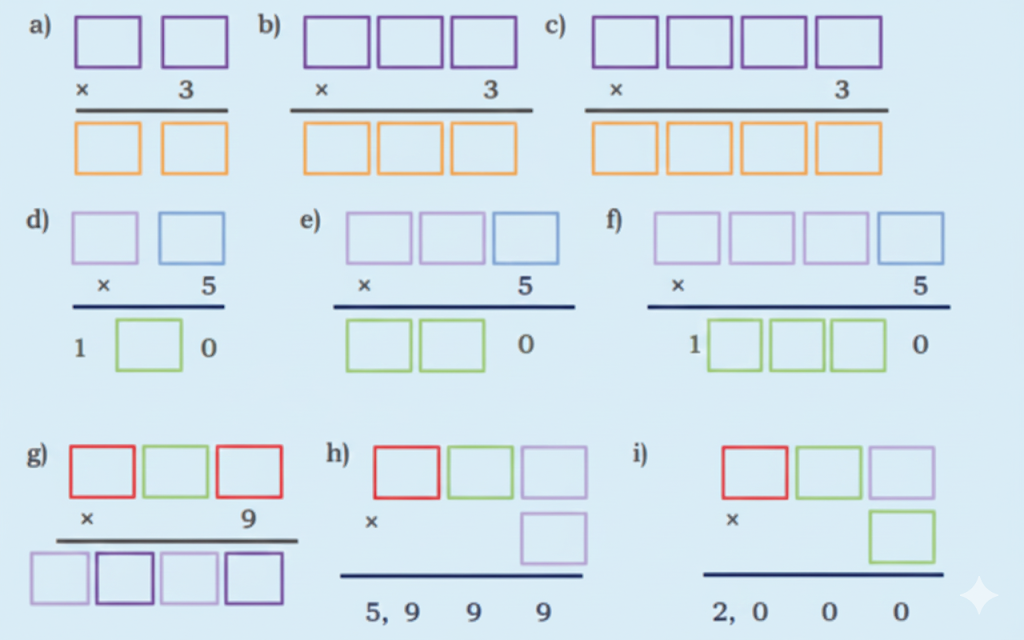
Solution:
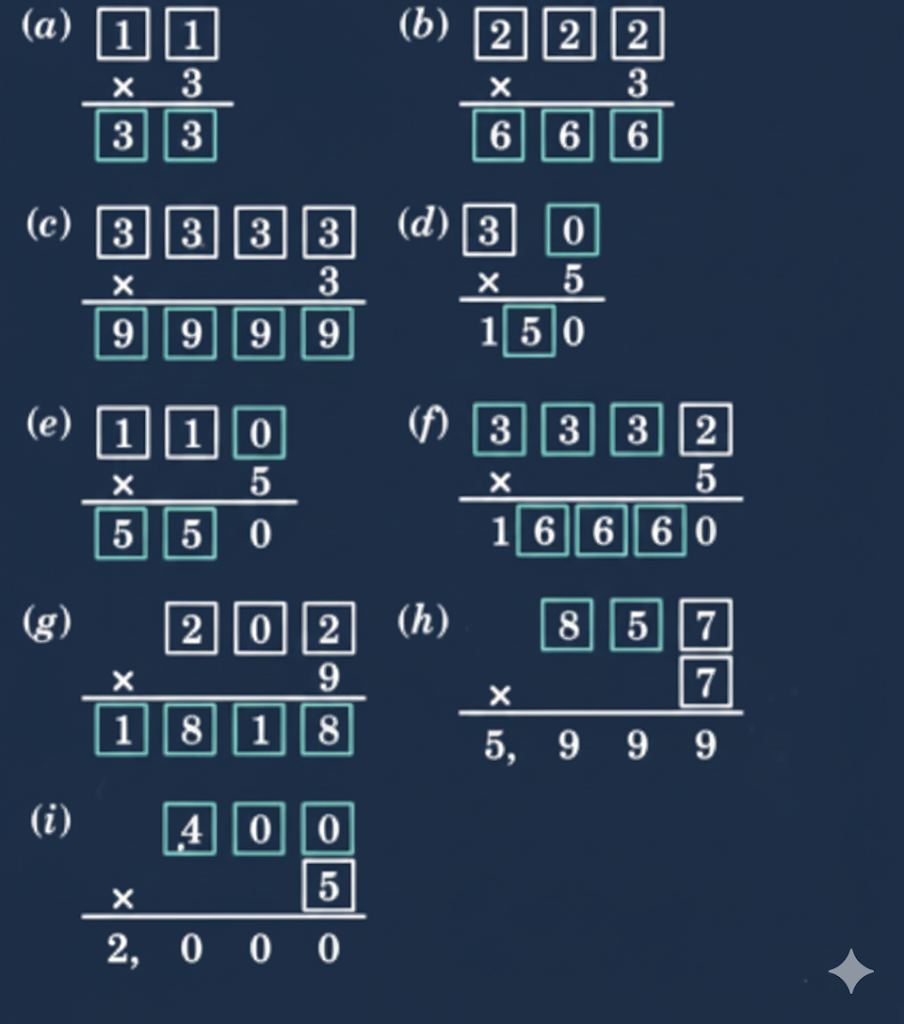
Question 2.
Estimate the products on the left and match them to the numbers given on the right.
Solution:
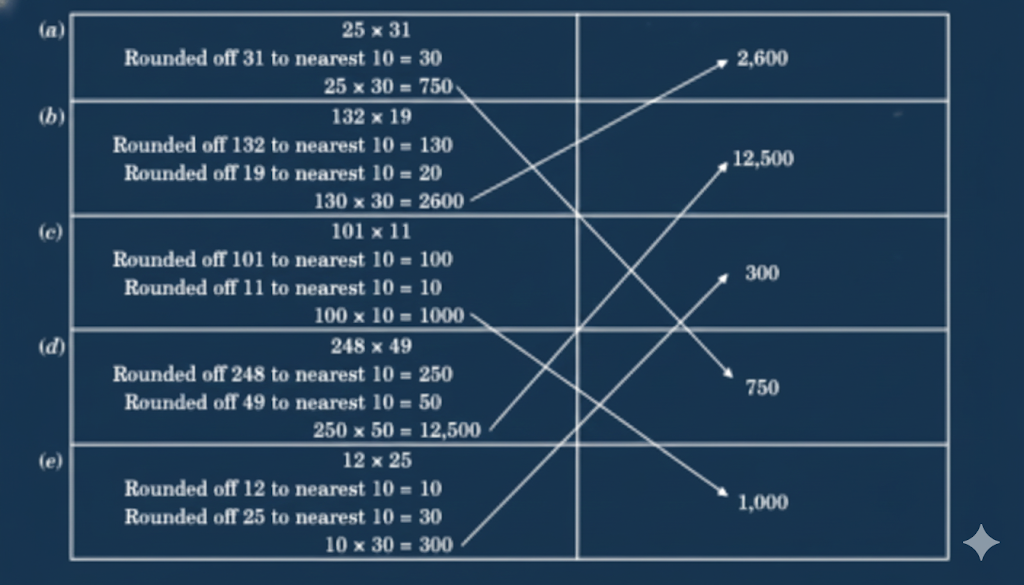
NCERT Textbook Pages 88-89
The King’s Reward
One day, a king decided to reward three of his most talented ministers. The king called them to his court and said, “You all have served my empire with great dedication. As a reward, I give you three choices of gold.
Which of the rewards would you have chosen?
Solution:
Students should do it by themselves.
After a week, the 3 ministers were surprised at the final amount of gold coins. Guess who received the most gold coins? Calculate how much gold
Solution:
Minister-1
5 × 1 = 5 → Day 1
5 × 2 = 10 → Day 2
10 × 2 = 20 → Day 3
20 × 2 = 40 → Day 4
40 × 2 = 80 → Day 5
80 × 2 = 160 → Day 6
160 × 2 = 320 → Day 7
Minister-2
3 × 1 = 3 → Day 1
3 × 3 = 9 → Day 2
9 × 3 = 27 → Day 3
27 × 3 = 851 → Day 4
81 × 3 = 243 → Day 5
243 × 3 = 729 → Day 6
729 × 3 = 2187 → Day 7
Minister-3
1 × 1 = 1 → Day 1
1 × 5 = 5 → Day 2
5 × 5 = 25 → Day 3
25 × 5 = 125 → Day 4
125 × 5 = 625 → Day 5
625 × 5 = 3125 → Day 6
3125 × 5 = 15625 → Day 7
Minister 1 received 320 gold coins, Minister 2 received 2187 gold coins, and Minister 3 received 15,625 gold coins.
Therefore, Minister 3 received the highest number of gold coins.
NCERT Textbook Pages 89-90
Multiplication Patterns
Question 1.
Notice how the multiplier, multiplicand, and products are changing in each of the following. What is the relationship of the new product with the original product? - Solve (a) completely, and then predict the answers for the rest.
a) 16 × 44 = 704
1) 8 × 88 = 704
2) 8 × 22 = 176
3) 16 × 22 = ______
4) 32 × 44 = ______
Solution:
16 × 44 = 704 .
(1) 8 × 88 = 704
(2) 8 × 22 = 176
(3) 16 × 22 = 352
(4) 32 × 44 = 1408
b) 12 × 32 = 384
1) 6 × 16 = ______
2) 24 × 16 = ______
3) 24 × 64 = ______
4) 12 × 16 = ______
Solution:
12 × 32 = 384
(1) 6 × 16 = 96
(2) 24 × 16 = 384
(3) 24 × 64 = 1536
(4) 12 × 16 = 192
Question 2.
Observe and complete the given patterns.
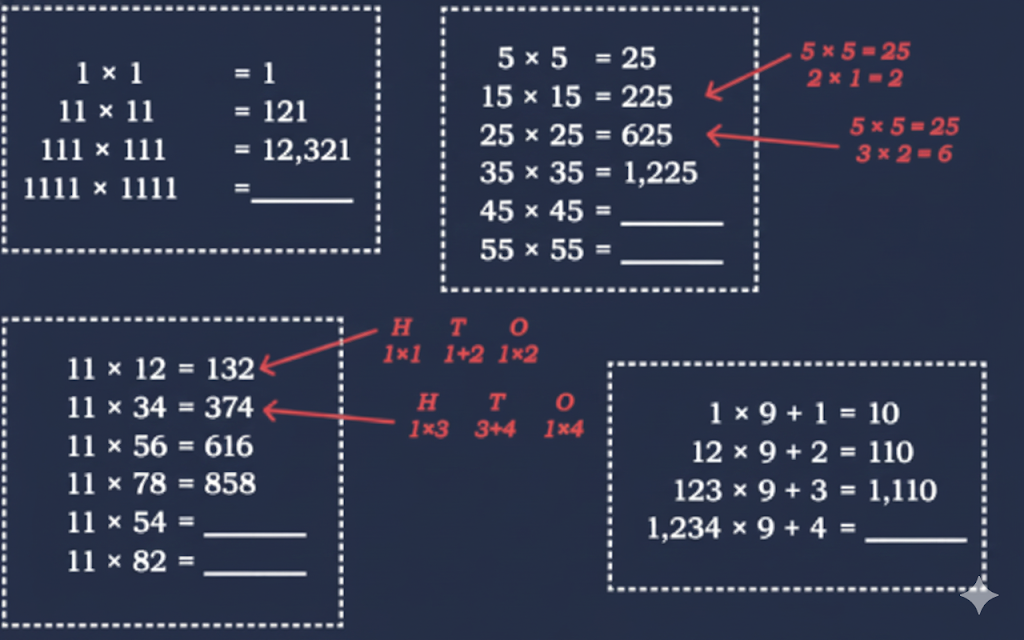
Solution:
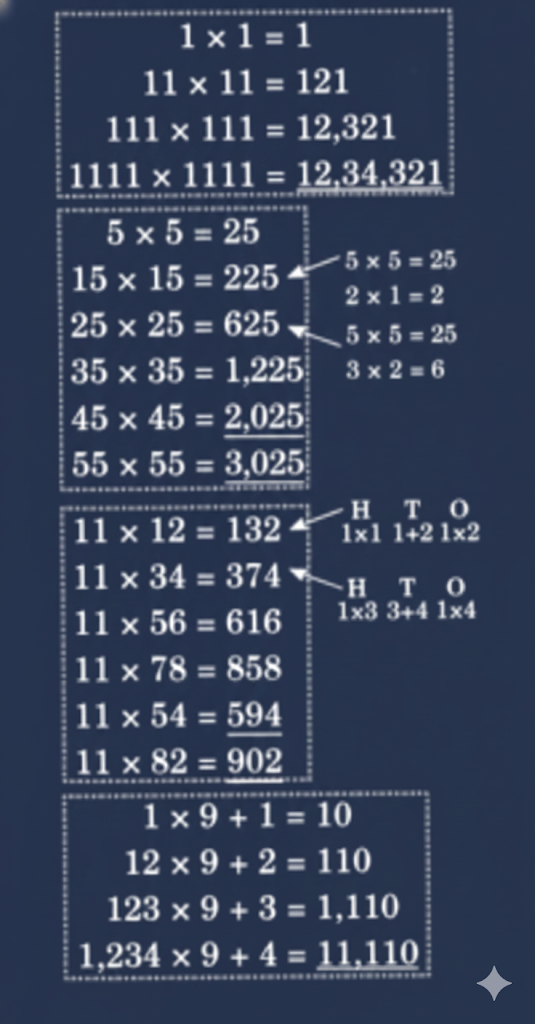
Here are some numbers.
Remember number pairs from Grade 4? Any two adjacent numbers in a row or a column are number pairs. Can you identify the pair whose product is the smallest and another pair whose product is the largest? Do you need to find every product or can you find this by looking at the numbers?
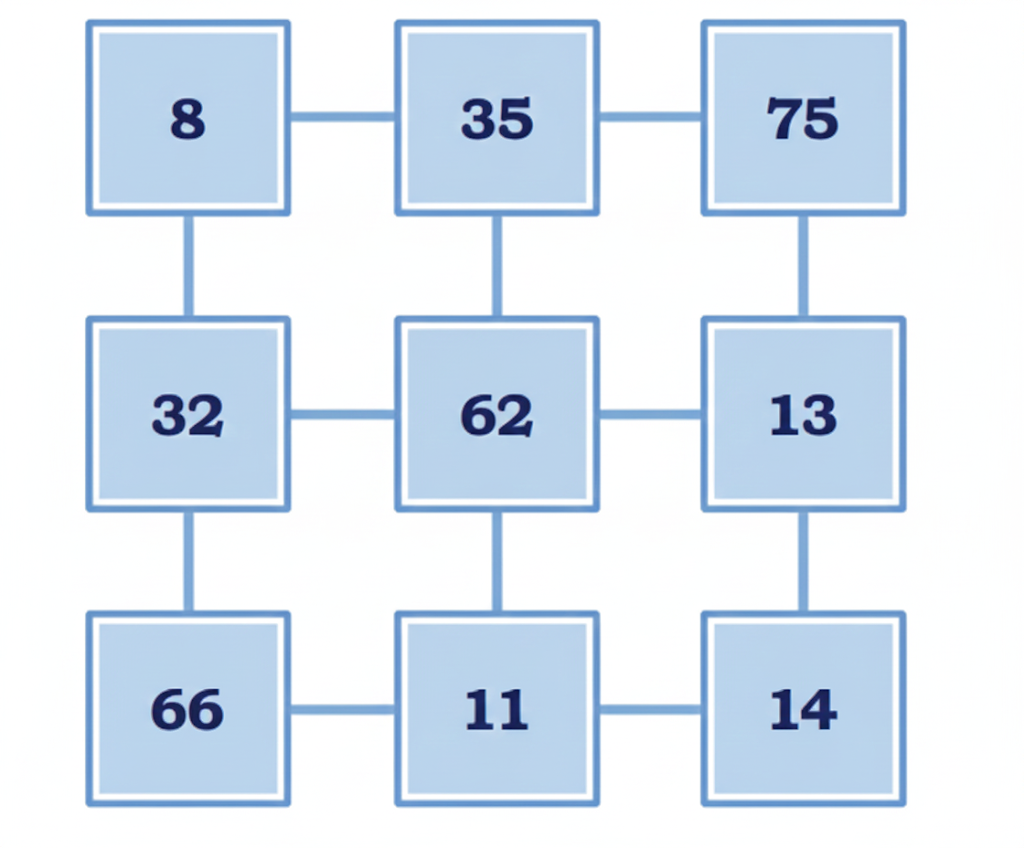
Solution:
Students should do it by themselves.
NCERT Textbook Page 91
Let Us Solve
Question 1.
Mala went to a book exhibition and bought 18 books. The shop was selling 3 books for ₹ 150. After buying the books, she still had ₹ 20 left. How much money did Mala have at the beginning?
Solution:
Mala bought 18 books.
The cost of 3 books is ₹150, so the price of 1 book is ₹50.
The total cost of 18 books is calculated as:
18 × 50 = (20 × 50) − 100
= 1000 − 100
= ₹900
Since Mala still had ₹20 remaining after the purchase,
the amount she originally had was ₹920 (₹900 + ₹20).
Question 2.
A village sports club organises a women’s football tournament. The club earned money by selling match tickets and charging fees for team participation.
They sold 57 tickets for ₹ 115 each.
They had 3 teams joining the tournament, with each team paying a participation fee of ₹ 1,599.
The teams paid ₹ 1,750 in total rent the football ground and ₹ 1,129 for food and water.
(a) How much money did the club collect in total from ticket sales and team participation fees?
(b) What were the total expenses on renting the ground and food and water?
Solution:
The money collected from ticket sales is calculated as follows:
₹(57 × 115) = ₹(60 × 115 − 3 × 115)
= ₹(6900 − 345)
= ₹6555.
The total participation fee paid by the 3 teams is:
₹(3 × 1599) = ₹(3 × 1600 − 3)
= ₹4797.
The total rent paid for the football ground by the teams is ₹1750, and the cost of food and water for the teams is ₹1129.
(a) The total amount collected by the club from ticket sales and team participation fees is:
₹6555 + ₹4797 = ₹11,352.
(b) The total expenditure on ground rent and food and water is:
₹1750 + ₹1129 = ₹2879.
Question 3.
Ananya is watching Republic Day celebrations on city’s public ground. There are 12 rows of students sitting in front of her and 17 rows behind her. There are 18 students to her right and 22 students to her left.
(a) How many rows of students are there in total?
(b) How many students are there in Ananya’s row?
(c) What is the total number of students on the ground?
Solution:
(a)
The total number of rows of students on the ground is:
12 + 1 + 17 = 30 rows.
(b)
The number of students in Ananya’s row is:
18 + 1 + 22 = 41 students.
(c)
The total number of students present on the ground is:
30 × 41 = 1230 students
Question 4.
Multiply.
(a) 67 × 78
(b) 34 × 56
(c) 45 × 263
(d) 86 × 542
(e) 432 × 107
(f) 310 × 120
Solution:
(a) 67 × 78 = 67 × 80 – 2 × 67
= 5360 – 134
= 5226
(b) 34 × 56 = 30 × 56 + 4 × 56
= 1680 + 224
= 1904
(c) 45 × 263 = 40 × 263 + 5 × 263
= 10,520 + 1315
= 11,835
(d) 86 × 542 = 86 × (540 + 2)
= 86 × 540 + 2 × 86
= 46,440 + 172
= 46,612
(e) 432 × 107 = 432 × 100 + 432 × 7
= 43,200 + 3024
= 46,224
(f) 310 × 120 = 300 × 120 + 10 × 120
= 36,000 + 1200
= 37,200
Question 5.
If 67 × 67 = 4489, without multiplication find 67 × 68.
Solution:
Since, 67 × 67 = 4489
∴ 67 × 68
= 67 × 67 + 67
= 4489 + 67 = 4556
Question 6.
If 99 × 100 = 9900, without multiplication find 99 × 99.
Solution:
Since, 99 × 100 = 9900
∴ 99 × 99
= 99 × 100 – 99
= 9900 – 99
= 9801
Mastering Multiplication in The Dairy Farm – Class 5 Maths
Learning multiplication strategies in NCERT Solutions Class 5 Maths Mela Chapter 6 The Dairy Farm makes calculations faster and easier. By practicing regularly, you build a strong foundation in basic arithmetic—a skill that will help in all higher maths topics.
This chapter focuses on using patterns, doubling, halving, and nearest multiples to solve problems efficiently. Understanding such techniques is essential for students aiming for high exam scores and for building conceptual clarity.
Practice every section of NCERT Solutions Class 5 Maths Mela Chapter 6 The Dairy Farm 2026-27 for confidence in exams. Revising worked examples and creating your own helps you tackle both direct and story-based questions easily.
FAQs on NCERT Solutions For Class 5 Maths Chapter 6 The Dairy Farm - 2026-27 Free PDF Download (Sign-in Required)
1. What are NCERT Solutions for Class 5 Maths Chapter 6 The Dairy Farm?
NCERT Solutions for Class 5 Maths Chapter 6 The Dairy Farm provide detailed stepwise answers to all textbook questions, following the latest CBSE 2026–27 syllabus. These solutions help students:
- Understand chapter concepts with clear explanations and stepwise methods
- Prepare for school exams with exam-style answers
- Clarify doubts in both intext and back exercise questions
- Download free PDFs for handy offline revision
2. How can I score full marks using NCERT Solutions for Class 5 Maths Chapter 6?
To score full marks with NCERT Solutions for Class 5 Maths Chapter 6 The Dairy Farm, follow these tips:
- Write stepwise answers as shown in the solutions
- Use correct formulas and definitions where required
- Draw neat diagrams if asked and label them properly
- Follow the CBSE marking scheme for long answers—introduction, steps, final answer
- Revise key concepts and practice previous year questions
3. Which questions from Class 5 Maths Chapter 6 are important for exams?
Questions that require calculation, use of diagrams, and key definitions from Class 5 Maths Chapter 6 The Dairy Farm are frequently asked in school exams. Important question types include:
- Step-based mathematical problems on dairy data
- Short and long answer questions needing explanations or diagrams
- Map or schematic representation of a dairy farm (if included in your book)
- Key terms and short notes from the chapter
4. Are diagrams and definitions mandatory in Class 5 Maths Chapter 6 answers?
Including neat diagrams and accurate definitions in your Class 5 Maths Chapter 6 answers can help you get full marks. Diagrams are usually required when questions specifically mention them; definitions give clarity to your answers, especially for important concepts.
5. How should I structure long answers in The Dairy Farm chapter for better marks?
For higher marks in long answers for The Dairy Farm chapter, structure your answer as follows:
- Start with an introduction sentence explaining the main idea
- Write each step clearly and in order
- Include relevant definitions and diagrams if asked
- Conclude with a direct answer or summary sentence
6. Where can I download the Class 5 Maths Chapter 6 solutions PDF for free?
You can download the free NCERT Solutions Class 5 Maths Chapter 6 PDF from educational platforms offering CBSE-aligned resources. Look for a clear download button, ensuring the PDF covers all exercise-wise questions with stepwise answers for easy offline study.
7. Are NCERT Solutions enough for Class 5 Maths Chapter 6 exam preparation?
NCERT Solutions for Class 5 Maths Chapter 6 are usually sufficient for exam preparation, as they follow the CBSE syllabus and marking scheme. For best results, also practice:
- Class assignments and worksheets
- Previous year and sample papers for extra practice
- Additional problems from NCERT Exemplar if available
8. How can I quickly revise Class 5 Maths Chapter 6 before exams?
Revise Class 5 Maths Chapter 6 quickly by:
- Studying summary notes and key formulae
- Practicing important questions from NCERT Solutions
- Memorizing key definitions and map/diagram labels
- Solving sample and previous year questions for time management
9. What are the key concepts and formulae in Class 5 Maths Chapter 6 The Dairy Farm?
Some key concepts and formulae in Class 5 Maths Chapter 6 The Dairy Farm include:
- Calculation of totals such as number of cows and milk yield
- Understanding graphical or tabular data (if in your book)
- Basic multiplication, addition, and comparison problems related to dairy farm operations
- Definitions like dairy, farm, produce, and measurements
10. Do examiners award partial marks for correct steps even if the final answer is wrong in Class 5 Maths?
Yes, in CBSE marking scheme for Class 5 Maths, partial marks are awarded for showing correct stepwise working even if the final answer is incorrect. Always write each step clearly to maximize your chances of scoring.
