







An Introduction to India and Brazil’s Economy
India and Brazil are celebrating 74 years of mollifying family members in 2022. In recent years, the two overall regions have extended their relationship totally upon a progressive worldwide vision, commitment to progress, and shared vote-based values. They mounted a fundamental association in 2006 and hoped to foster it in 2020 by consenting to an Activity Intent to Reinforce the Essential Association.
India
English rulers, not whatsoever, rolled out monstrous improvements to serve the social region, which hampered the economy's valuable capacity. During this opportunity, India's capability was solely 17%, with fear of any desire for 32.5 years. Subsequently, when India was created to turn out to be free, systematic business try of the money-related structure was once a simple undertaking for the experts of that time. The requirement for turning in impact and improvement was once in enormous interest towards the front of the political organisation - as the US once used on the accreditations and energies of countrywide energy.
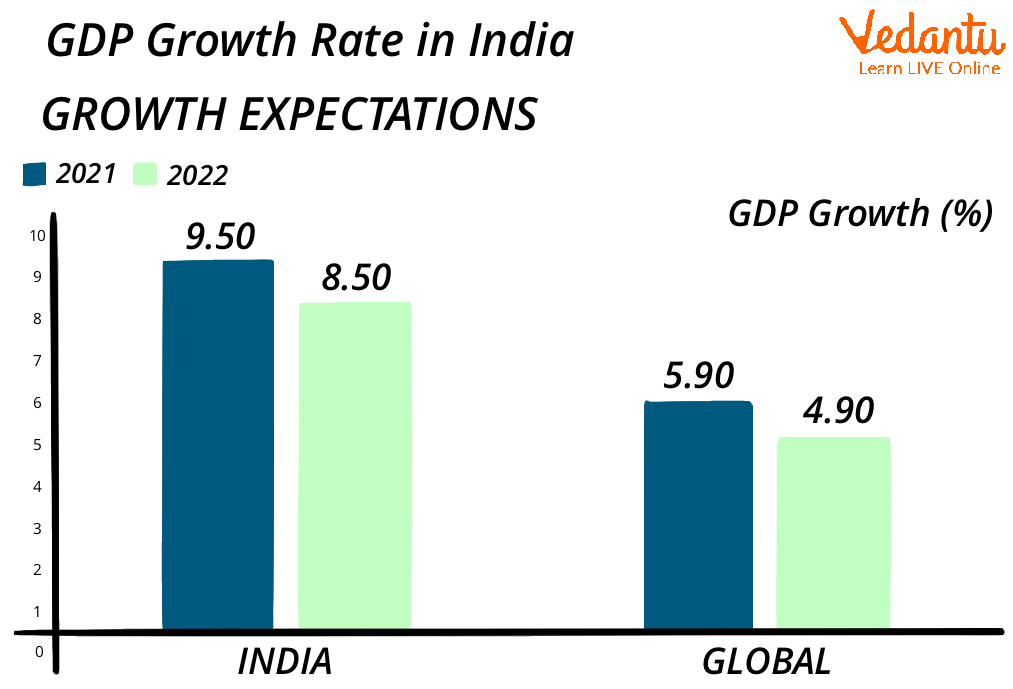
GDP in India
Brazil
Brazil has the best monetary system in Latin America, the world's tenth most conspicuous money-related structure employing the apparent gross homegrown item, and the seventh most noteworthy through Buying Power Equality (PPP). Brazil is one nation suggested as BRICS, with everything considered with Russia, India, China, and South Africa, thought of the five massive rising world economies. The country's monetary system is inwardly arranged and separated using commonly unhindered economies.
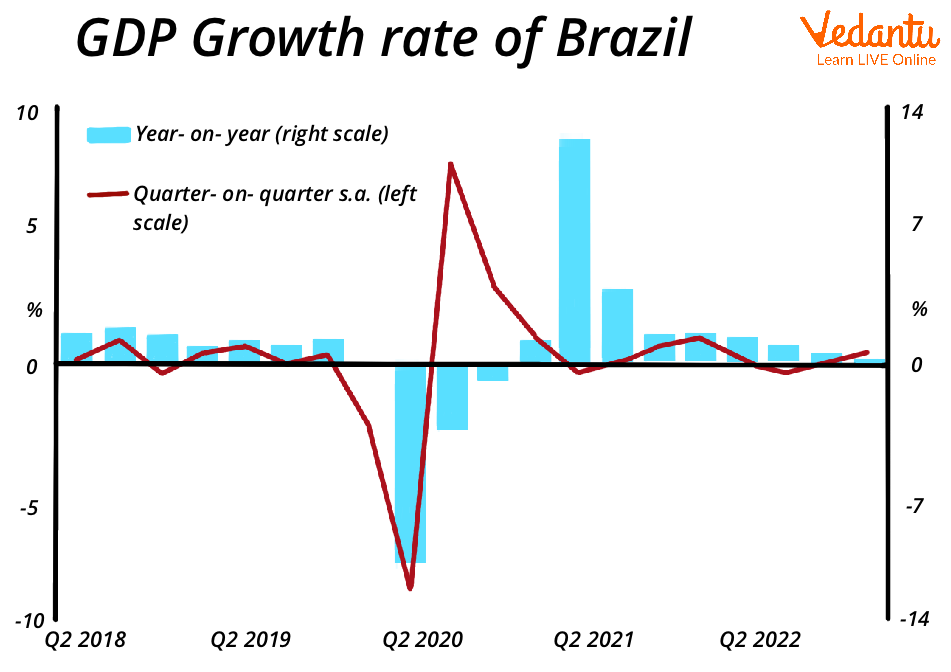
GDP in Brazil
History of Brazil and India
India's links with Brazil go back to five centuries. Portugal's Pedro Alvares Cabral is formally considered the essential European to "find" Brazil in 1500. In 1948, India and Brazil started officially communicating with each other. Both countries are committed to promoting economic development and social inclusion for the benefit of their citizens. This shared global vision and principles form the basis of the long-term bilateral strategic cooperation between the two nations.
Given this, having Brazilian President Jair Bolsonaro as the parade's special guest in 2020 would be a great opportunity for India to expand its influence in Latin America and provide a shot in the arm to the country's ties to a major power.
Relating to the Past
This relationship between India and Brazil goes back 500 years.
The narrative began in 1500 when Portuguese affiliation explorer Pedro Alvares was blown off course on his trip to India and instead stumbled into Brazil.
He travelled across Brazil on his way to Goa. As a result, the Portuguese established ties between India and Brazil throughout the colonial era, facilitating the trade of various agricultural goods and animals.
During the cold war, India and Brazil adjusted their policies to counter the superpower-imposed global order (US and USSR). The Non-proliferation Treaty, for instance, was widely opposed in both nations in 1967. (NPT).
Similarities between India and Brazil
The similarities between India and Brazil are as follows
India and Brazil are each emerging countries.
India and Brazil each have encountered the authority of broad capacities.
India and Brazil are striking for their chance to fight.
India and Brazil are the head exporters of tea and espresso separately.
India and Brazil share land limits with different bordering nations.
India and Brazil each have marine coasts.
India and Brazil each sail on basically the same kinds of issues.
India and Brazil each have blended economies.
Both overall regions are prominent for several kinds of moves.
India and Brazil are respected with piles of local resources.
The local environment in India and Brazil is truly relative.
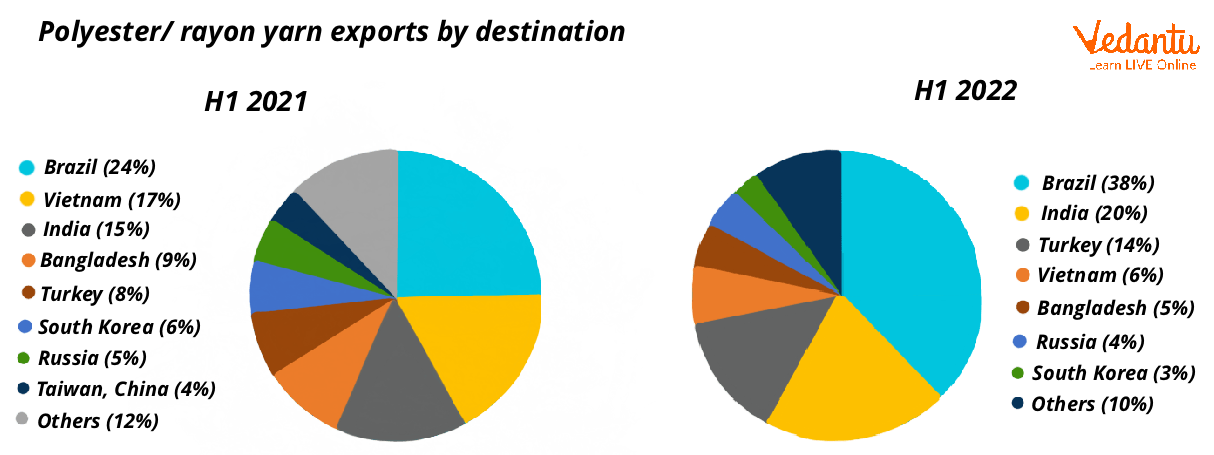
Export Rate
India and Brazil's Collaboration
1. Political Collaboration
The fundamental association set up in 2006 between Brazil and India has reached out, with each nation partaking carefully inside BRICS, IBSA, G4, G20, and the greater multilateral setting of the Assembled Countries.
Brazil and India (close to Germany and Japan) regularly pursued wants of ceaseless seats in the UN Security Chamber and worked more like a multipolar world on the spot, creating worldwide regions that can body world rules and democratise associations.
Both overall regions did an earnest job as tops of the Worldwide South or South investment.
2. Financial Collaboration
Brazil has ended up one of the most crucial exchanging associates of India in the whole LAC (Latin America and the Caribbean) locale.
Proportional change between the two overall regions stays at a dismal $8 billion.
In 2018 Indian interests in Brazil have been around U.S.$6 billion and Brazilian interests in India are evaluated at $1 billion.
3. Insurance Collaboration
Brazil and India denoted a particular 'Shield Collaboration Understanding' in 2003 that calls for cooperation in security-related matters, outstandingly in the subject of Innovative work, obtainment, and key aid between the two countries.
Under the arrangement of the game plan, a 'Joint Safeguard Board (JDC)' has been set up that meets standard stretches.
4. Social Collaboration
In Brazil, there is a huge recreation movement in India's lifestyle, religion, performing articulations, and hypotheses.
Brazil has areas of strength for Yoga and Ayurveda experts. The Brazilian Relationship of Ayurveda (ABRA) is a non-benefit association with workplaces in 9 territories of Brazil and has individuals all over Brazil.
Mahatma Gandhi in Brazil and the subject experts and NGOs are making an undertaking to show the perspective of serenity among students, youth, and police.
Case Study - Economic Regulations: Brazil and India's Growth and Stability
Today's rising economies include Brazil and India. Comparing the two nations' economic rules might be informative for both. Large geographical area, large population, high unemployment rates, dominant services sector, mixed economy framework, common interests in international markets and trade platforms like WTO (pharmaceuticals, agriculture, etc.) on the one hand, and contrasts in political experiences, economic upheavals, and dependence on foreign financial flows make this a rich and meaningful study (Oliver Stuenkel, 2010).
The study explores the causes that have helped India achieve high GDP growth and stay economically stable over the previous quarter century and helped Brazil rapidly handle the 2008-09 crisis's impacts. Brazil's economy improved in less than a year without major government expenditure increases or monetary easing. This suggests that Brazil's economic model has matured.
Conclusion
India and Brazil are rising countries that save commensurate standards on the vote-based framework, normal opportunities, world organisation, and liberal procedures. They are mates on the foundation of exchange family members and have a ton to study from one another. With their joining position on many multilateral and plurilateral conversations, the two worldwide regions are believed to be imperative for approaching new world solicitation.
FAQs on Brazil vs India: Economics Report to Compare India and Brazil
1. What are the key economic differences between India and Brazil?
The primary economic differences between India and Brazil lie in their GDP metrics, growth rates, and population size. While India has a larger overall Gross Domestic Product (GDP), Brazil has a significantly higher GDP per capita, indicating a higher average income per person. Key differences include:
- GDP and Population: India's economy is larger in absolute terms, largely due to its massive population. Brazil has a smaller population but is the largest economy in Latin America.
- Economic Growth: India's economy has been growing at a faster rate than Brazil's in recent years.
- Development Level: Based on per capita income, Brazil is considered a more developed economy with a higher standard of living on average compared to India.
- Economic Structure: While both are service-sector dominant, Brazil is a major exporter of agricultural products and iron ore, whereas India is a leading exporter of IT services and pharmaceuticals.
2. What type of economic system do both India and Brazil have?
Both India and Brazil operate under a mixed economic system. This means their economies are a blend of both private and public sector enterprises. In a mixed economy, the government coexists with private companies to drive economic activity. For instance, in both nations, strategic sectors like railways, energy, and certain heavy industries may have significant government ownership, while sectors like telecommunications, banking, and consumer goods have robust private participation.
3. Why is India's per capita income lower than Brazil's, despite having a larger total GDP?
India's per capita income is lower than Brazil's primarily because of its vast population. Per capita income is calculated by dividing a country's total GDP by its total population. Although India's overall economic output (GDP) is larger than Brazil's, this wealth is distributed among a population that is more than six times larger. Consequently, the average income per person in India is lower. Brazil's smaller population relative to its GDP results in a higher per capita figure.
4. How do India and Brazil compare in terms of their primary, secondary, and tertiary economic sectors?
India and Brazil show distinct profiles when comparing their economic sectors:
- Primary Sector (Agriculture): In India, the primary sector employs a large portion of the population but contributes a smaller percentage to the GDP. In Brazil, agriculture is highly mechanised and a major contributor to its exports and GDP, especially products like coffee, soybeans, and sugar.
- Secondary Sector (Industry): Both countries have well-developed industrial bases. Brazil is strong in automobile manufacturing and mining, while India has a diverse industrial sector including textiles, chemicals, and engineering goods.
- Tertiary Sector (Services): The tertiary sector is the largest contributor to GDP in both countries. India is globally recognised for its IT and business process outsourcing (BPO) services. Brazil's service sector is also robust, particularly in finance, retail, and tourism.
5. What are the main similarities that make a comparative study of India and Brazil relevant?
A comparative study is relevant because both nations share several key characteristics despite their geographical distance. Both are considered major emerging economies and are members of the BRICS group. They both have large, diverse populations, rich natural resources, and democratic political systems. Furthermore, both countries have faced similar developmental challenges, such as income inequality and the need for infrastructure development, making their contrasting approaches and outcomes a valuable subject of study.
6. From an economic standpoint, why is it important to compare India and Brazil?
Comparing the economies of India and Brazil is important because it provides valuable insights into different paths of economic development. Both are influential developing nations, but they have adopted different strategies to tackle similar problems like poverty and inequality. Studying their trajectories helps economists and policymakers understand the impact of different policies on growth, trade, and social welfare. For students, it illustrates how factors like population, natural resources, and government policy can create different economic outcomes in countries with similar potential.
7. What are the major challenges and opportunities facing the Indian and Brazilian economies?
Both economies face unique challenges and opportunities.
- India's Challenges: High population density, infrastructural gaps, and income inequality are significant hurdles. India's Opportunity: Its main opportunity lies in its 'demographic dividend'—a large, young workforce that can drive future growth, coupled with a booming tech and service industry.
- Brazil's Challenges: Brazil has faced periods of political and economic instability, and its economy can be sensitive to global commodity price fluctuations. Brazil's Opportunity: Its strength lies in its vast natural resources, self-sufficiency in energy, and a powerful agricultural sector that makes it a global food production powerhouse.
