



Class 12 Geography Chapter 2 Human Settlements Important Questions with Answers PDF
This Class 12 India People and Economy Chapter 2 Important Questions and Answers section contains 21 chapter-based questions: five MCQs, four very short answers, six short answers and six long answers. The selection covers the four rural settlement types, physical and social factors affecting villages, ancient and modern towns, Census town criteria, trends of urbanisation, functional classification and the Smart Cities Mission.
Class 12 India People and Economy Chapter 2 Important Questions MCQ Practice
Q1. A village has closely built houses grouped, while farms and pastures lie outside the residential area. Which type of settlement is described?
(a) Dispersed settlement
(b) Hamleted settlement
(c) Clustered settlement
(d) Semi-clustered settlement
Answer: (c) Clustered settlement.
Explanation: Clustered settlements have compact groups of houses. The residential area is generally separate from agricultural fields and pastures. These settlements are found in fertile alluvial plains and several north-eastern regions.
Q2. Which of the following conditions is associated with dispersed rural settlements in India?
(a) Closely packed houses on fertile plains
(b) Isolated houses on hills and in forested areas
(c) A large village divided into compact neighbourhoods
(d) Houses surrounding one central market
Answer: (b) Isolated houses on hills and in forested areas.
Explanation: Dispersed settlements consist of isolated houses or small groups of houses separated by considerable distances. They are found in Meghalaya, Uttarakhand, Himachal Pradesh, and Kerala.
Q3. Which of the following is an ancient Indian town known for its religious and cultural importance?
(a) Gandhinagar (b) Bhilai (c) Varanasi (d) Durgapur
Answer: (c) Varanasi.
Explanation: Varanasi is an ancient town with strong religious and cultural significance. Other examples include Prayag (Prayagraj), Pataliputra (Patna), and Madurai.
Q4. According to the Census-based criteria discussed in the chapter, what minimum population size is required for a settlement to qualify under the population-based criteria?
(a) 2,000 persons (b) 5,000 persons (c) 10,000 persons (d) 20,000 persons
Answer: (b) 5,000 persons.
Explanation: The chapter explains that the population-based town criteria include at least 5,000 people, a density of at least 400 persons per sq km and a specified proportion of male workers engaged in non-agricultural activities. Places with recognised urban local bodies are also included in the Census definition.
Q5. Which of the following is correctly matched with its dominant urban function?
(a) Jamshedpur – Mining town (b) Ambala – Garrison town (c) Pilani – Port town (d) Raniganj – Tourist town
Answer: (b) Ambala – Garrison town.
Explanation: Ambala is associated with military and cantonment functions. Jamshedpur is an industrial town, Pilani is an educational town, and Raniganj is a mining town.
Class 12 Geography Chapter 2 Very Short Answer Questions
Q6. What is a human settlement?
Answer: A human settlement is a group of dwellings of any type or size where people live. It includes houses and other structures, along with the surrounding area that supports people's economic activities.
Q7. Name the four major types of rural settlements found in India.
Answer: Rural settlements are classified into four types:
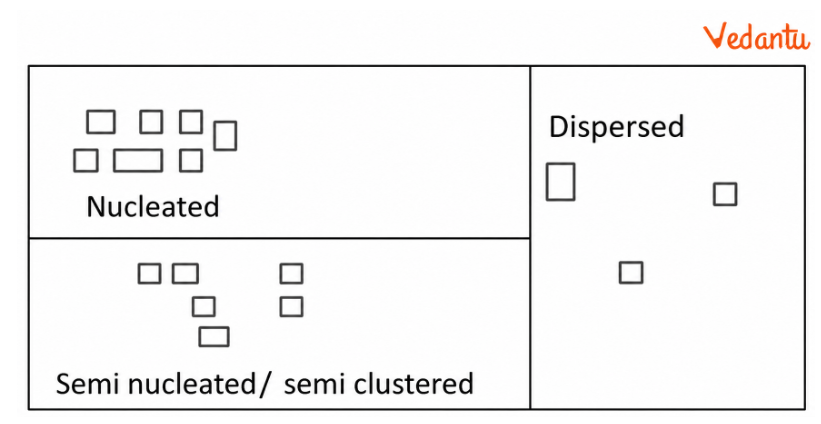
Clustered or nucleated settlements.
Semi-clustered or fragmented settlements.
Hamleted settlements.
Dispersed or isolated settlements.
Q8. What local names are used for the separate units of hamleted settlements?
Answer: The separate units of hamleted settlements are known by names such as panna, para, palli, nagla and dhani in different parts of India.
These units are physically separated but may belong to the same village.
Q9. What was the level of urbanisation in India according to the 2011 Census?
Answer: According to the 2011 Census, the level of urbanisation in India was 31.16%.
This means approximately 31 out of every 100 people lived in urban areas in that Census year.
Class 12 Geography Chapter 2 Short Answer Questions
Q10. Differentiate between rural and urban settlements. Why are they connected?
Answer: Rural and urban settlements differ mainly in their economic activities, size and way of life.
Relationship Between Rural and Urban Areas:
Villages supply towns with food and raw materials. In return, towns provide manufactured products, markets, education, healthcare and other services.
Transport and communication networks connect both types of settlements.
Q11. Explain how physical, cultural and security factors influence the pattern of rural settlements in India.
Answer: Rural settlements develop in different patterns depending on local geographical and social conditions.
1. Physical Factors
Relief, altitude, climate and water availability influence where people build houses.
For example, hilly terrain may lead to dispersed settlements because suitable land is available in separate patches.
2. Cultural and Ethnic Factors
Social structure, caste, religion, and community relationships may influence where different groups live within a village.
In some areas, these differences lead to hamleted or semi-clustered settlements.
3. Security Factors
People may live close together for protection against theft or attacks.
Examples include Bundelkhand and Nagaland, where security considerations have encouraged compact settlements.
4. Availability of Water
In dry areas of Rajasthan, houses may cluster near limited water sources so the community can use the available water more efficiently.
Q12. Differentiate between clustered and semi-clustered settlements with examples from India.
Answer: Both settlement types contain groups of houses, but their arrangement differs.
Clustered Settlements: Houses are built close together. Their streets may form rectangular, radial or linear patterns.
Semi-clustered Settlements: Social differences and community separation may contribute to the development of semi-clustered settlements.
Q13. Why do dispersed settlements develop in some parts of India? Give examples.
Answer: Dispersed settlements develop where houses cannot be easily grouped into one compact area.
The main reasons are:
Difficult terrain: Hills and uneven slopes separate suitable building sites.
Fragmented usable land: Farms and pastures may be spread across small, separate patches.
Forested areas: Settlements may develop as isolated huts or small groups.
Remote locations: Distance and physical barriers may prevent compact village development.
Examples: Dispersed settlements are found in parts of Meghalaya, Uttarakhand, Himachal Pradesh and Kerala.
Explanation: This pattern differs from clustered settlements because individual houses or small groups of houses remain physically separated from one another.
Q14. Explain the three major types of towns in India based on their historical development. Give examples.
Answer: Indian towns can be classified into ancient, medieval, and modern towns based on their historical evolution.
Ancient Towns: Many are more than 2,000 years old and have cultural or religious significance.
Medieval Towns: These developed around forts, royal centres and administrative headquarters.
Modern Towns: These expanded through ports, factories, transport networks and planned administrative functions.
Q15. A settlement has 6,000 people, a density of 450 persons per sq km and 80% of its male workers engaged in non-agricultural occupations. Does it meet the population-based Census town criteria discussed in the chapter? Explain.
Answer: Yes, the hypothetical settlement meets the three numerical criteria discussed in the chapter.
Explanation:
The population exceeds 5,000, the density is above 400 persons per sq km, and more than 75% of male workers are engaged in non-agricultural activities.
Class 12 Geography Chapter 2 Long Answer Questions
Q16. Describe the four major types of rural settlements in India. Explain their features, causes and geographical distribution.
Answer: Rural settlements in India differ in the arrangement of houses, the distance between dwellings, and the factors that influence their location.
There are four major types of rural settlements.
1. Clustered or Nucleated Settlements
These consist of houses built close together in a compact area.
Main Features:
Houses form a recognisable residential cluster.
Farms, barns and pastures generally lie outside the main residential area.
Streets may follow rectangular, radial or linear patterns.
Fertile land, water and security encourage this type of settlement.
Examples: Northern Plains, Bundelkhand, Nagaland and parts of Rajasthan.
2. Semi-clustered or Fragmented Settlements
These have a main residential cluster along with smaller groups of houses situated nearby.
Main Features:
Some households live apart from the central village.
Social and community differences may influence the arrangement.
The settlement is partly compact and partly fragmented.
Examples: Gujarat Plain and parts of Rajasthan.
3. Hamleted Settlements
In this type, a village is divided into several separate units that share a common village name.
Main Features:
Houses form smaller groups or hamlets.
The units may be called panna, para, palli, nagla or dhani.
Social and ethnic factors often influence the divisions.
Examples include the Middle and Lower Ganga Plains, Chhattisgarh, and the lower Himalayan valleys.
4. Dispersed or Isolated Settlements
These consist of isolated houses or small groups of houses separated by considerable distances.
Main Features:
Houses are scattered over a wide area.
Settlements may develop on hillsides or in forests.
Uneven terrain and scattered usable land encourage dispersion.
Examples: Parts of Meghalaya, Uttarakhand, Himachal Pradesh and Kerala.
Comparison Table
Q17. Explain the trend of urbanisation in India from 1901 to 2011 using the urbanisation data given in the chapter. What changes can be observed?
Answer: Urbanisation is measured as the percentage of people living in urban areas compared with the total population.
1. Urbanisation Data in India (1901–2011)
2. Increase in Urban Population
India's urban population increased substantially between 1901 and 2011.
In 1901, the recorded urban population was approximately 25.85 million. By 2011, it had reached approximately 377 million.
3. Growth in Urbanisation Level
The urbanisation level increased from 10.84% in 1901 to 31.16% in 2011.
Calculation:
$$\text{Increase}=31.16-10.84=20.32\text{ percentage points}$$
4. Increase in the Number of Towns
The number of towns and urban agglomerations rose from 1,827 in 1901 to 6,171 in 2011.
5. Reasons for Urbanisation
The growth of towns and urban populations was influenced by:
Industrial development.
Growth of trade and services.
Rural-to-urban migration.
Expansion of existing urban centres.
Development of new towns.
Improvement in transport and communication.
6. Changes in Growth Rate
Urban population continued to increase, but its decennial growth rate was lower in 2001–2011 than in some earlier decades.
Q18. Explain the functional classification of towns in India with suitable examples.
Answer: Towns perform different economic, administrative, cultural and social functions.
Some towns are known for one major activity, although they may also perform several other functions.
Towns are classified according to their dominant activities.
1. Administrative Towns
These towns function as important administrative headquarters.
Examples: Chandigarh, New Delhi, Bhopal, Gandhinagar, Jaipur and Shillong.
2. Industrial Towns
Industries form an important part of these towns' economies.
Examples: Jamshedpur, Bhilai, Coimbatore, Mumbai and Salem.
3. Transport Towns
These serve as major transport centres, ports or railway junctions.
Examples: Kandla, Kochi, Kozhikode, Visakhapatnam, Itarsi and Katni.
4. Commercial Towns
Trade and commercial activities are important functions of these towns.
Examples: Kolkata, Saharanpur and Satna.
5. Mining Towns
These develop in or near mineral-rich regions.
Examples: Raniganj, Jharia, Digboi, Ankleshwar and Singrauli.
6. Garrison or Cantonment Towns
These towns develop around military establishments and defence activities.
Examples: Ambala, Jalandhar, Mhow, Babina and Udhampur.
7. Educational Towns
Educational institutions and academic activities contribute significantly to their development.
Examples: Roorkee, Aligarh, Pilani, Prayagraj and Varanasi.
8. Religious and Cultural Towns
These are known for religious, historical or cultural importance.
Examples: Varanasi, Mathura, Amritsar, Madurai, Puri, Ajmer and Tirupati.
9. Tourist Towns
These attract visitors because of their natural beauty, climate or attractions.
Examples: Nainital, Mussoorie, Shimla, Jodhpur, Jaisalmer and Mount Abu.
Quick Revision Table
Q19. Trace the development of towns in India from the ancient period to the post-Independence period. How did different activities influence their growth?
Answer: Indian towns developed over many centuries. Religion, administration, trade, defence, industry, and planned development shaped their growth.
1. Early Urban Settlements: Urban settlements existed during the Indus Valley Civilisation. Harappa and Mohenjo-daro are examples of early towns.
2. Ancient Towns: Several ancient towns developed as cultural and religious centres. Examples include Varanasi, Prayagraj, Patna, and Madurai.
These towns attracted people because of their cultural importance and long-established settlement history.
3. Medieval Towns: During the medieval period, many towns developed as headquarters of kingdoms and principalities.
Examples: Delhi, Hyderabad, Jaipur, Lucknow and Agra.
Forts and administrative centres played an important role in their growth.
4. Colonial Trading Towns: European trading activities encouraged the development of coastal ports.
Examples: Surat, Daman, Goa and Puducherry.
The British later expanded major urban centres such as Mumbai, Chennai and Kolkata.
5. Industrial Towns: The development of modern industries contributed to the emergence of new towns. Jamshedpur is an important example of industrial urban development.
6. Post-Independence Administrative Towns: After Independence, new towns developed as administrative headquarters.
Examples: Chandigarh, Bhubaneswar, Gandhinagar and Dispur.
7. Post-Independence Industrial Towns: Industrial development also encouraged the growth of towns such as Durgapur, Bhilai, Sindri and Barauni.
8. Satellite Towns: Some towns expanded around large metropolitan cities.
Examples: Ghaziabad, Rohtak and Gurugram around Delhi.
Q20. What are the main objectives of the Smart Cities Mission? Explain how better urban planning can improve the lives of city residents.
Answer: The Smart Cities Mission focuses on improving urban infrastructure, environmental conditions, and citizens' quality of life.
The mission emphasises sustainable and inclusive urban development.
1. Core Infrastructure
Cities need reliable infrastructure and essential services to support residents and economic activities.
2. Clean and Sustainable Environment
Urban development should reduce environmental damage and use resources carefully.
3. Better Quality of Life
Cities should provide services and facilities that make living conditions safer and more convenient.
4. Smart Solutions
Technology and improved planning can help manage infrastructure and services more effectively.
5. Disaster Preparedness
Urban areas should be planned to reduce vulnerability to disasters and other risks.
6. Efficient Resource Use
Cities should aim to use fewer resources while improving service delivery.
7. Inclusive Development
Urban development should benefit all sections of society, not just selected groups.
8. Replicable Development Models
As cities expand, the mission aims to develop compact areas that can act as examples for other cities.
For example, consider a city that improves water supply, introduces efficient transport systems, manages waste more effectively, and improves disaster preparedness. These improvements would support several objectives described in the chapter.
Q21. Why do towns and cities become multifunctional as they grow? Explain with examples and the relationship between cities and their surrounding rural areas.
Answer: Most towns have more than one function, even when they are initially recognised for one dominant activity.
As towns grow, their economic and social activities become more varied.
1. Growth of Different Economic Activities
A town originally developed around an industry may later attract shops, schools, hospitals, banks and transport services.
2. Population Increase
As more people settle in a town, the demand for housing, education, healthcare, trade and public services increases.
3. Transport Development
Improved roads and railway connections support the movement of people and goods.
4. Administrative Expansion
Larger towns may develop additional government and administrative functions.
5. Educational and Commercial Development
Colleges, markets and businesses create employment opportunities and attract more residents.
6. Relationship With Rural Areas
Towns exchange goods and services with their surrounding villages.
7. Why a Single Classification Becomes Difficult
As these activities expand, it may no longer be accurate to describe a large city as only industrial, commercial or administrative.
As cities expand, metropolitan functions often become closely connected.
Why Practise Class 12 Geography Chapter 2 Important Questions with Vedantu?
Vedantu's Class 12 Human Settlements important questions help students understand rural settlement patterns, urbanisation, and the development and functions of Indian towns. By practising chapter-specific questions with relevant geographical examples, students can strengthen their understanding and prepare more confidently for examinations.
How to Prepare Class 12 Geography Chapter 2 Important Questions with Vedantu?
Learn all four rural settlement types: Understand how the houses are arranged and where each pattern is found.
Practise settlement diagrams: Identify clustered, semi-clustered, hamleted and dispersed arrangements.
Remember important town examples: Match important towns with their historical periods and dominant functions.
Revise Census criteria: Understand the conditions used to identify urban settlements.
Study the urbanisation table: Focus on the change in India's urban population between 1901 and 2011.
Prepare comparison questions: Practise rural versus urban settlements and different town functions.
Understand the Smart Cities Mission: Learn its main objectives and connect them with practical examples.
Important Study Material Links for Class 12 Geography Chapter 2
CBSE Class 12 Geography other books Important Questions and Study Resources
Chapter-Wise Important Questions for Class 12 Geography – India: People and Economy
Students can practise other chapters from India: People and Economy to understand how population, natural resources, economic activities and transport influence India's development.
Important Study Materials for Class 12 Geography
FAQs on Important Questions and Answers for Class 12 Geography Chapter 2 – Human Settlements (India: People and Economy) | 2026-27
1. What are the most important topics in Class 12 Geography Chapter 2: Human Settlements?
Key topics include rural and urban settlements, the four types of rural settlement patterns, factors affecting their location, the evolution of towns in India, urbanisation trends, the functional classification of towns, and the Smart Cities Mission.
2. What are the four major types of rural settlements in India?
The four types are clustered, semi-clustered, hamleted and dispersed settlements. They differ in the arrangement of houses, the distance between dwellings, and the physical or social factors that drive their development.
3. What is the difference between clustered and dispersed settlements?
Clustered settlements have houses built closely together in a compact area. Dispersed settlements consist of individual houses or small groups of houses located far apart, often in hilly or forested regions.
4. Why are clustered settlements commonly found in the Northern Plains?
The Northern Plains have extensive flat land, fertile soils and favourable conditions for agriculture and communication. These conditions encourage the development of compact villages.
5. What is a hamleted settlement in Class 12 Geography?
A hamleted settlement is a village divided into several physically separate units that share a common village name. These units may be called panna, para, palli, nagla or dhani in different regions.
6. What are the main factors affecting rural settlement patterns in India?
Physical factors such as terrain, climate and water availability are important. Social structure, caste, religion and security considerations also influence how houses and villages are arranged.
7. What are the main characteristics of urban settlements?
Urban settlements are generally larger and more compact than rural settlements. They support industry, trade, administration, transport, and other services, and are connected to surrounding rural areas.
8. What are the Census criteria for identifying a town in India?
According to the Census-based criteria discussed in the chapter, a settlement must have a minimum population of 5,000, a population density of at least 400 persons per square kilometre, and at least 75% of its male main workers engaged in non-agricultural activities to qualify as a Census town.
Settlements with recognised urban local bodies are classified separately as statutory towns. These criteria help explain the classification of urban settlements in India.
9. What was the level of urbanisation in India according to Census 2011?
In Census 2011, India's urban population accounted for 31.16% of the total population. These figures help explain the historical growth of urban settlements in India.
10. What is the difference between ancient, medieval and modern towns in India?
Ancient towns often developed as religious and cultural centres; medieval towns commonly served kingdoms and administrative systems; and modern towns expanded through colonial trade, industry, and planned development.
11. What are the different functional types of towns in India?
Towns are classified as administrative, industrial, transport, commercial, mining, garrison, educational, religious and cultural, and tourist. These categories are based on their dominant activities.
12. Why do Indian cities become multifunctional as they grow?
As cities expand, they develop more industries, services, transport facilities, educational institutions and administrative activities. Their functions become interconnected, making it difficult to place large cities in only one category.
13. What is the Smart Cities Mission in Class 12 Geography Chapter 2?
The Smart Cities Mission focuses on better infrastructure, sustainable urban development, improved public services and quality of life. It also focuses on efficient resource use, disaster preparedness, and development models other cities can adopt.
14. How should students prepare Human Settlements Chapter 2 for CBSE Geography examinations?
Students should practise the four rural settlement diagrams, revise examples of ancient and modern towns, learn town-function classifications and understand the Census 2011 urbanisation table. Short comparisons and chapter exercises are useful for revision.
