




When the north pole of a magnet is moved into a coil the direction of the induced current in the coil as seen from the magnet side is
A) Clockwise
B) Anticlockwise
C) Depends on the speed of the magnet
D) None of these
Answer
 Verified
275.1k+ views
Hint: When the north pole of a magnet Is moved towards a coil in its magnetic field span, electromotive force is induced. The electromotive force is induced in such a way that it opposes the change in flux, if flux is increasing it’ll try to decrease it but if the flux is decreasing then the induced emf tries to increase the flux by attracting the magnet.
Complete step by step answer:
Electromagnetism is the phenomenon by which electromotive force(emf) is induced in a coil or circuit when the magnetic flux in contact with it changes. The induced emf generates current flow in the coil or circuit due to voltage change.
The direction of the current depends on the direction of motion of the coil or magnet. The direction of current will be of such a manner that it opposes the decrease in flux through the coil. This is in accordance with Lenz's Law.
When we move the north pole of the magnet towards the left end of the coil or circuit, current starts flowing in the anticlockwise direction. Induction of current flow in anticlockwise direction turns that end of the coil into a north pole. And due to the similar polarity of the magnet and the coil that is in touch, the current opposes the magnetic flux change; repelling action of similar poles.
The pulling out of the magnet will cause a clockwise direction of flow that will trn the adjacent coil end to a south pole. This too is to oppose the flux change as now the opposing poles will try to attract each other.
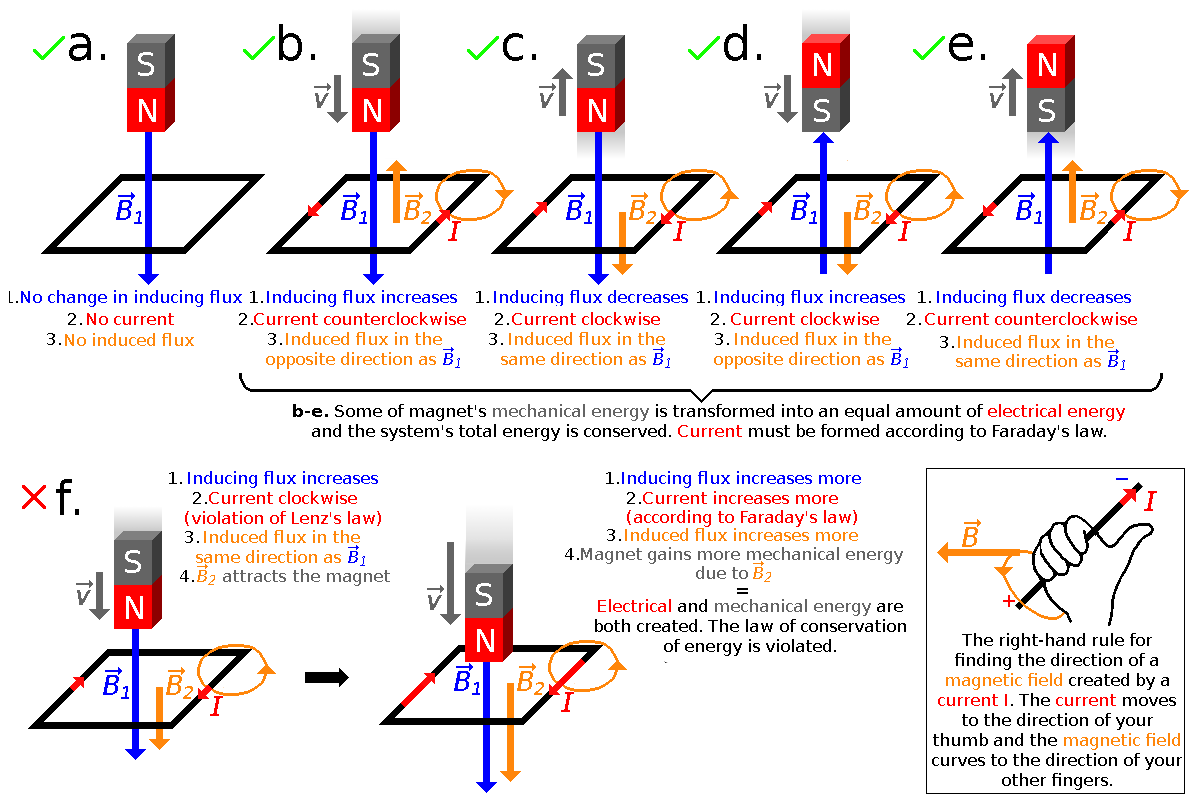
In the given question, when the north end of the magnet is moved into the coil, emf is induced in the coil and current starts to flow. The direction of the flow will be so that it opposes the movement of the magnet into it. Therefore, the direction of current generated is anticlockwise as seen from the magnet side. This produces north polarity in the coil which tries to oppose the flux change that induced it.
In conclusion, the correct option is B.
Note: The direction of current flow will be different when seen from the coil side. It will be clockwise indicating that the side in observation has south polarity and the side in touch with the magnetic flux is north. Therefore answering this question from the perspective given is important as the answer depends on it.
Complete step by step answer:
Electromagnetism is the phenomenon by which electromotive force(emf) is induced in a coil or circuit when the magnetic flux in contact with it changes. The induced emf generates current flow in the coil or circuit due to voltage change.
The direction of the current depends on the direction of motion of the coil or magnet. The direction of current will be of such a manner that it opposes the decrease in flux through the coil. This is in accordance with Lenz's Law.
When we move the north pole of the magnet towards the left end of the coil or circuit, current starts flowing in the anticlockwise direction. Induction of current flow in anticlockwise direction turns that end of the coil into a north pole. And due to the similar polarity of the magnet and the coil that is in touch, the current opposes the magnetic flux change; repelling action of similar poles.
The pulling out of the magnet will cause a clockwise direction of flow that will trn the adjacent coil end to a south pole. This too is to oppose the flux change as now the opposing poles will try to attract each other.
In the given question, when the north end of the magnet is moved into the coil, emf is induced in the coil and current starts to flow. The direction of the flow will be so that it opposes the movement of the magnet into it. Therefore, the direction of current generated is anticlockwise as seen from the magnet side. This produces north polarity in the coil which tries to oppose the flux change that induced it.
In conclusion, the correct option is B.
Note: The direction of current flow will be different when seen from the coil side. It will be clockwise indicating that the side in observation has south polarity and the side in touch with the magnetic flux is north. Therefore answering this question from the perspective given is important as the answer depends on it.
Recently Updated Pages
Wheatstone Bridge – Principle, Formula, Diagram & Applications

Mass vs Weight: Key Differences Explained for Students
Circuit Switching vs Packet Switching: Key Differences Explained
Young’s Double Slit Experiment Derivation Explained
Length vs. Height: Key Differences Explained for Students
Rows vs Columns: Key Differences Explained Simply
Trending doubts
JEE Main 2026: Exam Dates, Session 2 Updates, City Slip, Admit Card & Latest News
Understanding the Electric Field of a Uniformly Charged Ring
Understanding Atomic Structure for Beginners
Derivation of Equation of Trajectory Explained for Students
Electron Gain Enthalpy and Electron Affinity Explained
How to Convert a Galvanometer into an Ammeter or Voltmeter
Other Pages
CBSE Class 12 Physics Question Paper 2026: Download SET-wise PDF with Answer Key & Analysis
JEE Advanced 2026 Notification Out with Exam Date, Registration (Extended), Syllabus and More
JEE Advanced Percentile vs Marks 2026: JEE Main Cutoff, AIR & IIT Admission Guide
JEE Advanced Weightage Chapter Wise 2026 for Physics, Chemistry, and Mathematics
Understanding Uniform Acceleration in Physics
Understanding Electromagnetic Waves and Their Importance