






Why National Maritime Day Is Celebrated in India and Its Significance
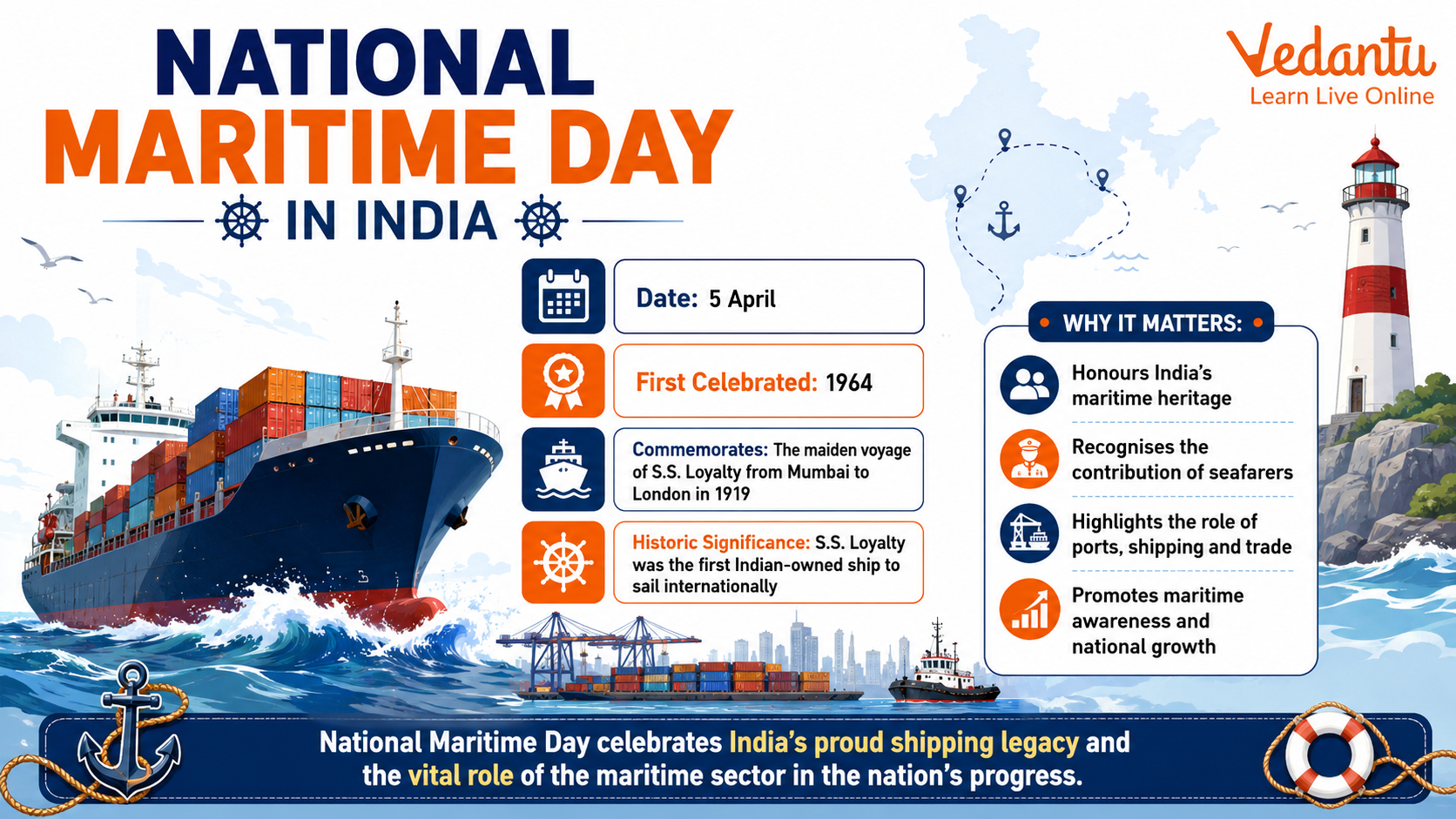
National Maritime Day in India is celebrated every year on 5 April to highlight the importance of the maritime sector in the country’s economy, trade, and security. This day commemorates the historic voyage of the first Indian-owned merchant ship, SS Loyalty, which sailed from Mumbai to London on 5 April 1919. National Maritime Day recognizes the vital role played by seafarers, ports, shipping companies, and maritime organizations in strengthening India’s global trade connections and economic growth.
History of National Maritime Day
The origin of National Maritime Day dates back to the pre-independence period of India. On 5 April 1919, the SS Loyalty, owned by The Scindia Steam Navigation Company Ltd., undertook its maiden voyage from Mumbai to the United Kingdom. At that time, sea routes were largely controlled by British companies, and this voyage marked a significant step toward India’s participation in international shipping.
To honor this milestone and recognize the contributions of the maritime sector, the Government of India declared 5 April as National Maritime Day. Since then, the day has been observed annually to promote awareness about maritime trade and shipping activities.
Significance of National Maritime Day
National Maritime Day holds great importance for a country like India, which has a long coastline of over 7,500 kilometers and a strong dependence on sea-based trade. Nearly 95 percent of India’s trade by volume and around 70 percent by value is carried out through maritime transport.
- Recognizes the contribution of seafarers and maritime professionals.
- Highlights the role of ports and shipping in economic development.
- Promotes awareness about marine safety and environmental protection.
- Encourages youth to consider careers in the maritime sector.
Theme of National Maritime Day
Each year, National Maritime Day is celebrated with a specific theme that focuses on key aspects of maritime development such as sustainability, innovation, digital transformation, and safety at sea. The theme reflects India’s commitment to modernizing ports, enhancing shipping efficiency, and promoting green maritime practices.
How National Maritime Day is Celebrated
National Maritime Day is observed with various programs and activities organized by maritime institutions, port authorities, and shipping companies across India.
- Award ceremonies to honor outstanding seafarers and maritime professionals.
- Seminars and conferences on maritime trade and technology.
- Awareness campaigns about marine safety and environmental conservation.
- Educational programs in maritime institutes and training centers.
Key Facts About National Maritime Day
| Particular | Details | Importance |
|---|---|---|
| Date | 5 April | Marks the voyage of SS Loyalty in 1919 |
| First Ship | SS Loyalty | First Indian-owned merchant vessel to sail internationally |
| Organized By | Government of India | Promotes maritime trade and awareness |
These key facts help in understanding the historical background and national relevance of National Maritime Day. The celebration emphasizes India’s journey toward becoming a strong maritime nation.
Importance of the Maritime Sector in India
India’s maritime sector is crucial for international trade, defense, and economic growth. The country has 12 major ports and more than 200 minor and intermediate ports along its coastline. These ports handle large volumes of cargo, including petroleum, coal, fertilizers, and manufactured goods.
- Supports export and import activities.
- Generates employment in shipping and logistics sectors.
- Strengthens national security through naval and coast guard operations.
- Encourages development of coastal infrastructure.
National Maritime Day and Competitive Exams
National Maritime Day is an important topic for General Knowledge and current affairs sections of competitive exams. Questions may be asked about its date, historical background, the SS Loyalty ship, and the importance of maritime trade in India.
Preparation Tips
- Remember the date 5 April and the year 1919.
- Associate SS Loyalty with The Scindia Steam Navigation Company.
- Understand the economic importance of maritime trade for India.
- Revise key facts about major ports and coastline length.
Conclusion
National Maritime Day in India is a significant observance that honors the country’s maritime heritage and acknowledges the contributions of the shipping industry. Celebrated on 5 April every year, it marks the historic voyage of SS Loyalty and highlights the importance of sea-based trade in India’s development. Understanding this day helps students and aspirants appreciate the strategic and economic value of the maritime sector in India.
FAQs on National Maritime Day in India: Meaning, History and Importance for Students
1. What is National Maritime Day in India?
National Maritime Day in India is celebrated to recognize the importance of the maritime sector in the country’s trade and economy.
• Observed annually on 5th April
• Celebrates India’s shipping industry and maritime heritage
• Highlights the role of ports, seafarers, and ocean trade
• Raises awareness about maritime safety and global shipping
This day answers common queries like “Why is National Maritime Day celebrated?” and “What is the importance of maritime trade in India?”
2. Why is National Maritime Day celebrated on 5th April?
National Maritime Day is celebrated on 5th April to mark the historic voyage of India’s first modern ship, SS Loyalty, in 1919.
• The ship sailed from Mumbai to London
• Owned by Scindia Steam Navigation Company
• Marked India’s entry into the global shipping industry
• Symbolized freedom from British maritime dominance
This event is a milestone in India’s maritime history and shipping development.
3. When was National Maritime Day first celebrated in India?
National Maritime Day was first celebrated in 1964 to honor India’s maritime achievements.
• Initiated by the Ministry of Ports, Shipping and Waterways
• Aims to promote awareness about the Indian shipping industry
• Recognizes contributions of seafarers and maritime professionals
Since 1964, the day has become significant for students preparing for GK and competitive exams.
4. What is the theme of National Maritime Day?
The theme of National Maritime Day changes every year to focus on current maritime challenges and opportunities.
• Themes highlight sustainable shipping
• Focus on blue economy and maritime safety
• Emphasize innovation in ports and logistics
The annual theme supports discussions on global trade, ocean economy, and maritime development.
5. What is the importance of the maritime sector in India?
The maritime sector is vital because over 90% of India’s trade by volume is carried through sea routes.
• Supports international trade and exports
• Strengthens India’s economic growth
• Provides employment to lakhs of seafarers
• Connects India with global markets through major ports
This explains why maritime trade is crucial to the Indian economy.
6. What was SS Loyalty and why is it significant?
SS Loyalty was the first Indian-owned ship that sailed internationally, marking a turning point in India’s shipping history.
• Sailed on 5 April 1919
• Operated by Scindia Steam Navigation Company
• Traveled from Mumbai to London
• Symbolized India’s participation in global maritime trade
Its voyage is the main reason behind celebrating National Maritime Day in India.
7. Which ministry is responsible for National Maritime Day celebrations?
National Maritime Day is organized by the Ministry of Ports, Shipping and Waterways of India.
• Coordinates events across major ports
• Honors outstanding maritime professionals
• Promotes awareness about the shipping industry
• Supports India’s vision of becoming a maritime powerhouse
The ministry plays a key role in strengthening India’s port infrastructure and logistics.
8. How is National Maritime Day celebrated in India?
National Maritime Day is celebrated through official ceremonies and awareness programs across India.
• Awards for seafarers and maritime officers
• Seminars on shipping, logistics, and blue economy
• Events at major ports like Mumbai and Chennai
• Educational activities for students and exam aspirants
These celebrations highlight India’s growing role in global maritime trade.
9. What is the role of ports in India’s maritime trade?
Ports serve as gateways for India’s international trade and economic activities.
• India has 12 major ports and many minor ports
• Handle cargo like petroleum, coal, and containers
• Support import-export business
• Boost regional and national economic development
Ports are central to understanding India’s maritime economy and logistics network.
10. Why is National Maritime Day important for students and competitive exams?
National Maritime Day is important for GK as it is frequently asked in competitive exams and current affairs sections.
• Important date: 5 April
• First celebrated in 1964
• Linked to SS Loyalty (1919 voyage)
• Related to India’s shipping and port sector
Questions about National Maritime Day often appear in SSC, UPSC, Railways, and state-level exams.
