






Earthquake Seismic Zones in India Explained: Zone II to Zone V Areas and Safety Insights
Earthquakes are one of the most destructive natural disasters that frequently affect India due to its unique geological position. India lies on the boundary of the Indian Plate and the Eurasian Plate, making several parts of the country highly vulnerable to seismic activity. To reduce damage and ensure safer construction practices, India is divided into different earthquake seismic zones based on the level of risk. Understanding the List Of Earthquake Seismic Zones In India is important for students, competitive exam aspirants, and professionals involved in civil engineering, disaster management, and geography.
What Are Earthquake Seismic Zones?
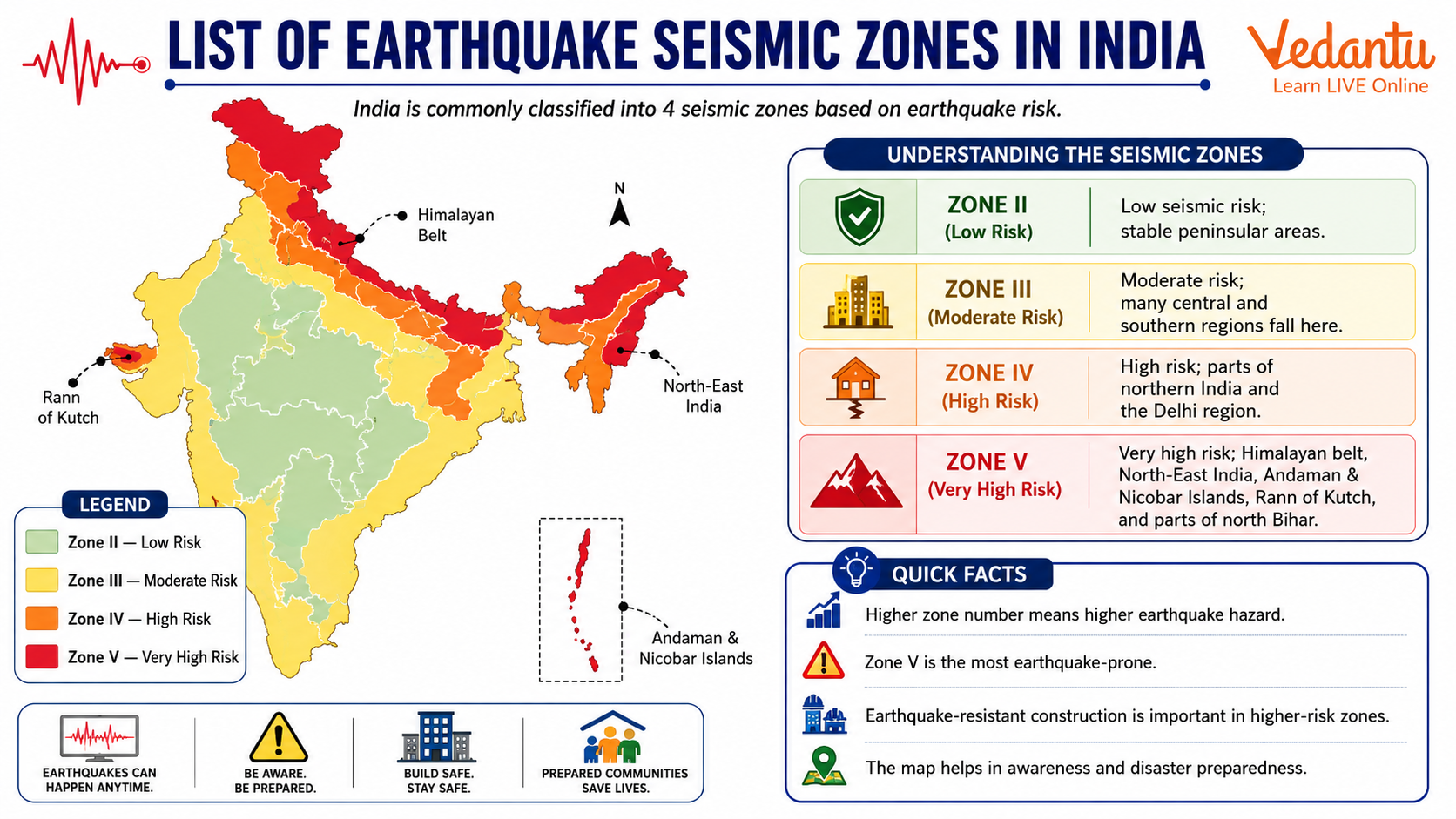
Earthquake seismic zones are regions classified according to the severity and frequency of earthquakes experienced in those areas. The Bureau of Indian Standards (BIS) has divided India into four seismic zones based on the potential intensity of earthquakes. These zones help in planning infrastructure, enforcing building codes, and preparing disaster management strategies.
- Zone II - Low damage risk zone
- Zone III - Moderate damage risk zone
- Zone IV - High damage risk zone
- Zone V - Very high damage risk zone
List Of Earthquake Seismic Zones In India
| Seismic Zone | Risk Level | Major Areas Covered |
|---|---|---|
| Zone II | Low Risk | Parts of Karnataka, Tamil Nadu, Madhya Pradesh |
| Zone III | Moderate Risk | Kerala, Goa, Lakshadweep, Parts of Uttar Pradesh and West Bengal |
| Zone IV | High Risk | Delhi, Haryana, Punjab, Bihar, Parts of Maharashtra |
| Zone V | Very High Risk | Jammu and Kashmir, Himachal Pradesh, Northeast India, Andaman and Nicobar Islands |
Zone V is the most seismically active region in India, while Zone II has the least risk. The classification is based on past earthquake data, tectonic features, and expected intensity levels measured on the Modified Mercalli Intensity scale.
Zone Wise Explanation
Zone II - Low Damage Risk Zone
This zone covers stable land areas with relatively low seismic activity. Although the risk is minimal, earthquakes can still occur. Proper building standards are recommended to prevent unexpected damage.
Zone III - Moderate Damage Risk Zone
Areas in this zone experience moderate seismic activity. Buildings must follow earthquake resistant construction guidelines to reduce structural damage during tremors.
Zone IV - High Damage Risk Zone
This zone includes regions close to the Himalayan belt and the Indo Gangetic plains. These areas are more prone to strong earthquakes due to active tectonic movements.
Zone V - Very High Damage Risk Zone
Zone V is the most hazardous seismic zone in India. It includes the entire northeastern region, parts of Jammu and Kashmir, Himachal Pradesh, Uttarakhand, Rann of Kutch in Gujarat, and the Andaman and Nicobar Islands. These areas have experienced some of the most severe earthquakes in Indian history.
Why India Is Prone To Earthquakes
India is highly vulnerable to earthquakes because of its tectonic setting. The Indian Plate is constantly moving northward and colliding with the Eurasian Plate. This collision forms the Himalayan mountain range and generates significant seismic activity.
- Plate boundary interactions in the Himalayas
- Active fault lines in Northeast India
- Seismic activity in the Rann of Kutch
- Subduction zones near Andaman and Nicobar Islands
Important Facts About Seismic Zones In India
- Nearly 59 percent of India's land area is vulnerable to moderate to severe earthquakes.
- The seismic zoning map of India is prepared by the Bureau of Indian Standards.
- Zone I was removed in the latest seismic classification.
- Building codes such as IS 1893 provide guidelines for earthquake resistant construction.
Importance Of Seismic Zoning
Seismic zoning plays a vital role in reducing earthquake related damage and saving lives. It helps architects, engineers, and planners design structures that can withstand expected ground shaking levels.
- Ensures safe building construction practices
- Guides urban planning and infrastructure development
- Supports disaster preparedness and response strategies
- Reduces economic and human losses
Conclusion
The List Of Earthquake Seismic Zones In India helps classify regions according to their earthquake risk levels and plays a crucial role in disaster management and infrastructure safety. From low risk Zone II to very high risk Zone V, each classification reflects the geological realities of the Indian subcontinent. Understanding these zones is essential for students preparing for competitive exams and for anyone interested in geography and disaster management. Proper awareness and strict adherence to building codes can significantly reduce the impact of earthquakes in vulnerable regions.
FAQs on List of Earthquake Seismic Zones in India with Risk Levels and Map Explanation
1. What are the earthquake seismic zones in India?
India is divided into four earthquake seismic zones based on the level of seismic hazard and earthquake risk.
- Zone II – Low damage risk zone
- Zone III – Moderate damage risk zone
- Zone IV – High damage risk zone
- Zone V – Very high damage risk zone
These zones are defined by the Bureau of Indian Standards (BIS) in the Seismic Zoning Map of India to assess earthquake-prone areas and disaster vulnerability.
2. Which is the most earthquake-prone zone in India?
The most earthquake-prone zone in India is Zone V, which has the highest seismic risk.
- Covers parts of Himalayan region
- Includes Northeast India
- Parts of Jammu & Kashmir, Uttarakhand, and Rann of Kutch
Zone V is highly vulnerable due to active tectonic plate movements along the Indian and Eurasian plates.
3. How many seismic zones are there in India?
India currently has four seismic zones as per the latest seismic zoning classification.
- Earlier, there were five zones (I to V)
- Zone I was merged into Zone II
- Present zones: II, III, IV, and V
This classification helps in earthquake-resistant construction and disaster management planning.
4. Which Indian states fall under Seismic Zone V?
Several states fall under Seismic Zone V, indicating very high earthquake risk.
- Entire Northeastern states (Assam, Meghalaya, Manipur, etc.)
- Parts of Jammu & Kashmir and Ladakh
- Uttarakhand
- Northern Bihar
- Rann of Kutch (Gujarat)
These areas experience frequent seismic activity due to tectonic instability.
5. What is Seismic Zone IV in India?
Seismic Zone IV is classified as a high damage risk zone in India.
- Covers parts of Delhi, Haryana, and Punjab
- Includes sections of Bihar and West Bengal
- Some regions of Maharashtra and Himachal Pradesh
Areas in Zone IV require strict earthquake-resistant building codes to reduce disaster impact.
6. Why is India prone to earthquakes?
India is earthquake-prone because it lies on the active Indian tectonic plate.
- Collision of Indian Plate with Eurasian Plate
- Formation of the Himalayas
- Presence of fault lines and seismic faults
- Intraplate seismic activity in regions like Gujarat
This tectonic movement causes frequent tremors and major earthquakes.
7. What is the Seismic Zoning Map of India?
The Seismic Zoning Map of India is an official map that categorizes regions based on earthquake hazard levels.
- Prepared by the Bureau of Indian Standards (BIS)
- Divides India into Zones II to V
- Used for earthquake-resistant design and urban planning
It helps engineers, architects, and policymakers reduce seismic risk and improve safety.
8. Is Delhi in an earthquake seismic zone?
Yes, Delhi falls under Seismic Zone IV, which is a high-risk earthquake zone.
- Close to the Himalayan seismic belt
- Influenced by nearby fault lines
- Requires compliance with earthquake safety norms
This makes Delhi vulnerable to moderate to strong earthquakes.
9. What safety measures are required in high seismic zones?
High seismic zones require strict earthquake preparedness and safety measures.
- Construction of earthquake-resistant buildings
- Following BIS building codes
- Disaster management planning
- Public awareness and emergency drills
These measures reduce loss of life and property during earthquakes.
10. Which zone has the least earthquake risk in India?
The least earthquake risk in India is in Seismic Zone II, classified as a low damage risk zone.
- Covers parts of Deccan Plateau
- Includes regions of Karnataka, Tamil Nadu, and central India
- Experiences mild seismic activity
Although relatively safer, earthquake-resistant construction is still recommended.
