






Why Is Vande Mataram Important in India’s Freedom Movement?
Vande Mataram is the National Song of India and holds a special place in the history of the Indian freedom struggle. It inspired millions of Indians to fight against British rule and became a powerful symbol of patriotism and unity. Written in the late 19th century, the song reflects love and devotion towards the motherland. For students and competitive exam aspirants, understanding Vande Mataram is important from both historical and cultural perspectives.
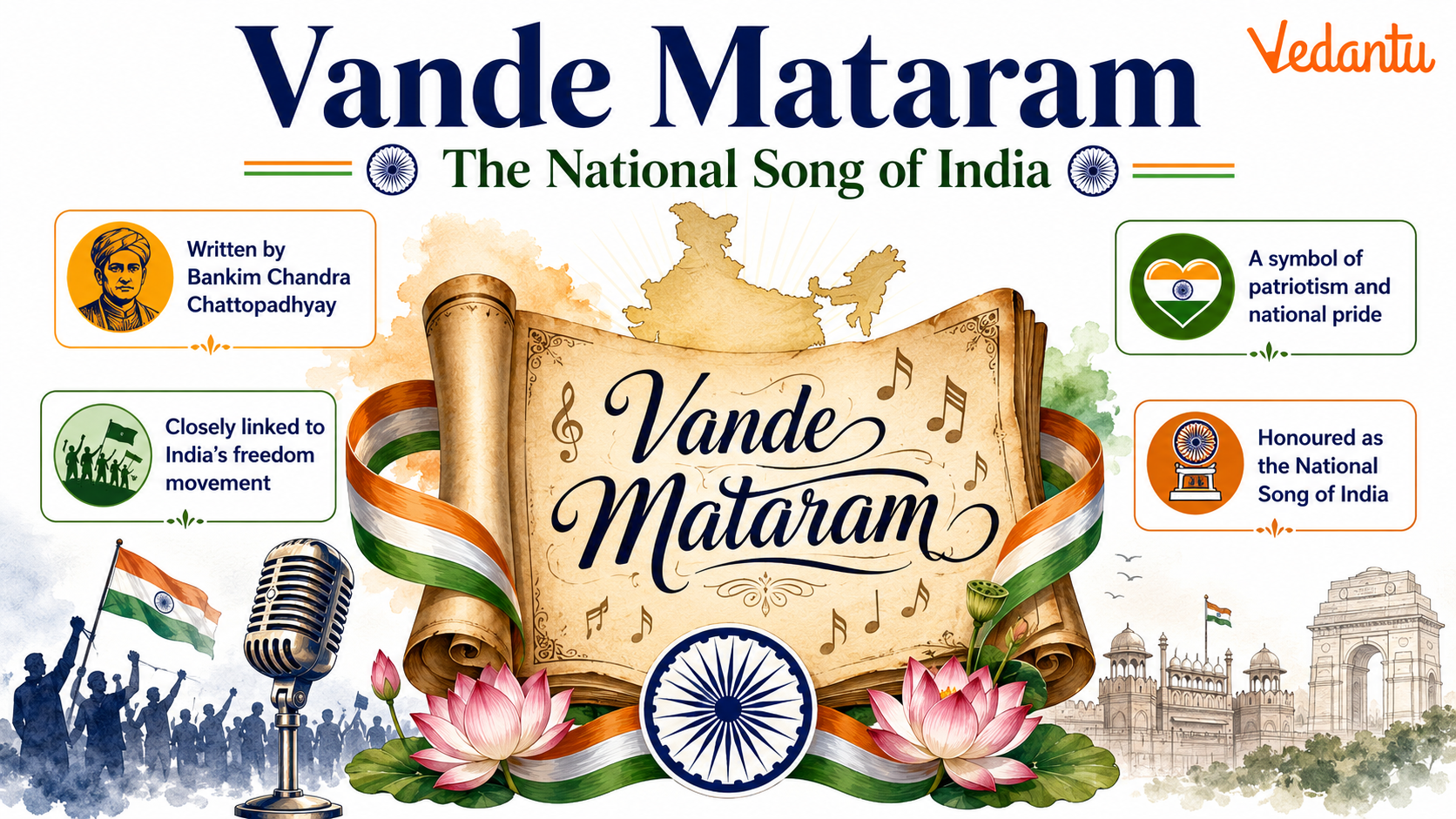
Overview of Vande Mataram
Vande Mataram was composed by Bankim Chandra Chattopadhyay in Sanskrit. It was first published in his novel Anandamath in 1882. The song praises India as a mother goddess and describes her beauty, richness, and strength. Over time, it became a rallying cry during the freedom movement and played a vital role in uniting people across the country.
Key Facts About Vande Mataram
| Particulars | Details | Year |
|---|---|---|
| Author | Bankim Chandra Chattopadhyay | 1870s |
| First Published | In the novel Anandamath | 1882 |
| Adopted as National Song | By Constituent Assembly of India | 1950 |
On 24 January 1950, the Constituent Assembly of India adopted Vande Mataram as the National Song of India. Only the first two stanzas were officially accepted for this purpose.
Meaning of Vande Mataram
The words Vande Mataram mean I bow to thee, Mother. The mother refers to Mother India. The song describes the country as rich in natural beauty, with green fields, cool breeze, flowing rivers, and fertile land. It also portrays the nation as powerful and protective.
- It praises the natural beauty of India.
- It expresses respect and devotion to the motherland.
- It symbolizes strength, unity, and patriotism.
Historical Importance in Freedom Movement
During the Indian freedom struggle, Vande Mataram became a slogan against British rule. Freedom fighters chanted it during protests, meetings, and revolutionary movements. The song created a sense of unity and national pride among Indians.
- It was first sung at the 1896 session of the Indian National Congress.
- It inspired revolutionary movements in Bengal and other parts of India.
- British authorities often tried to ban its public singing.
Difference Between National Song and National Anthem
National Song vs National Anthem
| Feature | National Song | National Anthem |
|---|---|---|
| Name | Vande Mataram | Jana Gana Mana |
| Author | Bankim Chandra Chattopadhyay | Rabindranath Tagore |
| Status | National Song | National Anthem |
While both are symbols of national pride, Jana Gana Mana is the National Anthem and is officially sung at formal events. Vande Mataram is the National Song and holds equal historical importance.
Important Points for Exams
Vande Mataram is frequently asked in school exams and competitive examinations such as SSC, UPSC, Railways, and State PSC exams. Students should remember key facts related to its author, publication, and adoption.
- Written by Bankim Chandra Chattopadhyay.
- Included in the novel Anandamath in 1882.
- Adopted as the National Song on 24 January 1950.
- Only the first two stanzas are officially recognized.
Conclusion
Vande Mataram is more than just a song. It represents the spirit of India’s struggle for independence and the deep love of its people for their motherland. Its historical significance and emotional power continue to inspire generations. Understanding its background, meaning, and importance helps students appreciate its value in Indian history and culture.
FAQs on Vande Mataram: History and Significance of India’s National Song
1. What is Vande Mataram and why is it important?
Vande Mataram is the National Song of India and a powerful symbol of the Indian freedom struggle.
- Written by Bankim Chandra Chattopadhyay
- Means "I bow to thee, Mother"
- First published in the novel Anandamath (1882)
- Inspired freedom fighters during the Indian Independence Movement
It remains an important patriotic song reflecting nationalism, unity, and devotion to Mother India.
2. Who wrote Vande Mataram?
Vande Mataram was written by Bankim Chandra Chattopadhyay, a renowned Indian poet and novelist.
- Composed in Sanskrit and Bengali
- Included in his novel Anandamath
- He was a key literary figure of the Bengal Renaissance
His composition played a major role in spreading patriotism and national consciousness during British rule.
3. When was Vande Mataram adopted as the National Song of India?
Vande Mataram was adopted as the National Song of India on 24 January 1950.
- Adopted by the Constituent Assembly of India
- Given equal status with the National Anthem (Jana Gana Mana)
- Only the first two stanzas were officially recognized
This decision recognized its historic role in the freedom movement.
4. What is the meaning of Vande Mataram?
The phrase Vande Mataram means "I bow to thee, Mother", referring to Mother India.
- "Vande" means I bow or salute
- "Mataram" means Mother
- Symbolizes respect and devotion to the motherland
The song praises India’s natural beauty, strength, and cultural richness.
5. In which book was Vande Mataram first published?
Vande Mataram was first published in the novel Anandamath in 1882.
- Written by Bankim Chandra Chattopadhyay
- The novel is set during the Sannyasi Rebellion
- The song appears as a hymn to inspire revolutionaries
It later became a slogan of the Indian nationalist movement.
6. How is Vande Mataram different from Jana Gana Mana?
Vande Mataram is the National Song, while Jana Gana Mana is the National Anthem of India.
- Vande Mataram written by Bankim Chandra Chattopadhyay
- Jana Gana Mana written by Rabindranath Tagore
- National Song adopted in 1950
- National Anthem officially adopted in 1950
Both songs hold equal respect and are symbols of Indian unity and patriotism.
7. Why were only the first two stanzas of Vande Mataram adopted?
Only the first two stanzas of Vande Mataram were adopted to maintain national harmony.
- Later stanzas had religious references
- The first two verses focus on Mother India’s beauty and glory
- Decision taken by the Constituent Assembly
This ensured the song remained inclusive and respectful of India’s diverse culture and religions.
8. What role did Vande Mataram play in the Indian freedom movement?
Vande Mataram became a powerful slogan during the Indian Independence Movement.
- Chanted during protests against British rule
- Inspired leaders and revolutionaries
- Used during the Swadeshi Movement (1905)
It symbolized resistance, national pride, and unity among Indians.
9. In which language was Vande Mataram originally written?
Vande Mataram was originally written in a mix of Sanskrit and Bengali.
- Literary Sanskrit vocabulary
- Bengali poetic style
- Reflects India’s rich linguistic heritage
This blend made the song both classical and culturally significant.
10. When was Vande Mataram first sung at a political event?
Vande Mataram was first sung at the Indian National Congress session in 1896.
- Sung by Rabindranath Tagore
- Marked its entry into national politics
- Became a rallying cry for freedom fighters
This event strengthened its place in India’s nationalist history.
