




Which of the following meet the requirements of Huckel Rule?
(A) Naphthalene
(B) Cyclohexane
(C) 1,3,5,7 - Cyclooctatetraene
(D) 1,3 - Cyclobutadiene
Answer
 Verified
283.8k+ views
Hint: In organic chemistry Huckel rule estimates whether a planar ring molecule will have aromatic properties or not. We need to analyse the structures of the compounds given in the options.
Complete step by step answer:
> Huckel rule states that in order to be aromatic a molecule must have a certain number of \[\text{ }\!\!\pi\!\!\text{ }\] electrons (that is electrons with pi bonds or lone pairs within p orbitals) within a closed loop of parallel, adjacent p orbitals.
To be more specific we can say that, if a cyclic, planar molecule has \[\text{4n+2 }\!\!\pi\!\!\text{ }\] electrons, it is an aromatic molecule. Here n is an integer which possess the value 0,1,2…etc.
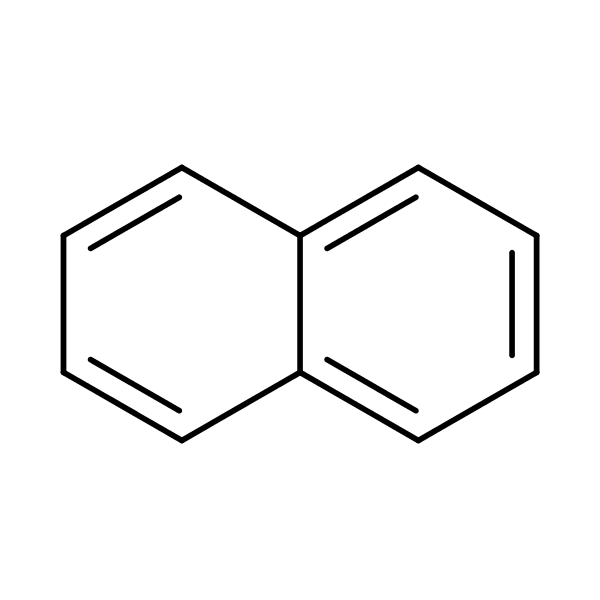
> The above is the structure of Naphthalene. From the diagram, we can see that there are 5
double bonds. The number of 10 pi electrons is 10.
So, the value of \[n\text{ }=\text{ }4\times n\text{ }+\text{ }2\text{ }=\text{ }10\]
So, \[\text{ }\!\!~\!\!\text{ n = 2}\] (which is an integer)
So, we can say that naphthalene meets the requirements of the Huckel Rule.
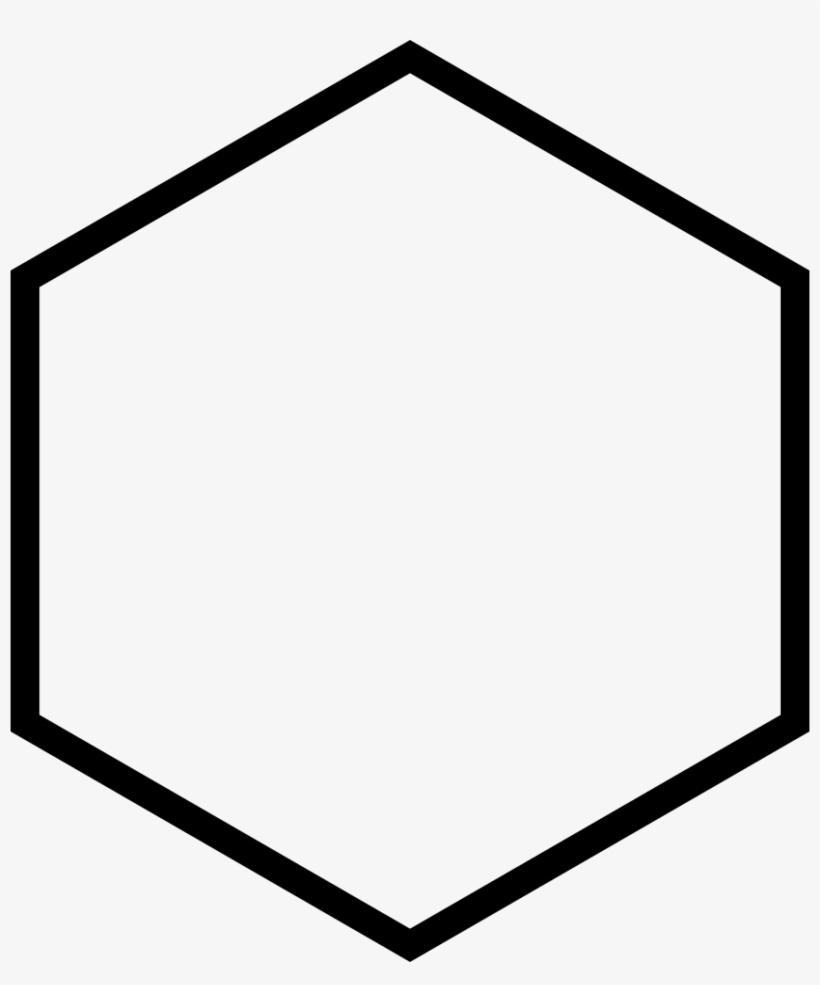
> The above is the structure of cyclohexane. Aromaticity requires cyclic conjugation that is
the alteration of single and double bonds or lone pairs and single bonds and double bonds
around the ring. Cyclohexane has only one double bond so it is not conjugated. Therefore, it cannot be automatic.
So we can say that cyclohexane does not follow the requirements of Huckel Rule.
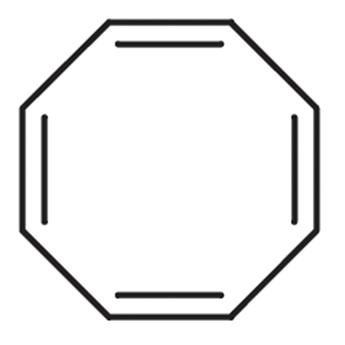
> The above is the diagram of 1,3,5,7 - Cyclooctatetraene. From the structure we can figure out that it is not planar in structure. So cannot be aromatic in nature. So we can say that 1,3,5,7 - Cyclooctatetraene does not follow the requirements of Huckel Rule.

> The above is the diagram of 1,3 - Cyclobutadiene. From the diagram it is clearer than the number of \[\text{ }\!\!\pi\!\!\text{ }\] electrons it is having is even in number and not odd. Therefore, it does not satisfy the \[\text{4n+2 }\!\!\pi\!\!\text{ }\] electrons criteria of the Huckel Rule. So we can say that 1,3 - Cyclobutadiene does not follow the requirements of Huckel Rule.
Therefore, we conclude that Option A is the correct answer.
Note: Criteria for aromaticity:
i) It must have a planar ring.
ii) A continuous chain of unhybridized p orbitals.
iii) Odd number of delocalized electron pairs in the system.
Complete step by step answer:
> Huckel rule states that in order to be aromatic a molecule must have a certain number of \[\text{ }\!\!\pi\!\!\text{ }\] electrons (that is electrons with pi bonds or lone pairs within p orbitals) within a closed loop of parallel, adjacent p orbitals.
To be more specific we can say that, if a cyclic, planar molecule has \[\text{4n+2 }\!\!\pi\!\!\text{ }\] electrons, it is an aromatic molecule. Here n is an integer which possess the value 0,1,2…etc.
> The above is the structure of Naphthalene. From the diagram, we can see that there are 5
double bonds. The number of 10 pi electrons is 10.
So, the value of \[n\text{ }=\text{ }4\times n\text{ }+\text{ }2\text{ }=\text{ }10\]
So, \[\text{ }\!\!~\!\!\text{ n = 2}\] (which is an integer)
So, we can say that naphthalene meets the requirements of the Huckel Rule.
> The above is the structure of cyclohexane. Aromaticity requires cyclic conjugation that is
the alteration of single and double bonds or lone pairs and single bonds and double bonds
around the ring. Cyclohexane has only one double bond so it is not conjugated. Therefore, it cannot be automatic.
So we can say that cyclohexane does not follow the requirements of Huckel Rule.
> The above is the diagram of 1,3,5,7 - Cyclooctatetraene. From the structure we can figure out that it is not planar in structure. So cannot be aromatic in nature. So we can say that 1,3,5,7 - Cyclooctatetraene does not follow the requirements of Huckel Rule.
> The above is the diagram of 1,3 - Cyclobutadiene. From the diagram it is clearer than the number of \[\text{ }\!\!\pi\!\!\text{ }\] electrons it is having is even in number and not odd. Therefore, it does not satisfy the \[\text{4n+2 }\!\!\pi\!\!\text{ }\] electrons criteria of the Huckel Rule. So we can say that 1,3 - Cyclobutadiene does not follow the requirements of Huckel Rule.
Therefore, we conclude that Option A is the correct answer.
Note: Criteria for aromaticity:
i) It must have a planar ring.
ii) A continuous chain of unhybridized p orbitals.
iii) Odd number of delocalized electron pairs in the system.
Recently Updated Pages
Disproportionation Reaction: Definition, Example & JEE Guide

JEE Main 2025-26 Mock Test: Binomial Theorem & Quick Practice
Properties of Solids and Liquids Mock Test 2025
JEE Main Mock Test 2025-26: Principles Related To Practical
JEE Main Mock Test 2025-26: Dual Nature of Matter & Radiation
JEE Main 2025-26 Work, Energy and Power Mock Test – Free Practice Online
Trending doubts
JEE Main 2026: Exam Dates, Session 2 Updates, City Slip, Admit Card & Latest News
Understanding the Electric Field of a Uniformly Charged Ring
Understanding Atomic Structure for Beginners
Derivation of Equation of Trajectory Explained for Students
Electron Gain Enthalpy and Electron Affinity Explained
How to Convert a Galvanometer into an Ammeter or Voltmeter
Other Pages
JEE Advanced Percentile vs Marks 2026: JEE Main Cutoff, AIR & IIT Admission Guide
JEE Advanced 2026 Notification Out with Exam Date, Registration (Extended), Syllabus and More
NCERT Solutions For Class 11 Chemistry In Hindi Chapter 1 Some Basic Concepts Of Chemistry - 2026-27
Understanding Electromagnetic Waves and Their Importance
Understanding Instantaneous Velocity
JEE Advanced Weightage Chapter Wise 2026 for Physics, Chemistry, and Mathematics