






Why World Malaria Day Was Started and Its Importance Today
World Malaria Day is observed every year on 25 April to raise awareness about malaria, a life-threatening disease caused by Plasmodium parasites and transmitted through the bite of infected female Anopheles mosquitoes. The day highlights global efforts to control, eliminate, and ultimately eradicate malaria. It also recognizes the progress made in reducing malaria cases and deaths while encouraging continued investment in prevention, diagnosis, and treatment. Understanding the history of World Malaria Day helps students and competitive exam aspirants grasp the global health importance of this observance.
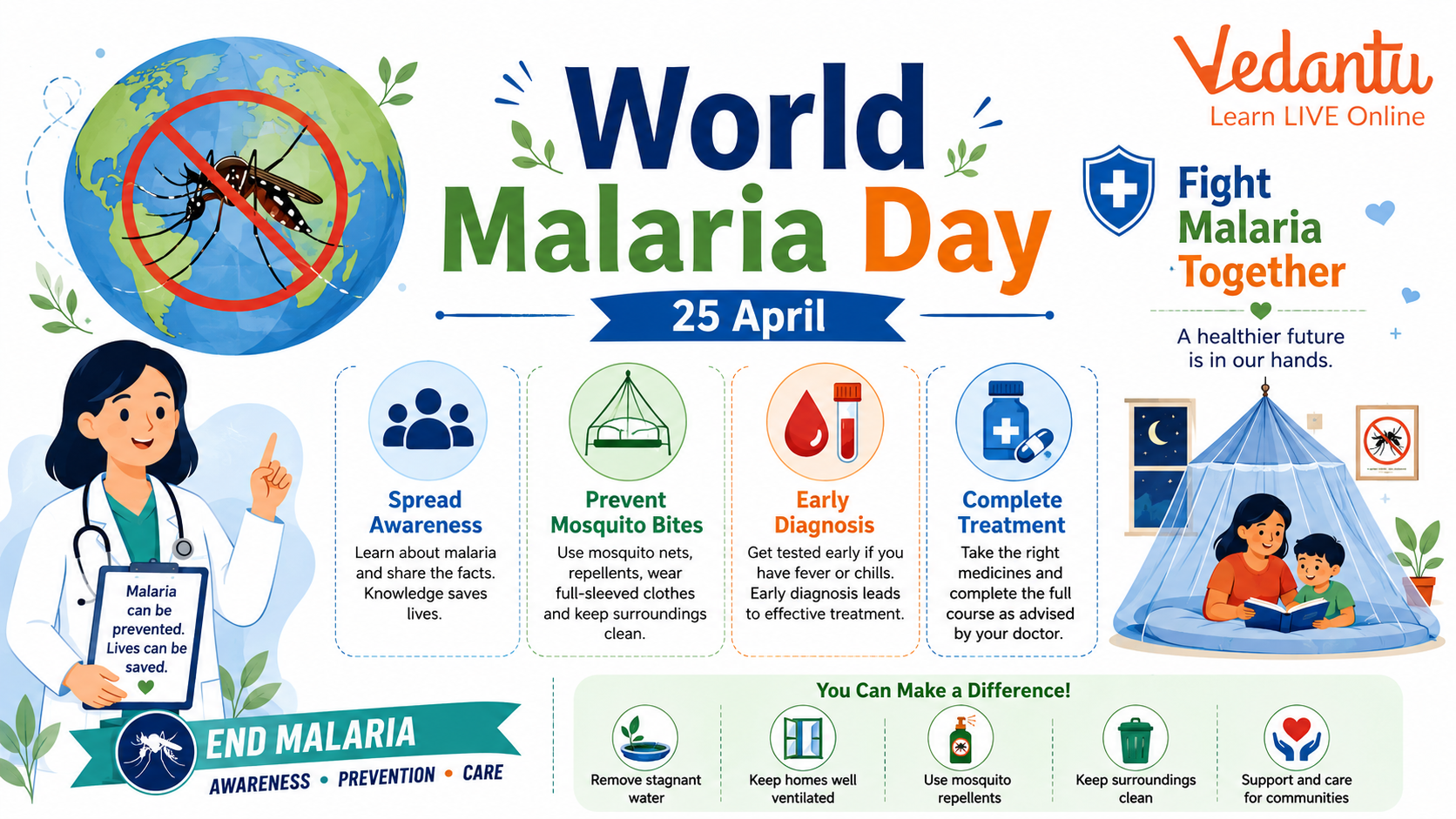
History of World Malaria Day
World Malaria Day was established by the World Health Organization - WHO during the 60th session of the World Health Assembly in May 2007. The first official World Malaria Day was observed on 25 April 2008. The day evolved from Africa Malaria Day, which had been observed since 2001 by African countries following the Abuja Declaration.
Africa Malaria Day was created to promote commitments made by African leaders to reduce malaria-related deaths. As malaria remained a global concern beyond Africa, WHO expanded the observance to a worldwide level, leading to the establishment of World Malaria Day.
Why 25 April?
The date 25 April was chosen to recognize the historic meeting held in Abuja, Nigeria, in 2000. During this meeting, leaders from African countries pledged to reduce malaria mortality and improve prevention strategies. This commitment laid the foundation for coordinated global action against malaria.
Objectives of World Malaria Day
- To increase awareness about malaria prevention and treatment.
- To mobilize resources and political commitment to fight malaria.
- To highlight progress made in malaria control and elimination.
- To encourage research and innovation in vaccines and medicines.
- To promote global partnerships and community participation.
Key Historical Milestones Related to World Malaria Day
| Year | Event | Significance |
|---|---|---|
| 2000 | Abuja Declaration | African leaders committed to reducing malaria deaths |
| 2007 | WHO Declaration | World Malaria Day established by World Health Assembly |
| 2008 | First Observation | First global celebration of World Malaria Day on 25 April |
These milestones reflect the global commitment to fighting malaria and mark important steps in the evolution of coordinated international health campaigns.
Role of the World Health Organization - WHO
The WHO plays a central role in organizing and promoting World Malaria Day. It sets annual themes, publishes global malaria reports, and supports countries in implementing malaria control programs. WHO also works closely with governments, non-governmental organizations, and research institutions to reduce the global burden of malaria.
WHO Global Malaria Strategy
The WHO Global Technical Strategy for Malaria aims to reduce malaria incidence and mortality rates significantly and eliminate malaria in many countries. World Malaria Day serves as a reminder of these long-term goals and encourages nations to strengthen their healthcare systems.
Importance of World Malaria Day in Modern Times
Despite major progress, malaria remains a major public health challenge, especially in tropical and subtropical regions. World Malaria Day provides a platform to:
- Educate communities about preventive measures such as mosquito nets and indoor spraying.
- Promote early diagnosis and effective treatment.
- Encourage funding for vaccine development and new medicines.
- Support countries aiming for malaria elimination.
Common Questions for Exams
When is World Malaria Day observed?
World Malaria Day is observed every year on 25 April.
Who established World Malaria Day?
It was established by the World Health Organization - WHO during the World Health Assembly in 2007.
What was observed before World Malaria Day?
Before World Malaria Day, Africa Malaria Day was observed from 2001, following the Abuja Declaration.
Conclusion
The history of World Malaria Day reflects a strong global commitment to combating one of the world’s oldest and deadliest diseases. From the Abuja Declaration in 2000 to the first global observance in 2008, the journey highlights the importance of international cooperation in public health. Observed every year on 25 April, World Malaria Day reminds nations, communities, and individuals of their shared responsibility to eliminate malaria and build a healthier future.
FAQs on World Malaria Day: Origin, Background and Global Impact
1. What is World Malaria Day and why is it observed?
World Malaria Day is a global health awareness day observed annually to raise awareness about malaria prevention and control.
- Celebrated every year on 25 April
- Established by the World Health Organization (WHO) in 2007
- Aims to promote efforts to eliminate malaria disease worldwide
- Highlights prevention methods like mosquito control, early diagnosis, and treatment
It answers common queries like “Why is World Malaria Day celebrated?” and “What is the importance of World Malaria Day?”
2. When was World Malaria Day first observed?
World Malaria Day was first observed in 2008 after being established by WHO in 2007.
- Replaced the earlier Africa Malaria Day
- Adopted during the 60th World Health Assembly
- Intended to provide global recognition to malaria control efforts
This date is important for students preparing for GK, UPSC, SSC, and competitive exams.
3. What is the history behind World Malaria Day?
The history of World Malaria Day traces back to Africa Malaria Day, which later became a global initiative.
- Africa Malaria Day started in 2001 by African governments
- WHO proposed a global observance in 2007
- First official World Malaria Day held on 25 April 2008
- Focused on strengthening global action against Plasmodium parasite infections
This evolution reflects growing international commitment to malaria eradication.
4. What is the theme of World Malaria Day?
The theme of World Malaria Day changes every year to highlight specific global malaria challenges.
- Announced annually by the World Health Organization
- Focus areas include malaria elimination, prevention strategies, and vaccine development
- Encourages global partnerships and community participation
Themes guide campaigns and awareness drives related to global health and infectious diseases.
5. Why is World Malaria Day important?
World Malaria Day is important because malaria remains a life-threatening disease in many tropical countries.
- Raises awareness about mosquito-borne diseases
- Promotes use of insecticide-treated nets (ITNs) and medicines
- Encourages early testing and treatment
- Supports the goal of Zero Malaria
It helps answer “Why is malaria awareness necessary?” for students and general readers.
6. What causes malaria?
Malaria is caused by the Plasmodium parasite, transmitted through the bite of infected female Anopheles mosquitoes.
- Common species: Plasmodium falciparum, P. vivax
- Spread mainly in tropical and subtropical regions
- Symptoms include fever, chills, and sweating
Understanding its cause is key to malaria prevention and control.
7. Which organization leads World Malaria Day campaigns?
The World Health Organization (WHO) leads and coordinates World Malaria Day campaigns globally.
- Works with governments and NGOs
- Publishes the annual World Malaria Report
- Supports national malaria elimination programs
- Promotes research on malaria vaccines and treatments
WHO plays a central role in global malaria eradication efforts.
8. What are the main objectives of World Malaria Day?
The main objective of World Malaria Day is to accelerate action toward reducing and eventually eliminating malaria.
- Increase awareness about malaria symptoms and prevention
- Promote investment in healthcare infrastructure
- Encourage research and innovation
- Reduce malaria mortality rates globally
These objectives align with global public health goals and sustainable development.
9. How can malaria be prevented?
Malaria can be prevented through mosquito control and early medical intervention.
- Use mosquito nets and repellents
- Indoor residual spraying with insecticides
- Timely diagnosis and antimalarial treatment
- Community awareness and sanitation measures
Prevention strategies are key topics in exams and health awareness campaigns.
10. Which countries are most affected by malaria?
Malaria mostly affects countries in Sub-Saharan Africa and parts of Asia and Latin America.
- Nigeria, Democratic Republic of Congo, and Uganda report high cases
- Children under five are most vulnerable
- Linked to tropical climate and poor healthcare access
These regions are central to global malaria control and elimination programs.
