






How Operation Flood Boosted India’s Dairy Development and Milk Production
The White Revolution in India refers to the rapid increase in milk production that transformed India from a milk-deficient country into the world’s largest milk producer. Launched in the 1970s under the leadership of Dr. Verghese Kurien, the White Revolution was based on the cooperative movement model and aimed at increasing rural income, ensuring fair prices to farmers, and providing affordable milk to consumers. It played a crucial role in strengthening India’s dairy sector and improving the socio-economic condition of millions of rural households.
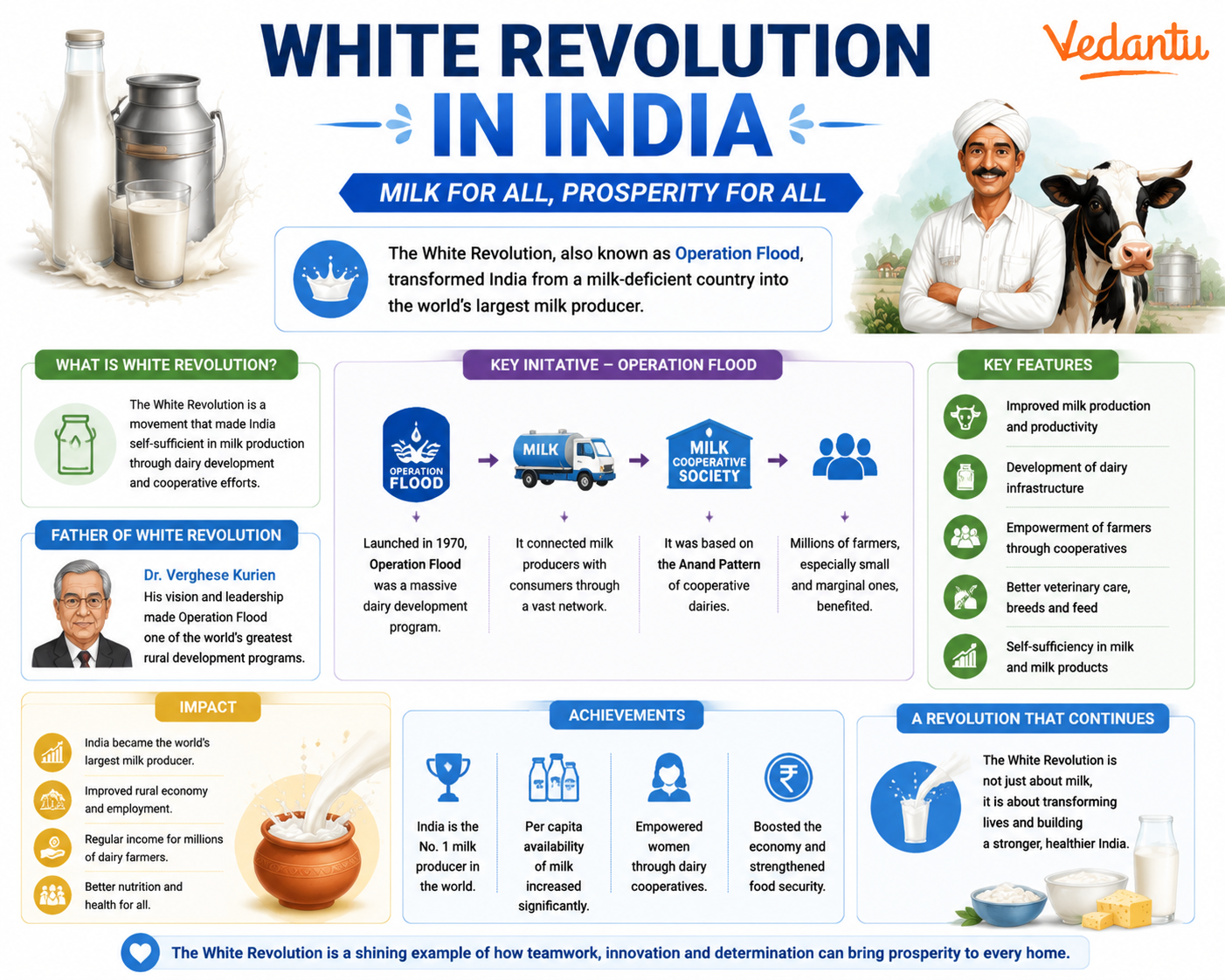
What is the White Revolution?
The White Revolution is a nationwide dairy development program initiated in 1970 under Operation Flood. It focused on creating a national milk grid, connecting milk producers directly to consumers, eliminating middlemen, and promoting dairy cooperatives. The movement was inspired by the success of the Anand Milk Union Limited - AMUL - in Gujarat.
- Launched in 1970
- Led by Dr. Verghese Kurien
- Implemented by National Dairy Development Board - NDDB
- Based on cooperative dairy model
Objectives of the White Revolution
The White Revolution was launched with multiple economic and social objectives to strengthen rural India and boost dairy production.
- Increase milk production in India
- Make India self-sufficient in milk production
- Provide fair prices to dairy farmers
- Eliminate exploitation by middlemen
- Ensure affordable milk supply to urban consumers
- Generate rural employment opportunities
Phases of Operation Flood
Phases of Operation Flood
| Phase | Period | Key Features |
|---|---|---|
| Phase I | 1970 - 1980 | Establishment of milk grid and dairy cooperatives |
| Phase II | 1981 - 1985 | Expansion to more cities and increase in milk sheds |
| Phase III | 1985 - 1996 | Strengthening infrastructure and self-sustaining growth |
These phases helped establish a strong nationwide dairy network, linking rural milk producers to urban markets efficiently and transparently.
Role of Dr. Verghese Kurien
Dr. Verghese Kurien is known as the Father of the White Revolution in India. He played a pivotal role in developing the cooperative dairy model at Anand, Gujarat. His leadership transformed AMUL into a successful brand and later inspired the nationwide Operation Flood program.
- Chairman of NDDB
- Promoted farmer-owned cooperatives
- Ensured direct payment to milk producers
- Expanded AMUL model across India
Impact of the White Revolution
The White Revolution brought significant economic and social transformation in India.
- India became the largest milk producer in the world
- Increase in per capita availability of milk
- Improved income of rural farmers
- Empowerment of women through dairy cooperatives
- Development of rural infrastructure
Comparison: White Revolution vs Green Revolution
White Revolution and Green Revolution Comparison
| Aspect | White Revolution | Green Revolution |
|---|---|---|
| Focus | Milk production | Food grain production |
| Main Period | 1970 onwards | 1960s onwards |
| Key Person | Dr. Verghese Kurien | Dr. M S Swaminathan |
While the Green Revolution focused on increasing agricultural production through high-yield varieties and irrigation, the White Revolution concentrated on dairy development and cooperative marketing systems.
Importance for Competitive Exams
The White Revolution is an important topic in General Knowledge, Social Science, and competitive exams such as UPSC, SSC, State PSC, and other government exams. Questions are often asked about Operation Flood, its phases, Dr. Verghese Kurien, and its impact on India’s economy.
Key Points to Remember
- White Revolution started in 1970
- Operation Flood was the main program
- NDDB implemented the program
- Dr. Verghese Kurien is known as Father of White Revolution
- India is the largest milk producer today
Conclusion
The White Revolution in India was a landmark movement that transformed the country’s dairy sector and strengthened the rural economy. Through cooperative efforts, scientific management, and strong leadership, India achieved self-sufficiency in milk production. The success of Operation Flood remains a model for rural development and cooperative success, making it a vital topic in General Knowledge and competitive exam preparation.
FAQs on India’s White Revolution: Causes, Leaders and Impact on Dairy Growth
1. What is the White Revolution in India?
The White Revolution was a nationwide movement that transformed India into the world’s largest milk producer.
- Launched in 1970 under Operation Flood
- Aimed to increase milk production and make India self-sufficient
- Organized rural dairy farmers into cooperative societies
- Improved rural income and reduced dependence on milk imports
It is also known as the Dairy Revolution of India and is a key topic in GK and competitive exams.
2. Who is known as the Father of White Revolution in India?
Dr. Verghese Kurien is known as the Father of the White Revolution in India.
- Led the success of Operation Flood
- Chairman of the National Dairy Development Board (NDDB)
- Associated with the famous Amul cooperative movement
- Played a major role in making India the largest milk producer
His contribution is frequently asked in exams under Indian agriculture and dairy development.
3. What was Operation Flood?
Operation Flood was the largest dairy development program in the world that launched the White Revolution.
- Started in 1970 by NDDB
- Implemented in three phases (1970–1996)
- Created a national milk grid linking producers and consumers
- Expanded dairy cooperatives across rural India
It significantly boosted milk production, rural employment, and farmer income.
4. What were the main objectives of the White Revolution?
The main objective of the White Revolution was to increase milk production and improve the livelihood of dairy farmers.
- Achieve self-sufficiency in milk production
- Eliminate middlemen through dairy cooperatives
- Provide fair prices to farmers
- Ensure affordable milk for consumers
- Promote rural development and women empowerment
These goals strengthened India’s agricultural economy and food security.
5. What is the role of Amul in the White Revolution?
Amul played a pioneering role in the success of the White Revolution.
- Founded in Anand, Gujarat
- Operated on the cooperative model
- Ensured direct payment to dairy farmers
- Became a model replicated nationwide under Operation Flood
The success of Amul Dairy inspired India’s nationwide dairy cooperative movement.
6. When did the White Revolution start in India?
The White Revolution began in 1970 with the launch of Operation Flood.
- Initiated by the National Dairy Development Board (NDDB)
- Implemented in three phases until 1996
- Expanded milk production across rural India
- Helped India surpass other nations in dairy output
The year 1970 is important for GK and competitive exam preparation.
7. What were the phases of Operation Flood?
Operation Flood was implemented in three phases to systematically expand dairy development.
- Phase I (1970–1980): Established milk grids in major cities
- Phase II (1981–1985): Expanded cooperatives and milk sheds
- Phase III (1985–1996): Strengthened infrastructure and marketing
These phases collectively boosted milk production and rural dairy networks.
8. What were the impacts of the White Revolution?
The White Revolution had a massive economic and social impact on India.
- Made India the largest milk producer in the world
- Increased rural income and employment
- Empowered women through dairy cooperatives
- Improved nutrition and milk availability
- Strengthened India’s agricultural and rural economy
It is often compared with the Green Revolution in terms of impact.
9. Which organization implemented the White Revolution?
The National Dairy Development Board (NDDB) implemented the White Revolution.
- Founded in 1965
- Headquartered in Anand, Gujarat
- Led by Dr. Verghese Kurien
- Managed and supervised Operation Flood
NDDB remains a key institution in India’s dairy development and milk production sector.
10. Why is the White Revolution important for India?
The White Revolution is important because it transformed India into a self-sufficient dairy nation.
- Reduced dependence on milk imports
- Strengthened the cooperative movement
- Boosted rural livelihoods and farmer income
- Contributed significantly to India’s GDP and agricultural growth
It remains a landmark event in modern Indian economic and agricultural history.
