






Why Jet Fuel Is Used in Aeroplanes Instead of Petrol
Fuel plays a crucial role in aviation, as it provides the energy required to power aircraft engines and enable safe and efficient flight. Different types of aeroplanes use different types of fuel depending on their engine design and performance requirements. Understanding what type of fuel is used in an aeroplane is an important General Knowledge topic for students and competitive exam aspirants. It also helps in understanding how modern air transport systems operate across the world.
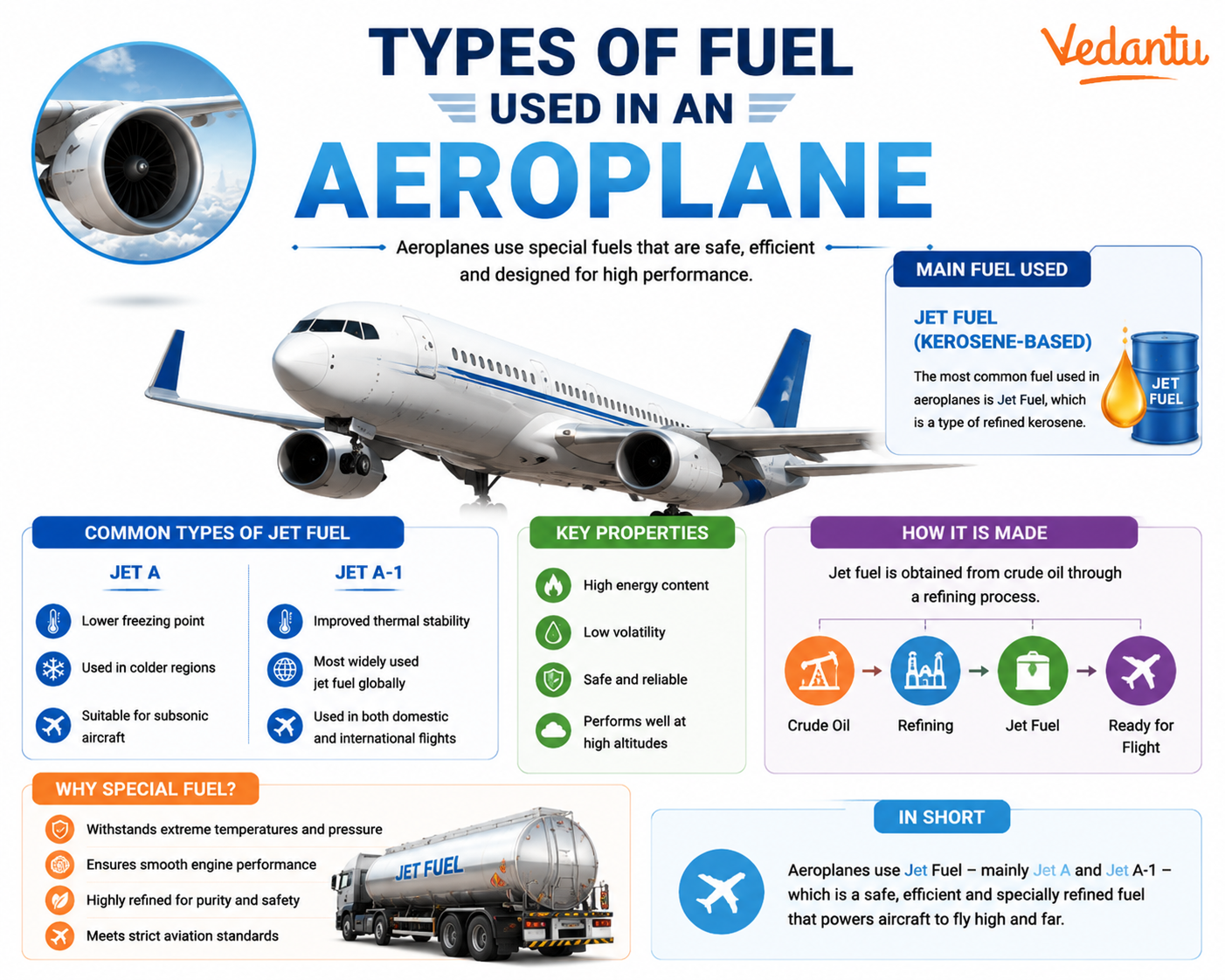
What Type Of Fuel Is Used In An Aeroplane?
Most modern aeroplanes use a special type of aviation fuel known as Aviation Turbine Fuel or Jet Fuel. The exact type of fuel depends on the engine type. Commercial jet aircraft use jet fuel, while smaller propeller-driven aircraft often use aviation gasoline. These fuels are specially refined to meet the high safety and performance standards required for air travel.
Main Types Of Aircraft Fuel
1. Jet Fuel
Jet fuel is used in jet engines, which power most commercial and military aircraft. It is a type of kerosene-based fuel designed to perform efficiently at high altitudes and low temperatures.
- The most common type is Jet A and Jet A-1.
- Jet A-1 is widely used internationally.
- It has a lower freezing point, making it suitable for high altitude flights.
- It is less flammable compared to petrol, increasing safety.
2. Aviation Gasoline - Avgas
Aviation gasoline, commonly known as Avgas, is used in small piston-engine aircraft. It is different from regular petrol used in cars and is specially formulated for aircraft engines.
- Used in light aircraft and training planes.
- Has a high octane rating for better engine performance.
- Ensures smooth combustion at high altitudes.
Why Jet Fuel Is Used In Commercial Aeroplanes
Commercial aeroplanes fly at very high altitudes where temperatures can be extremely low. Jet fuel is specially designed to withstand these conditions without freezing. It also provides high energy output, which is essential for long distance flights.
- High energy efficiency for long haul travel.
- Stable performance in low temperature conditions.
- Safer handling compared to regular petrol.
- Cost effective for large scale aviation operations.
Difference Between Jet Fuel And Aviation Gasoline
| Feature | Jet Fuel | Aviation Gasoline - Avgas |
|---|---|---|
| Used In | Jet engines | Piston engines |
| Fuel Type | Kerosene based | Petrol based |
| Main Users | Commercial and military aircraft | Small and training aircraft |
The table clearly shows that jet fuel and aviation gasoline are designed for different engine types. Using the correct fuel is essential for aircraft safety and performance.
How Aircraft Fuel Is Stored
In most aeroplanes, fuel is stored inside the wings. This design helps maintain balance and stability during flight. Large aircraft may also have additional fuel tanks in the fuselage for long distance travel.
- Fuel tanks are sealed and temperature controlled.
- Fuel is pumped directly to the engines.
- Advanced monitoring systems track fuel usage.
Environmental Considerations
The aviation industry is also working on sustainable aviation fuels to reduce carbon emissions. These fuels are made from renewable sources such as plant oils and waste materials. Although traditional jet fuel is still widely used, research is ongoing to develop cleaner alternatives.
Key Points For Competitive Exams
- Commercial aeroplanes use Aviation Turbine Fuel or Jet Fuel.
- Jet A-1 is the most commonly used jet fuel worldwide.
- Small piston engine aircraft use Aviation Gasoline - Avgas.
- Jet fuel is kerosene based and suitable for high altitude flights.
Conclusion
The type of fuel used in an aeroplane depends on its engine type. Most commercial aircraft use kerosene based jet fuel such as Jet A-1, while smaller aircraft use aviation gasoline. These fuels are specially designed to ensure safety, efficiency, and performance at high altitudes. Understanding aircraft fuel types is important for General Knowledge, competitive exams, and for gaining insight into how modern aviation functions.
FAQs on Type of Fuel Used in an Aeroplane: A Simple Guide for Students
1. What type of fuel is used in an aeroplane?
Aeroplanes mainly use aviation fuel, which is specially refined for aircraft engines.
• Jet aircraft use Aviation Turbine Fuel (ATF) or Jet Fuel (Jet A/Jet A-1)
• Small piston-engine planes use Aviation Gasoline (Avgas)
• These fuels are designed for high altitude, low temperature, and high performance conditions.
This type of aircraft fuel ensures safety, efficiency, and smooth engine operation.
2. What is Aviation Turbine Fuel (ATF)?
Aviation Turbine Fuel (ATF) is a kerosene-based fuel used in jet engines.
• Also known as Jet Fuel
• Common types include Jet A and Jet A-1
• Has a high flash point for safety
• Performs well in extremely cold temperatures at high altitudes
ATF is the most widely used fuel in commercial and military aircraft.
3. What fuel is used in small aircraft?
Small aircraft with piston engines use Aviation Gasoline (Avgas).
• Similar to petrol but specially refined for aircraft
• Common type is Avgas 100LL (Low Lead)
• Provides high octane rating for better engine performance
Avgas is mainly used in training planes and private aircraft.
4. Why don’t aeroplanes use normal petrol or diesel?
Aeroplanes do not use regular petrol or diesel because aircraft engines require specialized aviation fuel.
• Normal fuels may freeze at high altitudes
• They lack the required stability and safety standards
• Aircraft engines need high energy output and controlled combustion
Therefore, aviation gasoline and jet fuel are specially designed for flight safety.
5. What is the difference between jet fuel and aviation gasoline?
Jet fuel and aviation gasoline differ in composition and engine compatibility.
• Jet Fuel (ATF) is kerosene-based and used in turbine engines
• Avgas is petrol-based and used in piston engines
• Jet fuel is less flammable than gasoline
• Both are refined for aviation safety standards
This difference ensures proper engine performance and aircraft efficiency.
6. What type of fuel is used in commercial airplanes?
Commercial airplanes use Aviation Turbine Fuel (Jet A or Jet A-1).
• Suitable for large passenger aircraft like Boeing and Airbus
• Provides high energy efficiency
• Works effectively at high cruising altitudes
Jet fuel powers most international and domestic airline flights.
7. Is aviation fuel different from car fuel?
Yes, aviation fuel is different from car fuel in composition and performance standards.
• Aviation fuel is refined for extreme altitude and temperature conditions
• It has stricter safety and quality controls
• Car fuel is designed for ground vehicles, not aircraft engines
This distinction ensures safe and efficient aircraft operations.
8. Can airplanes run on alternative fuels?
Yes, some airplanes can run on Sustainable Aviation Fuel (SAF) and other alternatives.
• SAF is made from biofuels, waste oils, or renewable sources
• Reduces carbon emissions
• Can be blended with traditional jet fuel
Alternative aviation fuels are being developed to support eco-friendly air travel.
9. Why is jet fuel kerosene-based?
Jet fuel is kerosene-based because kerosene performs well at high altitudes and low temperatures.
• Has a low freezing point
• Provides stable combustion
• Safer due to higher flash point
This makes kerosene ideal for powering turbine aircraft engines.
10. What is the freezing point of aviation fuel?
The freezing point of aviation fuel is very low to prevent fuel solidification at high altitudes.
• Jet A-1 freezes around -47°C
• Jet A freezes around -40°C
• Low freezing point ensures smooth fuel flow during flight
This property is essential for safe operation in cold atmospheric conditions.
