






Key Features and Importance of Traditional Farming Systems
Traditional Agriculture refers to age-old farming practices that have been followed by communities for generations using simple tools, indigenous knowledge, and natural resources. It is mainly practiced in rural and tribal areas where modern technology is limited. This system of agriculture is closely connected to culture, climate, and local biodiversity. Understanding traditional agriculture is important for students and competitive exam aspirants as it explains the roots of modern farming systems and highlights sustainable farming practices that are environmentally friendly.
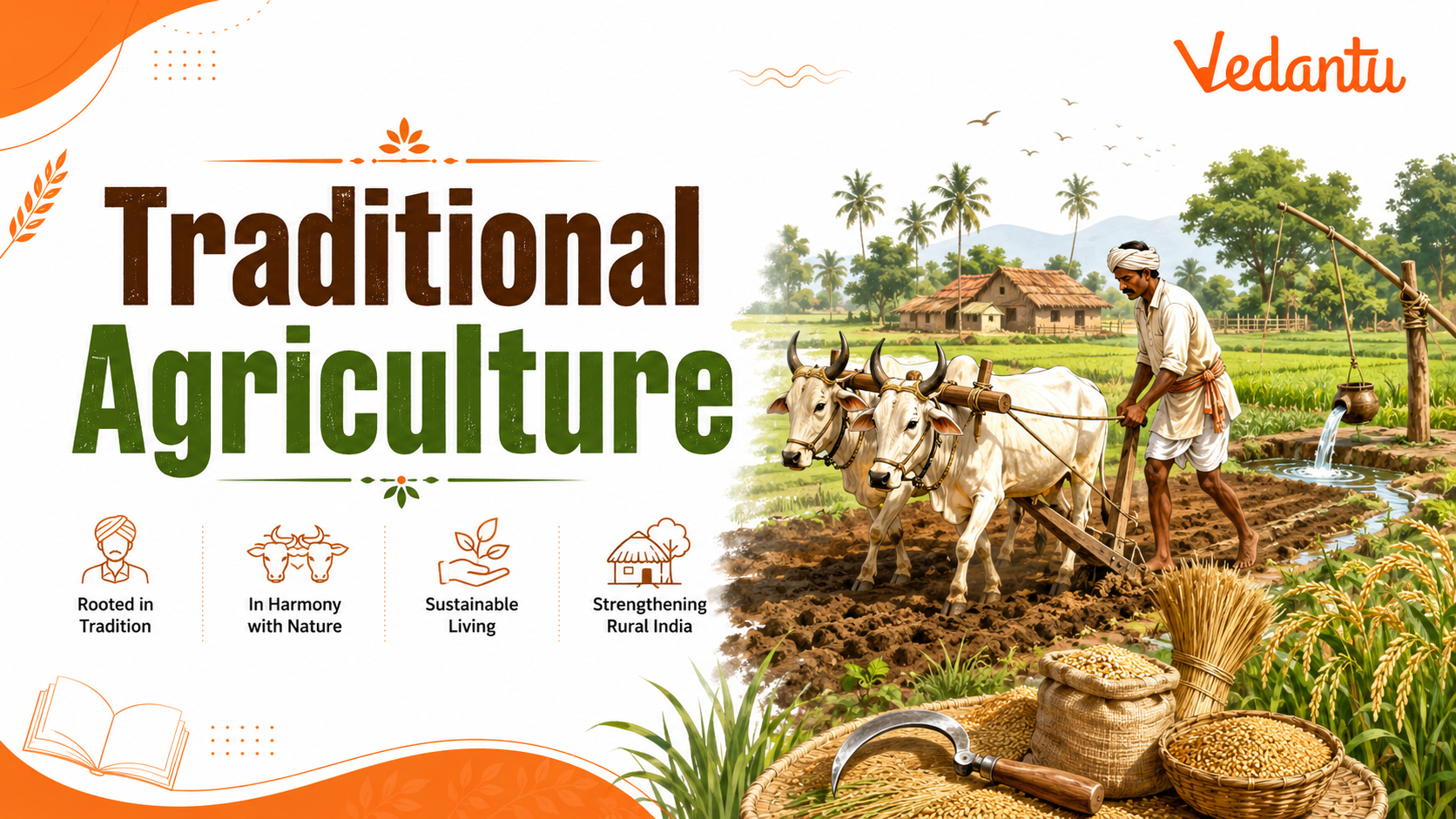
What is Traditional Agriculture?
Traditional agriculture is a farming system that relies on human labor, animal power, natural rainfall, and organic manure. It does not depend heavily on machines, chemical fertilizers, or hybrid seeds. Farmers use indigenous seeds, traditional irrigation methods, and locally available tools. The primary aim is subsistence, which means producing enough food for family consumption rather than large-scale commercial sale.
Key Features of Traditional Agriculture
- Use of simple tools like wooden ploughs and sickles.
- Dependence on monsoon rainfall for irrigation.
- Use of organic manure such as cow dung and compost.
- Mixed cropping and crop rotation practices.
- Low productivity compared to modern farming.
- Focus on subsistence rather than profit.
Types of Traditional Agriculture
1. Subsistence Farming
In this type, farmers grow crops mainly for their own consumption. Surplus production, if any, is sold in local markets. It is common in rural areas with small landholdings.
2. Shifting Cultivation
Also known as slash and burn agriculture, this method involves clearing forest land by cutting and burning vegetation. Crops are grown for a few years until soil fertility decreases, after which farmers shift to another area.
3. Pastoral Farming
This type focuses on rearing livestock such as cattle, sheep, and goats. It is practiced in regions where crop cultivation is difficult due to climatic conditions.
Tools Used in Traditional Agriculture
- Wooden plough pulled by oxen
- Sickle for harvesting
- Hoe for weeding
- Traditional irrigation systems like wells and canals
Difference Between Traditional and Modern Agriculture
| Basis | Traditional Agriculture | Modern Agriculture |
|---|---|---|
| Tools Used | Simple hand tools and animal power | Machines and advanced equipment |
| Fertilizers | Organic manure | Chemical fertilizers |
| Productivity | Low yield | High yield |
The table shows that traditional agriculture focuses on sustainability and natural methods, while modern agriculture emphasizes higher productivity using technology and chemicals.
Advantages of Traditional Agriculture
- Environmentally friendly and sustainable.
- Preserves soil fertility and biodiversity.
- Low cost of cultivation.
- Promotes local crop varieties.
Disadvantages of Traditional Agriculture
- Low productivity and limited surplus.
- Highly dependent on weather conditions.
- Limited use of scientific techniques.
- Income of farmers remains low.
Importance of Traditional Agriculture
Traditional agriculture plays a vital role in food security for rural populations. It helps maintain ecological balance by reducing the use of harmful chemicals. Indigenous knowledge passed down through generations supports sustainable farming practices. In recent years, there has been renewed interest in traditional farming due to its eco-friendly approach and contribution to organic farming movements.
Conclusion
Traditional Agriculture is the foundation of early human civilization and continues to support millions of people worldwide. Although it has lower productivity compared to modern agriculture, it offers sustainable and environmentally safe farming practices. For students preparing for competitive exams, understanding traditional agriculture helps in comparing different agricultural systems and appreciating the importance of sustainable development in farming.
FAQs on Traditional Agriculture and Its Farming Methods Explained
1. What is Traditional Agriculture?
Traditional agriculture is a farming system that uses age-old methods, local knowledge, and simple tools for crop cultivation and livestock rearing. • It relies on human labor and animal power rather than machines • Uses indigenous seeds and natural fertilizers like compost and manure • Practiced mainly in rural and tribal areas • Focuses on subsistence farming (growing food for family consumption) • Also known as primitive farming, subsistence agriculture, or traditional farming methods.
2. What are the main features of Traditional Agriculture?
The main features of traditional agriculture include small-scale farming and low productivity. • Use of simple tools like ploughs, sickles, and hoes • Dependence on monsoon rainfall • Minimal use of chemical fertilizers and pesticides • Cultivation on small landholdings • Emphasis on mixed cropping and crop rotation • Common in developing countries like India, Nepal, and African nations.
3. What are the types of Traditional Agriculture?
Traditional agriculture includes several types based on region and climate conditions. • Shifting cultivation (Slash and Burn) – Clearing forests for temporary farming • Subsistence farming – Growing crops for personal use • Nomadic herding – Raising livestock while moving from place to place • Intensive subsistence farming – High labor input on small land areas • These forms are often seen in Asia, Africa, and South America.
4. What is the importance of Traditional Agriculture?
Traditional agriculture is important because it supports rural livelihoods and preserves ecological balance. • Provides food security to small farmers • Protects biodiversity and indigenous crops • Maintains soil fertility through natural methods • Preserves cultural heritage and traditional knowledge • Plays a key role in sustainable development and eco-friendly farming practices.
5. What are the advantages of Traditional Farming Methods?
Traditional farming methods are environmentally friendly and cost-effective. • Low investment due to limited machinery • Uses organic manure and natural fertilizers • Reduces soil erosion and water pollution • Encourages community participation • Supports sustainable agriculture and climate resilience.
6. What are the disadvantages of Traditional Agriculture?
Traditional agriculture has limitations such as low productivity and dependence on nature. • Low crop yield compared to modern farming • Highly dependent on rainfall and climate • Limited access to advanced technology • Poor market connectivity • Can lead to poverty and food shortages in adverse conditions.
7. How is Traditional Agriculture different from Modern Agriculture?
Traditional agriculture differs from modern agriculture in tools, technology, and productivity levels. • Uses manual labor vs. machines and tractors • Relies on natural fertilizers vs. chemical inputs • Small-scale production vs. commercial large-scale farming • Lower yield vs. high-yield variety (HYV) seeds • Modern farming emerged after the Green Revolution.
8. What crops are commonly grown in Traditional Agriculture?
Traditional agriculture mainly produces staple food crops suited to local climates. • Rice in monsoon regions • Wheat in temperate areas • Millets like jowar and bajra • Pulses and legumes • Maize and root crops • Crop selection depends on soil type, rainfall, and temperature.
9. What is Shifting Cultivation in Traditional Agriculture?
Shifting cultivation is a traditional farming practice where land is cleared and used temporarily before moving to a new area. • Also called Slash and Burn Agriculture • Forest area is cut and burned to enrich soil with ash • Practiced in Northeast India (called Jhum) • Land is left fallow to regain fertility • Common in tropical forest regions.
10. Why is Traditional Agriculture still practiced today?
Traditional agriculture is still practiced due to economic, cultural, and environmental reasons. • Limited access to modern technology and capital • Strong connection to traditional knowledge systems • Suitable for remote and hilly regions • Promotes organic and sustainable farming • Supports livelihoods of millions of small and marginal farmers worldwide.
