






Why These Indian Martial Art Forms Are Important for Students Today
Martial arts in India have a rich and ancient history that dates back thousands of years. These combat traditions were not only developed for self-defense but also for physical fitness, discipline, spiritual growth, and military training. Many Indian martial arts have influenced fighting systems across Asia and are deeply connected with regional culture, folklore, and warrior communities. In this article, we explore the Top 10 Most Famous Martial Arts in India, their origin, key features, and significance for General Knowledge and competitive exams.
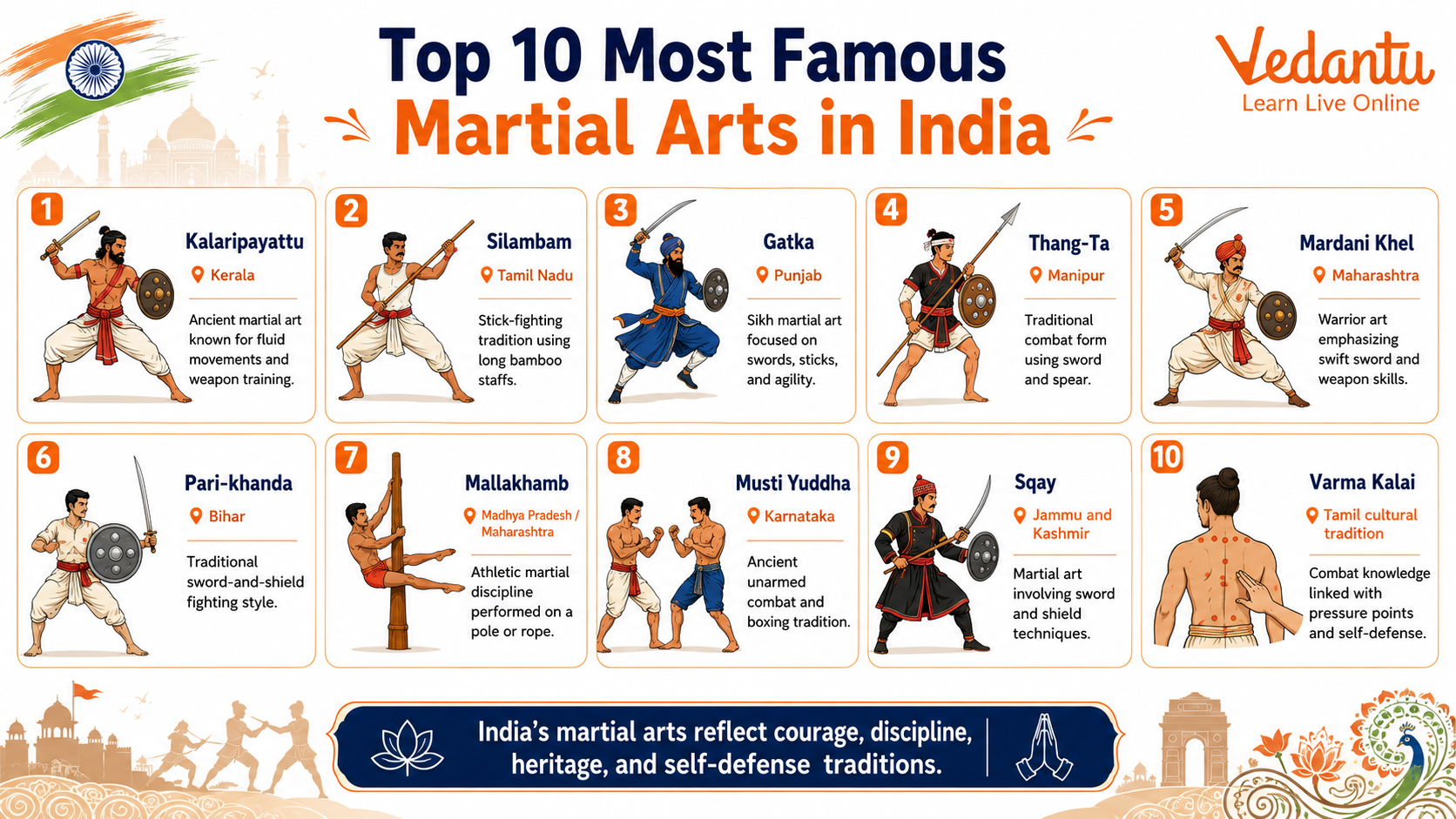
What Are Martial Arts?
Martial arts are structured systems of combat practices used for self-defense, warfare, physical fitness, and mental discipline. In India, martial arts were traditionally practiced by warriors, kings, and local communities to protect their kingdoms and preserve cultural heritage.
Top 10 Most Famous Martial Arts in India
1. Kalaripayattu
Kalaripayattu is considered one of the oldest martial arts in the world. Originating in Kerala around the 3rd century BCE, it includes strikes, kicks, weapon training, and healing techniques. It is often regarded as the mother of many Asian martial arts.
2. Silambam
Silambam originated in Tamil Nadu and focuses mainly on stick fighting. Practitioners use bamboo sticks and other weapons. It is known for its swift footwork and defensive techniques.
3. Gatka
Gatka is a Sikh martial art from Punjab. It emphasizes sword fighting skills and spiritual discipline. It is commonly displayed during Sikh festivals like Vaisakhi.
4. Thang-Ta
Thang-Ta is a traditional martial art from Manipur. The term means sword and spear. It combines armed and unarmed combat techniques and is closely linked with Manipuri culture.
5. Mardani Khel
Mardani Khel is a weapon-based martial art from Maharashtra. It was practiced by Maratha warriors and focuses on swords, sticks, and traditional weapons.
6. Lathi Khela
Lathi Khela is a stick-fighting martial art from West Bengal and parts of North India. It uses long bamboo sticks and was commonly practiced in rural areas for self-defense.
7. Pari-Khanda
Pari-Khanda originated in Bihar. The name refers to shield and sword. It is believed to have influenced some classical Indian dance forms due to its rhythmic movements.
8. Inbuan Wrestling
Inbuan is a traditional wrestling style from Mizoram. It focuses on strength and balance. The main objective is to lift the opponent without stepping out of a defined circle.
9. Sqay
Sqay is a traditional martial art from Jammu and Kashmir. It includes sword fighting techniques and emphasizes speed and agility.
10. Musti Yuddha
Musti Yuddha is an ancient form of Indian boxing. It combines punching techniques with grappling and was mentioned in ancient Indian texts.
Summary of Top 10 Most Famous Martial Arts in India
| Martial Art | State of Origin | Main Feature |
|---|---|---|
| Kalaripayattu | Kerala | Oldest martial art, weapons and healing |
| Silambam | Tamil Nadu | Stick fighting |
| Gatka | Punjab | Sword fighting |
| Thang-Ta | Manipur | Sword and spear combat |
| Mardani Khel | Maharashtra | Traditional weapons |
| Lathi Khela | West Bengal | Bamboo stick fighting |
| Pari-Khanda | Bihar | Sword and shield |
| Inbuan Wrestling | Mizoram | Strength-based wrestling |
| Sqay | Jammu and Kashmir | Sword techniques |
| Musti Yuddha | Ancient India | Traditional boxing |
The table above provides a quick overview of the most famous martial arts in India, their origin, and their main characteristics. This summary is especially helpful for competitive exams and quick revision.
Key Features of Indian Martial Arts
- Strong connection with regional culture and traditions
- Use of traditional weapons like swords, spears, and sticks
- Focus on discipline, respect, and mental strength
- Combination of physical fitness and spiritual development
- Historical use in warfare and self-defense
Importance for General Knowledge and Competitive Exams
Questions related to martial arts in India are frequently asked in SSC, UPSC, State PSC, Railways, and other competitive examinations. Students should remember the state of origin and key features of each martial art. Static GK sections often include questions on traditional sports and cultural heritage.
Conclusion
The Top 10 Most Famous Martial Arts in India reflect the country’s rich cultural and warrior traditions. From the ancient Kalaripayattu of Kerala to the sword-based Gatka of Punjab, each martial art represents unique techniques, discipline, and historical importance. Understanding these martial arts not only enhances general knowledge but also helps in competitive exam preparation and appreciation of India’s diverse heritage.
FAQs on Top 10 Most Famous Martial Arts in India and Their Origins
1. What are the top 10 most famous martial arts in India?
The top 10 most famous martial arts in India are traditional combat systems known for self-defense, discipline, and cultural heritage.
• Kalaripayattu (Kerala)
• Silambam (Tamil Nadu)
• Thang-Ta (Manipur)
• Gatka (Punjab)
• Thoda (Himachal Pradesh)
• Mardani Khel (Maharashtra)
• Pari-Khanda (Bihar & Jharkhand)
• Musti Yuddha (Ancient boxing)
• Lathi Khela (West Bengal)
• Inbuan Wrestling (Mizoram)
These traditional Indian fighting styles are also searched as ancient Indian martial arts and Indian combat sports.
2. Which is the oldest martial art in India?
The oldest martial art in India is Kalaripayattu, believed to have originated over 3,000 years ago in Kerala.
• Known as the mother of all martial arts
• Combines strikes, kicks, weapons, and healing techniques
• Influenced other Asian martial arts like Kung Fu
It is commonly searched under ancient Indian warfare techniques and traditional Kerala martial art.
3. What is Kalaripayattu and why is it important?
Kalaripayattu is a classical Indian martial art that focuses on physical training, weapon combat, and mental discipline.
• Originated in Kerala
• Includes sword, spear, and stick fighting
• Emphasizes flexibility, agility, and Ayurveda-based healing
It is important because it represents India’s martial heritage and ancient self-defense system.
4. What is Silambam in Indian martial arts?
Silambam is a traditional stick-fighting martial art from Tamil Nadu known for speed and agility.
• Uses bamboo sticks as primary weapons
• Practiced for self-defense and sport
• Dates back to the Sangam period
Silambam is also searched as South Indian stick martial art and ancient Tamil combat technique.
5. What is Gatka and who practices it?
Gatka is a Sikh martial art primarily practiced in Punjab and associated with Sikh warriors.
• Demonstrated during Gurpurab and festivals
• Uses swords, sticks, and daggers
• Promotes bravery and spiritual discipline
It is widely known as the Sikh martial art and a traditional form of Indian weapon-based combat.
6. What is Thang-Ta martial art?
Thang-Ta is a Manipuri martial art that combines sword (Thang) and spear (Ta) techniques.
• Originated in Manipur
• Includes ritualistic and combat movements
• Linked with Manipuri culture and dance
It is often searched under North-East Indian martial arts and traditional sword fighting in India.
7. What is the difference between Indian martial arts and other Asian martial arts?
Indian martial arts differ in origin, philosophy, and techniques compared to other Asian systems.
• Rooted in Vedic traditions and ancient warfare
• Strong connection with Ayurveda and yoga
• Emphasis on weapon-based combat like swords and sticks
Unlike Karate or Taekwondo, many Indian fighting styles integrate spirituality and healing practices.
8. Are Indian martial arts used in modern self-defense?
Yes, many Indian martial arts are effective for modern self-defense and physical fitness.
• Techniques improve strength and reflexes
• Teach practical weapon and unarmed combat skills
• Build confidence and mental discipline
Styles like Kalaripayattu and Silambam are increasingly promoted as traditional self-defense systems.
9. Which Indian martial art is popular in competitive exams GK?
Kalaripayattu, Gatka, Silambam, and Thang-Ta are commonly asked in GK and competitive exams.
• Questions focus on origin state
• Founder or historical background
• Associated community or festival
These are frequently searched under Indian martial arts GK questions and state-wise traditional sports of India.
10. Why are traditional martial arts important in Indian culture?
Traditional martial arts are important because they preserve India’s cultural heritage, warrior traditions, and physical discipline.
• Reflect ancient military training systems
• Promote respect, courage, and self-control
• Represent regional identity and folklore
They are also known as traditional Indian combat traditions and form a key part of India’s historical legacy.
