






How the Rural Infrastructure Development Fund Supports Rural Roads, Irrigation and State Projects
The Rural Infrastructure Development Fund (RIDF) is a government initiative in India aimed at financing rural infrastructure projects. Established in 1995-96, RIDF plays a crucial role in strengthening rural connectivity, irrigation, agriculture-related infrastructure, and social sector services. The fund is managed by the National Bank for Agriculture and Rural Development (NABARD) and supports state governments and state-owned corporations in implementing critical rural development projects. It has significantly contributed to improving the quality of life in rural areas by enhancing productivity, connectivity, and basic amenities.
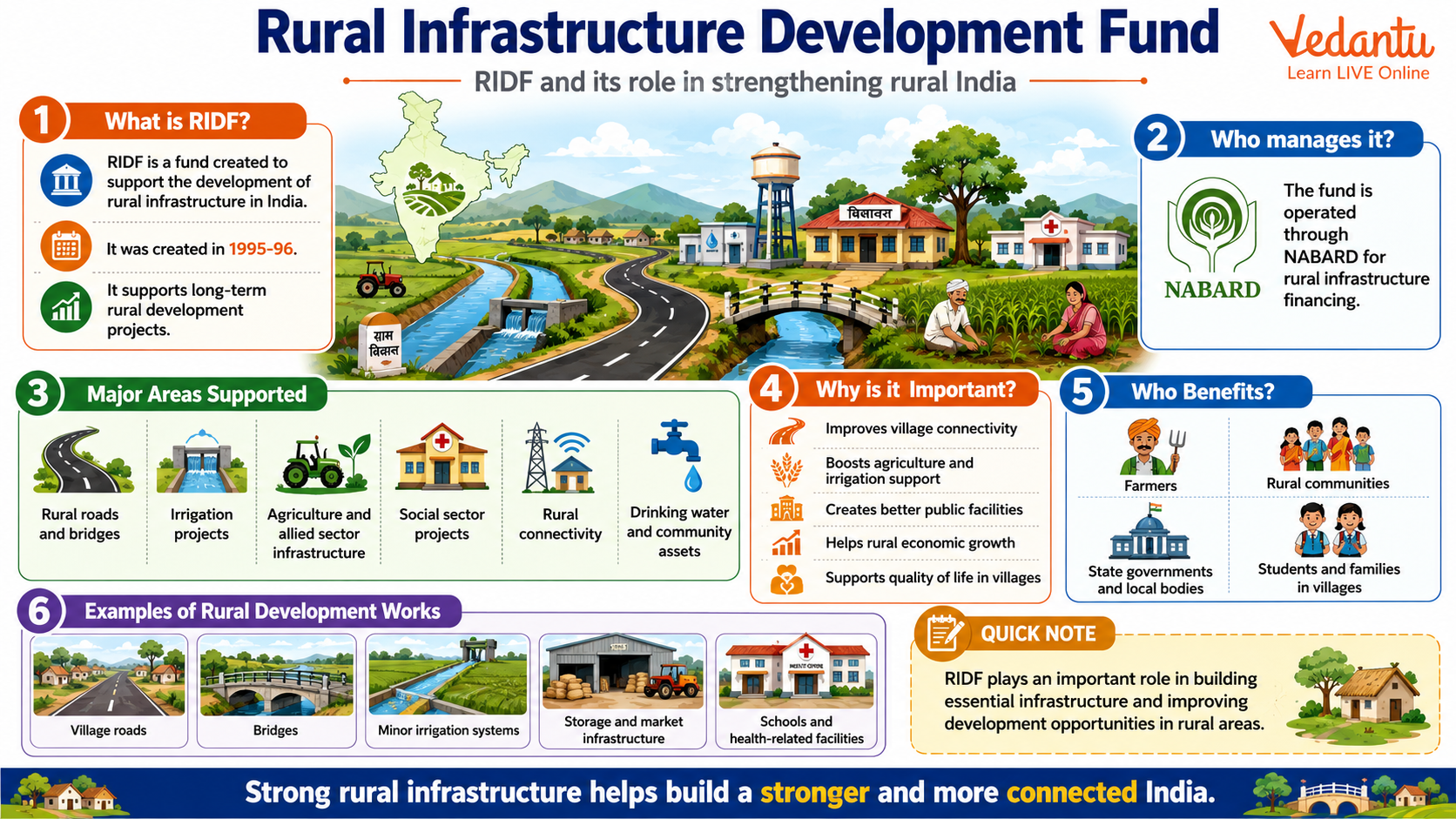
Overview of Rural Infrastructure Development Fund (RIDF)
RIDF was set up by the Government of India to address the gap in rural infrastructure funding. Commercial banks that fail to meet their priority sector lending targets to agriculture are required to deposit the shortfall amount into the RIDF. NABARD then utilizes these funds to provide loans to state governments and eligible institutions for rural infrastructure projects.
- Launched in 1995-96
- Managed by NABARD
- Funded by scheduled commercial banks
- Focus on rural infrastructure development
Objectives of RIDF
The primary objective of the Rural Infrastructure Development Fund is to promote sustainable rural development by financing infrastructure projects that boost agricultural productivity and improve living standards in rural areas.
- Strengthen rural connectivity through roads and bridges
- Expand irrigation facilities and water conservation projects
- Improve rural health and education infrastructure
- Support flood protection and watershed management projects
- Enhance agricultural marketing infrastructure
Eligible Activities Under RIDF
RIDF supports a wide range of rural infrastructure projects. These projects are selected based on their impact on rural development and economic growth.
- Minor and major irrigation projects
- Rural roads and bridges
- Soil conservation and watershed development
- Flood control and drainage systems
- Anganwadi centers and rural schools
- Primary health centers
- Agricultural markets and storage infrastructure
Key Features of RIDF
| Feature | Description | Benefit |
|---|---|---|
| Established | 1995-96 | Addresses rural funding gap |
| Managed By | NABARD | Efficient fund utilization |
| Funding Source | Commercial banks | Ensures priority sector compliance |
The table above highlights the core aspects of RIDF, including its establishment, management, and funding structure. These features ensure a steady flow of financial resources for rural infrastructure development across India.
Importance of RIDF in Rural Development
RIDF has played a transformative role in improving rural infrastructure. By financing critical projects, it has enhanced agricultural productivity, reduced transportation costs, and improved access to essential services such as education and healthcare.
- Boosts rural employment opportunities
- Improves farm-to-market connectivity
- Supports poverty reduction efforts
- Promotes balanced regional development
Funding Mechanism of RIDF
The funding mechanism of RIDF is unique. Commercial banks that do not meet their priority sector lending targets contribute the shortfall amount to RIDF. NABARD then disburses loans to state governments and eligible institutions at concessional interest rates. These loans are typically long-term and linked to specific infrastructure projects.
- Banks deposit shortfall in priority sector lending
- NABARD manages and allocates the funds
- States submit eligible infrastructure proposals
- Funds are released for project implementation
Challenges and Way Forward
Despite its success, RIDF faces certain challenges such as delays in project implementation, land acquisition issues, and coordination gaps between agencies. To enhance its effectiveness, there is a need for improved project monitoring, timely fund utilization, and greater transparency in execution.
Strengthening digital monitoring systems, encouraging community participation, and ensuring better coordination between central and state agencies can further improve the impact of the Rural Infrastructure Development Fund in the coming years.
Conclusion
The Rural Infrastructure Development Fund is a significant financial instrument for promoting rural growth and development in India. By addressing critical infrastructure gaps, it supports agricultural advancement, social development, and economic stability in rural regions. Understanding RIDF is important for students and competitive exam aspirants, as it reflects the government's commitment to inclusive and sustainable rural development.
FAQs on Rural Infrastructure Development Fund in India: Meaning, Objectives and Impact
1. What is the Rural Infrastructure Development Fund (RIDF)?
The Rural Infrastructure Development Fund (RIDF) is a government financing initiative created to support rural infrastructure projects in India.
• Established in 1995-96
• Managed by NABARD (National Bank for Agriculture and Rural Development)
• Provides loans to State Governments and State-owned corporations
• Focuses on rural roads, irrigation, bridges, and social infrastructure
It is commonly asked in competitive exams under topics like rural development schemes, NABARD funds, and agricultural infrastructure financing.
2. Why was the Rural Infrastructure Development Fund created?
The main objective of the RIDF is to address the shortage of funds for rural infrastructure projects.
• To bridge the gap in rural infrastructure financing
• To support incomplete rural development projects
• To improve agricultural productivity and rural connectivity
• To generate employment in rural areas
This fund strengthens rural economic growth, agriculture development, and inclusive development in India.
3. Who manages and finances the RIDF?
The Rural Infrastructure Development Fund is managed by NABARD and financed by scheduled commercial banks.
• Managed by: NABARD
• Funded by: Commercial banks that fail to meet priority sector lending targets
• Loans provided to: State Governments and rural agencies
Banks contribute to RIDF when they fall short of Priority Sector Lending (PSL) requirements set by the Reserve Bank of India (RBI).
4. What types of projects are funded under RIDF?
The RIDF finances a wide range of rural infrastructure projects aimed at improving living standards.
• Rural roads and bridges
• Irrigation projects and watershed development
• Flood protection and drainage systems
• Rural drinking water supply
• Health centers and school buildings
These projects promote rural connectivity, agricultural irrigation, and social infrastructure development.
5. How does RIDF contribute to rural development in India?
The Rural Infrastructure Development Fund boosts rural development by improving infrastructure and employment opportunities.
• Enhances farm productivity through irrigation facilities
• Improves market access via better roads
• Creates rural employment
• Reduces regional imbalances
It plays a key role in strengthening the rural economy, supporting farmers, and promoting sustainable development.
6. When was the RIDF launched and under which institution?
The RIDF was launched in 1995-96 under the supervision of NABARD.
• Announced in the Union Budget of 1995
• Operationalized through NABARD
• Designed as a long-term rural financing mechanism
This initiative strengthened India’s rural infrastructure financing system and improved public investment in villages.
7. What is the role of NABARD in the RIDF?
The NABARD plays a central role in administering and monitoring the RIDF.
• Manages and allocates funds to states
• Monitors project implementation
• Ensures proper utilization of funds
• Evaluates infrastructure impact
NABARD acts as the key institution for rural credit, agricultural finance, and infrastructure development in India.
8. How is RIDF linked to Priority Sector Lending (PSL)?
The RIDF is directly linked to Priority Sector Lending (PSL) norms set by the RBI.
• Banks failing to meet PSL targets must deposit shortfall funds into RIDF
• These funds are then used for rural infrastructure projects
• Ensures mandatory contribution to rural development
This mechanism supports agriculture financing, rural credit flow, and inclusive banking.
9. What are the benefits of the Rural Infrastructure Development Fund?
The RIDF provides multiple economic and social benefits to rural India.
• Accelerates completion of stalled projects
• Strengthens rural transport and irrigation
• Improves education and healthcare facilities
• Promotes balanced regional development
It enhances quality of life in villages and supports sustainable rural growth.
10. Why is RIDF important for competitive exams and General Knowledge?
The Rural Infrastructure Development Fund is important for exams because it is a key government initiative in rural development and banking.
• Frequently asked in UPSC, SSC, Banking, and State PCS exams
• Related to topics like NABARD, RBI, and Priority Sector Lending
• Part of Indian Economy and Government Schemes syllabus
Understanding RIDF helps in mastering concepts of rural economy, agricultural infrastructure, and government funding schemes.
