






Why Is National Handloom Day Celebrated in India?
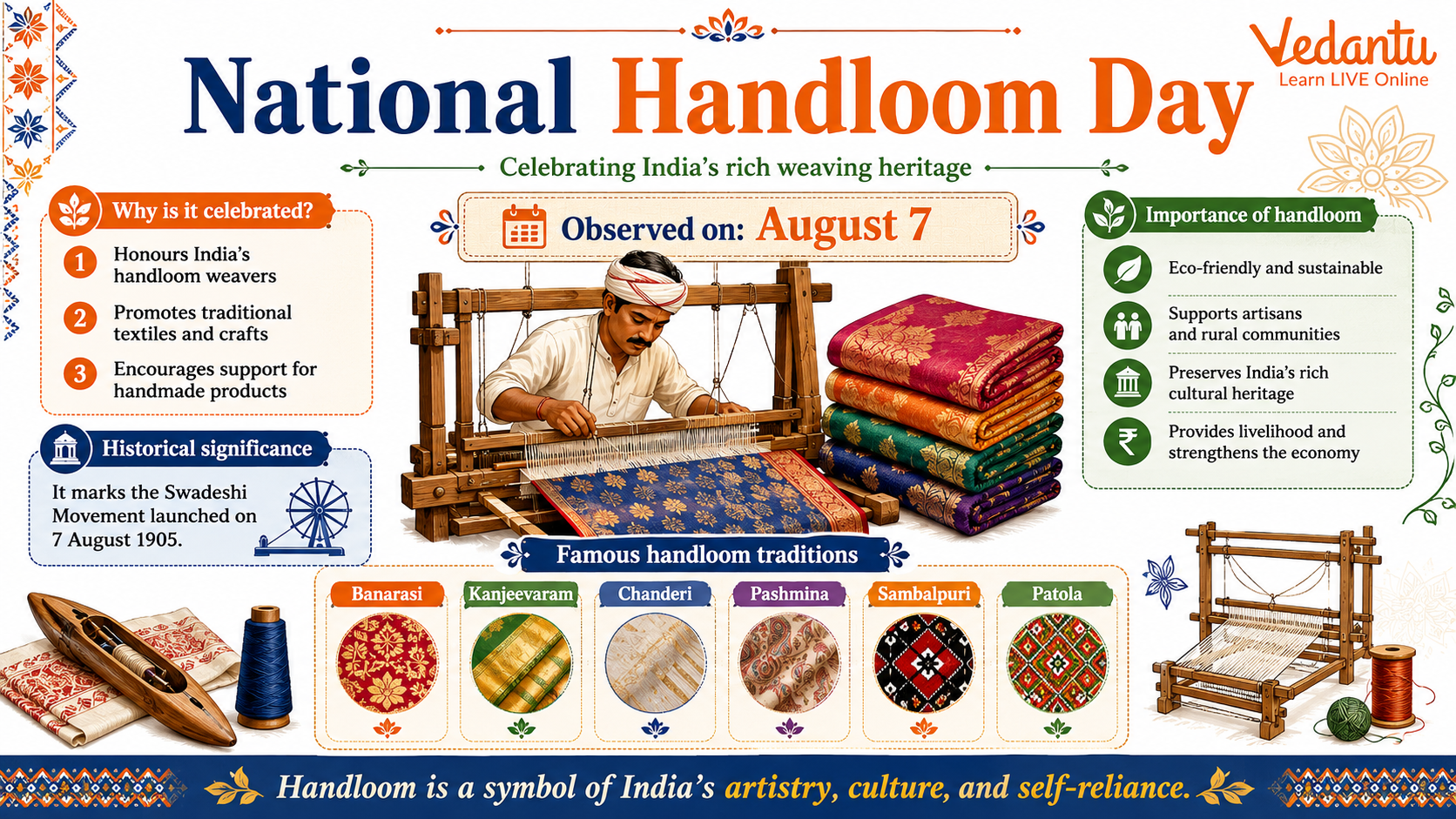
National Handloom Day is observed every year in India on August 7 to honour handloom weavers and celebrate the country’s rich textile heritage. In 2026, National Handloom Day will be observed on August 7, 2026, continuing its role as an important awareness day linked to culture, livelihoods, and the spirit of indigenous industry.
The day matters because handloom weaving is more than a craft tradition. It supports artisan families, preserves regional identities, and reflects India’s long history of handmade textiles. For students and general readers, National Handloom Day 2026 is best understood through its date, history, significance, observance, and the message of respecting the people behind handwoven fabrics.
What is National Handloom Day?
National Handloom Day is observed every year on August 7 in India to celebrate the country’s handloom heritage and honour handloom weavers. The day also marks the spirit of the Swadeshi Movement and highlights the cultural and economic importance of the handloom sector.
It is a national observance connected with awareness, appreciation, and recognition. The focus is not only on fabrics and designs, but also on the skilled labour, traditional knowledge, and local identities that handloom weaving has preserved across generations.
National Handloom Day 2026 Date
| Event | Date | Observed In |
|---|---|---|
| National Handloom Day 2026 | August 7, 2026 | India |
Searches for the national handloom day date usually rise in August, especially among students preparing speeches, posters, and school activities. The observance stays fixed on August 7 each year because of its historical connection to the Swadeshi Movement.
History and Origin of National Handloom Day
The documented history of National Handloom Day begins in 2015, when the observance was launched in India. Its date was chosen to remember the Swadeshi Movement of August 7, 1905, a major moment in India’s freedom struggle that encouraged the use of indigenous goods, including locally made textiles.
This historical link gives the observance both cultural and civic meaning. The handloom sector became associated not only with craftsmanship, but also with self-reliance and support for Indian industry. That connection continues to shape why National Handloom Day is celebrated today.
Simple timeline
| Year | Importance |
|---|---|
| 1905 | Swadeshi Movement began on August 7, encouraging indigenous industries and textiles. |
| 2015 | National Handloom Day was launched in India. |
| 2026 | The observance continues to raise awareness about handloom heritage and weaver livelihoods. |
National Handloom Day Theme 2026
National Handloom Day theme 2026: Awaited / To be updated when announced.
If an official National Handloom Day 2026 theme is announced, it should be added prominently and used only in its verified form. Until then, readers should avoid using unconfirmed theme lines in speeches, posters, or school projects.
Why National Handloom Day Is Celebrated
National Handloom Day is celebrated to recognise the contribution of handloom weavers and to spread awareness about the value of India’s traditional weaving practices. It also reminds people that handloom is connected to cultural continuity, artisan dignity, and the wider history of Indian self-reliance.
The significance of the day can be understood at three levels. Culturally, handloom preserves regional styles and textile traditions. Economically, it supports livelihoods. Socially, it draws attention to the communities and skilled workers who keep these traditions alive.
Key reasons this observance is important include:
- It honours handloom weavers and artisans.
- It celebrates India’s handloom heritage and textile diversity.
- It recalls the Swadeshi Movement and support for indigenous production.
- It raises awareness about rural livelihoods linked to weaving.
- It encourages respect for handmade products and traditional knowledge.
Role of Handloom in India
The handloom sector in India represents a living tradition rather than a museum subject. Different regions are known for distinct weaving identities, and these traditions are often passed from one generation to the next. This makes handloom an important part of both heritage education and everyday economic life.
Educationally, the topic also helps students understand how culture, history, craft, and livelihood can be connected. It shows that traditional industries continue to matter in modern India.
The handloom sector is often valued for the following reasons:
- It preserves regional textile traditions and artistic identity.
- It supports artisan communities and household-based work.
- It contributes to rural livelihoods.
- It reflects skill, patience, and manual craftsmanship.
- It keeps traditional weaving knowledge visible in public life.
How National Handloom Day Is Observed
National Handloom Day is generally marked through awareness and appreciation activities rather than fixed rituals. Observance may vary by institution, region, or organiser, but common forms include exhibitions, artisan recognition, public campaigns, and handloom-themed events.
Schools, colleges, cultural groups, and community organisations often use the day to discuss textile heritage and the importance of supporting traditional crafts. Readers interested in more awareness content can also explore the broader Vedantu blog and related observance reads such as Independence Day celebration, World Indigenous Day, and empowering women as nation-building.
Common ways to celebrate handloom day in India include:
- Organising handloom exhibitions or textile displays.
- Recognising the contribution of artisans and weavers.
- Holding school talks, assemblies, or short speeches on handloom heritage.
- Creating awareness posters and banners.
- Running social media awareness messages about handmade textiles.
- Choosing handloom products to show appreciation for the craft tradition.
Student Activities for National Handloom Day 2026
This observance works especially well in schools because it combines history, art, economics, and civic awareness. Activities should stay simple, educational, and respectful toward artisan communities.
Useful school and student activities include:
- Prepare a short speech on why National Handloom Day is celebrated.
- Make a classroom timeline linking 1905, 2015, and 2026.
- Design a handloom awareness poster using fabric motifs and weaving patterns.
- Hold a discussion on how handmade traditions support livelihoods.
- Create an art board showing regional textile diversity in India.
- Write a paragraph on the Swadeshi Movement and handloom.
- Visit a local exhibition or virtual craft showcase if available through school or community events.
National Handloom Day Poster Ideas
A national handloom day poster should focus on appreciation, awareness, and heritage. Since the official National Handloom Day 2026 theme is still awaited, poster content should stay general and fact-based.
You can include these elements in a poster:
- Date: August 7
- Main message: Honour handloom weavers and celebrate India’s textile heritage
- Historical note: Linked to the Swadeshi Movement of August 7, 1905
- Visual ideas: Loom patterns, thread spools, woven textures, artisan hands, or textile borders
- Colour direction: Warm earthy and textile-inspired colours for a traditional look
Short Slogan Ideas for Awareness Use
For school use, slogans should be simple, respectful, and focused on awareness. They should not claim an official theme unless one is formally announced.
Sample awareness lines:
- Celebrate India’s handloom heritage.
- Honour the hands that weave tradition.
- Support handloom, respect craftsmanship.
- Handloom reflects culture, skill, and identity.
- Remember the weavers behind every woven story.
Educational Value for Students
National Handloom Day helps students connect textbook learning with real cultural life. It brings together Indian history, the Swadeshi Movement, art traditions, and discussions about livelihoods. That makes it a useful topic for general knowledge, social science, art projects, and school assemblies.
It also teaches a wider lesson: preserving heritage is not only about remembering the past, but also about valuing the people and skills that continue into the present. In that sense, National Handloom Day 2026 remains both a cultural reminder and a public awareness opportunity.
Conclusion: National Handloom Day is a meaningful observance that honours India’s weavers, celebrates textile heritage, and recalls the historical spirit of the Swadeshi Movement. Observed on August 7, it encourages awareness about craftsmanship, culture, and livelihoods linked to handloom traditions. For students and families, the day offers a simple but important message: appreciate handmade work, respect artisan knowledge, and recognise the lasting place of handloom in India’s cultural identity.
FAQs on National Handloom Day 2026: Why India Celebrates on August 7
1. When is National Handloom Day 2026 celebrated?
National Handloom Day 2026 will be celebrated in India on Friday, August 7, 2026. The observance has a fixed annual date and honours handloom weavers, traditional craftsmanship, and India’s diverse textile heritage.
2. What is National Handloom Day?
National Handloom Day is an annual Indian observance dedicated to the country’s handloom weavers and weaving traditions. Celebrated on August 7, it raises awareness about artisan livelihoods, indigenous textiles, regional craftsmanship, and the cultural and economic importance of India’s handloom sector.
3. Why is National Handloom Day celebrated on August 7?
National Handloom Day is celebrated on August 7 to commemorate the launch of the Swadeshi Movement on August 7, 1905. The movement encouraged people to support indigenous goods and industries, including locally woven textiles. The date therefore represents self-reliance, Indian craftsmanship, and support for domestic production.
4. When was National Handloom Day first celebrated?
National Handloom Day was first celebrated on August 7, 2015. The first observance was inaugurated in Chennai to recognise India’s handloom communities and highlight the contribution of weavers to the country’s culture, economy, and textile heritage.
5. What is the National Handloom Day 2026 theme?
The official theme for National Handloom Day 2026 is awaited and should be updated only after a verified announcement. Until then, students should avoid presenting unofficial slogans as the formal theme. Posters and speeches can instead focus on honouring weavers, preserving textile heritage, and supporting handloom products.
6. What is the significance of National Handloom Day?
National Handloom Day recognises the cultural, social, and economic importance of India’s handloom sector.
- It honours handloom weavers and artisans.
- It preserves regional weaving styles and traditional knowledge.
- It highlights livelihoods connected with rural and household-based weaving.
- It recalls the values of the Swadeshi Movement and indigenous production.
- It encourages appreciation for handmade Indian textiles.
7. How is National Handloom Day celebrated in India?
National Handloom Day is celebrated through educational, cultural, and awareness activities across India.
- Handloom exhibitions and textile displays are organised.
- Weavers and artisans are recognised for their contributions.
- Schools conduct speeches, assemblies, quizzes, and poster-making activities.
- Public campaigns promote handwoven fabrics and traditional crafts.
- People show support by learning about or choosing authentic handloom products.
8. What is the connection between National Handloom Day and the Swadeshi Movement?
National Handloom Day commemorates the Swadeshi Movement, which began on August 7, 1905. The movement promoted the use of Indian-made goods and encouraged support for indigenous industries. Handloom became an important symbol of self-reliance, national identity, and resistance to dependence on imported textiles.
9. What activities can students do on National Handloom Day 2026?
Students can observe National Handloom Day 2026 through simple activities that connect history, art, culture, and livelihoods.
- Deliver a short speech on why National Handloom Day is celebrated.
- Create a timeline featuring 1905, 2015, and 2026.
- Design a poster using loom, thread, fabric, or weaving motifs.
- Research regional handloom traditions of India.
- Discuss how handmade textiles support artisan livelihoods.
- Write a paragraph about handloom and the Swadeshi Movement.
10. What can be written on a National Handloom Day poster?
A National Handloom Day poster should include the date, a factual message, and visuals representing India’s weaving heritage.
- Date: August 7, 2026
- Message: Honour the hands that weave India’s heritage.
- Historical fact: The date commemorates the Swadeshi Movement of August 7, 1905.
- Visuals: Looms, threads, woven patterns, artisan hands, and regional textiles.
- Call to action: Appreciate handloom and respect traditional craftsmanship.
11. What are some short slogans for National Handloom Day?
National Handloom Day slogans should be short, respectful, and centred on weavers and textile heritage.
- Honour the hands that weave tradition.
- Celebrate India’s handloom heritage.
- Support handloom, respect craftsmanship.
- Every weave tells India’s story.
- Value the weaver behind every fabric.
12. Why is the handloom sector important in India?
India’s handloom sector is important because it preserves traditional skills while supporting artisan communities and local livelihoods. It protects regional textile identities, transfers weaving knowledge across generations, and demonstrates the artistic value of handmade production. Handloom also connects India’s history, cultural diversity, craftsmanship, and indigenous industry.
