






How a Smartphone Company Earns Profit and Builds a Strong Brand
The smartphone industry in India is about $7 billion. The Indian government's recent actions have not only aided in the manufacture of smartphones in India, but they have also increased customer interest and reduced our reliance on other countries to meet our needs. A smartphone can now be found in practically every second-hand vehicle in the country. The Indian government's recent actions have not only aided in the manufacture of smartphones in India, but they have also increased customer interest and reduced our reliance on other countries to meet our needs. Can we, however, outperform or even surpass China in this area? Let's talk about it.
In the case of smartphones, a phone manufacturing company is nothing more than an assembling company. It's possible that neither Apple nor Samsung make their products entirely out of their own materials. Instead, the phone is made by combining a screen from one manufacturer with a battery from another and a camera from yet another. In this way, we can see that in order for India to overcome China, it must not only open its doors to major smartphone businesses but also to enterprises that produce individual parts.
Sony manufactures more than 89 percent of cameras in India, whereas LG or Samsung make screens. India needs to entice these businesses by making it easy for them to invest and by eliminating FDI restrictions.
How did China take over India's smartphone market before the Make in India project?
Previously, India was led by businesses such as Micromax, which defeated Samsung India to take the top spot. Between 2013 and 2015, this was the case.
Xiaomi, Oppo, and Vivo were all in their infancy at the time. To increase their sales, Chinese enterprises used the economies of scale approach. They produced millions of smartphones, lowering their production costs and providing good phones at a lesser cost. Xiaomi is a major player in the Indian smartphone market.
Indian businesses lacked innovation and quality, and they were primarily concerned with maximizing profit margins in a short period of time. This is why they were defeated by Chinese competitors at the time.
Even before the Indian government launched ‘Make in India’, Chinese enterprises began manufacturing in India because of the cheaper and more readily accessible labor.
Processors and silicon chips are not produced in India. This technology is lacking in India, and obtaining indigenous items in this sector will be tough for the next five years.
List of major Indian mobile manufacturers
(image will be uploaded soon)
India is the world's second most populated country and one of the fastest-growing smartphone markets. In India, Samsung smartphones and Chinese mobile phone companies have dominated the smartphone market, however, since the introduction of ‘Make in India’, below is a list of the finest Indian mobile phone firms and brands. So, the list of major Indian mobile manufacturers is as follows :
Micromax Informatics
Micromax Informatics, India's largest phone manufacturer, has expanded its product line to include LED televisions and tablets as well. Its headquarters are in Gurgaon, Haryana, and it is India's largest mobile phone maker. Rahul Sharma founded it in the year 2000.
YU Televentures
Micromax, India's largest consumer electronics manufacturer, also operates YU Televentures, a joint venture between Cyanogen Inc. and Micromax. The YU Yureka was YU Televentures' first smartphone, and it was a competitor to the Chinese Xiaomi Redmi Note 4.
Karbonn Mobile
Karbonn Mobiles is a company that makes smartphones, tablets, and phone accessories. Karbonn Mobiles is a significant Indian mobile phone firm with operations in Nepal, Sri Lanka, and the Middle East. Sudhir Hasija and Pardeep Jain founded the company in 2009. The organization's headquarters are in New Delhi. Mobile phones, tablets, feature phones, and Tablets are all manufactured by the company. It has a revenue of INR 650 crores and employs more than 10,000 people.
Lava International
Lava International is a multinational Indian mobile phone manufacturer with operations in India, Nepal, Bangladesh, Sri Lanka, and the Middle East. Lava also owns the Xolo brand, which has an Intel chipset and has produced Windows Phone and Android Lollipop smartphones. It is India's third-largest mobile phone provider, with headquarters in Noida. Hari Om Rai and others created it in 2009, and it manufactures smartphones, tablets, and laptops. The company has a revenue of 542 crores.
Xolo
The Xolo Indian mobile brand was the first to introduce a smartphone with an Intel processor, the first Indian mobile maker to collaborate with AMD, and one of the first to introduce 4G-enabled smartphones and dual camera phones in India.
Intex Technologies
Intex Technologies, founded by Narendra Bansal in 1996, is India's second-largest mobile phone firm. Its headquarters are in New Delhi, and it sells a wide range of products, including Smartphones, LED TVs, Speakers, Tablets, Feature Phones, Air Conditioners, UPS, and Coolers. The firm has revenue of INR 6200 crores and employs 10,000 people or more. Intex Technologies is India's second-largest Mobile Phone and LED Television manufacturer.
I-Ball Mobile
Anil Parasrampuria founded the iBall Mobile firm in 2001. Mumbai, Maharashtra, is the company's headquarters. The company imports everything from computer parts to telephones, tablets, routers, and loudspeakers. They have a workforce of over 2000 workers and a revenue of Rs. 2000 crores. Best IT World India's consumer electronics company, iBall, primarily imports computer peripherals but is also getting into the laptop and smartphone sector with Intel and Microsoft's help.
LYF
Reliance Jio Lyf Mobiles is a subsidiary of JIO, India's leading telecom firm. It manufactures 4G Volte Smartphones (Jio Phones), as well as other Android phones and WIFI dongles. Mr. Mukesh Ambani launched the company in 2015, and it is headquartered in Mumbai, Maharashtra. Jio is India's third-fastest growing mobile network operator, while LYF is the country's second-largest LTE phone supplier and one of the top five smartphone brands.
Spice Telecom
Spice Mobiles is a subsidiary of Spice Digital Ltd, which was created in 2000 by Mr. Bhupendra Kumar Modi. Value-Added Services, Spice Telecom, and Spice Mobiles are the three businesses that makeup Spice Digital. Spice Stellar is the brand name of numerous phones released by the firm. The company is headquartered in Noida and employs more than 500 people. Spice Telecom, a mobile phone service provider in India, launched Spice mobiles, and Idea Cellular acquired Spice Telecom.
Celkon
Celkon, based in Hyderabad with manufacturing units in Andhra Pradesh and Telangana, was among the popular smartphone handsets companies in India with Microsoft and Android OS. Several good brands and mobile phone companies in India include Jivi Mobiles, Loop Mobile, Zync Global, CREO, Onida Electronics, Videocon Mobiles, YU Televentures, Reliance Jio, and Reliance LYF.
How to boost the manufacturing of smartphones in India?
India has begun producing batteries. Samsung has a huge factory in Noida that can manufacture PCBs and other critical components. Samsung stated in June 2020 that it would build a display panel factory in Uttar Pradesh for a total expenditure of 5000 crores.
TATA has also decided to invest in a Chennai-based electronics manufacturing facility. Many other businesses are investing as part of a production-linked incentive program. Companies cannot create money under this approach until the manufacturer begins production. Many corporations would be forced to start their manufacturing processes in India right away as a result of this.
India is now the world's second-largest smartphone manufacturer. India now controls about 40% of the market. Now that China has lost some market share due to the Corona outbreak, India can capitalize on this trend and recruit more manufacturing units to the country.
Thus, based on the rate at which the Indian market is advancing toward profitability, India will be well ahead of China in smartphone manufacture in the next ten years.
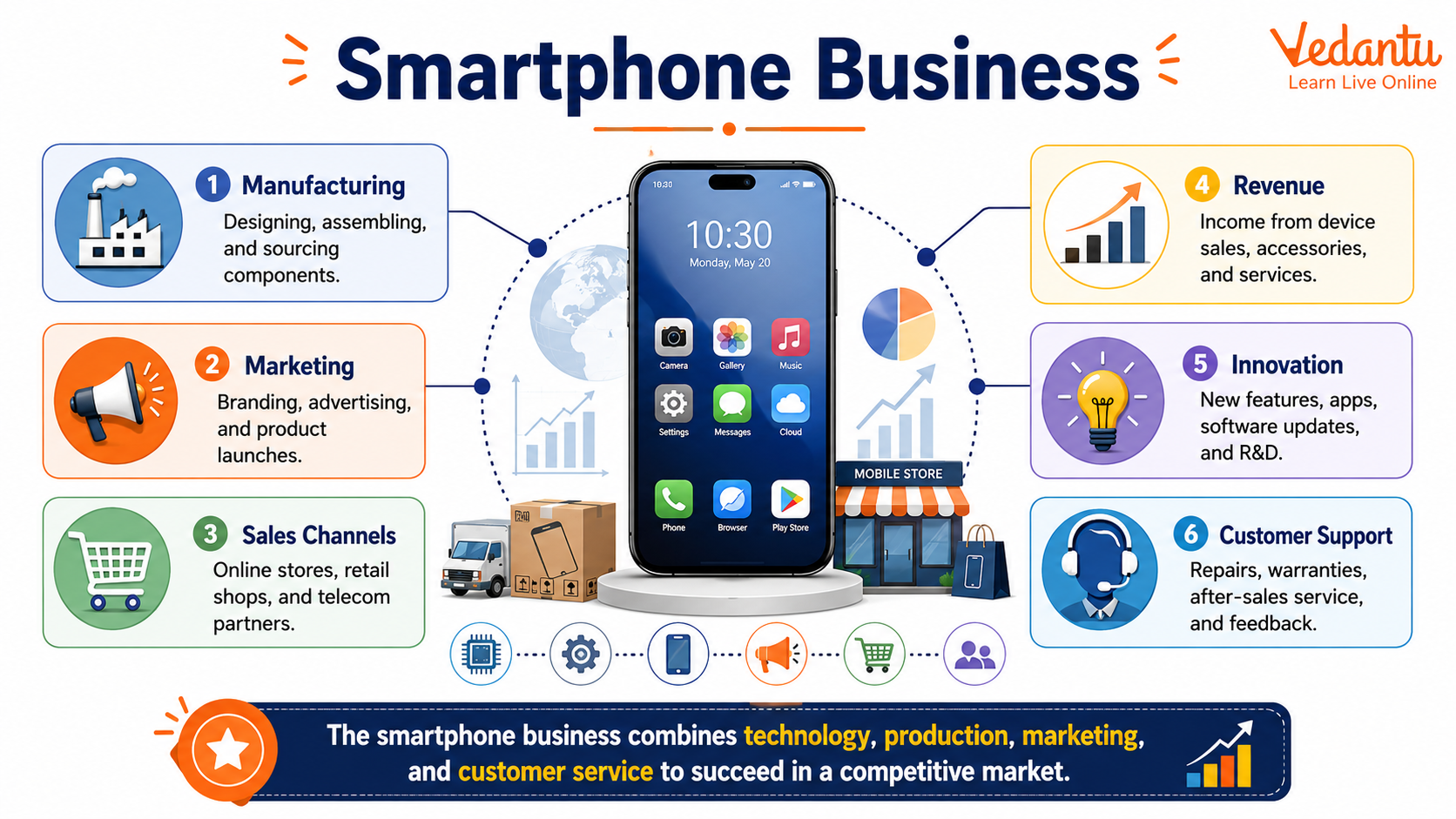
The Smartphone Business is one of the fastest growing and most competitive industries in the world. Smartphones have become an essential part of daily life, influencing communication, education, entertainment, banking, healthcare, and commerce. The smartphone industry involves designing, manufacturing, marketing, selling, and servicing mobile devices. It is a major contributor to the global economy and drives innovation in technology, software, and digital services. Understanding the smartphone business helps students and competitive exam aspirants grasp concepts related to economics, technology, globalization, and entrepreneurship.
Overview of the Smartphone Business
The smartphone business refers to the entire ecosystem involved in producing and selling smartphones. This includes hardware manufacturing, software development, operating systems, application ecosystems, supply chain management, branding, and after-sales services. The industry operates at a global level, with companies sourcing components from multiple countries and selling products worldwide.
Major players in the smartphone business include multinational technology companies that invest heavily in research and development to stay competitive. The market is driven by innovation, pricing strategies, consumer demand, and technological advancements such as 5G, artificial intelligence, and foldable displays.
Key Components of the Smartphone Business
1. Manufacturing and Supply Chain
Smartphone manufacturing involves assembling components such as processors, batteries, screens, cameras, and memory chips. Many companies outsource production to specialized manufacturers. The supply chain is global and highly interconnected.
- Chipsets from semiconductor companies
- Display panels from screen manufacturers
- Camera modules from optical technology firms
- Assembly units located in countries with lower production costs
2. Operating Systems and Software
Operating systems power smartphones and determine user experience. The two dominant operating systems globally are Android and iOS. Software ecosystems include mobile applications, cloud services, and security updates.
3. Marketing and Branding
Brand value plays a crucial role in the smartphone business. Companies invest in advertising, influencer marketing, sponsorships, and online promotions to build brand recognition and customer loyalty.
4. Sales and Distribution
Smartphones are sold through multiple channels such as online platforms, retail stores, telecom operators, and direct company websites. E-commerce has significantly increased smartphone accessibility worldwide.
Major Smartphone Companies
| Company | Country of Origin | Key Operating System |
|---|---|---|
| Apple | United States | iOS |
| Samsung | South Korea | Android |
| Xiaomi | China | Android |
Apart from these companies, other important brands include Oppo, Vivo, OnePlus, Google, and Motorola. Market share changes frequently due to competition, pricing strategies, and innovation.
Revenue Model in the Smartphone Business
Smartphone companies generate revenue through multiple streams. Selling devices is the primary source, but additional income comes from digital services and accessories.
- Direct sale of smartphones
- App store commissions
- Subscription services such as cloud storage and streaming
- Sale of accessories like earbuds, smartwatches, and chargers
- Advertising and digital ecosystem services
Factors Influencing the Smartphone Market
The smartphone business is influenced by technological, economic, and social factors. Companies must adapt quickly to maintain market position.
- Technological innovation such as 5G and artificial intelligence
- Consumer purchasing power
- Government regulations and trade policies
- Competition and pricing strategies
- Brand loyalty and customer satisfaction
Advantages of the Smartphone Business
- High global demand and wide consumer base
- Continuous innovation opportunities
- Integration with digital services and ecosystems
- Strong revenue potential from hardware and services
Challenges in the Smartphone Business
- Intense market competition
- Rapid technological changes
- Supply chain disruptions
- Short product life cycles
- Environmental concerns related to electronic waste
Future Trends in the Smartphone Business
The future of the smartphone business is shaped by innovation and digital transformation. Companies are focusing on improving performance, sustainability, and integration with emerging technologies.
- Expansion of 5G connectivity
- Development of foldable and flexible screens
- Integration of artificial intelligence features
- Growth of eco-friendly and recyclable devices
- Stronger focus on data privacy and cybersecurity
Conclusion
The smartphone business is a dynamic and globally significant industry that connects technology, economics, and consumer behavior. It involves complex manufacturing processes, strong competition, and continuous innovation. With billions of users worldwide, smartphones have transformed modern society and created vast business opportunities. For students and competitive exam aspirants, understanding the smartphone business provides valuable insight into global trade, technological advancement, and modern economic systems.
FAQs on Smartphone Business Overview and Growth Guide
1. What is the smartphone business?
The smartphone business refers to the global industry involved in designing, manufacturing, marketing, and selling smartphones.
It includes:
• Mobile phone manufacturers like Apple, Samsung, Xiaomi
• Operating systems such as Android and iOS
• Component suppliers (chips, displays, batteries)
• Retailers and telecom operators
This industry is a major part of the consumer electronics market and the broader mobile technology ecosystem.
2. Who are the leading companies in the global smartphone market?
The leading companies in the global smartphone market dominate sales, innovation, and market share.
Top brands include:
• Apple (iPhone series)
• Samsung (Galaxy series)
• Xiaomi
• Oppo and Vivo
• OnePlus
These companies compete based on price, features, camera technology, 5G connectivity, and brand value.
3. How does the smartphone industry make money?
The smartphone industry generates revenue through device sales, services, and digital ecosystems.
Main income sources:
• Smartphone sales (premium and budget models)
• App stores and software services
• Advertisements and subscriptions
• Accessories (earbuds, smartwatches)
Companies like Apple also earn from cloud services, app commissions, and digital payments.
4. What are the key features that drive smartphone sales?
The main factors driving smartphone sales are innovation, performance, and affordability.
Important features include:
• Camera quality and AI photography
• Battery life and fast charging
• 5G technology
• Processor speed and RAM
• Display quality (OLED, AMOLED)
Consumers often compare price, brand reputation, and software updates before buying.
5. What is the role of Android and iOS in the smartphone business?
The Android and iOS operating systems control the global smartphone ecosystem.
Key points:
• Android (by Google) is used by Samsung, Xiaomi, Oppo, etc.
• iOS is exclusive to Apple iPhones
• They manage apps, security, user interface, and software updates
The competition between Android and iOS shapes the mobile app market and user experience worldwide.
6. How has 5G impacted the smartphone market?
The introduction of 5G technology has significantly boosted smartphone demand and innovation.
Impact of 5G:
• Faster internet speed
• Improved gaming and streaming experience
• Growth in IoT and smart devices
• Increased sales of 5G-enabled smartphones
5G is considered a major driver of the modern mobile communication industry.
7. What challenges does the smartphone business face?
The smartphone business faces several global and economic challenges.
Main challenges include:
• Market saturation in developed countries
• Supply chain disruptions (chip shortages)
• Intense price competition
• Environmental concerns and e-waste management
Companies must focus on innovation, sustainability, and affordability to stay competitive.
8. What is the importance of the smartphone business in the global economy?
The smartphone industry plays a vital role in the global digital economy.
Its importance includes:
• Creating millions of jobs worldwide
• Supporting the app development industry
• Boosting e-commerce and digital payments
• Encouraging technological innovation
It is a key sector within the broader information technology (IT) industry.
9. What are flagship and budget smartphones?
Smartphones are categorized into flagship and budget models based on features and pricing.
• Flagship smartphones: Premium devices with advanced cameras, processors, and displays (e.g., iPhone Pro, Samsung Galaxy S series).
• Budget smartphones: Affordable devices with essential features for everyday use.
This segmentation helps companies target different consumer markets and income groups.
10. What is the future of the smartphone business?
The future of the smartphone business lies in innovation, AI integration, and sustainable technology.
Future trends include:
• Artificial Intelligence (AI) features
• Foldable and flexible displays
• Improved battery technology
• Expansion of 5G and 6G networks
• Eco-friendly and sustainable smartphones
The industry will continue evolving with advancements in mobile computing and digital connectivity.
