






How Modern Farming Technology Improves Crop Yield and Sustainability
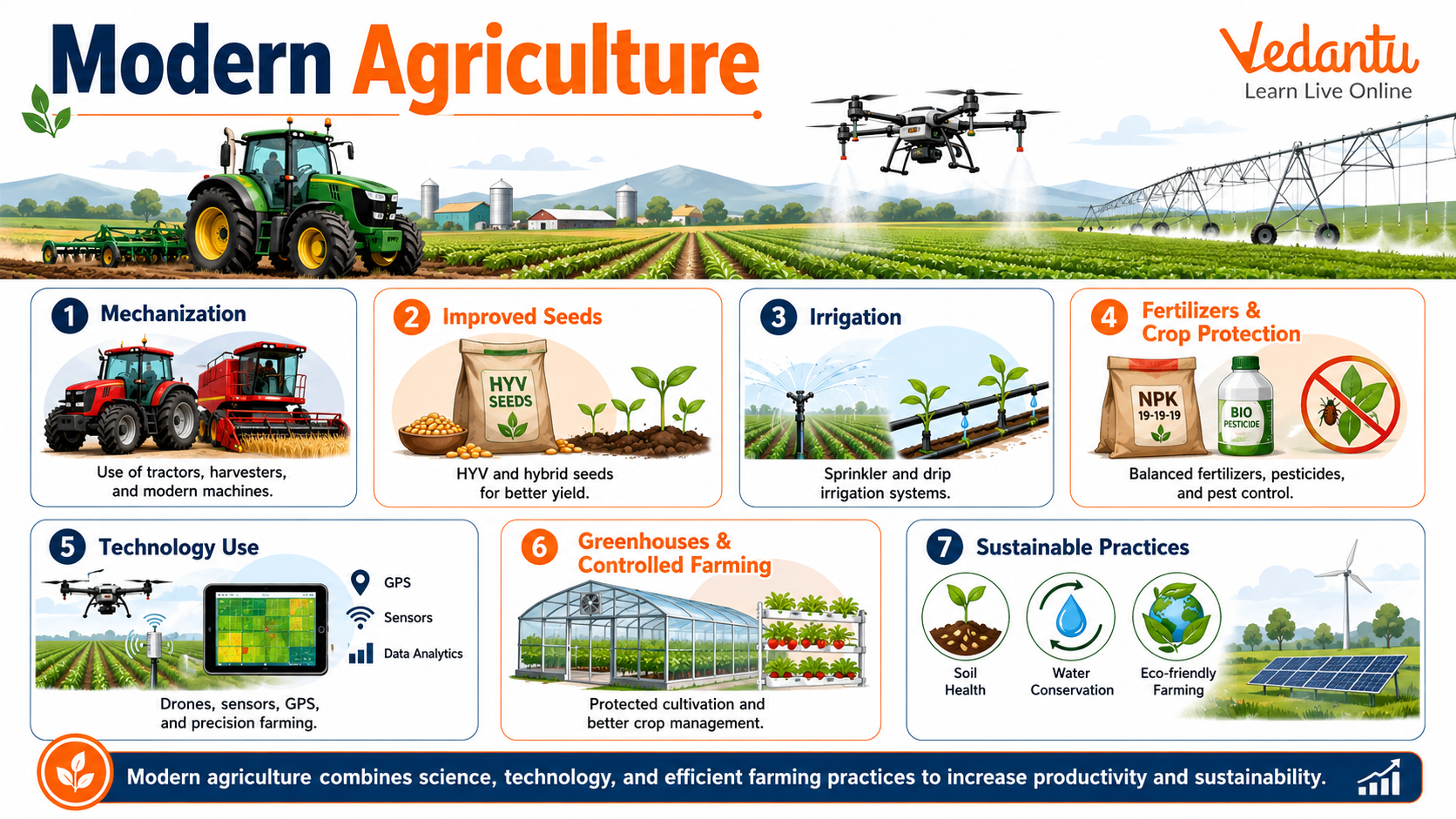
Modern Agriculture refers to advanced farming practices that use scientific research, improved technology, and innovative methods to increase crop yield and livestock productivity. It involves the use of high-yielding variety seeds, chemical fertilizers, pesticides, irrigation systems, farm machinery, biotechnology, and digital tools. Modern agriculture plays a crucial role in ensuring food security, improving farmer income, and supporting economic development. It is especially important in countries with large populations where sustainable and efficient food production is necessary to meet growing demands.
What is Modern Agriculture?
Modern agriculture is a system of farming that integrates scientific knowledge and technological advancements into traditional agricultural practices. Unlike traditional farming, which depends mainly on natural rainfall and manual labor, modern agriculture relies on mechanization, irrigation, chemical inputs, and genetic improvement of crops and animals.
The primary aim of modern agriculture is to increase productivity per unit area while ensuring efficient use of resources such as water, soil, and energy.
Key Features of Modern Agriculture
- Use of High Yielding Variety - HYV seeds
- Extensive use of chemical fertilizers and pesticides
- Mechanization using tractors, harvesters, and threshers
- Advanced irrigation systems such as drip and sprinkler irrigation
- Application of biotechnology and genetic engineering
- Use of information technology and precision farming tools
Components of Modern Agriculture
1. High Yielding Variety Seeds
HYV seeds are scientifically developed seeds that produce more grain per plant compared to traditional seeds. These seeds respond well to fertilizers and irrigation, leading to higher productivity.
2. Chemical Fertilizers and Pesticides
Fertilizers provide essential nutrients like nitrogen, phosphorus, and potassium to crops. Pesticides protect crops from pests and diseases, reducing crop loss and improving quality.
3. Irrigation Techniques
Modern irrigation methods such as drip irrigation and sprinkler systems ensure efficient water use. These methods reduce water wastage and increase crop yield.
4. Mechanization
Farm machinery such as tractors, seed drills, combine harvesters, and threshers reduce labor requirements and increase efficiency. Mechanization also helps in timely sowing and harvesting.
5. Biotechnology and Genetic Engineering
Biotechnology involves modifying crops to improve resistance to pests, diseases, and environmental stress. Genetically modified crops can enhance productivity and nutritional value.
Traditional Agriculture vs Modern Agriculture
| Basis | Traditional Agriculture | Modern Agriculture |
|---|---|---|
| Technology | Manual tools and animal power | Advanced machinery and digital tools |
| Seeds | Local varieties | High yielding and hybrid varieties |
| Productivity | Low to moderate yield | High yield per hectare |
The table highlights the transformation from traditional to modern farming systems. Modern agriculture significantly increases productivity but requires greater investment and careful resource management.
Advantages of Modern Agriculture
- Higher crop yield and increased food production
- Improved quality of crops and livestock
- Efficient use of water and fertilizers
- Reduction in manual labor and time
- Better pest and disease management
Disadvantages of Modern Agriculture
- Overuse of chemical fertilizers can degrade soil health
- Excessive pesticide use can harm beneficial organisms
- Groundwater depletion due to intensive irrigation
- High initial investment for machinery and technology
- Risk of environmental pollution
Importance of Modern Agriculture
Modern agriculture is essential for feeding the growing global population. It supports economic growth by increasing agricultural exports and improving rural livelihoods. It also encourages scientific research and innovation in crop improvement and sustainable farming practices.
However, for long-term sustainability, modern agriculture must balance productivity with environmental protection. Practices such as integrated pest management, organic supplementation, crop rotation, and sustainable irrigation can help maintain ecological balance.
Conclusion
Modern agriculture represents a significant shift from traditional farming methods to a technology-driven system aimed at maximizing productivity and efficiency. While it offers numerous benefits such as higher yields and improved food security, it also presents environmental and economic challenges. A balanced and sustainable approach is necessary to ensure that modern agriculture continues to support human needs without harming natural resources.
FAQs on Modern Agriculture and Smart Farming Methods
1. What is Modern Agriculture?
Modern Agriculture is a farming system that uses advanced technology, scientific research, and improved inputs to increase crop production and efficiency.
- It includes high-yielding variety (HYV) seeds, fertilizers, and pesticides.
- Uses machinery like tractors, harvesters, and irrigation pumps.
- Applies biotechnology, genetic modification, and precision farming.
- Focuses on higher productivity, commercial farming, and food security.
People also ask: What is scientific farming? What is commercial agriculture? Modern agriculture is also known as intensive farming or industrial agriculture.
2. What are the main features of Modern Agriculture?
The main features of Modern Agriculture include mechanization, chemical inputs, and scientific techniques.
- Use of HYV seeds and hybrid crops.
- Heavy use of fertilizers and pesticides.
- Advanced irrigation systems like drip and sprinkler irrigation.
- Farm mechanization using tractors and combine harvesters.
- Application of Green Revolution technologies.
People also search: characteristics of modern farming, intensive agriculture methods, scientific cultivation techniques.
3. What is the importance of Modern Agriculture?
Modern Agriculture is important because it increases food production and ensures food security.
- Boosts crop yield to meet growing population demands.
- Supports economic development and rural employment.
- Promotes commercial farming and exports.
- Reduces dependence on traditional farming methods.
People also ask: Why is modern farming necessary? How does agriculture support the economy?
4. What is the difference between Traditional and Modern Agriculture?
The key difference between traditional and modern agriculture lies in technology use and productivity levels.
- Traditional farming uses simple tools; modern farming uses advanced machinery.
- Traditional farming depends on rainfall; modern farming uses irrigation systems.
- Modern agriculture uses chemical fertilizers and HYV seeds.
- Productivity is much higher in modern farming.
People also search: traditional vs modern farming, subsistence vs commercial agriculture.
5. What role did the Green Revolution play in Modern Agriculture?
The Green Revolution played a major role in transforming agriculture into a modern, high-yield system.
- Introduced HYV seeds of wheat and rice.
- Promoted the use of fertilizers and pesticides.
- Expanded irrigation facilities.
- Increased food grain production in countries like India and Mexico.
People also ask: What is the Green Revolution? Who started the Green Revolution? It is closely linked with Dr. Norman Borlaug.
6. What are the advantages of Modern Agriculture?
Modern Agriculture offers higher productivity, efficiency, and better income opportunities.
- Increases crop production per hectare.
- Saves time and labor through mechanization.
- Improves quality of crops.
- Supports large-scale commercial farming.
People also search: benefits of modern farming, advantages of scientific agriculture.
7. What are the disadvantages of Modern Agriculture?
Despite its benefits, Modern Agriculture has environmental and health drawbacks.
- Overuse of chemical fertilizers and pesticides harms soil health.
- Causes water pollution and groundwater depletion.
- Leads to loss of biodiversity.
- Can increase farming costs for small farmers.
People also ask: Is modern agriculture harmful? What are the environmental impacts of intensive farming?
8. What is precision farming in Modern Agriculture?
Precision farming is a modern technique that uses technology to optimize crop production.
- Uses GPS, sensors, and data analysis.
- Monitors soil health and moisture levels.
- Reduces wastage of fertilizers and water.
- Improves efficiency and sustainability.
People also search: smart farming, digital agriculture, technology in farming.
9. How does Modern Agriculture affect the environment?
Modern Agriculture impacts the environment through intensive resource use and chemical inputs.
- Soil degradation due to excessive chemicals.
- Water contamination from pesticide runoff.
- Greenhouse gas emissions from machinery.
- Deforestation for commercial farming.
People also ask: environmental effects of agriculture, agriculture and climate change, sustainable farming practices.
10. What is sustainable Modern Agriculture?
Sustainable Modern Agriculture combines advanced technology with eco-friendly practices to protect future resources.
- Promotes organic farming and reduced chemical use.
- Encourages crop rotation and soil conservation.
- Uses renewable energy and water-saving irrigation.
- Balances productivity with environmental protection.
People also search: sustainable farming methods, eco-friendly agriculture, future of modern agriculture.
