






State-wise List of Major Coalfields in India with Locations and Map
Coal is one of the most important fossil fuels and a major source of energy in India. It plays a vital role in electricity generation, steel production, cement manufacturing, and other industrial activities. India is among the top coal-producing countries in the world, and its coal reserves are distributed across several states. Understanding the list of major coal fields in India is essential for students preparing for competitive exams and for general awareness about India’s mineral resources.
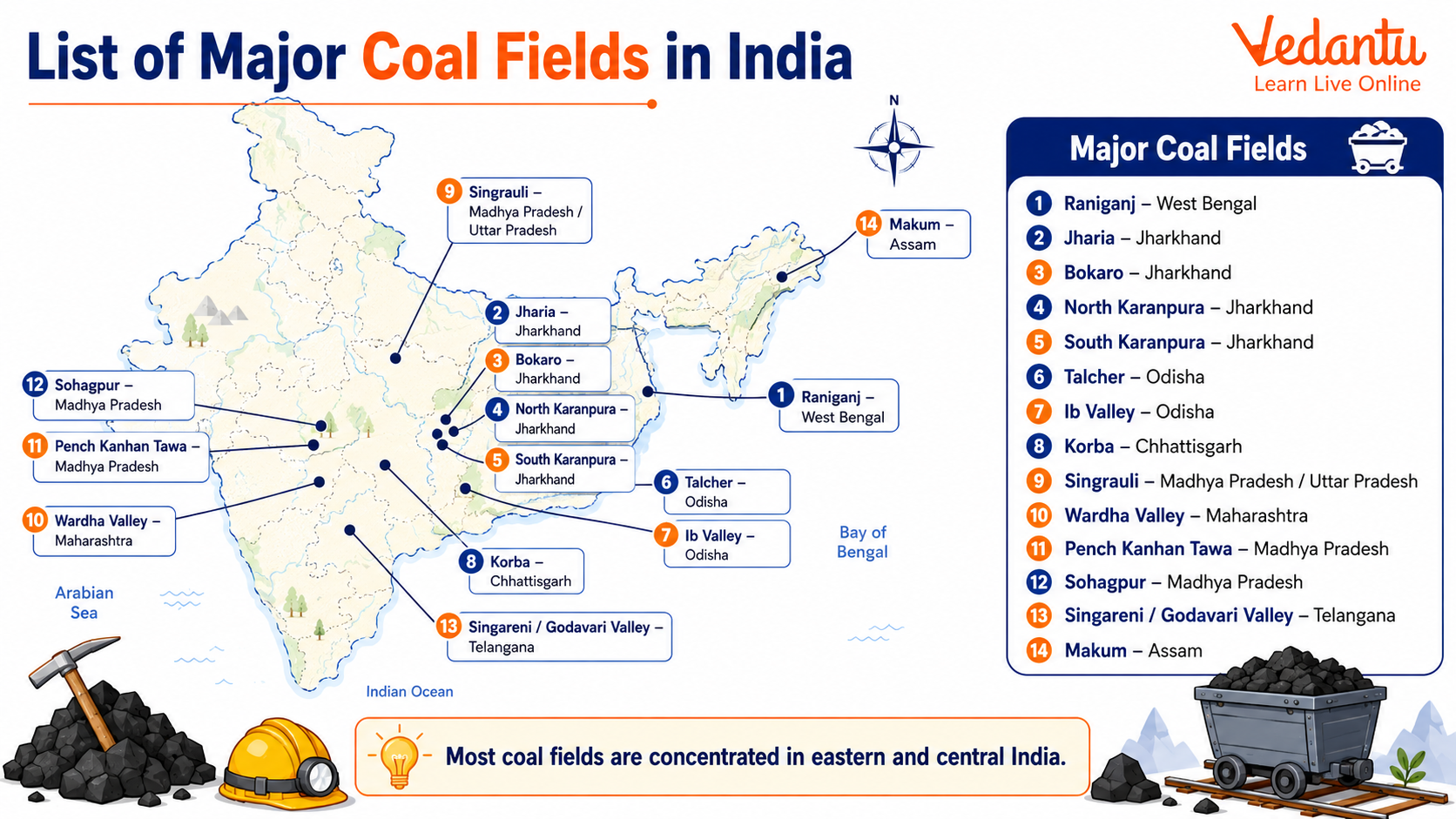
Overview of Coal in India
India has abundant coal reserves, mainly of bituminous and sub-bituminous types. The majority of Indian coal is Gondwana coal, which is about 250 million years old. A smaller portion is Tertiary coal, which is comparatively younger and found mainly in the northeastern states.
- Gondwana coal - Found in river valleys like Damodar, Mahanadi, Godavari, and Son.
- Tertiary coal - Found in Assam, Meghalaya, Arunachal Pradesh, and Nagaland.
- Major use - Thermal power generation and metallurgical industries.
List of Major Coal Fields in India
Major Coal Fields in India
| Coal Field | State | River Valley / Basin |
|---|---|---|
| Jharia | Jharkhand | Damodar Valley |
| Raniganj | West Bengal | Damodar Valley |
| Bokaro | Jharkhand | Damodar Valley |
| Talcher | Odisha | Mahanadi Valley |
| Korba | Chhattisgarh | Mahanadi Valley |
| Singrauli | Madhya Pradesh and Uttar Pradesh | Son Valley |
| Wardha Valley | Maharashtra | Godavari Basin |
| Neyveli | Tamil Nadu | Cauvery Basin |
The Damodar Valley is known as the Ruhr of India due to its rich coal deposits and concentration of industries. Jharia coal field is especially famous for high-quality coking coal, which is essential for steel production.
State-wise Distribution of Major Coal Fields
Jharkhand
Jharkhand is the leading coal-producing state of India. Major coal fields include Jharia, Bokaro, Giridih, and Karanpura. Jharia is the most important for coking coal.
West Bengal
Raniganj coal field in West Bengal is one of the oldest coal fields in India. It is located in the Damodar Valley and produces high-quality coal.
Odisha
Talcher and Ib Valley are major coal fields in Odisha. These fields are significant for thermal power generation.
Chhattisgarh
Korba coal field is the most important in Chhattisgarh. The state has large reserves and contributes significantly to national coal production.
Madhya Pradesh and Uttar Pradesh
Singrauli coal field extends across both states and is a major center for coal-based thermal power plants.
Tamil Nadu
Neyveli is known for lignite deposits. It is an important source of power generation in southern India.
Importance of Major Coal Fields
- Support thermal power plants that generate the majority of India’s electricity.
- Provide raw material for steel and cement industries.
- Generate employment and boost regional economic development.
- Contribute significantly to government revenue.
Key Points for Competitive Exams
- Jharia is the largest producer of coking coal in India.
- Damodar Valley is the most important coal-producing region.
- Talcher and Korba are major contributors to thermal power generation.
- Neyveli is famous for lignite, not bituminous coal.
- Most coal reserves in India belong to the Gondwana period.
Conclusion
The major coal fields in India are concentrated mainly in the eastern and central parts of the country, especially in the Damodar, Mahanadi, Son, and Godavari valleys. These coal fields are crucial for India’s energy security and industrial growth. A clear understanding of their location, characteristics, and importance is essential for competitive exams and general knowledge. By remembering the key coal fields and their associated states and river valleys, students can easily answer related questions in examinations.
FAQs on List of Major Coalfields in India: Key Mining Regions and Facts
1. What are the major coal fields in India?
The major coal fields in India are concentrated mainly in the eastern and central regions of the country.
• Jharia Coalfield – Jharkhand (rich in coking coal)
• Raniganj Coalfield – West Bengal
• Bokaro Coalfield – Jharkhand
• Talcher Coalfield – Odisha
• Korba Coalfield – Chhattisgarh
• Singrauli Coalfield – Madhya Pradesh & Uttar Pradesh
• Wardha Valley Coalfield – Maharashtra
These coal reserves are crucial for thermal power generation, steel production, and industrial development in India.
2. Which is the largest coal field in India?
The Jharia Coalfield in Jharkhand is considered one of the largest and most important coal fields in India, especially for coking coal.
• Located in Dhanbad district
• Famous for high-quality bituminous coal
• Major supplier for the iron and steel industry
• Known for underground coal mine fires
It plays a key role in India’s energy resources and metallurgical sector.
3. Where is the Raniganj Coalfield located?
The Raniganj Coalfield is located in the state of West Bengal and is one of the oldest coal fields in India.
• Discovered in 1774
• Situated in the Damodar Valley region
• Produces mainly bituminous coal
• Important for eastern India’s thermal power plants
It marked the beginning of commercial coal mining in India.
4. Which coal field is famous for coking coal in India?
The Jharia Coalfield is most famous for producing high-grade coking coal in India.
• Located in Jharkhand
• Supplies coal to major steel plants like Bokaro and Tata Steel
• Contains India’s richest metallurgical coal reserves
• Essential for blast furnace operations
This coal field is vital for the Indian iron and steel industry.
5. What are the major coal-producing states in India?
The major coal-producing states in India are primarily located in eastern and central India.
• Jharkhand – Largest producer
• Chhattisgarh
• Odisha
• West Bengal
• Madhya Pradesh
• Maharashtra
These states contribute significantly to India’s coal reserves, mining industry, and thermal power generation.
6. Where is the Talcher Coalfield situated?
The Talcher Coalfield is situated in the state of Odisha and is one of the largest coal reserves in India.
• Located in Angul district
• Rich in non-coking coal
• Supplies coal to major thermal power stations
• Important for eastern India’s industrial growth
It plays a key role in meeting India’s electricity and energy demands.
7. Which coal field is located in Chhattisgarh?
The Korba Coalfield is the major coal field located in Chhattisgarh.
• Known as the Power Capital of India
• Produces large quantities of thermal coal
• Supports several NTPC power plants
• Contains vast coal reserves
Korba is crucial for India’s power generation and coal mining sector.
8. What is the importance of the Damodar Valley coal fields?
The Damodar Valley coal fields are important because they contain some of India’s richest coal deposits.
• Include Jharia, Bokaro, and Raniganj
• Major source of coking and bituminous coal
• Support the steel and heavy industries
• Backbone of eastern India’s industrial belt
They are central to India’s mineral resources and industrial development.
9. Which coal field is shared by Madhya Pradesh and Uttar Pradesh?
The Singrauli Coalfield is shared by Madhya Pradesh and Uttar Pradesh.
• Located in the Son River Valley
• Major producer of non-coking coal
• Supplies coal to several super thermal power plants
• Important for northern India’s electricity supply
Singrauli is often called the Energy Capital of India.
10. Why are coal fields important for India’s economy?
Coal fields are important because they form the backbone of India’s energy sector and industrial economy.
• Major source of electricity generation
• Essential for iron and steel production
• Supports cement and manufacturing industries
• Provides employment through coal mining activities
Thus, India’s major coal fields play a crucial role in economic growth, infrastructure development, and energy security.
