






Major Industrial Belts in India and Their Key Industries
Industrial Regions of India are areas where a large number of industries are concentrated due to favorable geographical, economic, and infrastructural factors. These regions play a crucial role in the economic development of the country by generating employment, promoting urbanization, and contributing significantly to India’s GDP. The growth of industrial regions depends on the availability of raw materials, power supply, transportation, labor, capital, and market access. Understanding the major industrial regions of India is important for students preparing for competitive exams and for gaining knowledge about India’s economic geography.
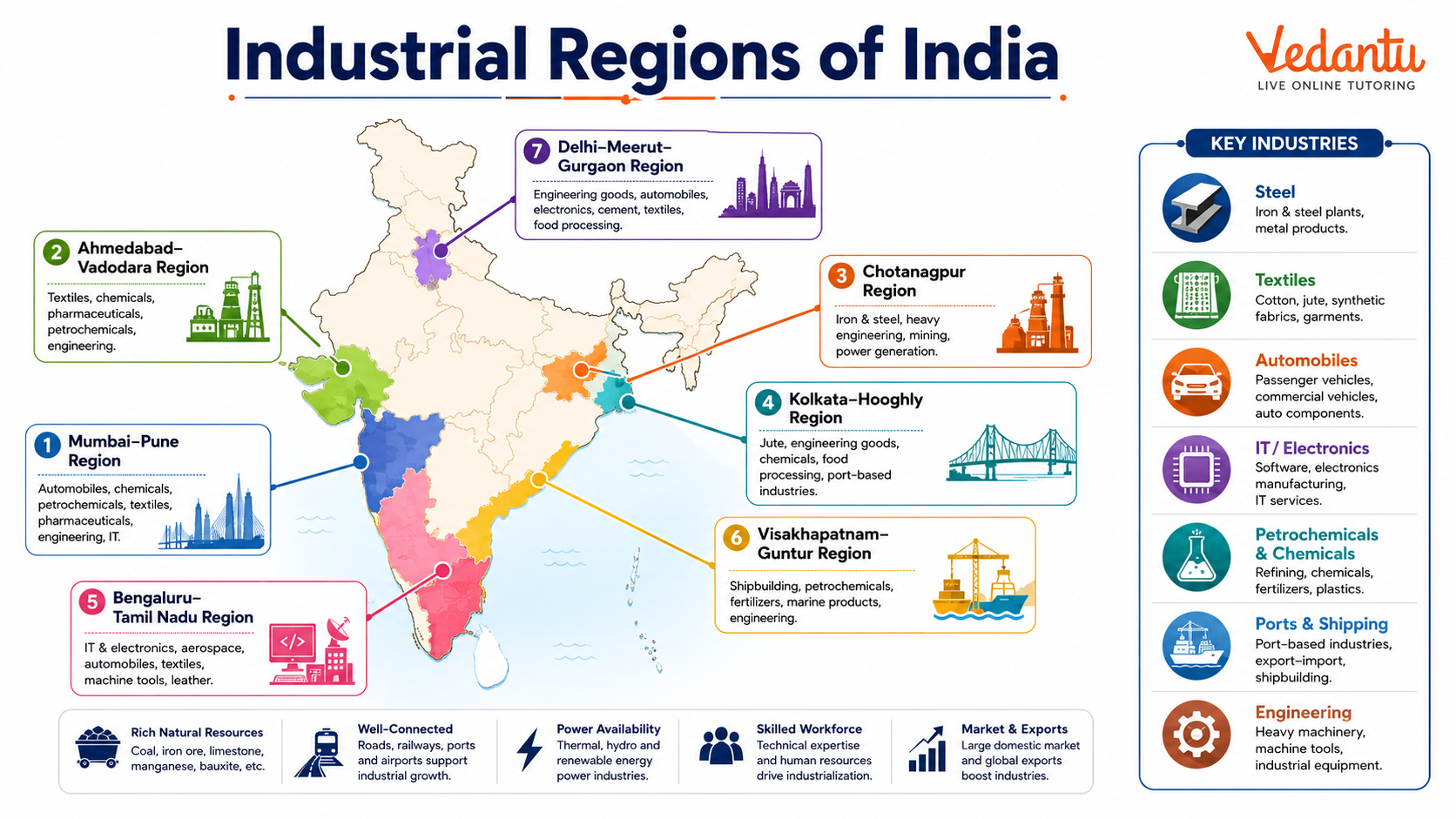
What is an Industrial Region?
An industrial region is a geographical area where industries are densely located and interconnected. These regions develop due to certain advantages such as proximity to raw materials, good transport networks, skilled labor, and availability of power resources. Industrial regions are often associated with urban centers and contribute significantly to regional development.
Factors Influencing the Location of Industrial Regions
- Availability of raw materials such as coal, iron ore, cotton, and minerals
- Reliable power supply including thermal, hydro, and nuclear energy
- Well-developed transportation facilities like railways, roads, ports, and airports
- Availability of skilled and unskilled labor
- Access to markets for selling finished goods
- Government policies and industrial incentives
Major Industrial Regions of India
India has several well-defined industrial regions that have developed over time. These regions are identified based on industrial concentration and economic importance.
Major Industrial Regions and Their Characteristics
| Industrial Region | Major States or Cities | Main Industries |
|---|---|---|
| Mumbai Pune Region | Maharashtra - Mumbai, Pune | Textiles, Engineering, Petrochemicals, Automobiles |
| Hugli Region | West Bengal - Kolkata | Jute, Engineering, Chemicals, Textiles |
| Chotanagpur Plateau Region | Jharkhand, Odisha, West Bengal | Iron and Steel, Heavy Engineering, Coal |
| Ahmedabad Vadodara Region | Gujarat | Textiles, Chemicals, Petrochemicals |
| Southern Region | Tamil Nadu, Karnataka | IT, Automobiles, Textiles, Electronics |
These industrial regions developed due to specific advantages such as port facilities in Mumbai and Kolkata, mineral resources in Chotanagpur, cotton production in Gujarat and Maharashtra, and skilled workforce in southern India.
Detailed Overview of Important Industrial Regions
1. Mumbai Pune Industrial Region
This region is one of the oldest and most diversified industrial areas in India. It benefits from excellent port facilities, banking infrastructure, and access to international markets. The presence of cotton-growing areas supported the growth of textile industries, followed by petrochemicals, engineering, and automobile manufacturing.
2. Hugli Industrial Region
Located along the Hugli River in West Bengal, this region developed during the British period. It is famous for its jute mills, engineering units, and chemical industries. The Kolkata port and abundant labor supply contributed to its development.
3. Chotanagpur Plateau Industrial Region
This region is known as the Ruhr of India due to its rich deposits of coal and iron ore. Major steel plants such as Jamshedpur, Bokaro, and Rourkela are located here. Availability of raw materials and power resources makes it a major heavy industrial belt.
4. Ahmedabad Vadodara Industrial Region
This region is known for cotton textile industries and petrochemical complexes. Gujarat’s entrepreneurial culture and strong infrastructure have helped in rapid industrial growth.
5. Southern Industrial Region
Covering cities like Chennai, Bengaluru, and Coimbatore, this region is known for IT industries, automobile manufacturing, electronics, and textiles. Availability of skilled manpower and advanced infrastructure supports its growth.
Significance of Industrial Regions
- Promote economic growth and increase national income
- Generate employment opportunities
- Encourage urbanization and infrastructure development
- Boost exports and foreign exchange earnings
- Support regional development and reduce economic disparities
Challenges Faced by Industrial Regions
- Environmental pollution and ecological imbalance
- Overcrowding and urban congestion
- Shortage of power and water resources
- Regional inequality in industrial development
Conclusion
Industrial Regions of India represent the backbone of the country’s economic structure. From mineral-based industries in the Chotanagpur Plateau to port-based industries in Mumbai and Kolkata and technology-driven industries in southern India, each region has its unique strengths. A clear understanding of these regions helps students grasp India’s economic geography and prepares them effectively for competitive examinations. These industrial belts continue to evolve with technological advancements and government initiatives aimed at balanced regional development.
FAQs on Industrial Regions of India Explained for Students
1. What are the major industrial regions in India?
The major industrial regions of India are geographically concentrated areas known for large-scale manufacturing and economic activity.
- Mumbai–Pune Industrial Region (Maharashtra)
- Hugli Industrial Region (West Bengal)
- Chotanagpur Plateau Region (Jharkhand, Odisha, West Bengal)
- Ahmedabad–Vadodara Region (Gujarat)
- Bengaluru–Tamil Nadu Region (South India)
- Delhi–Meerut Region (NCR)
These industrial regions in India are hubs of iron and steel, textiles, automobiles, IT, petrochemicals, and heavy industries.
2. Why is the Chotanagpur Plateau called the Ruhr of India?
The Chotanagpur Plateau is called the Ruhr of India due to its rich mineral resources and concentration of heavy industries.
- Abundant coal, iron ore, manganese, mica
- Major steel plants at Jamshedpur, Bokaro, Rourkela, Durgapur
- Availability of power and water resources
Like Germany’s Ruhr region, it is India’s core area for iron and steel production and mineral-based industries.
3. Which factors influence the location of industrial regions in India?
The location of industrial regions in India depends on physical, economic, and human factors.
- Availability of raw materials
- Access to power supply
- Good transport and communication
- Availability of skilled labour
- Large market demand
These location factors determine the growth of manufacturing hubs and industrial clusters.
4. What industries dominate the Mumbai–Pune industrial region?
The Mumbai–Pune Industrial Region is one of India’s most diversified industrial belts.
- Textile industry (cotton textiles)
- Petrochemicals and oil refineries
- Automobile manufacturing
- Engineering goods
- IT and financial services
Its coastal location and port facilities make it a leading commercial and industrial hub.
5. Why is the Hugli industrial region important?
The Hugli Industrial Region is historically significant due to its early industrial development during British rule.
- Famous for jute mills
- Growth of engineering and chemical industries
- Presence of Kolkata Port
- Availability of labour from nearby states
It played a key role in India’s early industrialization and export trade.
6. Which industrial region is known for information technology (IT) industries?
The Bengaluru–Tamil Nadu Industrial Region is widely known as India’s IT hub.
- Bengaluru – Silicon Valley of India
- Chennai – Automobile and IT corridor
- Growth of software, electronics, biotechnology
This region is a center for technology parks, startups, and multinational companies.
7. What is the significance of the Ahmedabad–Vadodara industrial region?
The Ahmedabad–Vadodara Industrial Region is a major industrial belt in western India.
- Known for cotton textile industry
- Development of petrochemical complexes
- Strong base in chemical and pharmaceutical industries
- Good road and port connectivity
It contributes significantly to Gujarat’s industrial growth and exports.
8. How do industrial regions contribute to India’s economy?
Industrial regions play a vital role in strengthening India’s economic development.
- Generate employment opportunities
- Increase GDP and industrial output
- Promote urbanization
- Boost exports and trade
They act as engines of growth for manufacturing, infrastructure, and regional development.
9. Which industrial region is located in the National Capital Region (NCR)?
The Delhi–Meerut Industrial Region is located in the National Capital Region (NCR).
- Includes Delhi, Ghaziabad, Noida, Faridabad
- Growth of electronics, automobile parts, garments
- Strong market access and infrastructure
It benefits from administrative importance and a large consumer base.
10. What challenges do industrial regions in India face?
Industrial regions in India face several environmental and infrastructural challenges.
- Pollution and environmental degradation
- Overcrowding and urban congestion
- Shortage of power and water resources
- Regional imbalance in industrial growth
Addressing these issues is crucial for achieving sustainable industrial development in India.
