






Why Hanuman Jayanti Is Celebrated and Key Rituals Explained
Hanuman Jayanthi is a significant Hindu festival that celebrates the birth of Lord Hanuman, one of the most revered deities in Hinduism. Lord Hanuman is known for his unwavering devotion to Lord Rama, immense strength, courage, and selfless service. The festival is observed with great devotion across India and in many parts of the world by Hindu communities. Hanuman Jayanthi holds spiritual, cultural, and religious importance, especially for students and devotees seeking strength, wisdom, and protection.
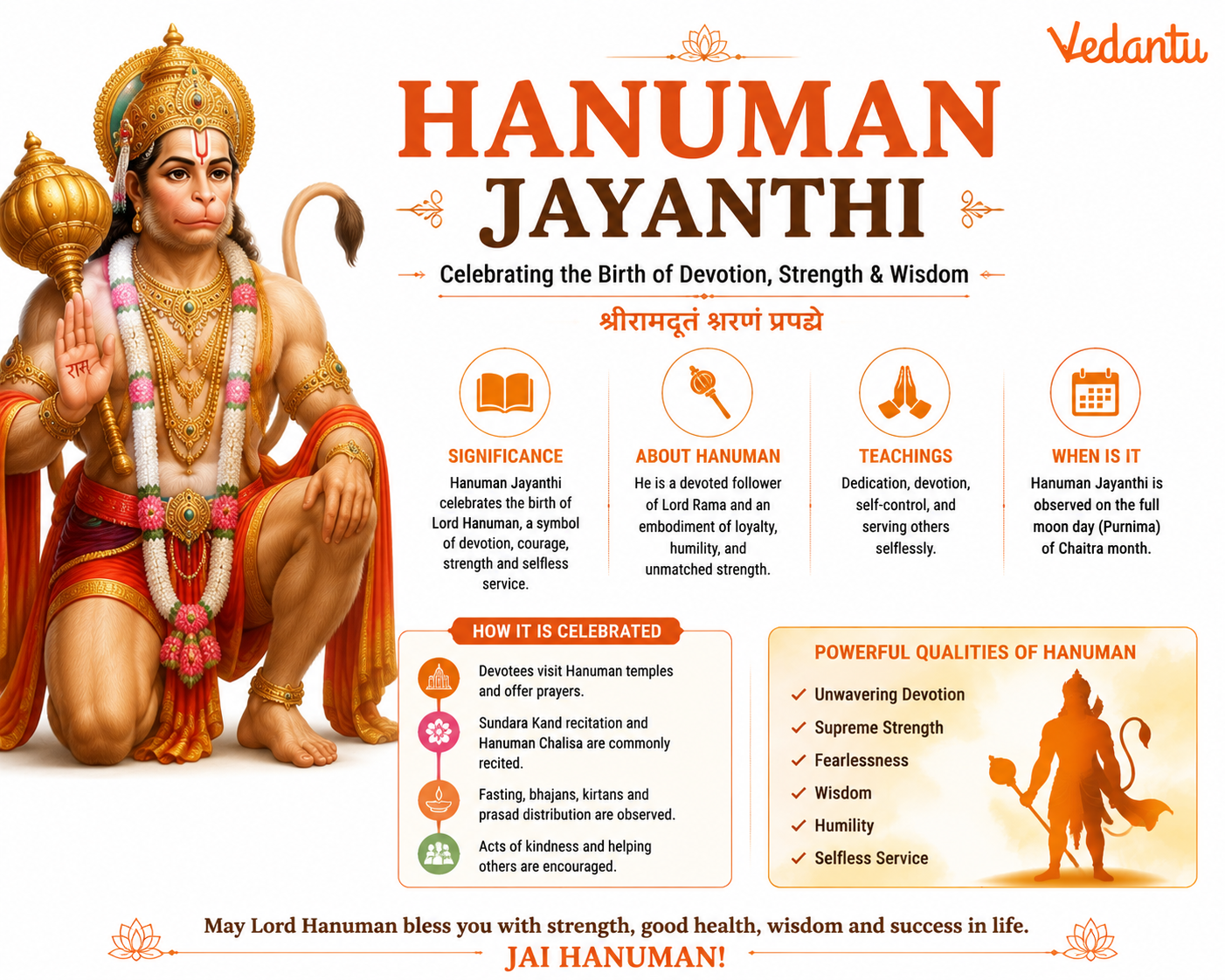
Overview of Hanuman Jayanthi
Hanuman Jayanthi marks the appearance day of Lord Hanuman, who is considered an incarnation of Lord Shiva according to several Hindu traditions. The festival is celebrated on different dates in various parts of India, most commonly during the Chaitra month of the Hindu calendar. Devotees visit temples, chant Hanuman Chalisa, observe fasts, and perform special prayers to seek blessings.
Key Facts About Hanuman Jayanthi
| Particular | Details | Significance |
|---|---|---|
| Festival Name | Hanuman Jayanthi | Birth anniversary of Lord Hanuman |
| Hindu Month | Chaitra (mostly) | Full Moon day - Purnima |
| Main Deity | Lord Hanuman | Symbol of strength and devotion |
The date of celebration may vary in states like Tamil Nadu, Karnataka, and Andhra Pradesh due to regional calendar differences. However, the essence of devotion and celebration remains the same throughout the country.
Mythological Background
According to Hindu mythology, Lord Hanuman was born to Anjana and Kesari. He is also known as Pavan Putra because he was blessed by Vayu, the wind god. Hanuman played a vital role in the epic Ramayana by helping Lord Rama rescue Sita from Ravana. His loyalty, bravery, and intelligence made him one of the most admired characters in Hindu scriptures.
Important Stories Related to Lord Hanuman
- As a child, Hanuman tried to swallow the sun, mistaking it for a fruit.
- He leaped across the ocean to reach Lanka in search of Goddess Sita.
- He carried the Sanjeevani mountain to save Lakshmana during the war.
- He is considered immortal and is believed to be present wherever Lord Rama is worshipped.
Rituals and Celebrations
Hanuman Jayanthi is celebrated with great devotion in temples and homes. Devotees wake up early, take a holy bath, and visit Hanuman temples. Special offerings such as laddoo, fruits, and betel leaves are made. Recitation of Hanuman Chalisa and Sundar Kand is common during this festival.
Common Practices on Hanuman Jayanthi
- Observing a day long fast.
- Chanting Hanuman Chalisa 108 times.
- Organizing bhajans and kirtans.
- Reading Ramayana, especially Sundar Kand.
Significance of Hanuman Jayanthi
Hanuman Jayanthi teaches values such as devotion, humility, discipline, and courage. Lord Hanuman is considered a symbol of strength and wisdom. Students and devotees pray for mental clarity, focus, and protection from negative influences. The festival also promotes unity and spiritual awareness among communities.
- Represents devotion towards duty and righteousness.
- Encourages physical and mental strength.
- Inspires loyalty and dedication.
- Promotes moral values among youth.
Hanuman Jayanthi in Different States
The method and timing of celebration vary across India. In North India, it is usually celebrated on Chaitra Purnima. In Tamil Nadu, it is observed in the Margazhi month. In Karnataka and Andhra Pradesh, it may be celebrated during different lunar phases based on regional traditions. Despite these variations, devotion to Lord Hanuman remains central to the festival.
Importance for Competitive Exams
Hanuman Jayanthi is an important topic in General Knowledge for school exams and competitive examinations. Questions may be asked about the festival date, associated deity, mythology, and cultural significance. Understanding the background and importance of this festival helps in static GK and cultural awareness sections.
- Important for static GK.
- Frequently asked in state level exams.
- Useful for essays and cultural studies.
Conclusion
Hanuman Jayanthi is more than just a religious celebration. It is a festival that symbolizes strength, devotion, and righteousness. By remembering the virtues of Lord Hanuman, devotees are inspired to lead a disciplined and courageous life. The festival continues to hold great spiritual and cultural relevance in India and among Hindu communities worldwide.
FAQs on Hanuman Jayanti Celebration, Story, and Importance
1. What is Hanuman Jayanthi?
Hanuman Jayanthi is a Hindu festival that celebrates the birth of Lord Hanuman, the devoted follower of Lord Rama in the epic Ramayana.
• It honors Hanuman’s devotion, strength, and courage.
• Devotees visit temples and recite the Hanuman Chalisa.
• The festival highlights values like loyalty, bravery, and selfless service (Bhakti).
• It is also known as Hanuman Jayanti or Anjaneya Jayanti.
2. When is Hanuman Jayanthi celebrated?
Hanuman Jayanthi is usually celebrated on the full moon day (Purnima) of the Chaitra month in the Hindu calendar, which falls in March or April.
• In North India: Chaitra Purnima.
• In Tamil Nadu and Kerala: Observed in Margazhi or Dhanu month.
• In Karnataka and Andhra Pradesh: Celebrated during Margashira month.
• Dates vary regionally due to different Hindu calendar traditions.
3. Why is Hanuman Jayanthi celebrated?
Hanuman Jayanthi is celebrated to honor the birth and divine qualities of Lord Hanuman.
• He symbolizes strength (Bala), wisdom (Buddhi), and devotion (Bhakti).
• It commemorates his role in helping Lord Rama defeat Ravana.
• Devotees pray for protection from evil and success in life.
• It inspires moral values and spiritual discipline.
4. How is Hanuman Jayanthi celebrated in India?
Hanuman Jayanthi is celebrated with prayers, fasting, and devotional activities across India.
• Special pujas and temple visits are organized.
• Recitation of the Hanuman Chalisa and Sundara Kanda.
• Devotees observe fasts (vrat) for blessings.
• Processions and spiritual discourses are held in many states.
5. Who were the parents of Lord Hanuman?
Lord Hanuman was born to Anjana and Kesari, and is also known as the son of the Wind God (Vayu).
• His mother: Anjana (a celestial nymph).
• His father: Kesari (a Vanara chief).
• He is called Pavan Putra or Vayu Putra due to the blessings of Vayu.
• Other names include Bajrangbali and Anjaneya.
6. What is the significance of Hanuman in the Ramayana?
Hanuman plays a crucial role in the Ramayana as the most devoted follower of Lord Rama.
• He located Sita in Lanka.
• He burned Lanka with his fiery tail.
• He carried the Sanjeevani mountain to save Lakshmana.
• He symbolizes devotion, loyalty, and fearlessness.
7. What are the different names of Lord Hanuman?
Lord Hanuman is known by many names reflecting his qualities and deeds.
• Bajrangbali – The strong one.
• Pavan Putra – Son of Wind God.
• Anjaneya – Son of Anjana.
• Maruti – Another name linked to Vayu.
• Mahavira – The great hero.
8. What is the Hanuman Chalisa?
Hanuman Chalisa is a devotional hymn of 40 verses composed by Tulsidas in praise of Lord Hanuman.
• Written in Awadhi language.
• Recited for strength, protection, and courage.
• Popular during Hanuman Jayanthi and Tuesdays.
• Believed to remove obstacles and negative energies.
9. Is Hanuman considered immortal?
Lord Hanuman is believed to be one of the Chiranjivis, meaning he is immortal according to Hindu mythology.
• Blessed with eternal life by Lord Rama.
• Said to remain on Earth wherever Rama’s name is chanted.
• Represents everlasting devotion and righteousness.
• Mentioned in several Hindu scriptures and Puranas.
10. What values does Hanuman Jayanthi teach us?
Hanuman Jayanthi teaches moral and spiritual values through the life of Lord Hanuman.
• Devotion (Bhakti) towards duty and God.
• Courage and strength in difficult times.
• Humility and selfless service.
• Faith, discipline, and dedication in daily life.
