






Important GK Questions on the Brahmaputra River System for Exams
The Brahmaputra River System is one of the most important river systems in India and Asia. It plays a crucial role in shaping the geography, economy, and culture of the northeastern states of India. The river is known for its vast basin, high water discharge, and frequent floods. For students and competitive exam aspirants, understanding the Brahmaputra River System is essential for Geography, General Studies, and various state and national level examinations. Below are carefully structured GK questions and answers on the Brahmaputra River System to help you prepare effectively.
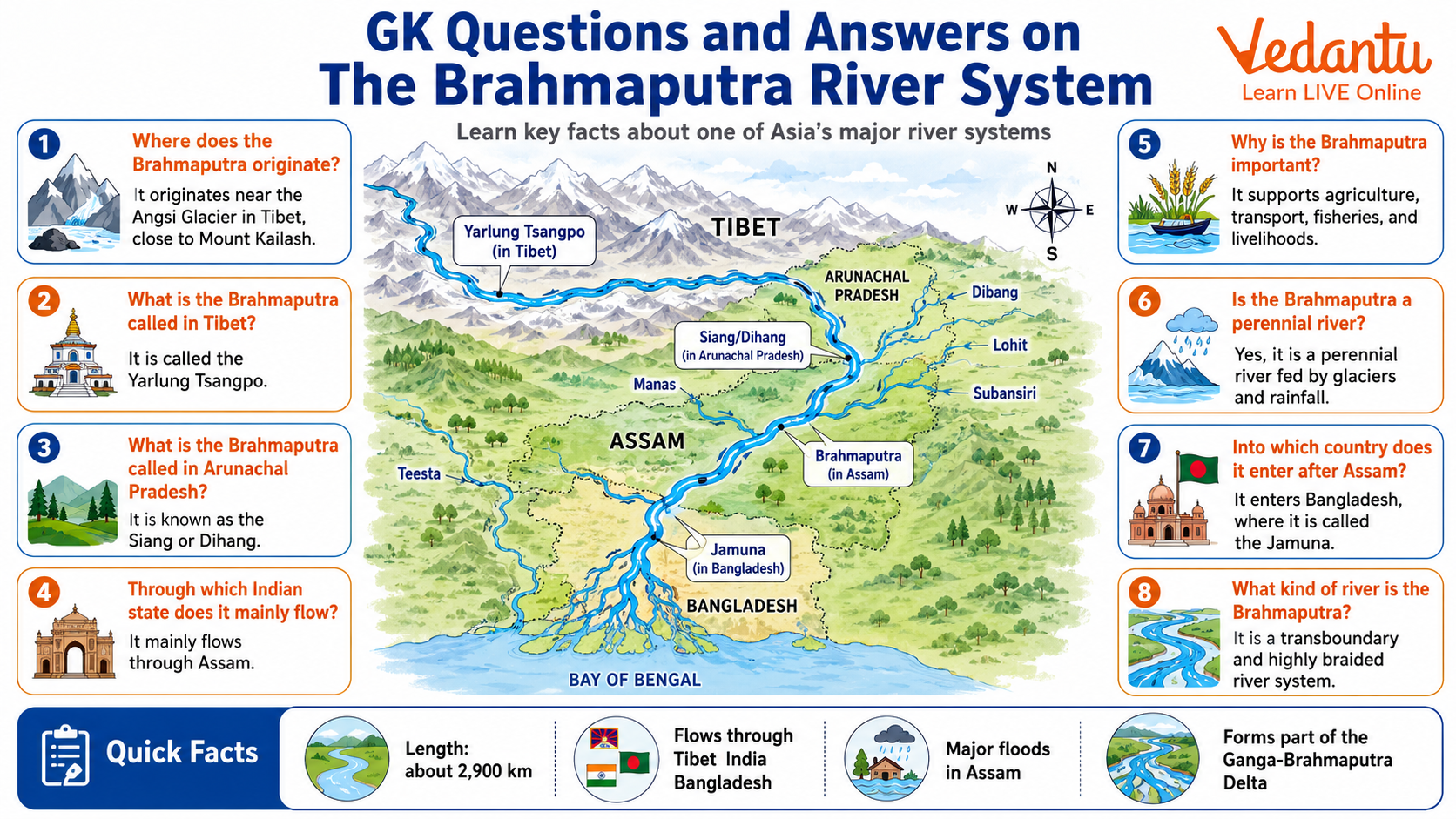
Overview of the Brahmaputra River System
The Brahmaputra River originates in the Tibetan Plateau and flows through China, India, and Bangladesh before emptying into the Bay of Bengal. It is one of the longest rivers in the world and forms a major river basin in northeastern India. The river is known by different names in different regions.
Key Facts About the Brahmaputra River
| Feature | Details | Importance |
|---|---|---|
| Origin | Chemayungdung Glacier, Tibet | Source of the river |
| Total Length | About 2900 km | One of the longest rivers in Asia |
| Indian States Covered | Arunachal Pradesh and Assam | Major river of Northeast India |
The Brahmaputra is known as Tsangpo in Tibet, Siang or Dihang in Arunachal Pradesh, and Jamuna in Bangladesh. It eventually joins the Ganga and Meghna rivers before draining into the Bay of Bengal.
GK Questions and Answers on the Brahmaputra River System
Basic Level Questions
- Q. Where does the Brahmaputra River originate?
Ans. It originates from the Chemayungdung Glacier near the Kailash Range in Tibet. - Q. What is the Brahmaputra called in Tibet?
Ans. It is called Tsangpo in Tibet. - Q. Which Indian state does the Brahmaputra first enter?
Ans. It first enters Arunachal Pradesh. - Q. Into which sea does the Brahmaputra drain?
Ans. It drains into the Bay of Bengal. - Q. Which island, the largest river island in the world, is located in the Brahmaputra River?
Ans. Majuli Island.
Intermediate Level Questions
- Q. Name two major tributaries of the Brahmaputra in India.
Ans. Subansiri and Manas are two major tributaries. - Q. Why is the Brahmaputra prone to floods?
Ans. Due to heavy monsoon rainfall, rapid snowmelt from the Himalayas, and a wide river basin. - Q. Which wildlife sanctuary is located on the banks of the Brahmaputra?
Ans. Kaziranga National Park. - Q. What type of river is the Brahmaputra in its upper course?
Ans. It is a braided river with multiple channels.
Advanced Level Questions
- Q. What is meant by the antecedent nature of the Brahmaputra River?
Ans. It means the river existed before the formation of the Himalayas and maintained its course by cutting through the rising mountains. - Q. How does the Brahmaputra contribute to the formation of the Sundarbans delta?
Ans. It joins the Ganga and Meghna rivers in Bangladesh and deposits sediments that help form the Sundarbans delta. - Q. Why is the Brahmaputra considered important for hydroelectric power generation?
Ans. Due to its high water discharge and steep gradient in the upper course, making it suitable for hydropower projects.
Major Tributaries of the Brahmaputra
The Brahmaputra River System consists of several important tributaries that increase its volume and influence the region's geography and economy.
- Subansiri
- Manas
- Dibang
- Lohit
- Teesta
Importance of the Brahmaputra River System
The Brahmaputra River System is vital for agriculture, transportation, fisheries, and hydropower generation in northeastern India. It provides fertile alluvial soil suitable for crops like rice and jute. The river also supports rich biodiversity, including endangered species like the one horned rhinoceros.
- Supports agriculture through fertile floodplains
- Enables inland water transport
- Provides hydropower potential
- Maintains ecological balance
Preparation Tips for Competitive Exams
To prepare GK questions on the Brahmaputra River System effectively, focus on map based learning and important factual details. Pay special attention to its origin, tributaries, states covered, and its role in flood formation. Practice previous year questions from UPSC, SSC, State PSC, and other competitive exams to strengthen your understanding.
- Revise river origin and course regularly.
- Memorize major tributaries and their locations.
- Understand causes of floods and economic importance.
- Practice map identification of the river system.
Conclusion
The Brahmaputra River System is a lifeline of northeastern India and an important topic in General Knowledge. Its origin, course, tributaries, and economic significance make it a frequently asked subject in competitive examinations. By understanding the key concepts and practicing structured GK questions and answers, students can strengthen their geography preparation and score well in exams.
FAQs on GK Questions & Answers on the Brahmaputra River System for Students
1. What is the Brahmaputra River System?
The Brahmaputra River System is one of the largest river systems in Asia, flowing through Tibet, India, and Bangladesh before joining the Bay of Bengal.
- Originates from the Angsi Glacier in Tibet near Mount Kailash
- Known as Yarlung Tsangpo in Tibet and Jamuna in Bangladesh
- Forms a major part of the Ganga-Brahmaputra Delta
- Important for irrigation, transportation, and hydroelectric power
This transboundary river is also called the Tsangpo-Brahmaputra River and is crucial for Northeast India’s geography.
2. Where does the Brahmaputra River originate?
The Brahmaputra River originates from the Angsi Glacier in the Himalayas of Tibet.
- Located near Lake Manasarovar and Mount Kailash
- Flows eastward as Yarlung Tsangpo
- Enters India through Arunachal Pradesh
This Himalayan river source makes it one of the highest major rivers in the world, often asked in GK and competitive exams.
3. Through which states does the Brahmaputra flow in India?
In India, the Brahmaputra River flows mainly through Arunachal Pradesh and Assam.
- Enters India at Arunachal Pradesh as Siang/Dihang
- Flows through the Assam Valley
- Creates the world’s largest river island, Majuli
This river plays a vital role in the geography, agriculture, and economy of Northeast India.
4. Why is the Brahmaputra River important?
The Brahmaputra River System is important for agriculture, transportation, and hydroelectric power generation.
- Provides fertile alluvial soil for farming
- Supports inland water transport
- Has vast hydropower potential
- Sustains rich biodiversity like Kaziranga National Park
It is also significant for floodplain ecosystems and is frequently discussed in geography GK questions.
5. What are the major tributaries of the Brahmaputra River?
The Brahmaputra River has several important tributaries that contribute to its large water volume.
- Subansiri
- Manas
- Dibang
- Lohit
- Teesta (in Bangladesh)
These tributaries increase the river’s discharge, making it one of the largest river systems in India and South Asia.
6. What is the length of the Brahmaputra River?
The Brahmaputra River is approximately 2,900 kilometers long, making it one of the longest rivers in Asia.
- About 1,600 km in Tibet
- Around 918 km in India
- Flows through Bangladesh before meeting the Ganga River
Its great length and high discharge rank it among the world’s major rivers.
7. Why does the Brahmaputra cause frequent floods in Assam?
The Brahmaputra River causes frequent floods due to heavy rainfall and high sediment load.
- Receives intense monsoon rainfall
- Carries large amounts of silt and sediments
- Has a wide, braided channel in Assam
- Rapid snowmelt from the Himalayas adds water volume
These factors make floods in the Brahmaputra Valley a common GK and current affairs topic.
8. What is Majuli and how is it related to the Brahmaputra?
Majuli is the world’s largest river island, formed by the Brahmaputra River in Assam.
- Located in the Assam Valley
- Known for Vaishnavite culture and satras
- Formed due to river deposition and erosion
Majuli is an important cultural and geographical landmark linked to the Brahmaputra River System.
9. Into which sea does the Brahmaputra River drain?
The Brahmaputra River drains into the Bay of Bengal after joining the Ganga River in Bangladesh.
- Merges with the Ganga as the Jamuna
- Forms the Sundarbans Delta
- Creates the world’s largest delta system
This combined system is known as the Ganga-Brahmaputra-Meghna Delta.
10. What are the different names of the Brahmaputra River in different regions?
The Brahmaputra River is known by different names in various regions it flows through.
- Yarlung Tsangpo in Tibet
- Siang or Dihang in Arunachal Pradesh
- Brahmaputra in Assam
- Jamuna in Bangladesh
These regional names are frequently asked in GK questions and highlight its transboundary river system.
