






Key Elements of Bharatanatyam Dance: Mudras, Expressions and Costumes
Bharatanatyam is one of the oldest and most respected classical dance forms of India. Originating in the temples of Tamil Nadu, this dance form is known for its grace, expressive storytelling, intricate footwork, and precise hand gestures. Bharatanatyam combines rhythm, expression, music, and spiritual devotion, making it not just a performance art but also a form of worship. It holds a significant place in Indian culture and is frequently asked about in General Knowledge exams, competitive tests, and cultural studies.
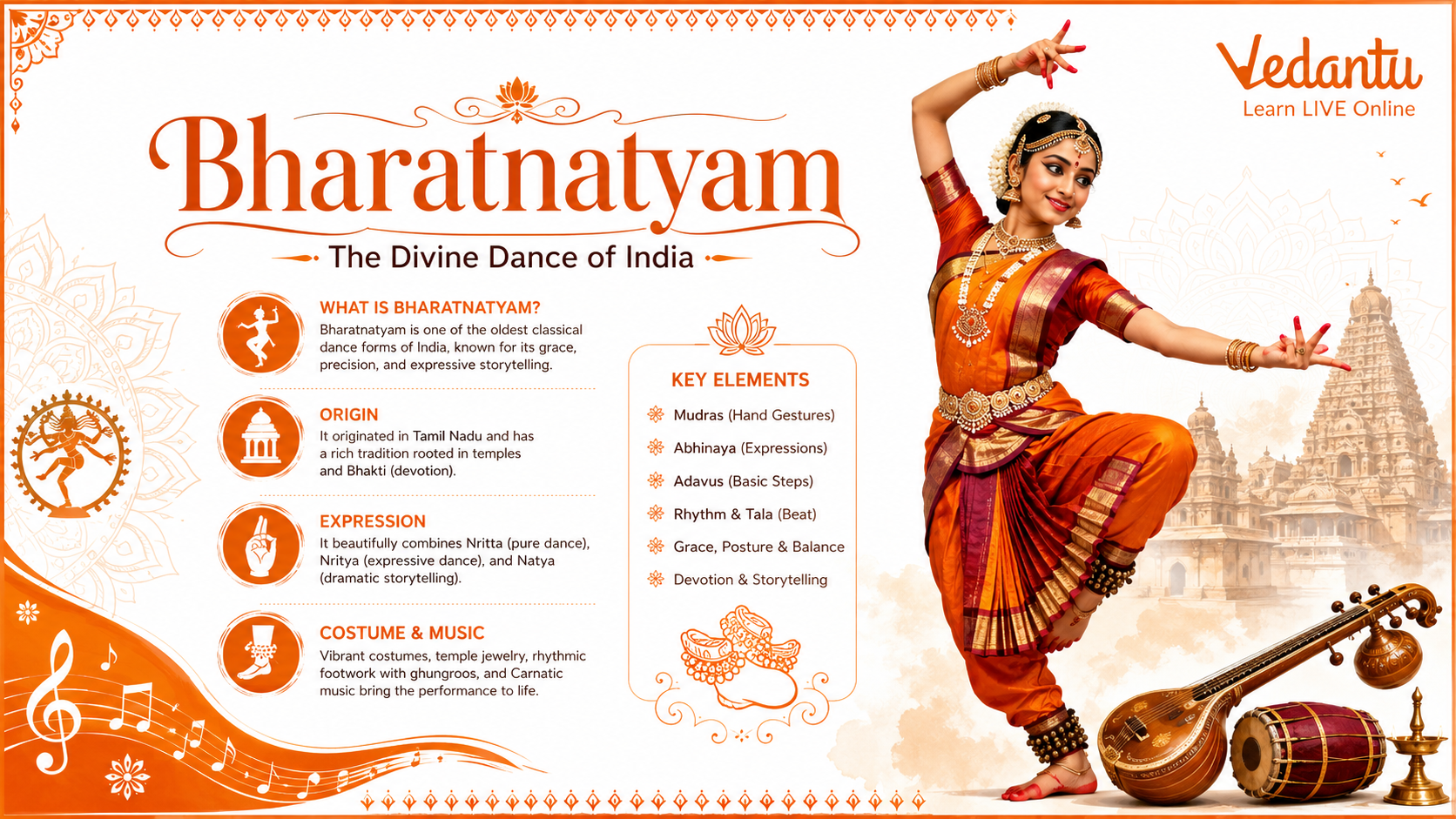
Origin and Historical Background
Bharatanatyam originated in the temples of South India, particularly in Tamil Nadu. It was traditionally performed by Devadasis, who were women dedicated to temple service. Earlier, it was known as Sadir. During the British period, the dance form faced decline due to social stigma. However, in the early 20th century, it was revived by pioneers like Rukmini Devi Arundale and Balasaraswati, who reformed and popularized it on modern stages.
Meaning of Bharatanatyam
The term Bharatanatyam is often explained as a combination of three words:
- Bha - Bhava (expression)
- Ra - Raga (melody)
- Ta - Tala (rhythm)
- Natyam - Dance or drama
Thus, Bharatanatyam represents the harmonious combination of expression, music, rhythm, and dance.
Key Features of Bharatanatyam
- Adavus - Basic dance steps that form the foundation of performance.
- Mudras - Hand gestures used to convey meanings and emotions.
- Abhinaya - Expressive storytelling using facial expressions and body language.
- Nritta - Pure dance movements without expression.
- Nritya - Expressional dance combining rhythm and emotion.
- Natya - Dramatic representation of stories.
Costume and Music
The Bharatanatyam costume is colorful and specially stitched to enhance the dancer's movements. It includes traditional silk saree style attire, temple jewelry, ankle bells called ghungroo, and expressive makeup. The music accompanying Bharatanatyam is based on Carnatic classical music.
Musical Instruments Used
- Mridangam
- Violin
- Flute
- Veena
- Nattuvangam
Important Facts About Bharatanatyam
| Aspect | Details | State |
|---|---|---|
| Origin | Temple dance tradition | Tamil Nadu |
| Earlier Name | Sadir | South India |
| Music System | Carnatic Music | South India |
These facts are important for competitive exams and general awareness. Bharatanatyam is recognized as one of the eight classical dance forms of India by the Sangeet Natak Akademi.
Prominent Exponents of Bharatanatyam
- Rukmini Devi Arundale
- Balasaraswati
- Yamini Krishnamurthy
- Padma Subrahmanyam
- Alarmel Valli
Significance of Bharatanatyam
Bharatanatyam is not only a cultural heritage of India but also a medium of spiritual expression. Many performances are based on themes from Hindu mythology, especially stories of Lord Shiva, Lord Krishna, and Goddess Parvati. The dance promotes discipline, physical fitness, emotional expression, and cultural awareness. It is widely performed in India and internationally, showcasing India's rich artistic tradition.
Bharatanatyam in Competitive Exams
Questions related to Bharatanatyam are frequently asked in General Knowledge sections of UPSC, SSC, State PSC, Railways, and other competitive exams. Common questions include its state of origin, features, prominent dancers, and musical tradition. Students preparing for exams should remember key facts such as Tamil Nadu as the birthplace and its connection with Carnatic music.
Conclusion
Bharatanatyam is a classical dance form that beautifully blends rhythm, expression, and devotion. With its deep historical roots, structured techniques, and spiritual themes, it remains one of the most admired art forms of India. Understanding its origin, features, and cultural importance helps students build strong General Knowledge and appreciate India's artistic heritage.
FAQs on Bharatnatyam: Understanding India’s Classical Dance Heritage
1. What is Bharatnatyam?
Bharatnatyam is one of the oldest and most popular classical dance forms of India that originated in Tamil Nadu. • It is a major form of Indian classical dance • Developed in the temples of South India • Known for expressive gestures (mudras), facial expressions (abhinaya), and rhythmic footwork • Combines music, dance, and drama • Frequently asked in GK, UPSC, SSC, and cultural awareness exams.
2. What is the origin of Bharatnatyam?
Bharatnatyam originated in the temples of Tamil Nadu and was traditionally performed by Devadasis. • Rooted in the ancient text Natyashastra by Bharata Muni • Practiced in temples like Chidambaram • Earlier known as Sadir • Revived in the 20th century by reformers like Rukmini Devi Arundale • Important topic in Indian culture and art history.
3. What does the word Bharatnatyam mean?
The term Bharatnatyam symbolizes the combination of expression, music, and rhythm in classical dance. • ‘Bha’ stands for Bhava (emotion) • ‘Ra’ stands for Raga (melody) • ‘Ta’ stands for Tala (rhythm) • ‘Natyam’ means dance • The name reflects the holistic nature of Indian performing arts.
4. Who is known as the father of Bharatnatyam?
Rukmini Devi Arundale is regarded as the modern revivalist of Bharatnatyam. • Revived the dance form in the early 20th century • Founded Kalakshetra Foundation in Chennai • Helped remove social stigma attached to Devadasi tradition • Standardized costumes and presentation style • Frequently asked in competitive exams under Indian art and culture.
5. What are the main elements of Bharatnatyam?
Bharatnatyam consists of three main components that define its structure and expression. • Nritta – Pure dance movements without expression • Nritya – Expressive dance conveying emotions • Natya – Dramatic representation of stories • Includes Mudras, Abhinaya, and Tala • These elements make it a complete classical performance art.
6. What costume and makeup are used in Bharatnatyam?
Bharatnatyam dancers wear traditional silk costumes with temple jewelry and expressive makeup. • Bright silk saree-style costume with pleats • Traditional temple jewelry and ornaments • Prominent eye makeup to highlight facial expressions • Hair decorated with flowers • Anklets called Ghungroo to emphasize rhythmic footwork.
7. Which musical instruments are used in Bharatnatyam?
Bharatnatyam performances are accompanied by Carnatic classical music and traditional instruments. • Mridangam – Main percussion instrument • Violin and Veena – Melody instruments • Nattuvangam – Cymbals for rhythm recitation • Vocal music in Carnatic style • Enhances rhythm (Tala) and emotion (Bhava).
8. What are the famous themes portrayed in Bharatnatyam?
Bharatnatyam mainly depicts mythological and devotional themes from Hindu scriptures. • Stories from Ramayana and Mahabharata • Devotion to deities like Shiva, Krishna, and Durga • Spiritual and moral values • Bhakti (devotion) movement influence • Common GK question under Indian heritage and temple arts.
9. How is Bharatnatyam different from other classical dances?
Bharatnatyam is distinct for its geometric movements, fixed upper torso, and precise footwork. • Emphasis on Aramandi posture (half-sitting position) • Strong rhythmic foot stamping • Highly structured performance format (Margam) • Originated in Tamil Nadu unlike Kathak (North India) or Kathakali (Kerala) • Frequently compared in competitive exam questions.
10. Why is Bharatnatyam important in Indian culture?
Bharatnatyam is an important symbol of India’s cultural heritage and classical arts. • One of the eight recognized Classical Dances of India • Represents ancient temple traditions • Promotes Indian values, spirituality, and storytelling • Recognized globally as a major performing art • Important topic in GK, UPSC, State PSC, and school examinations.
