






Major Agro-Based Industries in India with Examples and Benefits
Agro Based Industries in India are industries that use agricultural products as their primary raw materials. These industries play a crucial role in the Indian economy because India is an agriculture-based country with a large rural population. Agro-based industries not only add value to agricultural produce but also generate employment, promote rural development, and contribute significantly to exports and GDP. They form an important topic in General Knowledge for competitive exams due to their economic, social, and industrial importance.
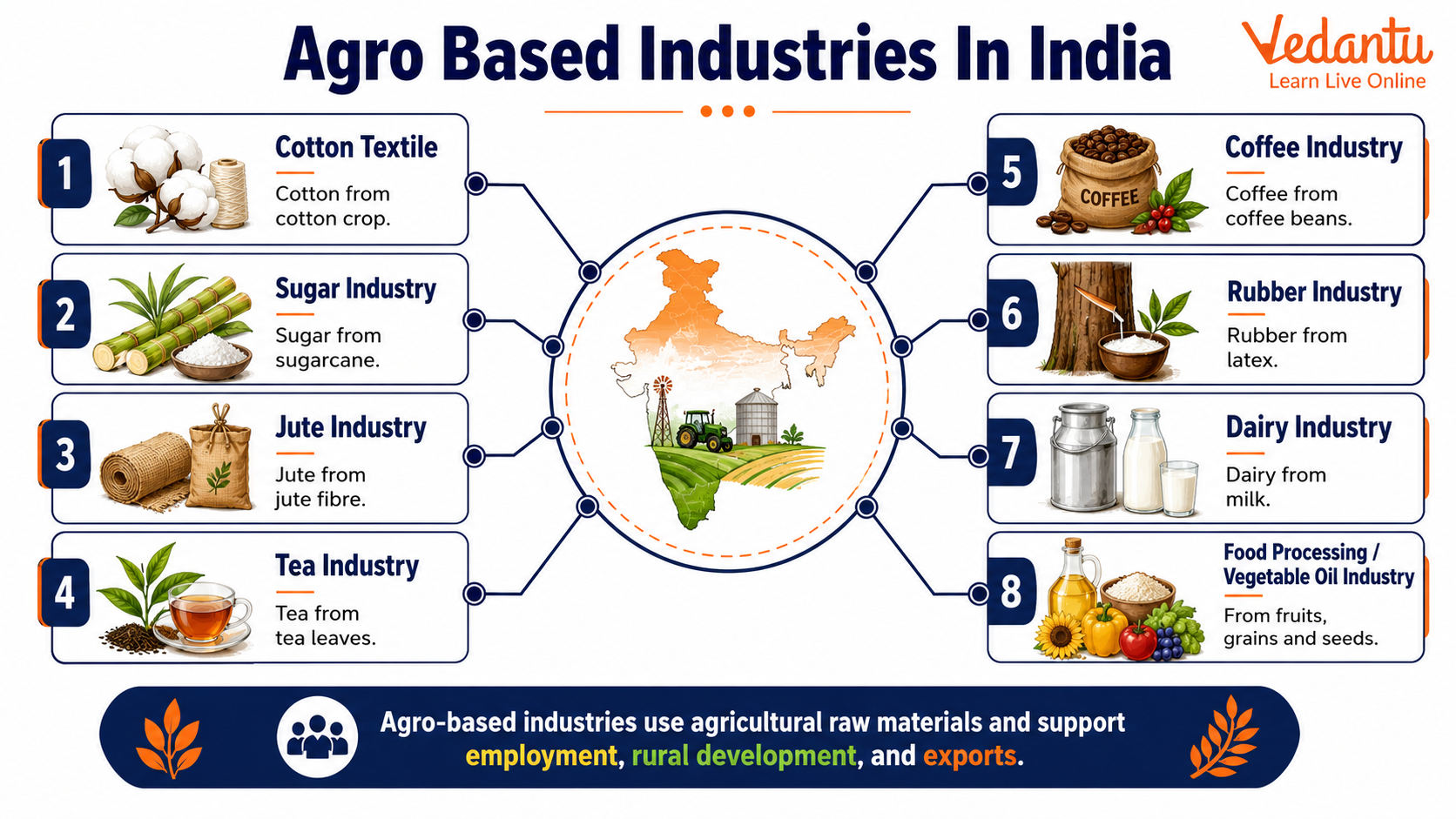
What are Agro Based Industries?
Agro based industries are those industries that depend on agriculture for raw materials. They process crops and other agricultural products into finished goods or intermediate products. These industries help in reducing wastage, increasing shelf life, and improving the quality of agricultural produce.
- Use agricultural raw materials like cotton, sugarcane, jute, milk, fruits, and vegetables
- Provide employment in rural and semi-urban areas
- Promote value addition and export earnings
- Reduce dependence on imported goods
Major Agro Based Industries in India
1. Cotton Textile Industry
The cotton textile industry is one of the oldest and most important agro based industries in India. It uses cotton as its raw material. Major cotton producing states include Gujarat, Maharashtra, and Telangana. Mumbai and Ahmedabad are major textile centers.
2. Sugar Industry
India is one of the largest producers of sugar in the world. The sugar industry depends on sugarcane as raw material. Major sugarcane producing states are Uttar Pradesh, Maharashtra, and Karnataka. This industry provides employment to millions of farmers and workers.
3. Jute Industry
The jute industry mainly uses raw jute obtained from West Bengal, Bihar, and Assam. India is one of the largest producers of jute products. Jute is used to make bags, ropes, carpets, and packaging materials.
4. Food Processing Industry
The food processing industry includes processing of fruits, vegetables, grains, dairy products, and meat. It helps in reducing post-harvest losses and increasing farmers income. This sector is rapidly growing in India.
5. Dairy Industry
India is the largest producer of milk in the world. The dairy industry processes milk into products like butter, cheese, curd, and milk powder. Operation Flood played a major role in the growth of this industry.
Major Agro Based Industries and Raw Materials
| Industry | Raw Material | Major States |
|---|---|---|
| Cotton Textile | Cotton | Gujarat, Maharashtra |
| Sugar | Sugarcane | Uttar Pradesh, Maharashtra |
| Jute | Raw Jute | West Bengal, Assam |
The above table highlights the relationship between agricultural raw materials and their respective industries. These industries are generally located near raw material sources to reduce transportation costs and ensure fresh supply.
Importance of Agro Based Industries in India
Agro based industries are vital for balanced economic development. They link agriculture with manufacturing and services, creating a strong economic chain.
- Generate large scale employment in rural areas
- Increase farmers income through value addition
- Promote exports and earn foreign exchange
- Encourage rural industrialization
- Reduce wastage of agricultural produce
Problems Faced by Agro Based Industries
Despite their importance, agro based industries face several challenges in India.
- Seasonal availability of raw materials
- Outdated technology and low productivity
- Inadequate storage and transportation facilities
- Fluctuating market prices
- Competition from synthetic and imported products
Government Initiatives to Promote Agro Based Industries
The Government of India has introduced various schemes to support agro based industries and promote rural industrial growth.
- Pradhan Mantri Kisan Sampada Yojana
- Mega Food Parks Scheme
- Operation Greens
- National Mission on Food Processing
Conclusion
Agro Based Industries in India form the backbone of rural industrial development and play a crucial role in economic growth. They connect agriculture with industry, generate employment, and contribute significantly to exports. Understanding their types, importance, and challenges is essential for General Knowledge preparation, especially for competitive exams. A strong agro industrial base ensures sustainable development and improves the standard of living of millions of people in India.
FAQs on Agro-Based Industries in India: Meaning, Types and Importance
1. What are agro-based industries in India?
Agro-based industries are industries that use agricultural raw materials to produce finished goods for domestic use and export.
• They depend on crops like cotton, sugarcane, jute, tea, coffee, and oilseeds.
• These industries link agriculture and manufacturing sectors.
• Examples include textile industry, sugar industry, jute industry, and food processing industry.
• They play a key role in rural development, employment generation, and economic growth in India.
2. Why are agro-based industries important for the Indian economy?
Agro-based industries are important because they support farmers and contribute significantly to India’s GDP and exports.
• Provide employment opportunities in rural and semi-urban areas.
• Add value to agricultural produce and reduce wastage.
• Boost exports of textiles, sugar, tea, and coffee.
• Promote balanced regional development and industrial growth.
3. Which are the major agro-based industries in India?
The major agro-based industries in India are those that process farm products into finished goods.
• Textile Industry (cotton and silk)
• Sugar Industry
• Jute Industry
• Tea and Coffee Industry
• Food Processing Industry
These industries form the backbone of India’s agro-industrial sector and competitive exam GK topics.
4. What are the problems faced by agro-based industries in India?
Agro-based industries face several challenges that affect production and profitability.
• Irregular supply of raw materials due to monsoon dependence.
• Outdated technology and machinery.
• Fluctuating market prices and global competition.
• Inadequate storage and transportation facilities.
These issues impact the growth of the agro-industrial sector in India.
5. Where are cotton textile industries mainly located in India?
The cotton textile industry is mainly located in regions with suitable climate and raw material availability.
• Maharashtra (Mumbai)
• Gujarat (Ahmedabad)
• Tamil Nadu (Coimbatore)
• Uttar Pradesh and West Bengal
These areas offer humid climate, skilled labor, and good transport facilities, making them major textile hubs.
6. Why is the sugar industry considered a seasonal industry?
The sugar industry is called a seasonal industry because it depends on the harvesting period of sugarcane.
• Operates mainly during the sugarcane crushing season (October to April).
• Production stops when raw material supply declines.
• Major producers include Uttar Pradesh, Maharashtra, Karnataka, and Tamil Nadu.
This seasonal nature affects employment and production cycles.
7. Why is the jute industry concentrated in West Bengal?
The jute industry is concentrated in West Bengal due to favorable geographical and economic factors.
• Availability of raw jute from the Ganga-Brahmaputra delta.
• Presence of Hugli River for water supply and transport.
• Availability of cheap labor and port facilities (Kolkata Port).
These factors make West Bengal the hub of India’s jute manufacturing industry.
8. How do agro-based industries help in rural development?
Agro-based industries promote rural development by creating income and infrastructure in villages.
• Generate direct and indirect employment.
• Encourage small-scale and cottage industries.
• Improve transport, storage, and market access.
• Reduce rural-to-urban migration.
This strengthens the rural economy and agricultural sustainability.
9. What is the role of the food processing industry in India?
The food processing industry adds value to agricultural products and reduces post-harvest losses.
• Processes fruits, vegetables, dairy, meat, and grains.
• Extends shelf life and improves food security.
• Increases export earnings and farmer income.
• Supports government initiatives like Make in India and Atmanirbhar Bharat.
It is one of the fastest-growing agro-based industries in India.
10. How do agro-based industries contribute to exports from India?
Agro-based industries contribute significantly to India’s export earnings through processed agricultural goods.
• Export of cotton textiles, tea, coffee, spices, and sugar.
• Supply to major global markets in Asia, Europe, and the USA.
• Enhance India’s position in the global agro-industrial trade.
These exports strengthen foreign exchange reserves and economic development.
