



Explore the Story of Indian Farming Through Class 7 Social Science Part 2 Chapter 1 Questions
Explore how seasons, soil, water and seeds shape Indian farming. Practise the given solved questions to compare farming methods, interpret pictures and explain how traditional knowledge and modern technology work together.
Class 7 Social Science Part 2 Chapter 1 Important MCQs with Answers
Q1. Which activity is an example of agriculture and allied activities?
A. Manufacturing mobile phones
B. Rearing silkworms for silk
C. Constructing railway stations
D. Producing plastic containers
Answer: B. Rearing silkworms for silk.
Q2. What do the perpendicular furrows discovered at Kalibangan suggest?
A. Farmers grew crops without preparing the land.
B. Farmers practised intercropping.
C. Farmers depended entirely on machinery.
D. Farmers grew only fruit trees.
Answer: B. Farmers practised intercropping.
Q3. Which material improves soil by adding nutrients and helping it retain moisture?
A. Plastic waste
B. Humus
C. Broken glass
D. Gravel alone
Answer: B. Humus.
Q4. Which farming method grows plants in nutrient-rich water without soil?
A. Terrace farming
B. Intercropping
C. Hydroponics
D. Forestry
Answer: C. Hydroponics.
Class 7 Social Science Part 2 Chapter 1 Very Short Answer Questions
Q5. How is agriculture broader than growing crops?
Answer:
Agriculture includes cultivating crops, raising livestock, growing trees and horticulture. Allied activities include fisheries, beekeeping and silkworm rearing.
Q6. What is grafting?
Answer:
Grafting joins parts of two plants so that they grow as one. It helps combine useful qualities, such as good fruit quality and resistance to pests.
Q7. Why have farming families traditionally preserved and shared seeds?
Answer:
Families preserve selected seeds for the next planting season. Sharing seeds helps keep useful crop varieties available within the community.
Class 7 Social Science Part 2 Chapter 1 Short Answer Questions
Q8. Distinguish between kharif, rabi, and zaid crops. Give two examples of each.
Answer:
The exact crop calendar varies across regions according to climate and water availability.
Q9. A farmer plants banana trees along the bunds of a paddy field. Explain three benefits of this practice.
Answer:
Protects the soil: The roots help hold soil in place.
Reduces wind damage: The trees act as windbreakers.
Provides another crop: Bananas give the farmer additional produce alongside rice.
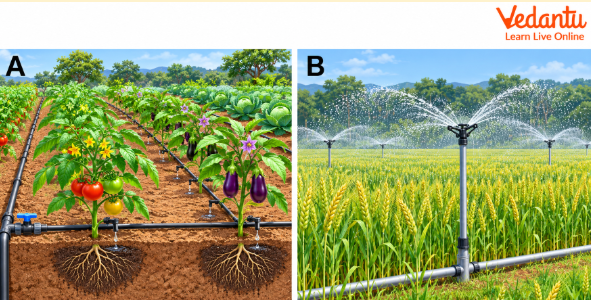
Q10. Identify the irrigation methods shown in pictures A and B. Explain how each supplies water to crops.
Answer:
A - Drip irrigation: Tubes and emitters deliver water slowly near the roots. Targeted watering helps reduce wastage.
B - Sprinkler irrigation: Sprinklers spray water into the air, allowing it to fall over crops like artificial rain.
Both methods provide water when rainfall alone is insufficient.
Class 7 Social Science Part 2 Chapter 1 Long Answer Questions
Q11. Explain how soil develops over time. Use a flowchart and describe why healthy soil matters for farming.
Answer:
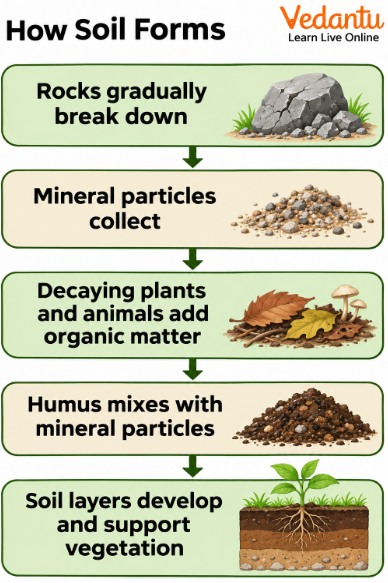
Soil develops through the weathering of rocks and the addition of decayed organic matter. This is a slow process.
Healthy soil matters because it:
Supplies nutrients needed for plant growth.
Holds water that roots can absorb.
Supports roots and keeps plants anchored.
Provides a home for organisms that help make nutrients available to plants.
Farmers can protect it through practices such as mulching, adding organic manure and preventing erosion.
Q12. What changes did the Green Revolution introduce? Explain its achievements and the concerns that appeared over time.
Answer:
The Green Revolution of the 1960s and 1970s introduced several changes in farming.
Achievements:
Foodgrain production increased, especially wheat and rice.
India moved towards self-sufficiency in food.
Machinery made many farming tasks quicker and easier.
Concerns:
Excessive groundwater use reduced underground water reserves.
Overuse of agricultural chemicals polluted soil and water.
Soil health suffered over time.
Harm to useful organisms affected the wider farming ecosystem.
A balanced approach combines productive technology with practices that conserve soil, water and biodiversity.
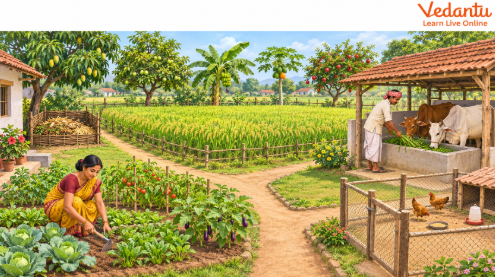
Q13. Observe the farm illustration. Explain how its different activities support one another and help the family avoid depending on a single crop.
Answer:
The farm combines crop cultivation with livestock, poultry and fruit growing.
Crops and livestock: Suitable crop residues can provide animal feed, while cattle dung can be used to prepare organic manure.
Composting: Plant waste and suitable farm materials can return nutrients to the soil.
Fruit trees: Trees provide fruit and help hold the soil along field boundaries.
Several products: Grain, vegetables, milk, eggs and fruit provide different sources of food and income.
Reduced dependence: If one crop performs poorly, other activities may still support the family.
This diversity builds resilience, although it cannot remove every risk from drought, extreme weather or low market prices.
Connect Crops, Seasons and Farming Methods in Class 7 Social Science Chapter 1
Strong answers explain why a farming practice is useful, alongside describing it. Use The Story of Indian Farming Class 7 extra questions and answers to build these connections:
Seasons influence crops: Link kharif crops with monsoon rainfall and rabi crops with cooler growing conditions.
Healthy soil supports growth: Explain how humus supplies nutrients and retains moisture.
Watering methods serve a purpose: Describe how drip irrigation delivers water near roots and reduces wastage.
Farm diversity supports families: Connect livestock, vegetables and fruit trees with additional food and income.
Higher yields involve trade-offs: Balance the achievements of the Green Revolution with concerns about soil and groundwater.
Choose one answer you found difficult and rewrite it using a clear point, a reason and an example.
Find What Your Farming Answers Need with Vedantu’s Solved Questions
Use Vedantu’s Class 7 Social Science Part 2 Chapter 1 Question Answer collection to check the accuracy and completeness of your responses.
Unsure how much to write? Use the brief definitions for very short answers and the developed points for longer explanations.
Mixing up crop seasons? Compare kharif, rabi and zaid in the table, then add two correct examples to your answer.
Recognising a picture but struggling to explain it? Name the method, describe how it works and state its benefit.
Missing part of a question? Check that your Green Revolution answer covers both achievements and concerns.
Repeating the textbook word for word? Keep the key terms, but explain the connections in your own sentences.
Mark any topic you still cannot explain and revisit it in the chapter before trying the question again.
Class 7 Social Science Part 2 Chapter 1 The Story of Indian Farming Study Materials
Explore these resources to understand farming practices, review key concepts and practise textbook questions.
Class 7 Social Science Chapter-wise Important Questions
Important Study Materials for CBSE Class 7 Social Science
FAQs on Important Questions for Class 7 Social Science (Exploring Society: India and Beyond Part 2) Chapter 1 The Story of Indian Farming | 2026-27
1. Which topics should I prepare in The Story of Indian Farming?
Focus on cropping seasons, soil types, irrigation, seed preservation and traditional farming practices. Also study the Green Revolution, sustainable agriculture, allied activities and the challenges farmers face.
2. How can I remember the difference between kharif, rabi and zaid crops?
Connect each season with its growing conditions: kharif—monsoon, rabi—winter and zaid—summer. Then remember two examples: rice and maize for kharif, wheat and mustard for rabi, and watermelon and cucumber for zaid.
3. Why do farmers need irrigation even when India receives monsoon rainfall?
Rainfall is seasonal and unevenly distributed. Irrigation supplies water during dry periods and helps farmers cope with delayed or insufficient rain. It also supports crops grown outside the monsoon season.
4. What is the difference between intercropping and terrace farming?
Intercropping means growing two or more different crops together. Terrace farming creates flat steps on hillsides for cultivation, helping conserve water and reduce soil erosion.
5. How do traditional knowledge and modern technology work together in farming?
Farmers can combine practices such as composting, seed preservation and mulching with drip irrigation, weather information and suitable machinery. This helps improve production while protecting soil and water.
6. Why do farming families keep livestock or grow several crops?
Different activities provide food and income at different times. Cattle can supply milk and manure, while poultry, vegetables and fruit offer additional produce. This reduces dependence on the success of one crop.
7. What should I include in The Story of Indian Farming Class 7 long answers?
Answer every part of the question using separate points and relevant examples. For a comparison, use the same basis for both sides. For the Green Revolution, explain its main changes, achievements and environmental concerns.
8. How can Vedantu’s Class 7 Social Science Part 2 Chapter 1 question answers help me practise?
Use Vedantu’s solved answers to check missing points and improve explanations. Test your recall with the cropping-season table, follow the soil-formation flowchart and explain the irrigation pictures before reading their answers.
