






What Do Wild Boars Eat? Diet, Habitat, and Survival Adaptations
The Wild Boar is a powerful and intelligent mammal found in forests, grasslands, and wetlands across the world. Known for its sharp tusks, strong body, and excellent sense of smell, the wild boar is the ancestor of domestic pigs. These animals are highly adaptable and can survive in different climates. Learning about Wild Boar facts, habitat, diet, and characteristics helps us understand their important role in nature.
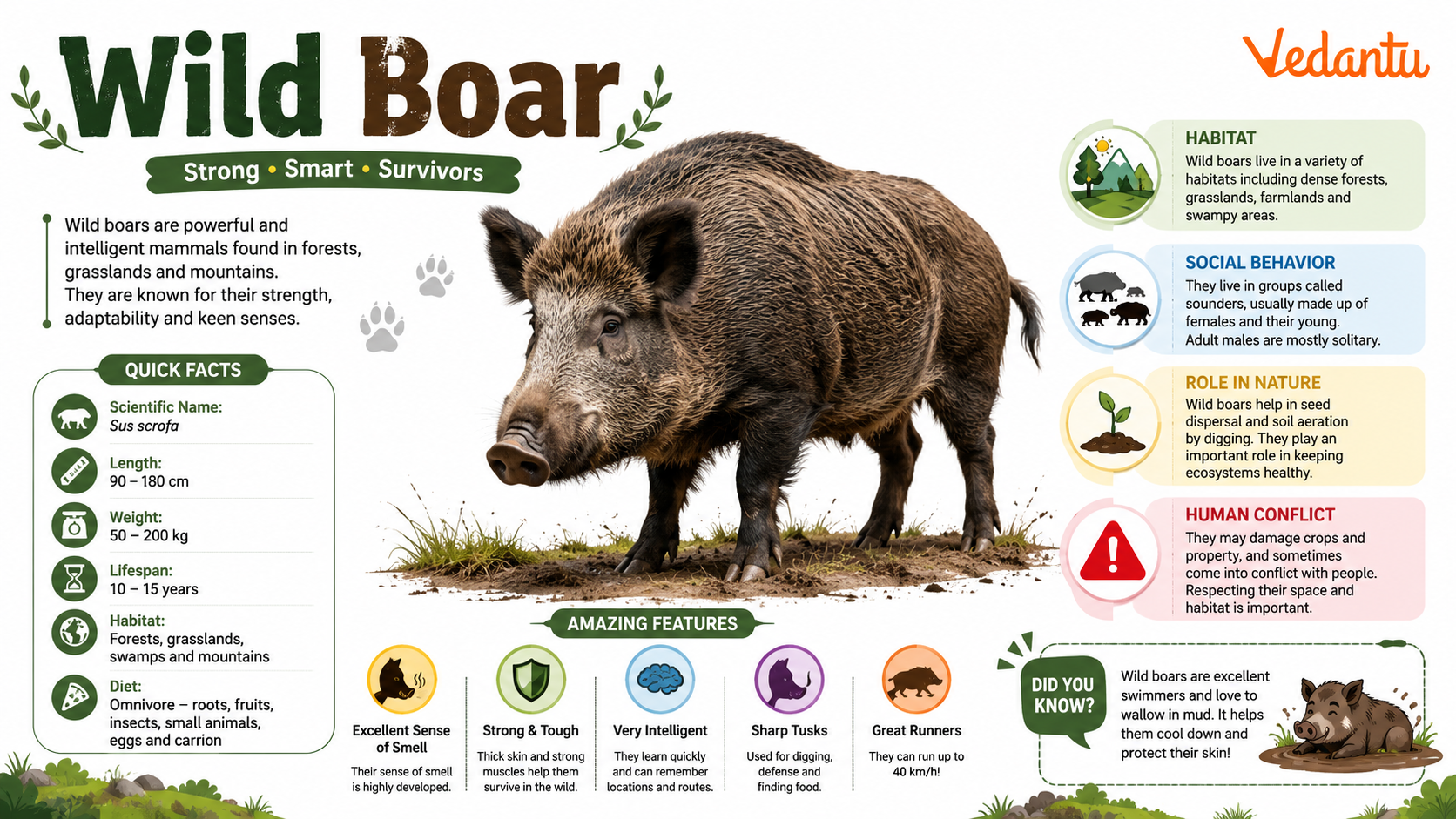
Quick Facts and Statistics
| Feature | Details |
|---|---|
| Common Name | Wild Boar |
| Scientific Name | Sus scrofa |
| Animal Group | Mammal |
| Size | 90–200 cm long |
| Weight | 50–300 kg |
| Lifespan | 10–14 years (in the wild) |
| Habitat | Forests, grasslands, wetlands |
| Diet | Omnivore |
| Young One | Piglet |
Appearance and Physical Characteristics
- Strong, heavy body with short but powerful legs.
- Covered with coarse brown, black, or grey hair.
- Long snout used for digging and smelling food underground.
- Sharp curved tusks, especially in males.
- Small eyes but excellent hearing and smell.
Habitat and Distribution
- Found in Europe, Asia, and parts of North Africa.
- Also introduced in North and South America and Australia.
- Prefer forests with dense vegetation.
- Can live in grasslands, marshes, and even snowy regions.
Diet and Feeding Habits
The Wild Boar diet is omnivorous, meaning it eats both plants and animals.
- Roots, tubers, and grass
- Fruits and seeds
- Insects and worms
- Small reptiles and birds
- Eggs and carrion
Behaviour and Lifestyle
- Usually active at night (nocturnal).
- Live in groups called “sounders.”
- Female groups include mothers and piglets.
- Adult males often live alone.
- Communicate using grunts and squeals.
Life Cycle and Reproduction
- Mating Season: Usually in winter.
- Pregnancy: Lasts about 115 days.
- Birth: 4–6 piglets are born in a nest made of grass.
- Growth: Piglets have striped coats for camouflage.
- Adult Stage: Become fully grown in 1–2 years.
What Makes Wild Boar Special?
Importance and Role in Nature
Amazing Facts About Wild Boar
- Wild boars are the ancestors of modern domestic pigs.
- Their tusks grow continuously throughout life.
- They are excellent swimmers.
- Piglets have brown coats with yellow stripes for camouflage.
- They can adapt to cold mountains and warm forests.
- Wild boars have been around for millions of years.
Fun Facts for Kids
FAQs on Wild Boar: Fascinating Facts, Habitat, and Behavior
1. What is a wild boar?
Wild boars are large, hairy wild pigs that live in forests and grasslands around the world.
- Scientific name: Sus scrofa
- Also called wild pigs or feral hogs
- Ancestors of domestic farm pigs
- Have sharp tusks and strong snouts for digging
2. Where do wild boars live?
Wild boars live in forests, grasslands, and wetlands across many continents.
- Native to Europe, Asia, and parts of North Africa
- Introduced to North America and Australia
- Prefer areas with water and thick plants for shelter
- Can adapt to farms and suburban areas
3. What do wild boars eat?
Wild boars are omnivores, meaning they eat both plants and animals.
- Roots, berries, nuts, and grass
- Insects and worms
- Small animals and bird eggs
- Farm crops like corn and wheat
4. Are wild boars dangerous?
Wild boars can be dangerous if they feel threatened or cornered.
- Have sharp tusks for defense
- Can run very fast (up to 30 mph)
- Usually avoid humans
- May charge to protect their babies
5. How big can a wild boar grow?
Wild boars can grow quite large depending on their habitat and food supply.
- Length: up to 6 feet (1.8 meters)
- Weight: 150–300 pounds or more
- Males are usually bigger than females
- Have thick fur and muscular bodies
6. What is the difference between a wild boar and a pig?
Wild boars are the wild ancestors of domestic pigs but have key differences.
- Longer snouts and larger tusks
- Thicker fur and leaner bodies
- More aggressive survival behavior
- Domestic pigs are bred for farms and food
7. How do wild boars protect themselves?
Wild boars protect themselves using speed, strength, and sharp tusks.
- Charge at predators like wolves
- Use curved tusks to defend
- Travel in groups called sounders
- Hide in thick bushes or mud
8. What are baby wild boars called?
Baby wild boars are called piglets and have special stripes for camouflage.
- Born in litters of 4–6 piglets
- Have brown fur with light stripes
- Stripes help them hide from predators
- Stay with their mother for protection
9. Why are wild boars important to the ecosystem?
Wild boars play an important role in maintaining forest ecosystems.
- Dig soil and help spread seeds
- Control insect populations
- Provide food for predators
- Sometimes considered invasive species in new habitats
10. How long do wild boars live?
Wild boars usually live several years in the wild depending on predators and environment.
- Average lifespan: 10–14 years
- May live longer in protected areas
- Face threats from hunting and predators
- Healthy diet and habitat increase survival
