



What Is the Difference Between ICSE and IGCSE Boards?
The difference between ICSE and IGCSE is mainly about curriculum design, assessment style, subject flexibility, and learning goals. ICSE is generally associated with detailed subject coverage and strong language foundations, while IGCSE is known for an international curriculum, flexible subject combinations, and application-based learning.
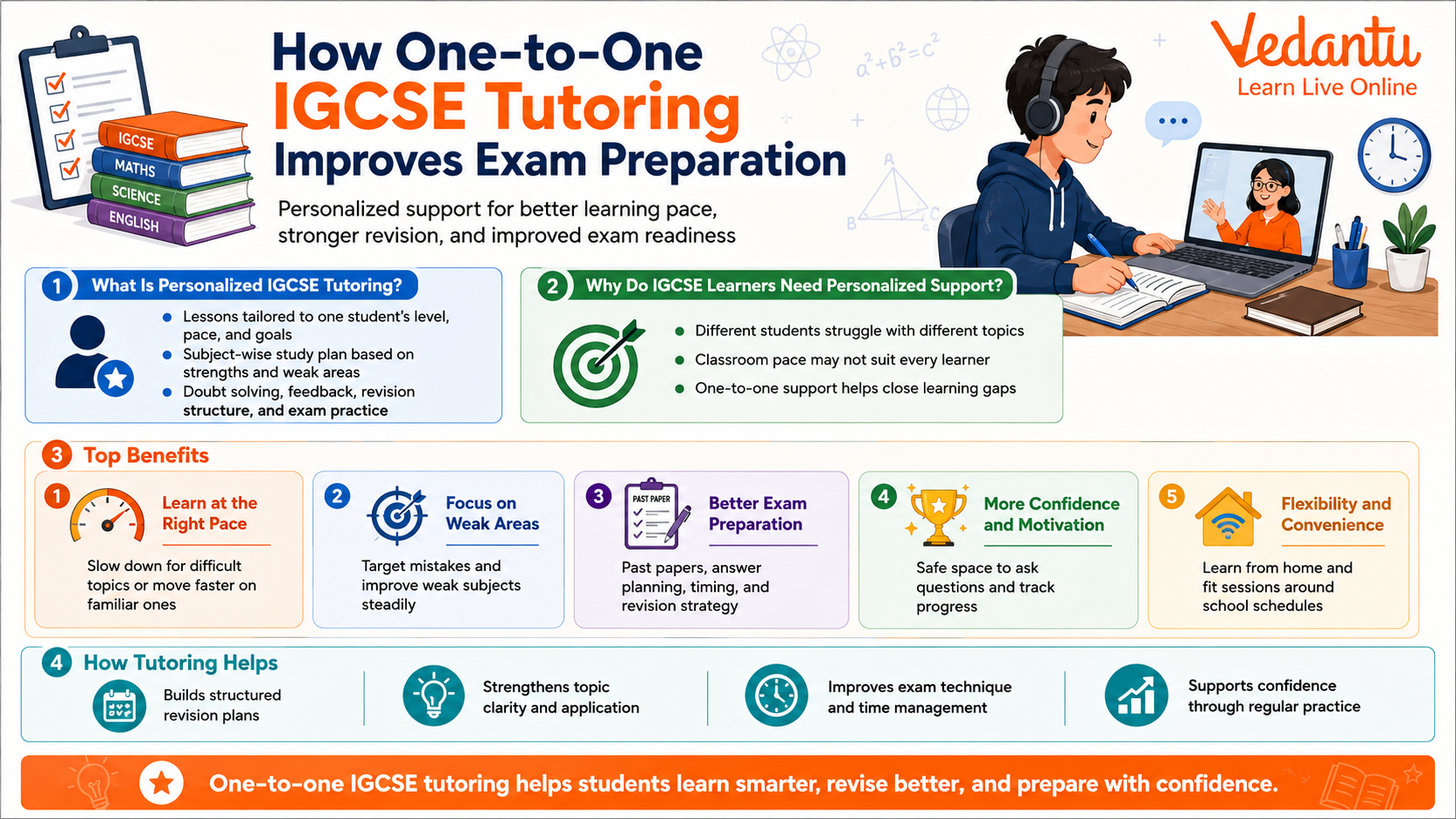
For students and parents comparing school boards, an ICSE vs IGCSE discussion is less about choosing a universally better option and more about choosing the right fit. The best decision often depends on the student’s learning style, future study plans, and the type of academic environment they may do well in.
What Is the Difference Between ICSE and IGCSE?
In simple terms, the difference between ICSE and IGCSE board systems lies in how they organise learning and assessment. ICSE is commonly chosen by families looking for a structured curriculum with detailed subject study, whereas IGCSE often appeals to those who want wider subject choice and a more globally oriented academic framework.
This ICSE and IGCSE comparison usually focuses on six areas: curriculum approach, exam pattern, difficulty style, recognition, teaching methods, and flexibility in subject selection. Neither path automatically guarantees stronger outcomes; suitability depends on the child’s needs and long-term plans.
What Is ICSE?
ICSE stands for Indian Certificate of Secondary Education. It is associated with the Council for the Indian School Certificate Examinations and is widely discussed in the context of Indian school education.
ICSE is generally seen as a curriculum with strong emphasis on detailed content coverage, language development, and foundational learning across subjects. Many families consider it useful for students who benefit from structured academic depth and regular subject-wise discipline.
What Is IGCSE?
IGCSE stands for International General Certificate of Secondary Education. It is commonly linked with the Cambridge international curriculum and is often described as a globally recognised school education pathway.
In a Cambridge IGCSE vs ICSE comparison, IGCSE is usually noted for flexible subject options and a learning approach that often encourages application, analysis, and conceptual understanding. It is frequently considered by families looking at international curriculum choices in India or abroad.
ICSE vs IGCSE: Key Differences at a Glance
| Feature | ICSE | IGCSE |
|---|---|---|
| Full Form | Indian Certificate of Secondary Education | International General Certificate of Secondary Education |
| Curriculum Orientation | Indian school curriculum with detailed subject study | International curriculum with global orientation |
| Subject Choice | Generally more structured | Generally more flexible |
| Assessment Style | Written exams with subject depth and board-style evaluation | May include exams, coursework, and application-focused assessment |
| Focus Area | Strong fundamentals and language base | Conceptual and inquiry-based learning |
| Recognition | Commonly recognised in India and also known internationally | Widely recognised internationally |
| Best Suited For | Students preferring detailed academic structure | Students preferring flexibility and international orientation |
ICSE and IGCSE Comparison by Curriculum, Exams, and Recognition
Curriculum Style
When comparing curriculum style, these are the broad differences parents usually look at.
- ICSE: Often associated with detailed coverage, strong language emphasis, and subject depth.
- IGCSE: Often associated with conceptual understanding, real-world application, and broader academic flexibility.
- ICSE vs IGCSE curriculum: One is generally seen as more structured, while the other is often viewed as more customizable.
- Students who enjoy interdisciplinary and analytical tasks may often adapt well to IGCSE, while students who like detailed subject-based study may often be comfortable with ICSE.
Assessment Pattern
| Aspect | ICSE | IGCSE |
|---|---|---|
| Main Evaluation Pattern | Strong written-exam orientation | Often includes application-based evaluation |
| Internal Components | May include internal assessment and practical elements | May include coursework, practicals, and internal elements |
| Question Style | Often tests detailed understanding | Often tests concepts and application |
Subject Flexibility
Subject choice is one of the most practical points in an IGCSE vs ICSE decision. ICSE generally follows a more fixed structure in many schools, while IGCSE is more often associated with a wider range of subject combinations. This can matter for students who have early interests in specific academic areas or prefer a more customised learning path.
Difficulty Level
Questions such as is IGCSE harder than ICSE do not have a single factual answer for every student. The challenge is often different rather than higher or lower. ICSE may feel demanding because of detailed content and strong writing requirements, while IGCSE may feel demanding because it often expects conceptual clarity, interpretation, and application.
A student who performs well in memorisation-supported structured study may find ICSE more manageable. A student who enjoys analysis, independent thinking, and flexible subject choices may find IGCSE more suitable. So, difficulty often depends on learning style rather than the board name alone.
Recognition in India and Abroad
Recognition is another key factor in the difference between ICSE and IGCSE. ICSE is commonly recognised in India and is also known internationally. IGCSE is widely associated with international recognition and is often considered by families planning possible overseas study pathways later.
In practical terms, families usually consider recognition in these ways.
- If a student is likely to continue education mainly within India, ICSE may feel familiar and straightforward.
- If a student may later move between countries or explore international academic pathways, IGCSE may feel aligned with that plan.
- Board recognition should always be viewed together with the school’s quality, teaching strength, and the student’s goals.
ICSE or IGCSE: Which Is Better for Students?
The question ICSE or IGCSE which is better should be answered with context. A better board is the one that supports the student’s academic habits, confidence, and future direction. The comparison should focus on fit, not labels.
ICSE may often suit students who:
- Prefer a structured and detailed curriculum
- Benefit from strong language and writing practice
- Are comfortable with depth-focused subject study
IGCSE may often suit students who:
- Prefer conceptual and application-based learning
- Want more flexibility in subject selection
- May be considering an internationally oriented academic journey
Pros and Considerations
| Board | Strengths Often Noted | Points to Think About |
|---|---|---|
| ICSE | Detailed coverage, strong language base, structured academic flow | May feel intensive for students who prefer flexibility or less content-heavy study |
| IGCSE | Flexible subjects, global orientation, concept-driven learning | May require comfort with independent thinking and application-style learning |
How to Choose More Confidently
Before choosing between ICSE and IGCSE, families can use this simple checklist.
- Observe whether the student prefers structured study or flexible exploration.
- Check whether future plans are mainly India-focused or may include international options.
- Review how the school actually teaches the board, not just the board name.
- Ask about assessment methods, practical work, and subject combinations.
- Consider the child’s comfort with writing-heavy tasks versus application-heavy tasks.
- Think about long-term academic transitions after Class 10 or equivalent stages.
If you want broader context on school board selection, you can also explore Vedantu’s articles on education boards in India, difference between CBSE and ICSE, Indian boards or international board, and IB vs IGCSE comparison.
Students already studying in an ICSE environment may also find it useful to understand the exam culture through resources like ICSE Class 10 exam time table. Looking at the school’s teaching quality and support system alongside the board can lead to a more practical decision.
Conclusion
The difference between ICSE and IGCSE is not about one board being universally superior. ICSE generally offers structured depth and strong language foundations, while IGCSE generally offers flexibility and an international, application-based approach. For most families, the right choice depends on the student’s learning preferences, comfort with assessment style, and future academic direction. A balanced decision should consider the child, the school, and the long-term pathway together.
FAQs on ICSE vs IGCSE: A Complete Guide for Students and Parents
1. What is the main difference between ICSE and IGCSE?
The main difference between ICSE and IGCSE lies in their curriculum orientation, subject flexibility, and assessment approach. ICSE generally provides detailed, structured subject coverage with a strong emphasis on language, while IGCSE offers an internationally oriented curriculum that focuses on conceptual understanding, application, and flexible subject choices.
2. What are the full forms of ICSE and IGCSE?
ICSE stands for Indian Certificate of Secondary Education, while IGCSE stands for International General Certificate of Secondary Education. ICSE is associated with India's CISCE examination system, whereas IGCSE is an internationally recognised secondary education qualification.
3. Is IGCSE harder than ICSE?
IGCSE is not universally harder than ICSE; each presents a different type of academic challenge.
- ICSE may feel demanding because of its detailed syllabus, extensive written work, and emphasis on language.
- IGCSE may feel challenging because questions often require analysis, interpretation, and practical application of concepts.
The relative difficulty depends on the student's learning style, subject combination, and preparation.
4. Which is better, ICSE or IGCSE?
Neither ICSE nor IGCSE is better for every student; the right choice depends on individual learning needs and future plans.
- ICSE may be suitable for students who prefer structured study, detailed content, and extensive language and writing practice.
- IGCSE may be suitable for students who prefer subject flexibility, conceptual learning, and an internationally oriented academic pathway.
5. How do the ICSE and IGCSE curricula differ?
The ICSE curriculum is generally more structured and content-detailed, whereas the IGCSE curriculum is typically more flexible and application-oriented. ICSE places considerable emphasis on comprehensive subject knowledge and language skills. IGCSE commonly encourages inquiry, problem-solving, conceptual understanding, and the selection of subjects according to a student's interests and school offerings.
6. How are students assessed in ICSE and IGCSE?
ICSE and IGCSE use written examinations along with subject-specific internal, practical, or coursework components where applicable.
- ICSE assessment generally emphasises detailed written answers, subject knowledge, projects, and practical work.
- IGCSE assessment may include written papers, practical tests, oral assessments, or coursework, depending on the subject and assessment route.
The exact assessment pattern can vary by subject and school.
7. Does IGCSE offer more subject flexibility than ICSE?
IGCSE generally offers greater flexibility in subject selection than ICSE. Students may be able to choose from a broader range of languages, sciences, humanities, creative subjects, and vocational options, depending on what their school offers. ICSE usually follows a more structured combination of compulsory subjects and permitted elective groups.
8. Are ICSE and IGCSE recognised in India and abroad?
Both ICSE and IGCSE are recognised for further education in India and abroad, subject to the admission and eligibility rules of the institution concerned. IGCSE is widely used across international education systems, while ICSE is well established in India and is also accepted by many institutions overseas. Families should verify subject prerequisites and equivalence requirements before applying to a particular programme.
9. Which board is better for studying abroad, ICSE or IGCSE?
IGCSE may provide a more familiar pathway for students planning to study abroad because of its international orientation and flexible subject structure. However, ICSE students can also pursue education overseas. Universities and schools usually consider later qualifications, academic performance, required subjects, and admission criteria rather than relying only on the secondary school board.
10. What factors should parents consider when choosing between ICSE and IGCSE?
Parents should choose between ICSE and IGCSE by considering the student's learning style, future plans, and the quality of the school.
- Assess whether the student prefers structured depth or flexible, application-based learning.
- Compare available subjects, teaching methods, and assessment formats.
- Consider future study plans in India or abroad.
- Review school facilities, teacher experience, academic support, and fees.
- Check how easily the student can transition to the intended programme after secondary school.



