




Which is used in making thermocol ?
(A) Polypropylene
(B) Polyethylene
(C) Polystyrene
(D) High density polyethylene
Answer
 Verified
233.1k+ views
Hint: This compound is also used to make Styrofoam. This is used for producing disposable plastic cutlery and dinnerware, it is harmful to both the human body if ingested and to the environment if not properly disposed of. Its expanded form is used for food containers, moulded sheets for building insulation, and packing material.
Complete step by step answer:
To answer this question, we should discuss each option.
> Polypropylene: We should know that it is a thermoplastic polymer used in a wide variety of applications. It is produced via chain-growth polymerization from the monomer propylene.
- Polypropylene is used in the manufacturing of piping systems. Polypropylene is widely used in ropes, distinctive because they are light enough to float in water. There are many applications of polypropylene. But none of the points can prove that it is used for manufacturing of thermocol.

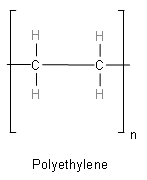
> Polyethylene: We know that Polyethylene or polythene is the most common plastic in use today. It is used for making plastic bags, plastic films, containers including bottles, etc.
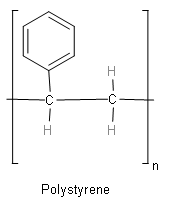
> Polystyrene: We should know that it is a synthetic aromatic hydrocarbon polymer made from the monomer known as styrene. Polystyrene can be solid or foamed. Polystyrene is an additional polymer that results when styrene monomers interconnect (polymerization). We should here note that polystyrene foams are 95-98% air and they are good thermal insulators. It has one other form that is Expanded polystyrene (EPS). It is usually white and made of pre-expanded polystyrene beads. EPS is used for food containers, moulded sheets for building insulation, and packing material either as solid blocks formed to accommodate the item being protected.
> High-density polyethylene (HDPE): We should know that it is a thermoplastic polymer produced from the monomer ethylene. It has a high strength-to-density ratio. We use HDPE fibres to make rope. It is used to make flexible HDPE pipes. It is used in a variety of applications such as in making chemical containers, folding chairs and tables, shampoo bottles and many more.

So, from the above discussion we can say that polystyrene is used to make thermocol. As we already discussed that polystyrene foams have 95-98% air. Polystyrene foam is used to make thermocol. So, option C is correct.
Note: We should know that synthetic polymers are man-made polymers. Synthetic polymers are classified into three main categories: thermoplastics, elastomers and synthetic fibres. We are already familiar with synthetic polymers such as Nylons in textiles and fabrics, Teflon in non-stick pans, Bakelite for electrical switches, polyvinyl chloride (PVC) in pipes. The plastic kits and covers are mostly made of synthetic polymers like polythene and tires are manufactured from Buna rubbers. The eight most common types of synthetic organic polymers, which are commonly found in households, are:
1) Low-density polyethylene (LDPE)
2) High-density polyethylene (HDPE)
3) Polypropylene (PP)
4) Polyvinyl chloride (PVC)
5) Polystyrene (PS)
6) Nylon, nylon 6, nylon 6,6
7) Teflon (Polytetrafluoroethylene)
8) Thermoplastic polyurethanes (TPU)
Complete step by step answer:
To answer this question, we should discuss each option.
> Polypropylene: We should know that it is a thermoplastic polymer used in a wide variety of applications. It is produced via chain-growth polymerization from the monomer propylene.
- Polypropylene is used in the manufacturing of piping systems. Polypropylene is widely used in ropes, distinctive because they are light enough to float in water. There are many applications of polypropylene. But none of the points can prove that it is used for manufacturing of thermocol.
> Polyethylene: We know that Polyethylene or polythene is the most common plastic in use today. It is used for making plastic bags, plastic films, containers including bottles, etc.
> Polystyrene: We should know that it is a synthetic aromatic hydrocarbon polymer made from the monomer known as styrene. Polystyrene can be solid or foamed. Polystyrene is an additional polymer that results when styrene monomers interconnect (polymerization). We should here note that polystyrene foams are 95-98% air and they are good thermal insulators. It has one other form that is Expanded polystyrene (EPS). It is usually white and made of pre-expanded polystyrene beads. EPS is used for food containers, moulded sheets for building insulation, and packing material either as solid blocks formed to accommodate the item being protected.
> High-density polyethylene (HDPE): We should know that it is a thermoplastic polymer produced from the monomer ethylene. It has a high strength-to-density ratio. We use HDPE fibres to make rope. It is used to make flexible HDPE pipes. It is used in a variety of applications such as in making chemical containers, folding chairs and tables, shampoo bottles and many more.
So, from the above discussion we can say that polystyrene is used to make thermocol. As we already discussed that polystyrene foams have 95-98% air. Polystyrene foam is used to make thermocol. So, option C is correct.
Note: We should know that synthetic polymers are man-made polymers. Synthetic polymers are classified into three main categories: thermoplastics, elastomers and synthetic fibres. We are already familiar with synthetic polymers such as Nylons in textiles and fabrics, Teflon in non-stick pans, Bakelite for electrical switches, polyvinyl chloride (PVC) in pipes. The plastic kits and covers are mostly made of synthetic polymers like polythene and tires are manufactured from Buna rubbers. The eight most common types of synthetic organic polymers, which are commonly found in households, are:
1) Low-density polyethylene (LDPE)
2) High-density polyethylene (HDPE)
3) Polypropylene (PP)
4) Polyvinyl chloride (PVC)
5) Polystyrene (PS)
6) Nylon, nylon 6, nylon 6,6
7) Teflon (Polytetrafluoroethylene)
8) Thermoplastic polyurethanes (TPU)
Recently Updated Pages
JEE Main 2023 April 6 Shift 1 Question Paper with Answer Key

JEE Main 2023 April 6 Shift 2 Question Paper with Answer Key
JEE Main 2023 (January 31 Evening Shift) Question Paper with Solutions [PDF]
JEE Main 2023 January 30 Shift 2 Question Paper with Answer Key
JEE Main 2023 January 25 Shift 1 Question Paper with Answer Key
JEE Main 2023 January 24 Shift 2 Question Paper with Answer Key
Trending doubts
JEE Main 2026: Session 2 Registration Open, City Intimation Slip, Exam Dates, Syllabus & Eligibility
JEE Main 2026 Application Login: Direct Link, Registration, Form Fill, and Steps
Understanding the Angle of Deviation in a Prism
Hybridisation in Chemistry – Concept, Types & Applications
How to Convert a Galvanometer into an Ammeter or Voltmeter
Understanding the Electric Field of a Uniformly Charged Ring
Other Pages
JEE Advanced Marks vs Ranks 2025: Understanding Category-wise Qualifying Marks and Previous Year Cut-offs
NCERT Solutions For Class 12 Chemistry Chapter 1 Solutions (2025-26)
Solutions Class 12 Chemistry Chapter 1 CBSE Notes - 2025-26
NCERT Solutions For Class 12 Chemistry Chapter 4 The d and f Block Elements (2025-26)
Biomolecules Class 12 Chemistry Chapter 10 CBSE Notes - 2025-26
NCERT Solutions For Class 12 Chemistry Chapter 10 Biomolecules (2025-26)