




The systems in an organism work independently.
A. True
B. False.
Answer
 Verified
622.8k+ views
Hint: Different systems in our body are well regulated and dependent on each other. These are known as biological systems.
All of them work in synchronization with each other.
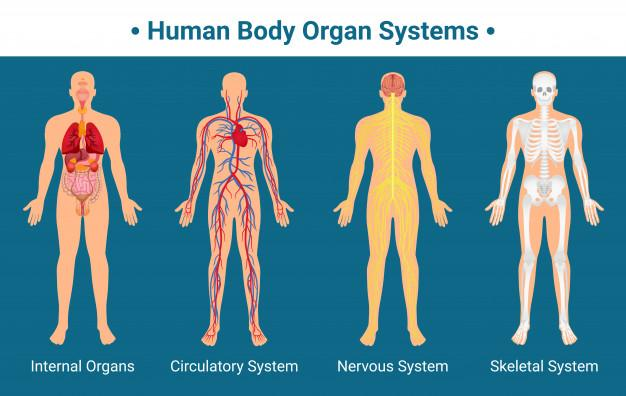
Complete answer: Various systems are present in your body. These are: circulatory system, respiratory system, muscular system, digestive system, integumentary system, endocrine system, reproductive system, and nervous system.
All of these have specific functions and the functions are carried out by different mechanisms.
They cannot function independently. They rely on all the other systems to work properly. The major example is that, nervous system is one of the principal systems of our body and it controls the work of almost every organ. Nerve stimuli can reach even the distant parts of our system.
It controls the circulatory system by keeping heart-beat regulated and working on blood vessels too. Endocrine system controls the reproductive system, visual senses, digestion, sleep, metabolism by the effects of various hormones.
Immune system protects all the other systems. Excretory system and endocrine system are also interrelated.
Hence, no system can work independently. Each one functions with the help and effect of the other. From the above explanation it is obvious that every part of our body is important, hence, each of them deserve care.
So, the correct option is B. False.
Note: ‘System’ is a broader term but as organism word is mentioned, biological systems are considered which are present within an organism.
A person is considered as healthy only when all the systems in him/her work in synchronization. A synchronized body is always well-regulated and when all the systems are well-regulated organs function to their optimum capacity.
All of them work in synchronization with each other.
Complete answer: Various systems are present in your body. These are: circulatory system, respiratory system, muscular system, digestive system, integumentary system, endocrine system, reproductive system, and nervous system.
All of these have specific functions and the functions are carried out by different mechanisms.
They cannot function independently. They rely on all the other systems to work properly. The major example is that, nervous system is one of the principal systems of our body and it controls the work of almost every organ. Nerve stimuli can reach even the distant parts of our system.
It controls the circulatory system by keeping heart-beat regulated and working on blood vessels too. Endocrine system controls the reproductive system, visual senses, digestion, sleep, metabolism by the effects of various hormones.
Immune system protects all the other systems. Excretory system and endocrine system are also interrelated.
Hence, no system can work independently. Each one functions with the help and effect of the other. From the above explanation it is obvious that every part of our body is important, hence, each of them deserve care.
So, the correct option is B. False.
Note: ‘System’ is a broader term but as organism word is mentioned, biological systems are considered which are present within an organism.
A person is considered as healthy only when all the systems in him/her work in synchronization. A synchronized body is always well-regulated and when all the systems are well-regulated organs function to their optimum capacity.
Recently Updated Pages
Master Class 12 Business Studies: Engaging Questions & Answers for Success

Master Class 12 Chemistry: Engaging Questions & Answers for Success
Master Class 12 Biology: Engaging Questions & Answers for Success
Class 12 Question and Answer - Your Ultimate Solutions Guide
Master Class 9 General Knowledge: Engaging Questions & Answers for Success
Master Class 9 Maths: Engaging Questions & Answers for Success
Trending doubts
Which are the Top 10 Largest Countries of the World?
Draw a labelled sketch of the human eye class 12 physics CBSE
Name the crygenes that control cotton bollworm and class 12 biology CBSE
Differentiate between homogeneous and heterogeneous class 12 chemistry CBSE
In a transcription unit the promoter is said to be class 12 biology CBSE
Sulphuric acid is known as the king of acids State class 12 chemistry CBSE